The Architecture of Toyota's Output Speed Sensor (OSS) Systems
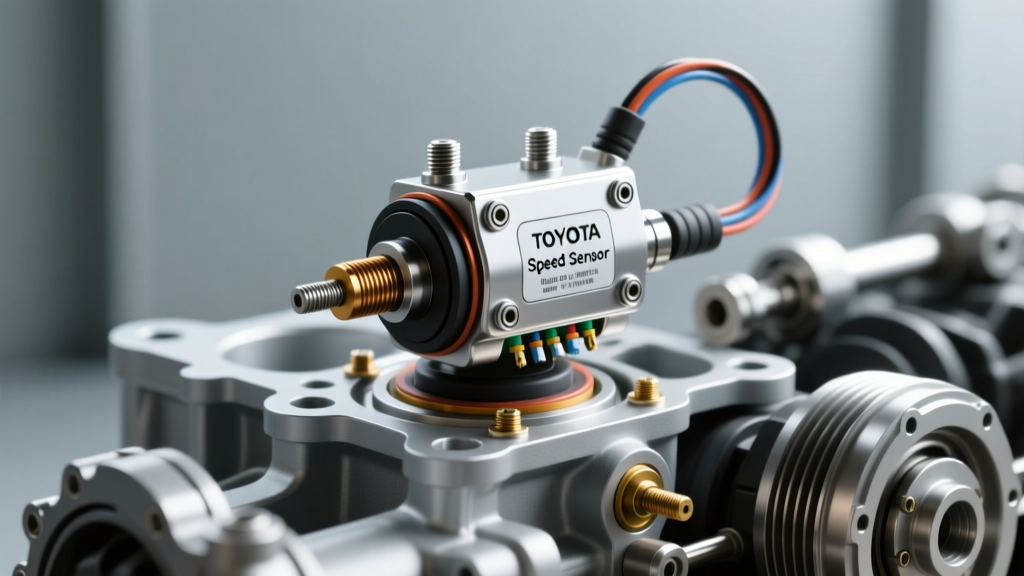
In modern Toyota drivetrains, the Transmission Output Speed Sensor (OSS) is a critical node in the powertrain control network. Unlike the Input Speed Sensor (ISS), which monitors turbine shaft RPM to calculate torque converter slip, the OSS measures the rotational speed of the transmission's output shaft or the differential ring gear. The Transmission Control Module (TCM) relies on this data not only for determining vehicle speed and shift timing but also for executing precise Pulse Width Modulation (PWM) control over the torque converter clutch (TCC) and line pressure solenoids.
Understanding the exact Toyota transmission speed sensor location is paramount for accurate diagnostics. A failing OSS typically triggers limp-home mode, harsh shifts, or complete loss of speedometer functionality. As we navigate the 2026 automotive landscape, Toyota's Direct Shift-8AT (UA80E) and legacy 6-speed (U660F) transaxles utilize advanced Hall-effect OSS designs, replacing the older Variable Reluctance (VR) sensors found in early 2000s A-series transmissions. This shift to Hall-effect technology means the TCM now expects a clean 0-5V digital square wave rather than an analog sine wave, fundamentally changing how technicians must diagnose signal faults.
Toyota Transmission Speed Sensor Location: Application Matrix
The physical placement of the output speed sensor varies drastically depending on whether the vehicle is equipped with a longitudinal RWD/4WD transmission or a transverse FWD/AWD transaxle. Below is a technical matrix detailing the OSS location, access requirements, and OEM part numbers for Toyota's most prevalent transmission families.
| Transmission Model | Application Examples | OSS Physical Location | Access Method | OEM Part Number |
|---|---|---|---|---|
| A750E / A760H | Tacoma, 4Runner, FJ Cruiser | Extension housing, driver-side rear | Underneath vehicle, remove skid plate | 89413-08010 |
| U660F / U760E | Camry V6, Sienna, Highlander | Transaxle case, near differential | Driver-side wheel well or subframe drop | 89413-06180 |
| UA80E / UA80F | Camry I4, RAV4 (Direct Shift-8AT) | Integrated into mechatronic/valve body | Transmission pan removal required | Integrated (N/A separate) |
| AB60E / AB60F | Tundra, Sequoia (5.7L V8) | Tail housing, adjacent to transfer case | Underneath, near crossmember | 89413-0C010 |
Note: For the UA80E Direct Shift-8AT, Toyota has moved toward integrated sensor arrays within the valve body mechatronic unit. If an output speed fault is detected on these newer platforms, technicians must often diagnose the internal wiring harness or replace the entire valve body assembly, as the sensor is not serviced as a standalone external component.
Electrical Diagnostics: Waveforms and OBD-II Fault Codes
When a customer complains of erratic shifting or a flashing check engine light, the TCM will typically store one of two primary OBD-II fault codes:
- P0720 (Output Speed Sensor Circuit Malfunction): Indicates an electrical fault, such as an open circuit, short to ground, or short to voltage in the sensor wiring harness.
- P0722 (Output Speed Sensor No Signal): The TCM detects rotation on the input shaft and engine RPM, but the OSS signal reads 0 MPH or drops out intermittently under load.
Oscilloscope Waveform Analysis
Because modern Toyota Hall-effect sensors require a 5V reference from the TCM, a standard multimeter is insufficient for dynamic testing. You must use an automotive oscilloscope. Back-probe the signal wire (typically the center pin on a 3-pin connector) while the vehicle is on a lift with the drive wheels spinning.
A healthy Hall-effect OSS will produce a perfectly square digital waveform toggling between 0.5V (Low) and 4.8V (High). The frequency of the square wave increases proportionally with wheel speed. If you observe rounded corners, voltage drop-offs, or 'hash' in the signal, you are likely looking at wiring harness degradation or a failing internal sensor IC. According to Toyota TechInfo service bulletins, chafing on the engine harness near the bellhousing is a known culprit for intermittent P0722 codes on U660F transaxles due to engine roll under heavy acceleration.
Signal Interference and Wiring Harness Degradation
One of the most overlooked aspects of Toyota transmission speed sensor location diagnostics is electromagnetic interference (EMI). The OSS signal wire is often routed parallel to high-current circuits, such as the alternator output or the ignition coil primary feeds. Over time, the shielding on the OEM harness can degrade, especially in high-heat environments like the 4Runner's underbody routing.
If your oscilloscope reveals high-frequency noise superimposed over the OSS square wave, the TCM's internal logic may misinterpret the noise as additional gear teeth passing the sensor. This results in phantom speed readings, causing the transmission to command upshifts prematurely or refuse to engage the torque converter clutch. Always perform a voltage drop test on the sensor ground circuit; a ground circuit resistance exceeding 0.05 ohms will skew the 5V reference signal, mimicking a failed sensor.
Mechanical Replacement Protocol and Torque Specifications
Replacing an external OSS on an A750E or U660F is a straightforward mechanical procedure, but it requires strict adherence to sealing and torque protocols to prevent catastrophic fluid leaks or case damage.
Step-by-Step Removal and Installation
- Fluid Level Verification: Check the ATF level before starting. Removing the OSS will result in a fluid loss of approximately 0.5 to 1.5 quarts, depending on the transmission pan geometry and vehicle rake.
- Electrical Disconnect: Depress the locking tab and disconnect the 3-pin connector. Inspect the terminals for green copper oxide corrosion; clean with electrical contact cleaner if necessary.
- Fastener Removal: Remove the single 10mm hex head flange bolt securing the sensor to the transmission case.
- Extraction: Gently twist and pull the sensor outward. Warning: Do not use pry tools between the sensor flange and the aluminum transmission case. Scoring the mating surface will guarantee a permanent fluid leak.
- O-Ring Preparation: Lubricate the new O-ring exclusively with clean Toyota WS or CVTF fluid. Never use petroleum jelly or silicone grease. Petroleum-based lubricants will detach in the hot ATF, migrate into the valve body, and cause solenoid spool valves to stick, leading to burnt clutch packs.
- Torque Specification: Reinstall the sensor and torque the 6mm flange bolt to exactly 5.4 Nm (48 in-lbs). Overtorquing can crack the sensor's plastic housing or strip the soft aluminum threads in the transmission case.
Expert Technician Tip: After replacing the output speed sensor on any 2015 or newer Toyota platform, you must use the Toyota Techstream diagnostic software to perform a 'Reset Memory' function in the TCM. This clears the adaptive shift pressure maps. If you skip this step, the TCM may retain the high line-pressure compensation values it learned while the sensor was failing, resulting in brutally harsh 1-2 and 2-3 shifts for the first 50 miles of driving.
OEM vs. Aftermarket Procurement Strategy
When sourcing a replacement for your Toyota transmission speed sensor location, the market is flooded with cheap, unbranded alternatives. However, transmission sensors operate in a brutal environment: submerged in 200°F (93°C) hydraulic fluid, subjected to high-frequency vibration, and exposed to metallic particulate debris.
Denso is the original equipment manufacturer (OEM) for the vast majority of Toyota's electronic sensors. Purchasing a genuine Denso unit or a Toyota-branded box ensures the Hall-effect IC is calibrated to the exact pulse-per-revolution ratio required by the TCM.
- Genuine Toyota (Dealer): $85.00 - $130.00. Best for warranty compliance and guaranteed fitment.
- Denso Aftermarket: $35.00 - $55.00. Identical internal components to the OEM part, minus the Toyota logo. The smartest choice for independent repair shops and DIYers.
- White-Box / Unbranded (Online Marketplaces): $12.00 - $25.00. Avoid. These units frequently suffer from poor epoxy potting, leading to internal short circuits within 5,000 miles. Furthermore, the O-rings provided are often made of Buna-N rubber rather than Viton, which will swell and degrade rapidly in synthetic ATF.
For comprehensive wiring diagrams and pinout charts specific to your vehicle's VIN, always consult the official Toyota Technical Information System (TIS). Relying on generic forum diagrams can lead to misidentifying the 5V reference wire as a 12V ground, which will instantly fry the TCM's internal driver circuit if back-probed incorrectly.