The Fundamental Divide: Fluid Coupling vs. Friction Coupling
When evaluating powertrain dynamics, the distinction between a manual friction clutch and an automatic torque converter represents one of the most significant engineering divergences in automotive history. While both serve the primary function of coupling and decoupling the engine from the transmission to facilitate gear changes and idle states, their operational mechanics, failure modes, and acoustic signatures are entirely different. For technicians and enthusiasts alike, understanding these differences is paramount, especially when diagnosing complex NVH (Noise, Vibration, and Harshness) issues like torque converter noise when accelerating.
In 2026, despite the rapid proliferation of electrified drivetrains and dual-clutch transmissions (DCTs), traditional hydrodynamic torque converters remain the backbone of heavy-duty, off-road, and luxury automatic transmissions due to their unparalleled torque multiplication capabilities and smooth low-speed launch characteristics. Conversely, manual clutches remain the purview of performance, motorsport, and legacy commercial applications.
Manual Clutch Architecture
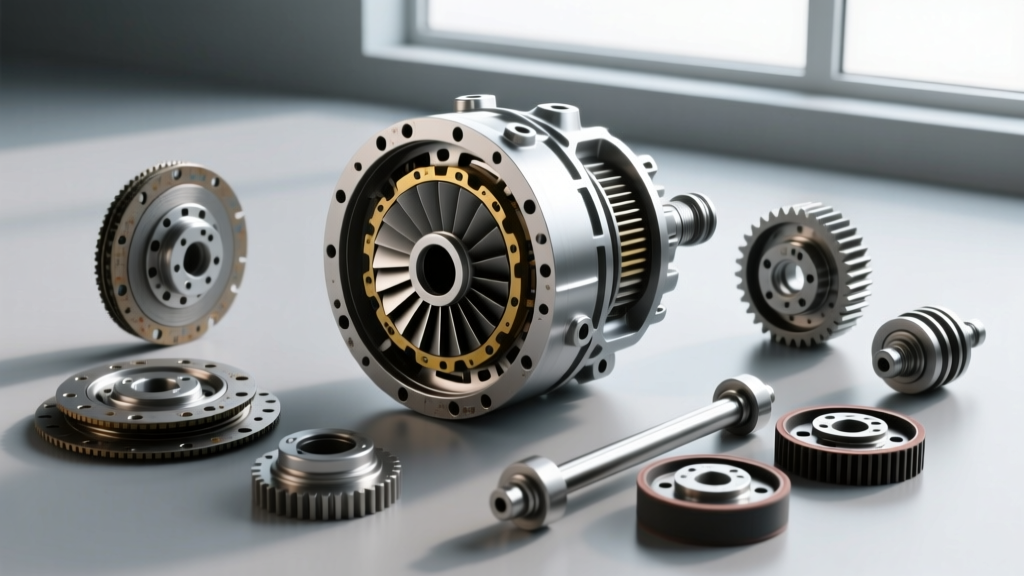
A traditional manual clutch system relies on mechanical friction. It consists of a flywheel attached to the engine crankshaft, a friction disc splined to the transmission input shaft, and a pressure plate actuated by a diaphragm spring. When the clutch pedal is released, the pressure plate clamps the friction disc against the flywheel, creating a solid mechanical lock. Noise in this system is almost exclusively mechanical: throwout bearing squeal, pilot bearing whine, or clutch chatter caused by contaminated friction surfaces or warped flywheels.
Torque Converter Architecture
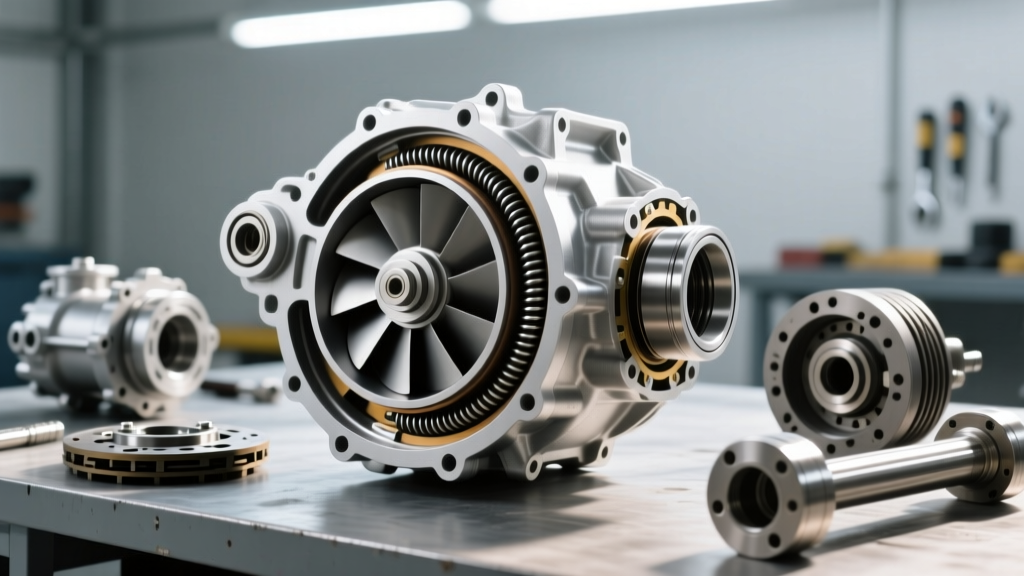
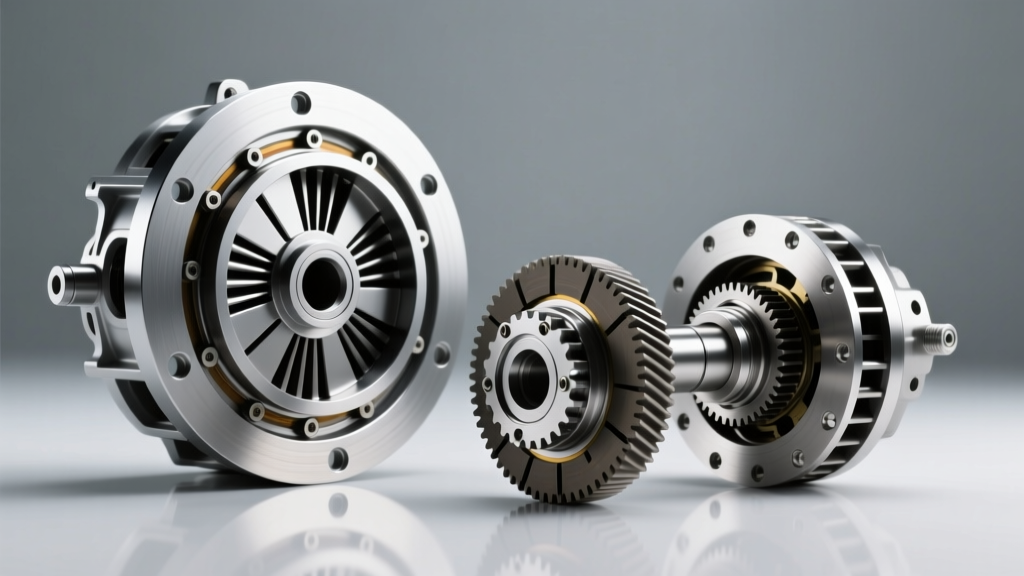
The torque converter is a hydrodynamic fluid coupling. It utilizes three primary internal components: the impeller (pump) driven by the engine, the turbine connected to the transmission input shaft, and the stator situated between them. The stator redirects fluid flow to achieve torque multiplication (often up to 2.2:1) during initial acceleration. Modern units also feature a Torque Converter Clutch (TCC) to provide a mechanical lockup at cruising speeds, eliminating parasitic slip and improving fuel economy.
Isolating Torque Converter Noise When Accelerating
Diagnosing torque converter noise when accelerating requires a methodical approach to separate hydrodynamic anomalies from mechanical engine or transmission faults. Unlike a manual clutch, which typically exhibits noise during the engagement/disengagement phases (pedal movement), a failing torque converter often vocalizes under load during the torque multiplication phase.
The Acoustic Signature of TC Failure
When a driver reports a whining, whirring, or metallic rattling noise specifically when accelerating from a stop or under heavy throttle, the root cause usually lies within the torque converter's internal fluid dynamics or mechanical clearances.
- High-Pitched Whining: Often indicative of fluid cavitation. If the transmission fluid level is low, or if the suction screen is clogged, the impeller starves for fluid. As the impeller spins faster during acceleration, it creates microscopic vapor bubbles that collapse violently, generating a distinct whine.
- Metallic Rattling or Marbles in a Can: This is the hallmark of a failed stator one-way clutch. During acceleration, the stator must lock to the stator shaft to redirect fluid. If the one-way clutch fails and freewheels in both directions, the stator fins will physically interfere with the fluid flow and the impeller/turbine fins, causing a severe rattling noise and a drastic loss of low-end torque.
- Deep Growling or Vibration: Usually points to TCC (Torque Converter Clutch) drag or a failing internal thrust bearing. If the TCC friction material is delaminating, it can cause erratic lockup attempts and severe harmonic vibrations that resonate through the chassis during acceleration.
Differentiating from Manual Clutch NVH
To contrast, a manual clutch experiencing failure during acceleration will typically manifest as clutch slip (RPMs rise without proportional vehicle speed increase) or clutch chatter (a violent, rhythmic shudder felt through the chassis upon initial pedal release). Manual clutches do not whine or rattle under steady acceleration unless the input shaft bearing or release bearing is failing, and those noises are usually tied to engine RPM rather than load.
Acoustic Signature & Diagnostic Matrix: TC vs. Clutch
| Symptom / Noise | Torque Converter (Automatic) | Manual Clutch System | Diagnostic Action |
|---|---|---|---|
| Whining under load | Cavitation, low fluid, restricted filter | Rare (Input shaft bearing) | Check fluid level/condition; perform pressure test. |
| Metallic Rattle (0-30 mph) | Stator one-way clutch failure, broken fins | Loose flywheel bolts, broken dampener springs | Stall test (monitor RPM drop); inspect via borescope. |
| Shudder / Vibration | TCC apply slip, degraded friction material | Warped flywheel, oil-contaminated friction disc | Scan for TCC slip RPM PID; monitor accelerometer data. |
| Squealing / Chirping | Rare (External flexplate crack) | Throwout (release) bearing failure | Listen for noise changes when depressing clutch pedal. |
Technical Specifications and Failure Points
To properly diagnose and repair these systems, technicians must adhere to exact manufacturer specifications. The tolerances inside a modern torque converter are measured in thousandths of an inch, and improper assembly or fluid usage will lead to immediate NVH complaints.
GM 6L80 / 6L90 Torque Converter Specs
The GM 6L80 is a ubiquitous 6-speed automatic found in millions of trucks and performance vehicles. A common complaint is a whining noise during acceleration, often traced back to the converter hub or stator.
- OEM Part Number: 24254261 (Standard 6L80 TC)
- Stall Speed: ~1,600 - 1,800 RPM (Stock)
- Fluid Capacity (Dry Fill): 11.2 Liters (Dexron VI or Dexron ULV for newer calibrations)
- TC-to-Flexplate Torque Spec: 46 lb-ft (62 Nm)
- Flexplate-to-Crank Torque Spec (LS/LT V8): 74 lb-ft (100 Nm)
Expert Note: If you hear a rhythmic knocking that correlates with engine RPM during acceleration on a 6L80, inspect the flexplate for radial cracks near the crankshaft flange before condemning the torque converter. According to Sonnax technical resources, flexplate fatigue is a frequent misdiagnosis for internal TC rattles.
ZF 8HP Lockup Clutch Dynamics
The ZF 8HP series (found in BMW, Audi, Dodge, and Ford applications) utilizes a highly sophisticated multi-plate TCC to allow for lockup in almost all gears, enhancing efficiency. The Gen 3 variants feature an integrated torsional damper to absorb the violent torque spikes of modern turbocharged engines.
- OEM Part Number (Example - BMW F-Series): ZF 1087.298.365
- Fluid Requirement: ZF LifeguardFluid 8 (Crucial: using generic ATF will destroy the multi-plate TCC friction lining)
- Fluid Capacity (Dry Fill): ~8.5 Liters
- TC Hub Play Spec: End-play must be checked during installation; typically 0.20mm - 0.50mm depending on the bellhousing depth.
When a ZF 8HP exhibits torque converter noise when accelerating, it is frequently a harmonic resonance caused by degraded torsional dampers inside the TC, rather than a fluid dynamic issue. The ZF aftermarket documentation strictly mandates replacing the TC as a sealed unit if internal damper rattle is detected, as cutting and re-welding the converter requires precision balancing equipment that exceeds standard shop capabilities.
Cost Analysis: Torque Converter vs. Clutch Replacement
The financial implications of repairing these two distinct systems vary wildly based on labor intensity and part availability.
Manual Clutch Replacement Costs
Replacing a manual clutch is labor-intensive but mechanically straightforward. It requires dropping the transmission, unbolting the pressure plate, resurfacing or replacing the flywheel, and installing a new clutch kit (e.g., Tremec T-56 Magnum kit M-7560-A).
- Parts Cost: $300 - $800 (OEM to High-Performance Ceramic)
- Flywheel Resurfacing/Replacement: $100 - $450
- Labor Time: 5.0 - 8.0 hours
- Total Estimated Cost: $850 - $1,900
Torque Converter Replacement Costs
Replacing a torque converter requires the same labor to remove the transmission, but the parts cost is significantly higher. Furthermore, the transmission cooler lines and internal cooler must be flushed to remove metallic debris from the failing stator or TCC material.
- Parts Cost: $450 - $1,200 (OEM or High-Quality Remanufactured)
- Transmission Fluid & Filter: $120 - $250
- Labor Time: 6.0 - 10.0 hours (Includes R&R and cooler flush)
- Total Estimated Cost: $1,400 - $2,800+
Expert Diagnostic Workflow for Acceleration Noise
Before authorizing a transmission removal, follow this SAE-aligned diagnostic workflow to confirm the torque converter is the culprit:
- Verify Fluid Level and Condition: Check the dipstick at operating temperature. Burnt-smelling fluid indicates TCC slip; metallic glitter indicates stator or bearing failure.
- Perform a Stall Test: Hold the brakes firmly and apply wide-open throttle (WOT) for no more than 5 seconds. If the engine RPM stalls significantly lower than the manufacturer's specification (e.g., 1,200 RPM instead of 1,800 RPM) and is accompanied by a loud whining or rattling, the stator one-way clutch has failed and is creating massive internal fluid drag.
- Use an NVH Chassis Ear: Clamp wireless microphones to the transmission bellhousing and the engine block. A failing torque converter will transmit high-frequency acoustic energy directly into the bellhousing, whereas an engine accessory bearing noise will be localized to the front of the block.
- Monitor TCC Slip PID: Using a bi-directional scan tool, monitor the Torque Converter Slip Speed while driving at a steady 45-55 mph. Slip should be near 0 RPM when locked. If it fluctuates wildly, the TCC is failing, which can cause secondary harmonic noises under load.
Conclusion
While both the manual clutch and the automatic torque converter serve as the vital link between engine and transmission, their failure modes are worlds apart. Diagnosing torque converter noise when accelerating requires an understanding of hydrodynamic fluid flow, stator mechanics, and precise acoustic differentiation. By utilizing stall tests, NVH diagnostic tools, and adhering to strict OEM torque and fluid specifications, technicians can accurately isolate the fault, saving customers from unnecessary engine teardowns and ensuring the longevity of the drivetrain.