The Engineering Divide: Fluid Dynamics vs. Mechanical Friction
When automotive enthusiasts and powersports mechanics discuss drivetrain components, the terminology often overlaps, leading to significant confusion. To properly execute a torque converter vs clutch comparison, we must first separate full-size automotive engineering from small-engine powersports dynamics. In a traditional automobile, a torque converter is a fluid coupling device that multiplies engine torque and allows the vehicle to stop without stalling the engine. Conversely, a manual clutch relies on direct mechanical friction to engage and disengage the drivetrain.
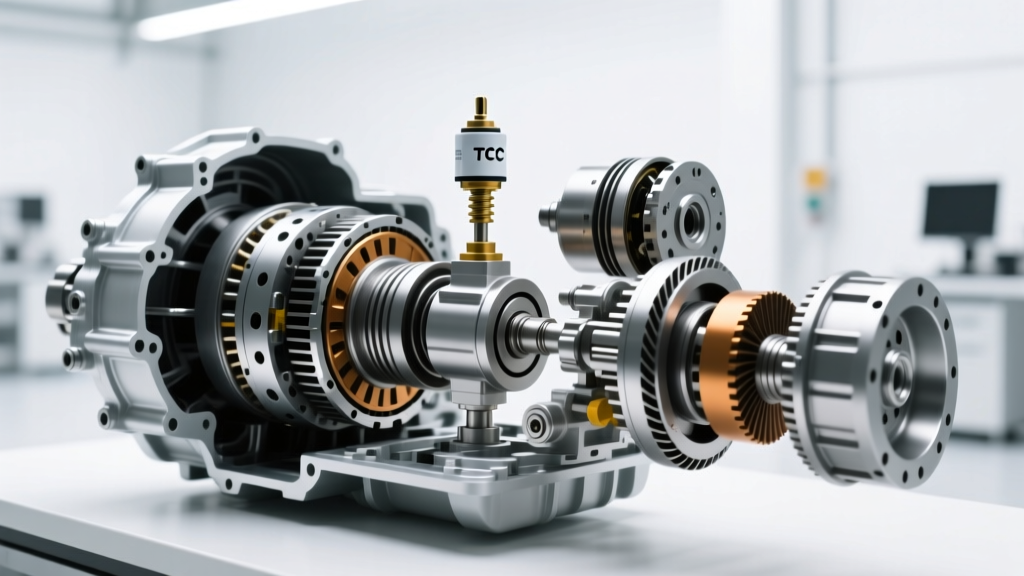
In modern automatic transmissions, such as the GM 6L80 or the ZF 8HP series, the torque converter features a Torque Converter Clutch (TCC). When the TCC solenoid engages, it locks the turbine to the impeller, effectively turning the fluid coupling into a direct mechanical clutch. This eliminates slip, reduces heat generation, and improves fuel economy at highway speeds. Understanding this baseline is critical before we transition to the powersports realm, where the term 'torque converter' is colloquially—though technically incorrectly—used to describe a belt-driven Continuously Variable Transmission (CVT).
Small-Engine Drivetrains: Centrifugal Clutch vs. CVT 'Torque Converter'
In the go-kart, mini bike, and small off-road vehicle community, a 'torque converter' actually refers to a variable-pitch belt drive system, with the Comet/TAV2 40 series being the industry standard for engines ranging from 4 HP to 12 HP (such as the Honda GX200 or Predator 212). Comparing a standard centrifugal clutch to a 40 series CVT reveals distinct operational differences:
- Centrifugal Clutch: Utilizes a fixed gear ratio. Engagement occurs at a specific RPM (typically 2,200 to 2,500 RPM) when clutch shoes are thrown outward by centrifugal force against a friction drum. It provides no torque multiplication and relies entirely on the engine's low-end torque to accelerate the vehicle.
- 40 Series CVT (Torque Converter): Utilizes a drive clutch (attached to the crankshaft) and a driven pulley (attached to the transmission or axle). As engine RPM increases, the drive clutch pulley closes, forcing the belt outward and changing the effective gear ratio. This provides a massive low-end torque multiplication (often 2.7:1) before shifting into a 1:1 overdrive ratio at high RPMs.
While a centrifugal clutch is simpler and cheaper, the 40 series CVT dramatically improves hill-climbing ability, reduces clutch burnout in stop-and-go scenarios, and extends engine life by keeping the motor in its optimal power band.
40 Series Torque Converter Belt Size Chart & Application Guide
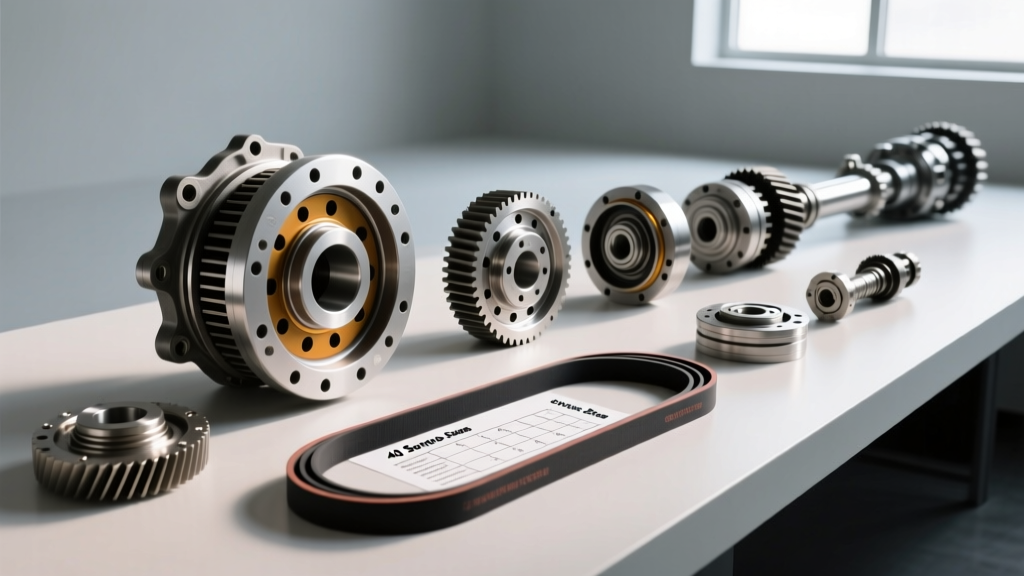
Selecting the correct drive belt is the most critical maintenance task for any 40 series CVT setup. Using an incorrectly sized belt will result in immediate slippage, failure to engage, or catastrophic belt shredding. Below is the definitive 40 series torque converter belt size chart for standard asymmetric 3/4-inch CVT systems.
| Belt Part Number | Outside Circumference (O.C.) | Top Width | Angle | Primary Application / Engine Spacing |
|---|---|---|---|---|
| 203577A | 25-1/4 inches | 3/4 inch | 18° / 2.5° | Mini Bikes / Short Wheelbase (4-6 HP) |
| 203578A | 30-3/8 inches | 3/4 inch | 18° / 2.5° | Standard Go-Karts (6-8 HP) |
| 203579A | 35-3/8 inches | 3/4 inch | 18° / 2.5° | Medium Karts / Buggies (8-10 HP) |
| 203580A | 40-3/8 inches | 3/4 inch | 18° / 2.5° | Large Buggies / LWB Karts (10-12 HP) |
| 203581A | 45-3/8 inches | 3/4 inch | 18° / 2.5° | Custom Chassis / Extended Swings |
Reading the Chart: Belt Anatomy and 2026 Compound Evolution
The 40 series belt is highly specialized. It features an asymmetric profile: one side of the belt is cut at an 18-degree angle, while the other is cut at a 2.5-degree angle. This matches the asymmetric sheaves of the Comet/TAV2 pulleys. As of 2026, premium aftermarket manufacturers have introduced Kevlar-reinforced cords and high-temperature aramid fibers to these belts, increasing tensile strength by up to 30% compared to traditional polyester-corded belts. Always ensure the flat side of the belt faces outward, and the angled sides seat deeply into the pulley sheaves.
Diagnostic Symptoms: Identifying Drivetrain Failures
Whether you are diagnosing a slipping TCC in a 2024 Silverado equipped with a 10L90E, or a bogging go-kart running a Predator 212, recognizing the symptoms of drivetrain failure is paramount. Because this guide bridges both domains, we will break down the diagnostic symptoms for both automotive and powersports applications.
Automotive TCC and Fluid Coupling Failures
In full-size vehicles, torque converter issues usually manifest through the transmission control module (TCM) or as physical drivability complaints. Common symptoms include:
- DTC P0741 (Torque Converter Clutch Circuit Performance/Stuck Off): The TCM commands the TCC solenoid to lock, but the actual slip speed remains higher than the threshold (usually >100 RPM). This is often caused by degraded friction material on the TCC piston or a failing apply valve in the valve body.
- Highway Shudder (40-55 MPH): A rhythmic vibration felt through the chassis during light throttle application. This indicates the TCC is attempting to lock but slipping rapidly due to contaminated fluid (loss of Dexron VI or specific OEM fluid friction modifiers) or a warped TCC apply plate.
- Stall Speed Abnormalities: If a vehicle's stall speed during a brake-torque test is significantly higher than the factory specification (e.g., 2,800 RPM instead of 1,800 RPM), the internal stator one-way clutch has likely failed, or the impeller fins are damaged.
Powersports CVT Slippage and Pulley Bind
For the 40 series CVT systems, the symptoms are entirely mechanical and acoustic:
- High-RPM Bogging / Slipping: The engine revs freely, but the kart does not accelerate proportionally. This is the hallmark of a glazed drive belt, a belt that has lost its top width due to wear, or insufficient tension on the driven pulley spring.
- Failure to Return to Idle (Creeping): The vehicle continues to move forward even when the throttle is released. This indicates the drive clutch is binding on the crankshaft. The most common culprit is the degradation of the internal ramp buttons, lack of high-temperature grease (such as Alco 205D), or a rusted crankshaft taper.
- Squealing at Engagement: A high-pitched squeal when taking off from a dead stop usually points to a misaligned belt, worn driven pulley bushings, or a belt that is too long for the specific chassis application.
Maintenance, Torque Specs, and Replacement Costs
The financial and mechanical investment required to maintain these systems varies wildly based on the application. Below is a comparative breakdown of maintenance protocols, torque specifications, and real-world replacement costs.
Automotive Torque Converter Replacement
Replacing an automotive torque converter requires transmission removal. For a common application like the GM 6L80E, the flexplate-to-torque converter bolts must be torqued to exactly 46 lb-ft (62 Nm), and the transmission cooler lines must be flushed to prevent old TCC friction material from destroying the new unit. The TCC apply solenoid itself is a relatively inexpensive part ($45-$85), but the labor to drop the transmission pushes the total repair cost to $1,200 - $1,800 at an independent shop. If the entire torque converter requires replacement due to internal stator failure, expect to pay $400 - $700 for a remanufactured unit from suppliers like Sonnax or Precision Industries, bringing the total job closer to $2,000.
40 Series CVT Maintenance and Overhaul
Maintaining a 40 series CVT is highly accessible and requires basic hand tools. The most critical torque specification to remember is the drive clutch crankshaft bolt. On a standard 3/4-inch crankshaft (like the Honda GX200 or Predator 212), the retaining bolt must be torqued to 40 - 47 lb-ft. Warning: Always use a dedicated clutch holding tool or a heavy-duty strap wrench; using an impact wrench without securing the clutch can strip the crankshaft threads or shatter the cast aluminum drive hub.
Replacement costs for the 40 series are remarkably low. A high-quality asymmetric replacement belt from the chart above typically costs between $35 and $65. A complete overhaul kit—including a new drive clutch, driven pulley, belt, and mounting hardware—ranges from $160 to $240. Routine maintenance involves disassembling the drive clutch every 50 hours of operation, cleaning the sheaves with brake cleaner, and applying a thin layer of specialized CVT grease to the spider gear and ramp buttons.
Final Diagnostic Takeaways
Whether you are scanning for a P0741 code on a modern ZF 8HP transmission or inspecting the asymmetric wear pattern on a 30-3/8 inch go-kart belt, the core principle remains the same: efficient power transfer relies on precise clearances, correct friction materials, and proper alignment. By referencing the correct 40 series torque converter belt size chart and understanding the mechanical limits of your specific drivetrain, you can eliminate slip, maximize torque multiplication, and ensure long-term reliability across both automotive and powersports platforms. For further reading on automatic transmission hydraulic circuits and valve body diagnostics, consult the technical archives at Transmission Digest.