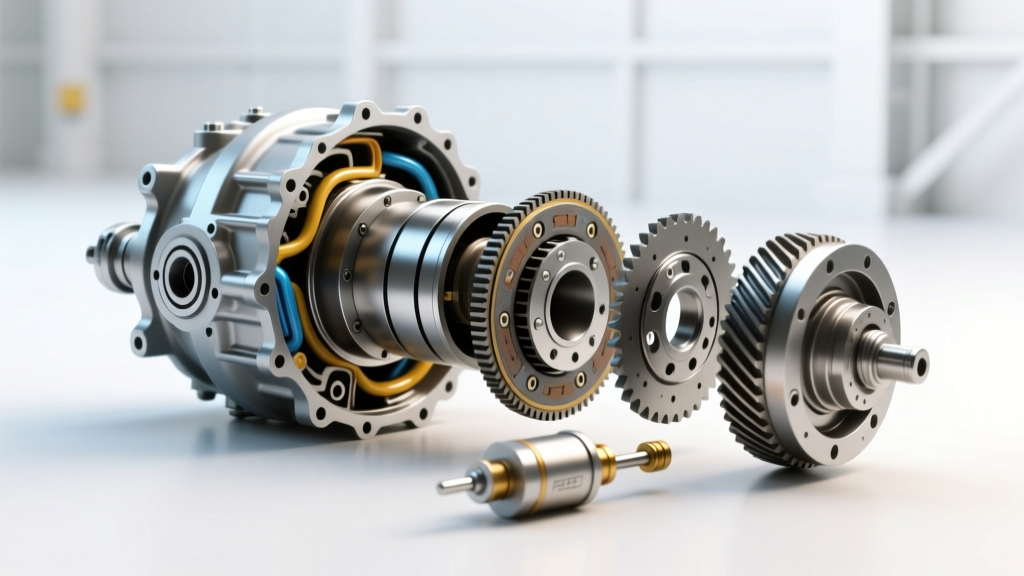
Why a Torque Converter Selection Calculator Dictates Your Replacement Cost
When replacing a failing torque converter, guessing the right stall speed or lockup strategy is a recipe for drivetrain destruction. In 2026, modern automatic transmissions like the GM 6L80, Ford 10R80, and ZF 8HP rely on highly calibrated Torque Converter Clutch (TCC) apply maps. Using a torque converter selection calculator is no longer just a tool for drag racers; it is a critical diagnostic and replacement step for daily drivers, tow rigs, and off-road builds. By inputting your engine’s torque curve, vehicle weight, final drive ratio, and tire diameter, a selection calculator ensures TCC lockup occurs in the correct RPM window, preventing catastrophic shudder, overheating, and premature transmission failure.
The output of this calculator directly dictates your replacement cost. If the calculator determines your modified tow rig requires a multi-disc billet lockup converter to handle 600 lb-ft of torque, you are instantly moved from a standard $350 OEM remanufactured unit to a $1,200+ performance unit. Below, we break down the exact 2026 replacement costs, model-specific part numbers, and the hidden expenses of torque converter swaps.
2026 Model-Specific Torque Converter Replacement Cost Breakdown
Replacement costs vary wildly based on the transmission architecture and whether you follow the calculator’s recommendation for an OEM-equivalent or an upgraded billet stator unit. Labor rates in 2026 average $135 to $185 per hour, and specialized Ultra Low Viscosity (ULV) fluids have pushed fluid exchange costs higher.
| Transmission Model | Common Vehicles | OEM Part Number | OEM / Reman Cost | Billet / Multi-Disc Cost | Book Labor Time | Total Est. Cost (2026) |
|---|---|---|---|---|---|---|
| GM 6L80 / 6L90 | Silverado 1500, Camaro SS, Tahoe | GM 24276342 / 24277582 | $350 - $480 | $850 - $1,200 | 5.2 - 6.5 hrs | $950 - $2,100 |
| Ford 10R80 | F-150 (3.5L EcoBoost), Mustang GT | Ford JL3Z-7902-C | $550 - $700 | $1,100 - $1,600 | 6.8 - 8.0 hrs | $1,400 - $2,800 |
| ZF 8HP70 / 8HP75 | Ram 1500 (5.7L HEMI), BMW F-Series | ZF 1060.298.013 | $650 - $850 | $1,300 - $1,800 | 7.5 - 9.2 hrs | $1,600 - $3,200 |
Hidden Costs: Fluids, Machining, and Adaptive Relearns
The parts and labor are only the beginning. When utilizing a torque converter selection calculator to upgrade to a higher stall or multi-disc lockup, you must account for the supporting services:
- Ultra Low Viscosity (ULV) Fluids: Modern 8 and 10-speed transmissions require 11 to 14 quarts of specialized fluid (e.g., GM DEXRON ULV, Ford MERCON ULV, or ZF LifeguardFluid 8). At $14 to $19 per quart in 2026, expect to spend $175 to $260 on fluid alone.
- Flexplate Resurfacing: If your old converter suffered from severe TCC shudder, the flexplate friction surface is likely scored. Machining costs $85 to $150, while a new OEM flexplate ranges from $120 to $280.
- Bidirectional Scan Tool Relearns: Transmissions like the ZF 8HP and Ford 10R80 require a TCC adaptive pressure relearn after installation. If you do not own an advanced tool like an Autel MaxiSys or Snap-on Zeus, expect a dealership or specialized shop to charge $120 to $180 for this programming step.
Diagnosing Before You Buy: Is It Really the Torque Converter?
Before punching your vehicle specs into a selection calculator and ordering a new unit, verify the symptoms. Misdiagnosing a valve body issue as a torque converter failure is a costly mistake. According to diagnostic frameworks published by Transmission Digest, TCC-related failures typically present with specific OBD-II codes and physical behaviors.
Common Torque Converter Failure Symptoms
- TCC Shudder (30-50 MPH): A rhythmic vibrating sensation felt through the chassis, often mimicking driving over rumble strips. This indicates the torque converter clutch lining is degraded, or the apply pressure is insufficient due to worn TCC regulator valves in the valve body.
- P0741 (TCC System Stuck Off): The PCM commands the TCC solenoid to lock, but the actual RPM slip remains high. This can be a failed converter clutch piston seal or a leaking stator support shaft.
- P2757 (TCC Pressure Control Solenoid): Often points to an electrical fault in the TEHCM (Transmission Electro-Hydraulic Control Module) on GM 6L80s, rather than the converter itself.
- Transmission Overheating (P0218): If the stator one-way clutch is failing and freewheeling in both directions, the converter cannot multiply torque, generating massive internal heat and glazing the fluid.
Expert Tip: Always perform a stall test and a TCC slip test using live data before removal. If the TCC slip RPMs bounce erratically while the commanded slip is steady at 20 RPM, the converter friction material is failing. For deeper hydraulic diagnostics, consult the technical bulletins available via Sonnax Tech Resources.
Step-by-Step Installation Torque Specs & Clearances
Whether you selected a stock replacement via RockAuto or a custom billet unit based on your calculator results, improper installation will destroy the new converter and the transmission oil pump within miles. Follow these exact 2026 industry-standard specifications:
1. Pilot Clearance and Endplay
Before bolting the transmission to the engine block, measure the clearance between the torque converter pilot and the flexplate. You must have a minimum of 1/8-inch (0.125") to 3/16-inch (0.187") of clearance. If the converter is pulled tight to the flexplate by the bolts, it will bottom out in the oil pump gear, cracking the pump housing the moment you start the engine.
2. Flexplate Runout
Mount a dial indicator to the engine block and measure the flexplate runout. The maximum allowable runout is 0.015 inches. Excessive runout will cause the TCC piston to apply unevenly, resulting in immediate shudder and premature lockup clutch failure.
3. Critical Torque Specifications
Always use new hardware and threadlocker where specified. Torque values vary slightly by manufacturer, but these are the baseline specs for the most common V8 applications:
- Torque Converter-to-Flexplate Bolts (M10 x 1.5): 35 lb-ft (47 Nm). Apply a medium-strength threadlocker (e.g., Loctite 243) or high-strength (Loctite 272) if specified by the OEM. Some Ford applications require a torque-to-yield angle of an additional 60 degrees after reaching 35 lb-ft.
- Transmission Bellhousing-to-Engine Block: 50 lb-ft (68 Nm) for standard M12 bolts. Ensure all dowel pins are perfectly seated to maintain concentricity between the crankshaft and the transmission input shaft.
- Transmission Crossmember Mounts: 65 lb-ft (88 Nm). Ensure the transmission is properly supported so the mount is not pre-loaded before tightening.
Final Thoughts on Drivetrain Calibration
The era of simply "swapping in a new torque converter" is over. Modern transmissions are deeply integrated with the vehicle’s CAN bus network, and the TCC apply strategy is mapped to the exact friction coefficient of the factory converter. By leveraging a torque converter selection calculator, you ensure the stall speed matches your engine’s peak torque band, and the lockup profile aligns with your vehicle’s weight and gearing. Factor in the true 2026 costs of ULV fluids, adaptive relearns, and precision machining, and you will execute a repair that lasts the lifetime of the vehicle.