The Anatomy of a Torque Converter Seal Leak
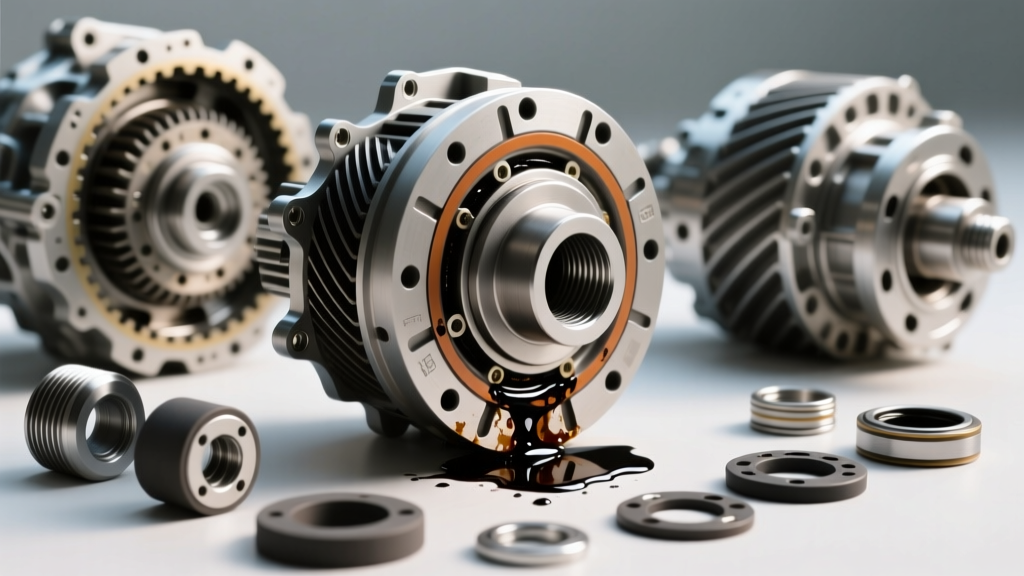
A torque converter seal leak is one of the most common, yet frequently misdiagnosed, drivetrain failures in modern automatic transmissions. Often referred to as the front pump seal, input shaft seal, or hub seal, this critical component sits at the front of the transmission case where the torque converter hub enters the stator support and oil pump. When this seal fails, automatic transmission fluid (ATF) rapidly empties through the bellhousing weep hole, leading to catastrophic internal damage if the vehicle is driven.
According to Sonnax technical bulletins, the root cause of a torque converter seal leak is rarely the seal itself. In high-torque applications like the GM 6L80/6L90 or the ZF 8HP series, the seal lip rides directly on the torque converter hub. Over time, microscopic friction, overheating, and inadequate lubrication cause the hardened steel or polished hub surface to wear, creating a groove. Installing a new OEM seal over a scored hub guarantees a repeat leak within 500 miles. Furthermore, a worn front pump bushing allows the converter hub to orbit off-center, tearing the seal lip from the inside out.
Diagnosing the Source: Pump Bushing vs. Seal Lip Failure
Before purchasing replacement parts, accurate diagnosis is mandatory. A simple visual inspection of the bellhousing can reveal the nature of the failure:
- Clean, Red/Pink Fluid Weeping: Indicates early seal lip degradation or a dry installation (failure to lubricate the seal lip during assembly).
- Burnt, Dark Fluid with Metallic Glitter: Points to front pump bushing failure. The bushing has disintegrated, causing the converter hub to wobble and destroy the seal. A full transmission teardown and pump rebuild are required.
- Fluid Spraying from the Flexplate Inspection Cover: Often mistaken for a seal leak, but may actually be a cracked torque converter weld or a leaking converter drain plug (if equipped).
2026 Buyer's Guide: Seals, Sleeves, and Repair Kits
When addressing a torque converter seal leak, choosing the right hardware is the difference between a permanent fix and a recurring nightmare. Below is a comparison of the top repair solutions for the most common 8-speed and 6-speed automatic transmissions on the road today.
| Transmission Model | Component / Kit | Part Number | Estimated Price (2026) | Expert Verdict |
|---|---|---|---|---|
| GM 6L80 / 6L90 | OEM Front Pump Seal | 24238931 | $14 - $18 | Good for low-mileage units with pristine hubs. Do not use if hub scoring is visible. |
| GM 6L80 / 6L90 | Sonnax Heavy-Duty Seal & Sleeve Kit | 57311-01K | $38 - $45 | Best Overall. Includes a machined steel sleeve that presses over the worn converter hub, providing a perfect new sealing surface. |
| ZF 8HP45 / 8HP70 | OEM ZF Pump Seal | 0734.327.103 | $22 - $28 | Required for ZF units. Must be paired with a new molded rubber pump O-ring (0734.327.104). |
| Universal / Custom | SKF / Timken High-Temp Viton Seal | Varies by Hub OD | $25 - $40 | Excellent for high-stall aftermarket converters subjected to extreme drag-racing heat. |
The Hidden Cost of Low Fluid: TCC Shudder and Clutch Glazing
When a torque converter seal leak occurs, the transmission fluid level drops rapidly. The Torque Converter Clutch (TCC) relies on precise hydraulic pressure to apply smoothly. Low fluid volume introduces air into the valve body and TCC apply circuits, resulting in severe TCC shudder. This micro-slip glazes the friction material on the clutch packs and contaminates the entire fluid system with microscopic friction debris. Simply replacing the seal and topping off the fluid is insufficient; a comprehensive transmission flush is mandatory to remove the suspended debris and restore TCC lockup integrity.
2026 Buyer's Guide: Flushing Equipment and Fluids
Not all flushes are created equal. The Automatic Transmission Rebuilders Association (ATRA) strictly advises against aggressive chemical flushing solvents on modern transmissions with sensitive mechatronic units and solenoids. Instead, a volume-based fluid exchange is required.
Machine Flush vs. DIY Cooler Line Flush
Professional shops utilize dialysis-style flush machines (like the BG PF7 or Motorvac) that use the transmission's own internal pump to push out old fluid while simultaneously introducing new fluid at equal pressure. This prevents the mechatronic unit from experiencing pressure drops that could trigger solenoid fault codes.
For the DIY enthusiast, a cooler-line flush is the safest and most effective method. By disconnecting the return line at the radiator or auxiliary cooler, you can cycle the transmission in park or neutral (with the rear wheels safely elevated) to pump out old fluid into a catch pan, while adding new fluid into the dipstick or fill tube at the exact same rate.
Fluid Selection Matrix
- GM 6L80/6L90: Requires Dexron VI or the newer Dexron ULV (Ultra Low Viscosity) for 2020+ applications. Capacity: 11.2 Quarts (Total), ~6.0 Quarts (Pan Drop).
- ZF 8HP Series: Requires ZF LifeguardFluid 8 (or Shell Spirax S6 ATF X). Do not substitute with generic multi-vehicle ATFs, as the ZF mechatronic adaptation values rely on the exact friction modifiers of Lifeguard 8. Capacity: 8.5 to 9.5 Liters (Total), ~5.5 Liters (Pan Drop).
Maintenance Protocol: Flushing After a Seal Failure
Once the torque converter seal leak is repaired and the transmission is reinstalled, follow this precise flushing and fill protocol to ensure longevity and proper TCC operation.
- Pre-Fill the Torque Converter: If the converter was drained or replaced, pre-fill it with 2 to 3 quarts of the specified ATF through the stator hub before mating it to the flexplate. This prevents a dry-start that can instantly cavitate the oil pump and score the bushings.
- Initial Fill and Prime: Install the transmission, fill the pan to the initial specification, and start the engine. Allow the engine to idle for 3 minutes to prime the oil pump and fill the cooler circuits.
- Cycle the Valves: With the foot firmly on the brake, shift the transmission through every gear position (P-R-N-D-L), pausing for 3 seconds in each. This fills the clutch drums and valve body accumulators.
- Execute the Cooler Line Flush: Disconnect the cooler return line. Run the engine at 1,200 RPM while adding new fluid to the fill port. Continue until the fluid exiting the cooler line is bright red and matches the new fluid color. For a 6L80, expect to use 12-14 quarts total to achieve a 95% fluid exchange.
- Temperature-Dependent Level Check: Modern transmissions do not use a traditional 'Hot/Cold' dipstick. You must use a bi-directional OBD2 scanner to monitor the Transmission Fluid Temperature (TFT).
- GM 6L80: Check fluid level with TFT between 86°F and 122°F (30°C - 50°C). Fluid should drip steadily from the level check plug.
- ZF 8HP: Check fluid level with TFT between 30°C and 50°C. The vehicle must be perfectly level, and the engine must be idling. Refer to ZF Aftermarket guidelines for exact mechatronic adaptation resets.
Torque Specs & Reinstallation Best Practices
A torque converter seal leak repair requires dropping the transmission. Proper reassembly torque specs are critical to prevent binding, which causes off-center rotation and immediate seal destruction.
- Torque Converter to Flexplate (GM 6L80): M10 bolts must be torqued to 22 lb-ft, plus an additional 45-degree turn. Ensure the converter is fully seated into the pump gears (usually requiring three distinct 'clunks' or drops) before bolting to the engine block.
- Torque Converter to Flexplate (ZF 8HP): M8 bolts are torqued to 25 Nm, plus a 90-degree turn. Use new OEM stretch bolts; reusing old fasteners risks shearing under high-torque lockup conditions.
- Bellhousing to Engine Block: Typically 37 lb-ft (GM) or 48 Nm (ZF). Tighten in a crisscross pattern to prevent case distortion.
Cost Breakdown: DIY vs. Professional Repair (2026 Estimates)
Addressing a torque converter seal leak is labor-intensive. Because the transmission must be completely removed from the vehicle, the bulk of the cost is tied to shop labor rates, which average $150 to $190 per hour in 2026.
| Repair Scenario | Parts & Fluids | Labor | Total Estimated Cost |
|---|---|---|---|
| DIY Seal & Sleeve Replacement + DIY Flush | $120 - $160 | $0 (8-12 Hours) | $120 - $160 |
| Independent Shop (Seal, Fluid, Machine Flush) | $250 - $350 | $750 - $1,100 | $1,000 - $1,450 |
| Dealership (OEM Seal, OEM Fluid, Flush) | $400 - $550 | $1,100 - $1,500 | $1,500 - $2,050 |
Expert Verdict & Preventative Maintenance
A torque converter seal leak is a mechanical failure that demands a mechanical solution. Never rely on 'stop-leak' additives; they swell the rubber seals temporarily but will degrade the precise friction modifiers required for TCC lockup, ultimately leading to transmission failure. If your vehicle has over 80,000 miles and exhibits a front seal leak, invest in a hub-sleeve kit (like the Sonnax 57311-01K for GM applications) rather than a standard OEM seal. Pair this with a thorough, volume-based cooler line flush using OEM-specified fluids, and your transmission will reliably handle torque delivery for another 100,000 miles.