The Core Question: Do Manual Transmissions Have a Torque Converter?
When enthusiasts and daily drivers alike begin diagnosing drivetrain heat issues, a fundamental question often arises: do manual transmissions have a torque converter? The short answer is no. Manual transmissions rely on a dry friction clutch assembly—comprising a flywheel, clutch disc, pressure plate, and release bearing—to mechanically couple the engine's crankshaft to the transmission input shaft. When the clutch pedal is released, the connection is rigid, resulting in zero slippage and minimal parasitic heat generation during cruising.
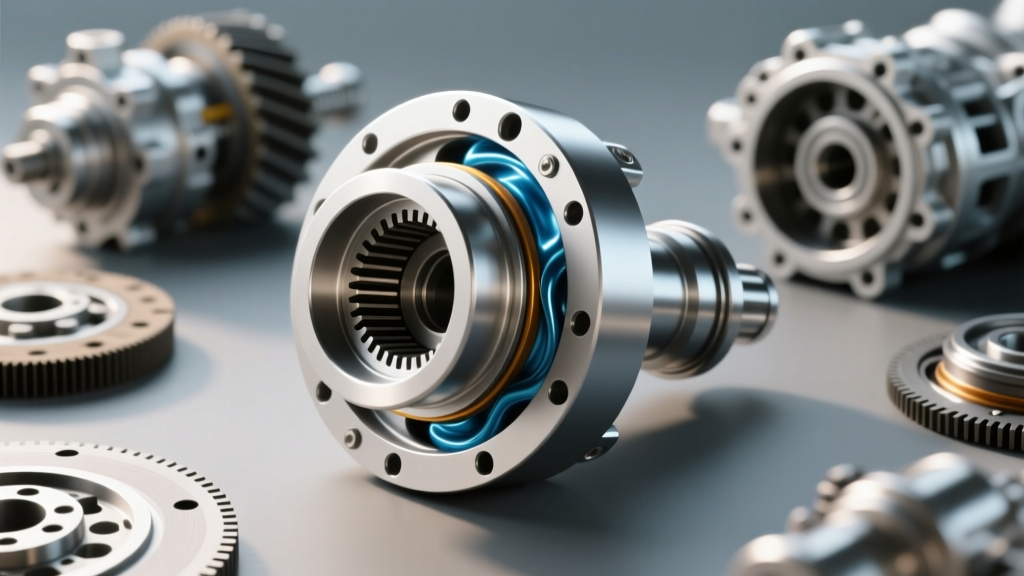
In contrast, automatic transmissions utilize a hydrodynamic fluid coupling known as a torque converter. This device uses transmission fluid (ATF) to transfer power from the engine to the transmission via an impeller, turbine, and stator. While this allows the vehicle to stop without stalling the engine, the fluid shear inherent in a torque converter generates immense amounts of heat, especially when the Torque Converter Clutch (TCC) fails to lock up. As we navigate the automotive landscape in 2026, understanding the thermal dynamics of these two systems is critical for anyone towing, tracking, or modifying their vehicle.
Heat Dynamics: Fluid Coupling vs. Friction Clutches
To understand torque converter overheating problems, we must compare how manuals and automatics handle thermal loads. In a manual transmission, heat is primarily generated only during clutch engagement (slipping the clutch to start from a stop or during aggressive track launches). Once engaged, the mechanical lock means heat generation drops to near zero.
Automatic transmissions, however, are in a constant battle with thermodynamics. Before the TCC locks, the torque converter operates as a fluid coupling. The impeller spins the fluid, which drives the turbine. The difference in speed between the impeller and turbine (slip) is converted directly into heat. If you are crawling in traffic, towing a heavy trailer up a grade, or driving a vehicle with a failing TCC solenoid, the ATF temperature can spike rapidly, leading to catastrophic transmission failure.
Torque Converter Overheating Problems: The Automatic Achilles Heel
Torque converter overheating problems are the leading cause of automatic transmission mortality. When ATF exceeds its thermal limits, the fluid oxidizes, varnish forms on the valve body, and the friction materials on the TCC and clutch packs disintegrate. Let's break down the primary culprits behind torque converter overheating:
- TCC Solenoid and PWM Failures: In ubiquitous transmissions like the GM 4L60E and 6L80, the Pulse Width Modulated (PWM) TCC solenoid controls lockup. If the solenoid clogs with debris or fails electrically, the TCC cannot achieve a 1:1 lockup ratio, resulting in continuous slip and massive heat.
- Stator One-Way Clutch Failure: The stator multiplies torque at low speeds. If its internal one-way clutch seizes or freewheels incorrectly, the converter loses efficiency, generating severe heat even at highway speeds.
- Low Line Pressure: In modern marvels like the ZF 8HP (found in BMW, Audi, and Dodge vehicles), wear in the mechatronic sleeve or valve body can cause low hydraulic line pressure. This prevents the TCC from clamping down hard enough, causing micro-slip that cooks the ZF Lifeguard 8 fluid.
Critical ATF Temperature Thresholds
Monitoring your transmission fluid temperature is non-negotiable for automatic owners. The table below outlines the thermal danger zones for modern synthetic ATFs like Dexron VI and Mercon LV.
| ATF Temperature | Fluid State & Transmission Impact | Action Required |
|---|---|---|
| 175°F - 195°F | Optimal operating range. Fluid provides maximum shear stability and lubrication. | Normal operation. |
| 200°F - 220°F | Fluid begins to oxidize. TCC friction material wear accelerates. Fluid life is halved. | Reduce load; verify cooler flow. |
| 225°F - 250°F | Severe varnishing. Clutch packs begin to slip. Seals harden and crack. | Pull over immediately. Fluid change required. |
| 260°F+ | Total fluid breakdown. Transmission failure is imminent or actively occurring. | Shut down engine. Tow to shop. |
2026 Buyer’s Guide: Upgrades to Prevent Torque Converter Overheating
If you are running an automatic and pushing the limits of your drivetrain, the factory cooling system is rarely adequate. Upgrading your cooling infrastructure and internal components is the best defense against torque converter overheating problems. Here is our expert buyer's guide to the best upgrades available.
Heavy-Duty Transmission Coolers
Bypassing or supplementing the factory radiator-integrated transmission cooler is the most cost-effective way to drop ATF temps by 30°F to 50°F. According to cooling experts at Hayden Automotive, selecting a cooler with the correct Gross Vehicle Weight Rating (GVWR) and physical footprint is crucial.
- Hayden 679 Rapid-Cool Plate-and-Fin: Ideal for light trucks and SUVs (e.g., Silverado 1500, F-150). Rated for up to 30,000 lbs GVWR. Price: ~$75.
- Derale 15850 Series 8000 Tube-and-Fin: Features turbulators inside the tubes to agitate the fluid, maximizing heat transfer. Perfect for off-road vehicles where airflow is intermittent. Price: ~$90.
- Mishimoto MMTC-F2D-03SL (6.7L Powerstroke): A direct-fit, stacked-plate behemoth for heavy-duty towing. Stacked-plate designs offer the highest heat rejection but require high fluid pressure to overcome flow restriction. Price: ~$380.
High-Performance Fluids & TCC Upgrades
Fluid choice dictates shear stability under high heat. For GM 6L80/8L90 applications, sticking to OEM Dexron VI or upgrading to Amsoil Signature Series Multi-Vehicle ATF provides superior resistance to thermal breakdown. For ZF 8HP transmissions, never deviate from ZF Lifeguard 8 or a licensed equivalent; the TCC friction material is specifically matched to this fluid's friction modifiers.
If you are rebuilding a transmission for high-horsepower applications, consult the engineering data at Sonnax. Upgrading to a billet torque converter with a multi-disc TCC (like the Circle D 3000 Series or Precision Industries) distributes the clamping force across multiple friction surfaces, eliminating micro-slip and drastically reducing heat generation.
Diagnostic Protocol: Measuring TCC Slip and Heat
Before throwing parts at a cooling problem, verify if your torque converter is actually the source of the heat. Modern OBD2 networks allow you to monitor TCC slip in real-time.
- Connect an advanced scan tool or an OBD2 Bluetooth dongle paired with an app like Torque Pro or HP Tuners VCM Scanner.
- Pull up the Engine RPM and Turbine Speed (or Transmission Input Shaft Speed) PIDs.
- Drive the vehicle at a steady highway speed (e.g., 65 MPH in top gear) where the TCC is commanded LOCKED.
- Calculate the difference between Engine RPM and Turbine Speed. A healthy, locked TCC should show a slip of less than 20 RPM.
Expert Insight: If your scan tool shows 100+ RPM of slip while the TCC is commanded to 100% duty cycle (locked), your torque converter clutch is mechanically worn out, or you have a severe cross-leak in the valve body. No amount of auxiliary cooling will fix this; the converter must be replaced.
Installation Torque Specs & Best Practices
When installing aftermarket coolers or replacing lines, precision matters. Over-tightening can crack aluminum housings, while under-tightening leads to aerated fluid and instant overheating. For GM 4L60E and 6L80 transmissions, the cooler line nuts at the transmission case require exactly 18 lb-ft (25 Nm) of torque. Always use a backup wrench on the adapter fitting to prevent twisting the internal case threads. Furthermore, ensure your cooler lines are routed away from exhaust manifolds, as radiant heat can easily add 20°F to your ATF before it even reaches the cooler.
Final Verdict: Choosing the Right Drivetrain Cooling Strategy
So, do manual transmissions have a torque converter? No, and that mechanical simplicity saves them from the hydrodynamic heat generation that plagues automatics. However, automatic transmissions offer unmatched drivability and torque multiplication, provided you manage the thermal byproducts. By understanding the root causes of torque converter overheating problems—ranging from failed PWM solenoids to inadequate factory cooling—you can make informed purchasing decisions. Whether you are bolting on a $90 Derale cooler for a daily driver or investing in a billet multi-disc converter for a 1,000-horsepower build, prioritizing thermal management is the key to automatic transmission longevity in 2026 and beyond.