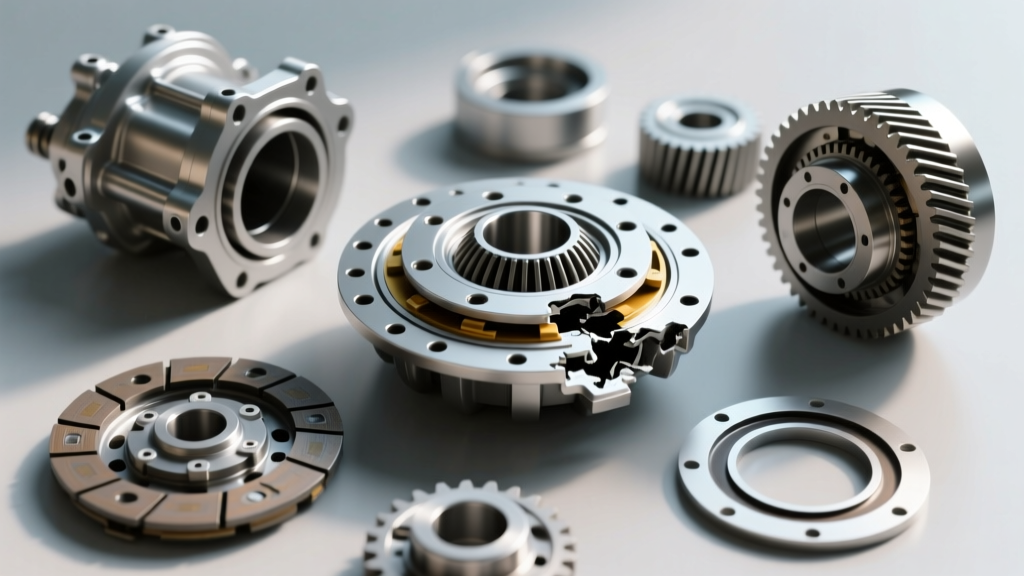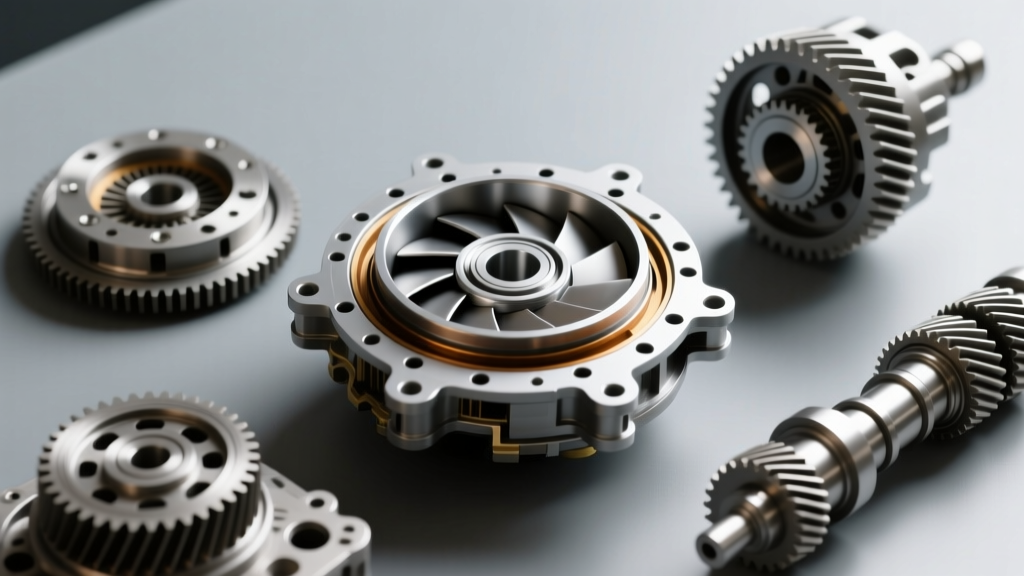
If you have ever felt your car vibrate or 'shudder' while cruising at highway speeds, you might have been told to try a torque converter shudder additive. But before you pour a $20 bottle of chemicals into your transmission, it is crucial to understand the mechanical marvel that is causing the issue. Understanding how torque converters work is the only way to diagnose whether a chemical friction modifier will save your drivetrain or if you are facing a costly mechanical failure.
The Anatomy of a Torque Converter: A Beginner’s Guide
Situated between your engine's flexplate and the transmission's input shaft, the torque converter is a donut-shaped fluid coupling. Unlike a manual transmission that uses a solid friction clutch disc, an automatic transmission relies on pressurized hydraulic fluid to transfer power. Inside the sealed aluminum housing, three primary components dictate your vehicle's acceleration and cruising behavior.
1. The Impeller (The Pump)
The impeller is bolted directly to the converter housing, which spins at the exact same speed as your engine. As it rotates, its internal vanes fling transmission fluid outward using centrifugal force. Think of it like a high-powered fan blowing air across a room. During heavy acceleration, the fluid dynamics inside the impeller generate immense hydraulic pressure, which is why the torque converter can act as an auxiliary transmission fluid pump.
2. The Turbine (The Output)
Sitting directly across from the impeller is the turbine, which is splined to the transmission's input shaft. When the fluid thrown by the impeller strikes the curved vanes of the turbine, it forces the turbine to spin, thereby turning the wheels of your car. If the impeller is a fan plugged into the wall, the turbine is an unplugged fan sitting across from it, spinning simply from the wind generated by the first fan. This fluid coupling allows the engine to keep running while the vehicle is completely stopped.
3. The Stator (The Multiplier)
Located in the center between the impeller and turbine, the stator is mounted on a one-way roller clutch. Its job is to redirect the fluid returning from the turbine back into the impeller. This redirection multiplies engine torque by up to 2.5 times during initial acceleration from a stop, which is why automatic vehicles can launch so smoothly without stalling the engine. Once the turbine speed catches up to the impeller speed, the stator freewheels to prevent fluid restriction.
The Torque Converter Clutch (TCC) and the Birth of Shudder
While fluid coupling is excellent for stop-and-go traffic, it creates 'slip.' Slip generates immense heat—sometimes exceeding 400°F inside the converter core—and robs your vehicle of fuel economy. To solve this, modern transmissions (like the ubiquitous GM 6L80, Ford 10R80, and ZF 8HP) utilize a Torque Converter Clutch (TCC).
When you reach cruising speeds (usually between 35 and 50 mph), the transmission's valve body routes pressurized fluid to apply a friction-lined clutch disc inside the converter. This physically locks the impeller and turbine together, creating a 1:1 mechanical connection. This is known as 'lockup.'
Why Does Shudder Happen?
To make lockup imperceptible to the driver, modern Engine Control Modules (ECMs) use a strategy called controlled slip. Instead of locking up 100%, the TCC is commanded by a Pulse Width Modulation (PWM) solenoid to slip by roughly 20 to 40 RPMs to absorb engine harmonics. Over time, the friction material on the TCC disc wears, or the automatic transmission fluid (ATF) loses its specialized friction-modifying properties due to extreme thermal cycling. When the fluid can no longer maintain a microscopic, stable slip, the clutch rapidly grabs and releases. This rapid oscillation translates through the drivetrain as a rhythmic vibration known as TCC shudder.
Evaluating the Torque Converter Shudder Additive
This brings us to the chemical solution: the torque converter shudder additive. Products like LUBEGARD® Instant Shudder Fixx (Part #40102) or Dr. Tranny Shudder Fixx are heavily marketed to cure this exact symptom. But how do they interact with the mechanics we just discussed?
These additives are highly concentrated friction modifiers. They contain long-chain organic molecules (often derived from fatty acids or synthetic esters) that bond to the microscopic pores of the TCC friction lining. By altering the surface tension and the coefficient of friction, the additive restores the fluid's ability to maintain that smooth, 20-RPM controlled slip, eliminating the grab-and-release shudder.
When Will an Additive Actually Work?
- Fluid Degradation: If your ATF is old and the friction modifiers have sheared down due to high mileage (e.g., 80,000+ miles), an additive can restore the chemical balance.
- Incorrect Fluid Top-Offs: If a shop previously topped off your Dexron VI or Mercon LV system with a generic, non-spec fluid, an additive can sometimes mask the friction mismatch.
- Early-Stage Glazing: If the TCC friction material is slightly glazed from mild overheating, the chemical esters can condition the surface and restore grip.
When Will an Additive Fail?
Additives are chemistry, not magic. They cannot rebuild physical hardware. If the TCC friction material has completely worn down to the bare steel backing plate, or if the torque converter's internal damper springs have collapsed, no liquid in a bottle will fix it. Furthermore, if the shudder is caused by a failing transmission solenoid (such as the common TCC PWM solenoid failure in the GM 4L60E) or a warped flexplate, chemical modifiers are useless.
Diagnostic Data: Additive vs. Mechanical Repair
| Shudder Scenario | Root Cause | Will an Additive Work? | Estimated Repair Cost (2026) |
|---|---|---|---|
| Smooth vibration at 45-55 mph, goes away when tapping brakes | Depleted ATF friction modifiers | Yes (Highly Effective) | $15 - $25 (Additive) |
| Harsh vibration accompanied by RPM fluctuations | Failing TCC PWM Solenoid / Valve Body | No | $250 - $600 (Solenoid/Fluid) |
| Shudder only under heavy load or towing | Glazed TCC clutch or weak damper springs | Maybe (Temporary Band-Aid) | $1,200 - $2,200 (TC Replacement) |
| Vibration at all speeds, metallic noise at idle | Cracked Flexplate or broken converter hub | No | $800 - $1,500 (Flexplate/R&R) |
Real-World Application and Torque Specifications
If you decide to try a torque converter shudder additive before committing to a teardown, follow a strict diagnostic protocol. First, verify that tapping your brake pedal lightly while the shudder occurs makes it stop. The brake switch signals the ECM to instantly release the TCC; if the vibration stops, you have confirmed the issue is isolated to the torque converter clutch apply circuit.
For a standard GM 6L80 transmission (which holds approximately 11.5 quarts of Dexron VI in the pan and cooler lines), you will need to extract about 4 to 6 ounces of fluid via the dipstick tube or fill plug to make room for the additive. Overfilling the transmission will cause fluid aeration, leading to foaming and worsened shifting. Note that with the industry's shift toward ultra-low viscosity fluids in 2026 (such as GM's Dexron ULV or Ford's MERCON ULV), you must ensure your chosen additive is compatible with thinner synthetic bases, as older, heavier ester blends can cause sluggish shift times in modern 10-speed units.
If the additive fails after 100 miles of mixed driving, the torque converter must be replaced. For the DIYer or independent shop tackling a 6L80 or Ford 6R80 replacement, precision is mandatory. When mating the new converter to the flexplate, the flexplate-to-converter nuts must be torqued to exactly 37 lb-ft (50 Nm) in a star pattern. The bellhousing-to-engine block bolts typically require 37 lb-ft as well. Always measure the converter-to-flexplate clearance; it should be between 1/8' and 3/16'. If the converter is not fully seated into the transmission oil pump (you must feel three distinct 'clunks' when sliding it in), tightening the bellhousing bolts will instantly destroy the oil pump gear.
The Verdict from the Experts
Understanding how torque converters work reveals that they are highly sensitive hydraulic computers. A torque converter shudder additive is an excellent, low-risk first step for early-stage TCC slip issues caused by fluid degradation. According to transmission engineering resources at Sonnax, maintaining the precise friction coefficient of the ATF is critical for modern regulated slip strategies. However, as noted by fluid tribology experts at LUBEGARD, chemical modifiers can only optimize existing friction surfaces; they cannot replace them. Use the additive as a diagnostic tool and a maintenance aid, but be prepared to drop the transmission if the mechanical hardware has reached its physical limit.