The Beginner's Guide to Torque Converter Operation
If you have ever wondered how an automatic transmission smoothly transfers power from a idling engine to the drive wheels without stalling, the answer lies inside a donut-shaped component bolted to the flexplate: the torque converter. For beginners, understanding this hydrokinetic device can seem intimidating, but it is actually based on a beautifully simple fluid dynamics principle. However, when internal components wear out, the resulting symptoms can mimic engine misfires or transmission slip. By understanding the mechanical operation, you will easily recognize every major sign of bad torque converter failure before it leaves you stranded.
Imagine two electric fans placed face-to-face. If you turn one on (the engine), the air it blows will eventually spin the blades of the second fan (the transmission), even though they never physically touch. A torque converter does exactly this, but instead of air, it uses highly pressurized automatic transmission fluid (ATF) to multiply engine torque and transfer rotational force.
Inside the Shell: The Four Core Components
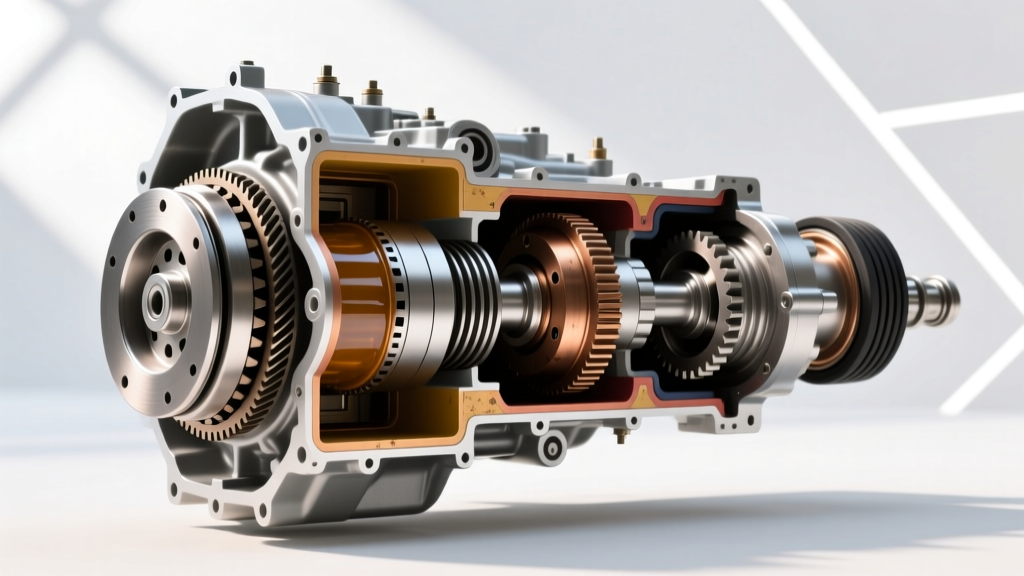
To diagnose issues later, we first need to break down the internal anatomy. Modern torque converters, whether found in a classic GM 4L60E or a sophisticated ZF 8HP, share four primary internal components:
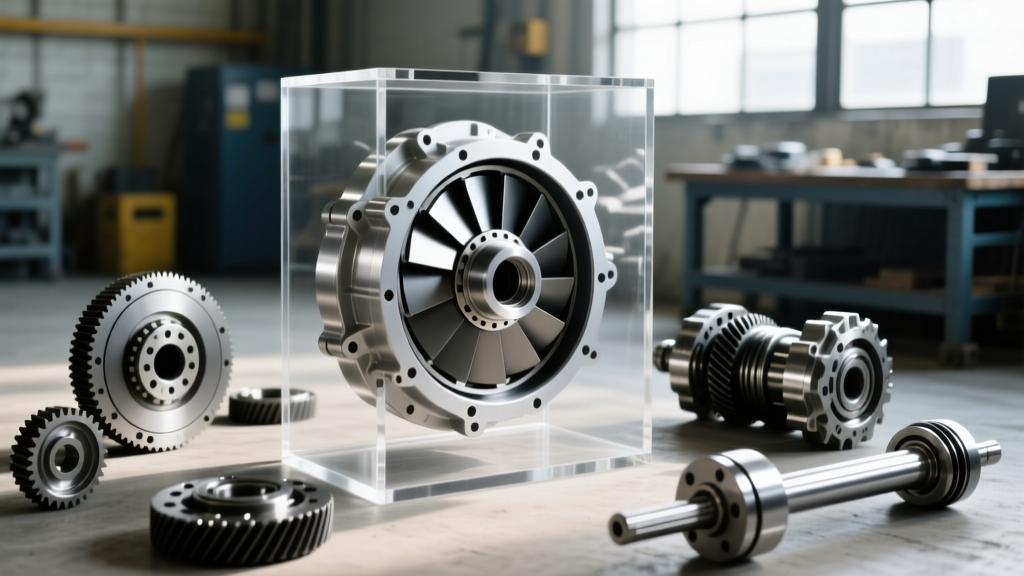
- The Impeller (Pump): Bolted directly to the converter shell and the engine's flexplate, the impeller spins at engine RPM. Its curved vanes grab ATF and sling it outward via centrifugal force, creating a high-pressure fluid stream.
- The Turbine: Connected to the transmission input shaft, the turbine sits directly opposite the impeller. The fluid thrown by the impeller strikes the turbine's vanes, causing it to spin and drive the transmission gears.
- The Stator: The unsung hero of torque multiplication. Sitting between the impeller and turbine on a one-way sprag clutch, the stator redirects returning fluid back into the impeller. This redirection is what allows the converter to multiply engine torque by up to 2.5 times during hard acceleration.
- The Torque Converter Clutch (TCC): A friction-lined piston inside the converter. When engaged by the transmission control module (TCM), it mechanically locks the turbine to the impeller shell, eliminating fluid slip and creating a 1:1 direct drive ratio for maximum fuel efficiency.
The Three Phases of Power Transfer
A torque converter operates in three distinct phases depending on vehicle speed and throttle input. Understanding these phases is critical because different failure points reveal themselves in different phases.
1. Stall Phase (Idle and Initial Launch)
When your foot is on the brake at a red light, the engine is spinning the impeller, but the turbine is held stationary by the drivetrain. The fluid is churning violently, generating heat. The maximum RPM the engine can reach under these conditions is the 'stall speed.' If your stator's one-way clutch fails and seizes, the fluid cannot redirect properly, causing immediate overheating and sluggish launches.
2. Acceleration and Coupling Phase
As you release the brake and accelerate, the turbine begins to catch up to the impeller's speed. During this phase, the stator multiplies torque, giving you that smooth, powerful push away from a stop. Once the turbine reaches about 90% of the impeller's speed, the converter enters the 'coupling' phase, acting mostly as a fluid coupling rather than a torque multiplier.
3. Torque Converter Clutch (TCC) Lockup Phase
Fluid coupling inherently creates slip, which wastes fuel and generates excess heat. To solve this, modern vehicles apply the TCC at cruising speeds (usually between 35 and 55 mph). In modern transmissions like the GM 6L80 or the ZF 8HP70, the TCC is rarely just 'on' or 'off.' Instead, the TCM uses Pulse Width Modulation (PWM) to apply the clutch with microscopic slip—often just 20 to 40 RPM of slip—to absorb engine harmonics and provide a glass-smooth ride.
Comparing Modern Torque Converter Specifications
Not all converters are built alike. The engineering requirements for a heavy-duty truck differ vastly from a luxury sedan. Below is a comparison of three highly common transmission platforms and their specific torque converter characteristics:
| Transmission Model | Typical Application | Stall Speed Range | TCC Strategy & Tech |
|---|---|---|---|
| GM 4L60E | 1990s-2010s GM V8 Trucks/SUVs | 1600 - 2000 RPM | Simple on/off lockup; prone to TCC shudder if fluid degrades. |
| GM 6L80 / 6L90 | 2006-2020 GM Full-Size Trucks, Camaro | 1800 - 2400 RPM | Aggressive PWM slip apply; requires specific DEXRON VI fluid to prevent clutch glazing. |
| ZF 8HP70 / 8HP75 | Chrysler, BMW, Jaguar, Ram 1500 | 1800 - 2200 RPM | Centrifugal pendulum absorber inside the TC; ultra-early TCC lockup for 8th gear fuel economy. |
Connecting Operation to Failure: Spotting a Sign of Bad Torque Converter
Because the torque converter bridges the gap between the engine and transmission, its failures often confuse drivers and novice mechanics. Here is how internal mechanical breakdowns manifest as real-world drivability issues.
1. TCC Shudder (The PWM Slip Failure)
If you feel a rhythmic, vibrating shake—similar to driving over highway rumble strips—while cruising at 45-55 mph, you are experiencing TCC shudder. This is the most common sign of bad torque converter clutch failure. It happens when the friction material on the TCC piston glazes or wears unevenly, preventing the solenoid from maintaining that critical 20-RPM micro-slip. In GM 6L80 units, this is frequently compounded by worn TCC apply valves in the valve body, which fail to regulate hydraulic pressure smoothly.
2. Whining or Grinding at Idle (Impeller/Bearing Failure)
A high-pitched whine that changes pitch with engine RPM, but disappears when the vehicle is in Park, points to internal converter damage. This often indicates that the internal thrust bearing separating the impeller and turbine has failed, or the impeller fins are physically damaged and cavitating the ATF. If you hear a metallic grinding noise, the stator sprag clutch may have shattered, sending metal debris directly into the transmission cooler and valve body.
3. Engine Stalling at Stops (Locked Stator or Seized TCC)
If your engine feels like it is bogging down or completely stalls when you come to a halt in Drive, the TCC may be stuck in the applied position. Alternatively, if the stator's one-way clutch seizes in the 'locked' mode, it will fight the fluid flow at idle, creating massive parasitic drag that the engine cannot overcome, resulting in a stall.
4. Severe Overheating and Burnt Fluid
Transmission fluid should be bright red or pink. If your dipstick reveals fluid that is dark brown and smells like burnt toast, the torque converter is likely the culprit. Continuous slipping in the coupling phase, or a TCC that refuses to lock up due to a failed solenoid, will cause ATF temperatures to spike past 250°F (121°C). According to industry experts at Sonnax, prolonged heat exposure will rapidly degrade the friction linings and warp the converter cover, necessitating a full teardown.
Real-World Diagnostics and Replacement Costs
Diagnosing a torque converter requires isolating it from the transmission and engine. A professional stall test (holding the brakes while applying throttle to see where the RPM peaks) can identify a slipping stator or weak impeller. Furthermore, scanning the TCM for TCC slip RPM data while driving is crucial; if the commanded slip is 20 RPM but actual slip is fluctuating between 50 and 150 RPM, the internal clutch is failing.
When replacement is inevitable, costs vary heavily based on the drivetrain layout:
- Standard FWD Sedan (e.g., Toyota Camry): $900 - $1,400. Labor is intensive as the entire transaxle must be dropped to access the converter.
- RWD V8 Truck (e.g., GM Silverado 4L60E/6L80): $1,100 - $1,800. Includes removing the driveshaft, crossmember, and exhaust components. It is highly recommended to replace the transmission front pump seal and flush the cooler lines simultaneously.
- High-End AWD (e.g., ZF 8HP equipped BMW/Audi): $1,800 - $3,200. These units often require specialized locking tools, proprietary OEM fluid, and complex TCM adaptation resets post-installation.
As automotive engineering pushes toward earlier TCC lockup points to satisfy strict fuel economy standards, the mechanical stress on torque converter friction materials has never been higher. For more in-depth engineering specifications on modern multi-plate torque converter clutches, refer to the ZF Automatic Transmission documentation. By understanding how these hydrokinetic marvels operate, you can catch the earliest sign of bad torque converter degradation, saving your transmission from catastrophic secondary damage.