Bridging the Gap: How It Works and How It Fails
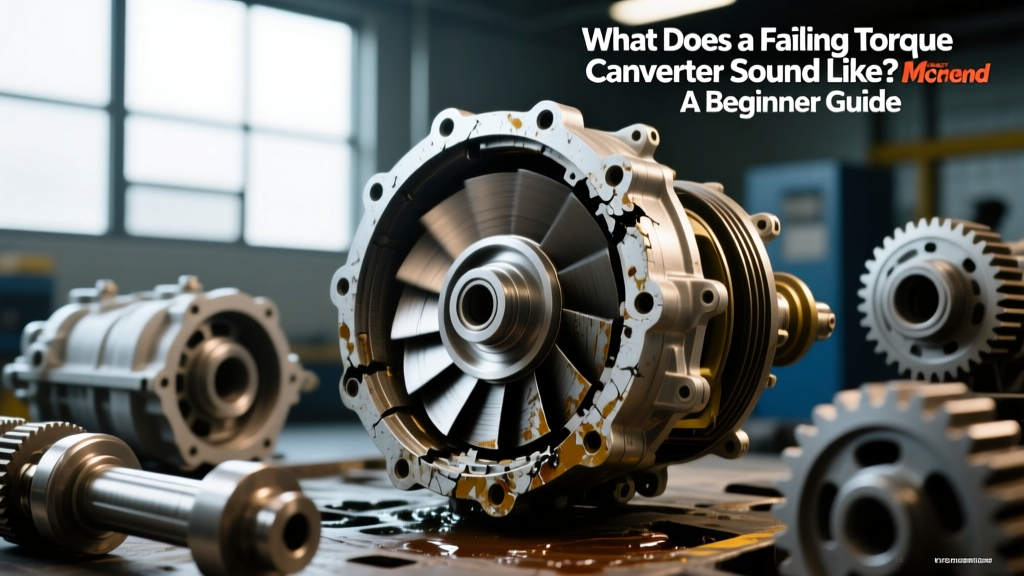
If you have ever noticed strange noises emanating from beneath your vehicle while idling at a stoplight or accelerating onto a highway, you might be asking yourself: what does a failing torque converter sound like? To truly understand these auditory warning signs, a beginner must first understand the mechanical ballet happening inside the transmission bell housing. The torque converter is a marvel of fluid dynamics, but when its internal components wear out, they translate mechanical failure into distinct, diagnosable sounds.
In this beginner-friendly explainer, we will break down exactly how a torque converter operates and map those internal functions directly to the whines, grinds, and clicks you hear when things go wrong. By understanding the 'why,' diagnosing the 'what' becomes remarkably straightforward.
The Magic of Fluid Coupling: How a Torque Converter Works
Unlike a manual transmission that uses a mechanical friction clutch to connect the engine to the gearbox, an automatic transmission uses a torque converter. It acts as a fluid coupling that multiplies engine torque and allows the vehicle to come to a complete stop without stalling the engine.
The Four Main Internal Players
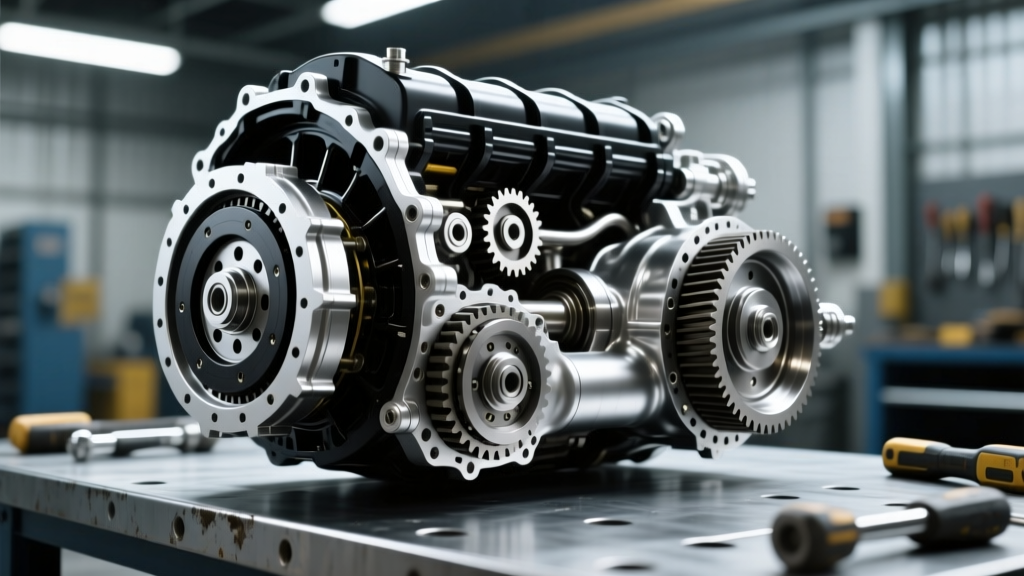
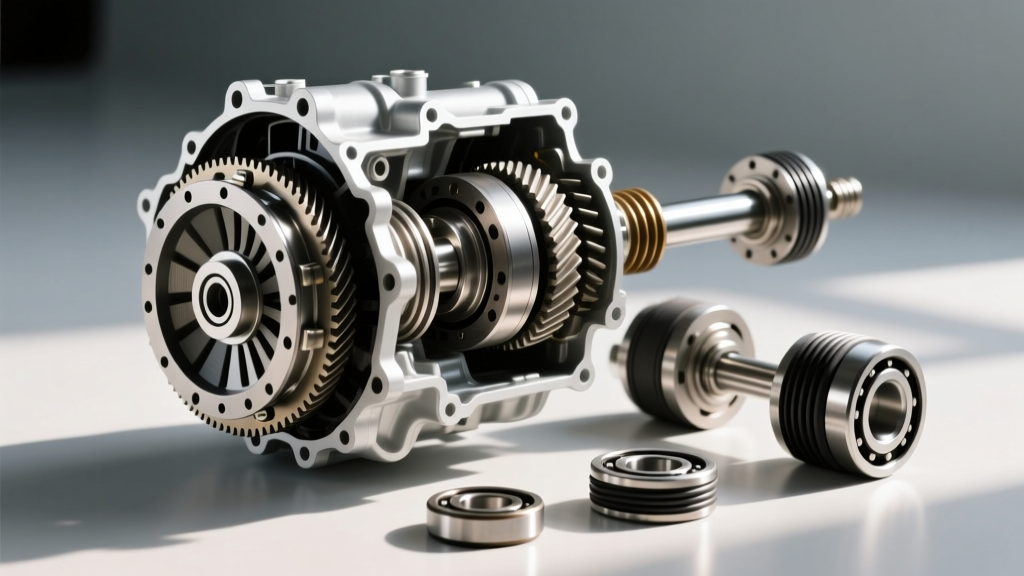
- The Impeller (Pump): Bolted directly to the engine's flexplate, the impeller spins at engine speed. Its curved fins fling transmission fluid outward using centrifugal force.
- The Turbine: Connected to the transmission input shaft, the turbine sits directly across from the impeller. The fluid thrown by the impeller strikes the turbine's fins, causing it to spin and drive the transmission.
- The Stator: Sitting between the impeller and turbine, the stator redirects returning fluid back into the impeller. This redirection is what creates 'torque multiplication' during initial acceleration. It is mounted on a one-way clutch.
- The Torque Converter Clutch (TCC): At higher speeds, fluid coupling creates heat and inefficiency. The TCC is a friction disc that physically locks the turbine to the impeller, creating a direct 1:1 mechanical connection for optimal fuel economy.
Translating Mechanics to Noise: The Failure Matrix
When internal clearances exceed factory specifications or bearings disintegrate, the fluid dynamics are disrupted. According to Sonnax technical resources, identifying the specific pitch and timing of the noise is the first step in accurate diagnosis.
| Internal Component | Normal Operation | Failing Torque Converter Sound | Primary Root Cause |
|---|---|---|---|
| Transmission Fluid Pump | Smooth, silent fluid circulation | High-pitched whining or howling | Cavitation, low fluid, or blocked filter |
| Torrington Bearings | Silent separation of rotating parts | Metallic grinding or crunching | Needle bearing disintegration |
| Stator One-Way Clutch | Locks up to multiply torque | Rattling or 'freewheeling' whir | Clutch race failure or broken sprags |
| TCC / Damper Springs | Smooth lockup and vibration dampening | Rhythmic clicking or heavy chatter | Broken damper springs or warped friction disc |
Deep Dive: The 3 Most Common Torque Converter Noises
1. The High-Pitched Whine (Cavitation and Starvation)
If you are wondering what a failing torque converter sounds like when it is starved of fluid, the answer is a distinct, high-pitched whine that increases in pitch with engine RPM. This is often caused by cavitation. When the transmission fluid level is low, or the internal filter is clogged with clutch material, the impeller draws in air along with the fluid. The collapsing air bubbles create a whining or howling noise. Beginner Tip: Always check your fluid level with the engine running and the transmission at operating temperature before assuming the converter is physically destroyed.
2. The Metallic Grinding or Rattling (Bearing and Stator Failure)
A harsh, metallic grinding noise that is present in 'Park' and 'Neutral' but changes pitch when shifted into 'Drive' or 'Reverse' usually points to the Torrington needle bearings. These tiny bearings separate the rotating impeller, turbine, and stator. When they fail, metal grinds on metal. Alternatively, a rattling sound that sounds like 'marbles in a tin can' at idle often indicates that the stator's one-way clutch has shattered, allowing the stator to freewheel erratically.
3. The Rhythmic Clicking or Chatter (TCC and Damper Issues)
A rhythmic clicking or tapping noise that occurs only when the vehicle is in gear at a stop, or a heavy shudder/chatter felt and heard during highway cruising, points to the Torque Converter Clutch (TCC) assembly. Inside the TCC piston are damper springs designed to absorb engine torsional vibrations. If a spring snaps, you will hear a distinct metallic click once per revolution at idle. As noted by experts at Transmission Digest, ignoring TCC chatter can lead to catastrophic input shaft damage.
Real-World Transmission Profiles: Where These Sounds Hide
Different transmission families exhibit unique torque converter failure signatures. Here is what to look for in modern and legacy platforms:
GM 4L60E and 6L80 Platforms
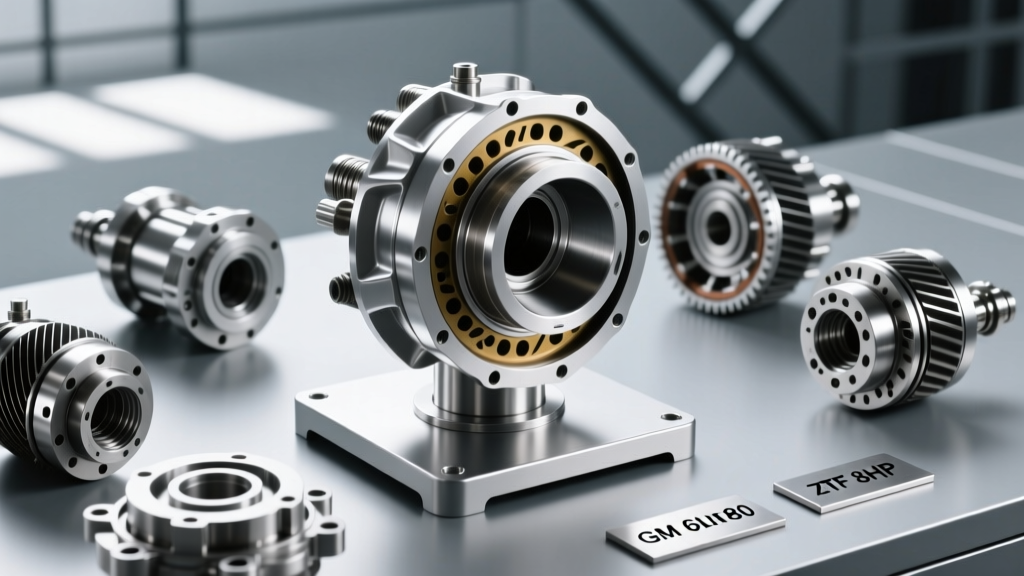
The GM 4L60E is notorious for TCC apply issues. A failing converter here often presents as a 'shudder' accompanied by a low-frequency hum around 45-55 MPH. The 6L80, a much heavier-duty 6-speed, frequently suffers from torque converter clutch lining degradation. When the friction material shears off, it circulates through the system, causing a whining noise from the pump and eventual TCC slip codes (like P0741). A remanufactured 6L80 torque converter typically costs between $350 and $550, requiring roughly 11-12 quarts of Dexron VI fluid for a complete system refill.
ZF 8HP Series (Chrysler, BMW, Audi, Ford)
The ZF 8HP is an engineering masterpiece, but its torque converter damper springs are a known weak point under high torque loads. A failing ZF 8HP converter often emits a pronounced rattling sound at idle in 'Drive' with the foot on the brake. This is the sound of broken internal damper springs. Because the ZF 8HP requires specialized ZF Lifeguard 8 fluid (which can cost $25 to $35 per quart) and precise adaptation resets, total replacement costs easily exceed $1,500 to $2,000 when factoring in labor and OEM fluids.
Expert Diagnostic Steps and Replacement Realities
Before tearing into the bell housing, professional technicians rely on specific tests to isolate the noise. The Automatic Transmission Rebuilders Association (ATRA) recommends the following diagnostic framework:
- The Stall Test: With the wheels chocked and brakes firmly applied, the throttle is briefly pushed to wide open. If the engine RPM shoots up significantly past the factory stall speed (usually 2,000-2,500 RPM), the stator one-way clutch has failed and is freewheeling. If the engine bogs down excessively, the converter may be internally locked or the engine is misfiring.
- The Lockup Test: Using a bi-directional scan tool, a technician can manually command the TCC solenoid to apply while cruising at 50 MPH. If the shudder or clicking noise immediately changes or disappears when the TCC is commanded off, the fault lies within the clutch piston or damper assembly.
- Flexplate Inspection: Sometimes, the noise isn't the converter at all. A cracked flexplate can mimic a torque converter rattle. When reinstalling a new converter, adhering to exact torque specifications is vital. For example, GM 6L80 torque converter-to-flexplate bolts must be torqued to exactly 46 lb-ft (62 Nm), while Ford 6R80 bolts require 26 lb-ft (35 Nm).
Summary
Understanding what a failing torque converter sounds like requires a basic grasp of how fluid coupling and mechanical lockup operate. A whine means fluid starvation or cavitation; a grind means bearing failure; a click or chatter points to the TCC and damper springs. By matching the sound to the internal component, you can save hours of diagnostic guesswork and prevent minor internal faults from turning into complete transmission replacements.