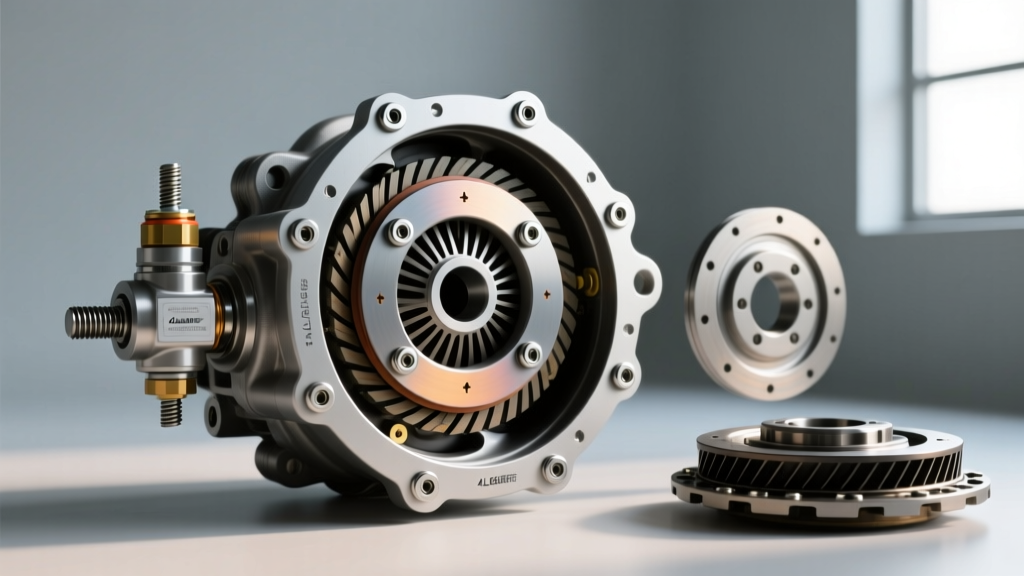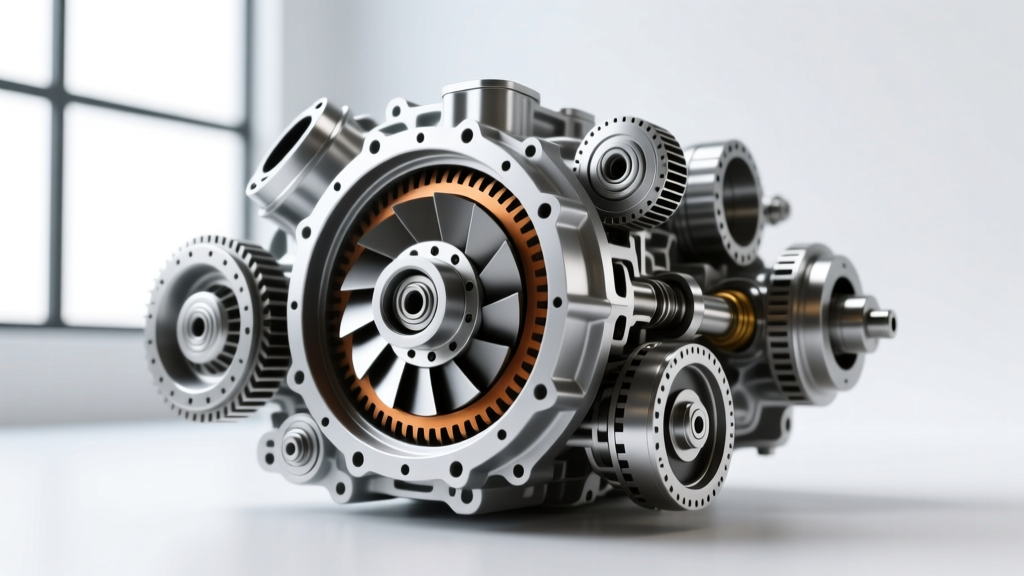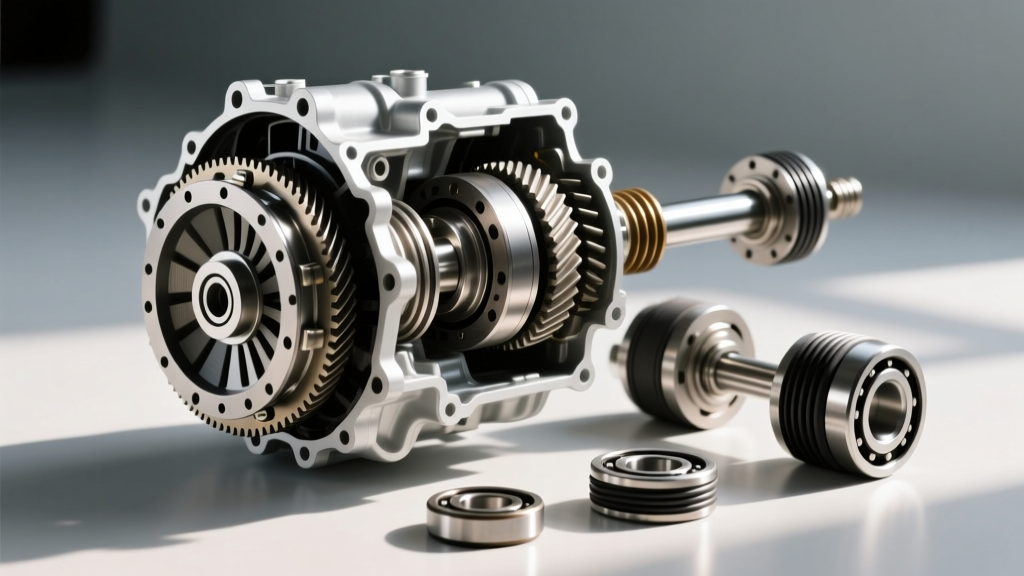
The True Cost of Torque Converter Bearing and Seal Failures in 2026
When a transmission bellhousing starts weeping fluid or a high-pitched whine emanates from the engine bay in park and neutral, the culprit is rarely the transmission gear train itself. More often than not, you are dealing with torque converter bearing degradation or front pump seal failure. In 2026, with average dealership and independent specialty shop labor rates hovering between $145 and $195 per hour, the decision to simply swap a seal versus replacing the entire torque converter (TC) requires a rigorous cost-benefit analysis.
Furthermore, extracting a seized or heavily worn torque converter from the input shaft and stator support without causing catastrophic collateral damage often necessitates a dedicated torque converter removal tool. This guide breaks down the exact failure modes of TC bearings and seals across popular platforms like the GM 6L80, Ford 6R80, and ZF 8HP, while analyzing the financial implications of DIY tooling versus professional remanufacturing.
Diagnosing Bearing vs. Seal Failures: Platform-Specific Quirks
Before spending money on parts or tooling, accurate diagnosis is critical. A misdiagnosis can lead to pulling a transmission only to find the leak is originating from a $15 O-ring on a cooler line or a mechatronic sleeve.
GM 6L80 / 6L90: The Impeller Hub and Stator Support Dilemma
The GM 6L80 is notorious for front pump seal leaks. However, simply replacing the front pump seal (typically a National 710982 or equivalent) is a temporary fix if the root cause is ignored. The torque converter impeller hub rides directly on the front pump seal. Over time, microscopic pitting and wear on the TC hub will shred the lip of a brand-new seal within 500 miles. Additionally, the stator support shaft splines can wear, causing internal fluid pressure loss and TCC (Torque Converter Clutch) shudder. If the stator bearing inside the TC fails, it generates metallic debris that circulates through the lube circuit, destroying the solenoid pack.
ZF 8HP: Turbine Bearing Whine and Sleeve Leaks
In the ZF 8HP series (found in Ram, BMW, and Jaguar applications), a common misdiagnosis involves confusing a leaking mechatronic sealing sleeve with a front TC seal leak. If the fluid is confirmed to be originating from the bellhousing inspection cover, the internal turbine bearings of the torque converter are the likely suspect. When these bearings fail, they produce a distinct whining noise that changes pitch with engine RPM, independent of vehicle speed or gear engagement.
2026 Repair Cost Breakdown: Rebuild vs. Remanufactured R&R
Understanding the financial landscape is essential for transmission repair planning. Below is a comparative cost analysis for addressing internal TC bearing and seal issues.
| Repair Strategy | Parts Cost | Tooling / Equipment | Estimated Labor | Total Est. Cost |
|---|---|---|---|---|
| Front Seal R&R Only (No TC Rebuild) | $15 - $35 | $40 (Seal Installer) | $850 - $1,200 | $865 - $1,235 |
| OEM Torque Converter Replacement | $650 - $1,100 | Standard Hand Tools | $850 - $1,200 | $1,500 - $2,300 |
| Aftermarket Reman TC (e.g., Stallion, Yank) | $350 - $550 | Standard Hand Tools | $850 - $1,200 | $1,200 - $1,750 |
| DIY TC Cut, Rebuild & Weld | $65 - $140 (Bearing/Seal Kit) | $250 - $800 (Lathe/Welder/Tools) | 0 (DIY Labor) | $315 - $940 |
Note: Labor costs reflect transmission removal and reinstallation (R&R). Fluid, filters, and cooler flushes will add $150-$300 to the final invoice.
Evaluating the Torque Converter Removal Tool Investment
When internal stator bearings seize or the impeller hub scores heavily against the transmission input shaft, standard prying methods will crack the transmission pump housing. This is where a specialized torque converter removal tool becomes mandatory. These tools typically consist of a slide-hammer assembly with specific threaded adapters that mate to the TC studs or hub, allowing for controlled, axial extraction.
Tooling Costs vs. Shop Liability
- OTC / Schley Slide Hammer Adapters: Ranging from $85 to $160, these adapters thread into the TC hub. For a DIYer doing a single job, renting or borrowing this tool is more economical.
- TC Holding and Cutting Fixtures: If you are rebuilding the TC yourself to replace the internal needle bearings and O-rings, a heavy-duty holding jig (like the OTC 45004 series) costs between $250 and $400. This is only cost-effective for shops or hardcore enthusiasts performing multiple rebuilds.
- Shop Perspective: Professional shops rarely rebuild TCs in-house. The liability of an improperly welded TC halving resulting in catastrophic balloon failure or explosion outweighs the $200 savings over a warranted remanufactured unit. Therefore, shops use removal tools strictly for extraction, followed by core-exchange reman units.
Edge Cases: Fluid Contamination and Cooler Flushing
A critical, often overlooked cost factor in TC bearing failure is secondary contamination. When the internal stator or turbine bearings disintegrate, ferrous and babbitt metal particles are pushed directly into the transmission cooler lines. Sonnax Technical Resources heavily emphasizes that failing to replace the transmission cooler or performing a high-pressure thermal flush will result in immediate failure of the replacement TC or rebuilt transmission.
Expert Insight: If you find glitter or heavy metal sludge in the transmission pan alongside a whining TC, budget an additional $250-$450 for an inline cooler replacement or a professional Machtot flush. Skipping this step will void the warranty on almost all remanufactured torque converters.
Precision Specifications for Reassembly
If you opt to replace the front pump seal and reinstall the torque converter, adhering to exact measurements and torque specifications is non-negotiable to prevent immediate recurrence of the issue.
Impeller Hub Preparation
Before installing a new front seal, inspect the TC impeller hub. Run your fingernail across the sealing surface. If you feel any grooves, the TC must be replaced or fitted with a stainless-steel Speedi-Sleeve (such as SKF 99171 for specific hubs). Lubricate the seal lip with the appropriate fluid (e.g., Dexron ULV for GM 10-speeds, ZF Lifeguard 8 for 8HPs) to prevent dry-start burnout.
Clearance and Torque Specs
- TC to Flexplate Clearance: Must be between 1/8" (3.1mm) and 3/16" (4.7mm). If the TC is seated too deeply, it will bottom out in the pilot and crack the flexplate or destroy the front pump upon engine start.
- TC to Flexplate Bolts: Typically M8x1.25 or M10x1.5. Apply Blue Loctite 242 to the threads. Torque specifications generally range from 18 to 22 lb-ft (consult specific OEM service manuals, as Ford 6R80 specs differ slightly from GM 6L80).
- Flexplate to Crankshaft (GM 6L80 Example): Torque to 74 lb-ft, plus an additional 90 degrees of rotation using an angle gauge.
Final Verdict: Repair Strategy Decision Matrix
For the average vehicle owner experiencing a front seal leak with a smooth, unworn impeller hub, a simple seal R&R is the most cost-effective route, requiring minimal specialty tooling beyond a basic seal driver. However, if diagnostic acoustics confirm internal bearing whine, or if metal contamination is present in the pan, the internal components are compromised.
In cases of internal bearing failure, purchasing a torque converter removal tool to safely extract the unit is necessary, but rebuilding the TC at home is ill-advised without dynamic balancing equipment. The optimal 2026 strategy is to extract the failed unit, utilize it as a core return, and install a pre-balanced, billet-stator remanufactured torque converter. For deeper diagnostic protocols and valve body cross-references, consult the Automatic Transmission Rebuilders Association (ATRA) technical bulletins.
By accurately diagnosing the boundary between a simple external seal leak and an internal bearing catastrophe, you can save thousands in misallocated labor and ensure the longevity of your drivetrain.