The Lifeblood of the Drivetrain: Reading Your Transmission Fluid
When diagnosing automatic transmission drivability issues, many technicians and DIYers immediately connect a scan tool to chase electronic solenoid codes or suspect internal clutch pack failures. However, learning how to tell if you have a bad torque converter often begins with a much simpler, yet highly revealing step: analyzing the transmission fluid. The torque converter (TC) relies entirely on automatic transmission fluid (ATF) not just for lubrication, but as the hydraulic medium that transfers engine torque to the transmission input shaft. When the TC begins to fail internally, the fluid is the first component to bear the physical evidence.
In modern 8-speed, 9-speed, and 10-speed automatic transmissions, the torque converter clutch (TCC) operates with incredibly tight slip tolerances—sometimes as low as 2 to 5 RPM during highway cruising to maximize fuel economy. This aggressive Electronic Controlled Capacity (ECC) apply strategy generates immense localized heat and shear force. If the TC's internal friction lining begins to degrade, or if the stator one-way clutch fails, the fluid will rapidly deteriorate, providing a clear diagnostic roadmap for the trained eye.
The Fluid Tell-Tales: Dipstick and Drain Pan Analysis
Before tearing into the bell housing, you must evaluate the fluid's physical properties. Pull the dipstick (if equipped) or extract a sample via the fill tube. Here is how to decode what your fluid is telling you about the torque converter's health.
| Fluid Appearance | Odor Profile | Particulate on Magnet | Probable Torque Converter Issue |
|---|---|---|---|
| Translucent Cherry Red | Slightly sweet / neutral | None to fine dust | Healthy TC; normal operation. |
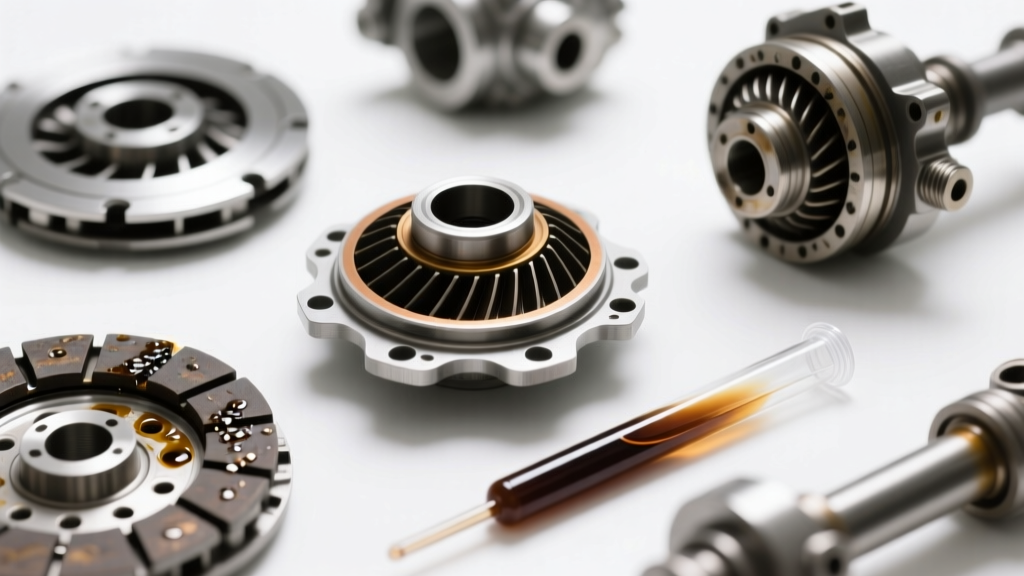
| Dark Brown / Opaque | Burnt toast / acrid | Thick black sludge | TCC friction material overheating and delaminating due to excessive slip. |
| Cloudy / Milky Pink | No distinct burnt smell | Emulsified paste | Coolant intrusion via failed transmission cooler (not strictly a TC failure, but ruins the TC clutch). |
| Red with brass/gold flakes | Hot metal / sharp | Brass shaving clusters | TC hub bushing or stator support tube wear; physical metal-on-metal grinding. |
The 'Burnt Varnish' Smell Test
A healthy synthetic ATF, such as ZF LifeguardFluid 8 or GM's Dexron ULV, has a very mild, almost chemical-sweet odor. If the fluid smells sharply of burnt varnish or scorched brake pads, the torque converter clutch (TCC) has been slipping under load. Because the TC is the lowest point in the hydraulic circuit when the vehicle is stationary, burnt fluid and suspended friction material tend to settle inside the converter, creating a contaminated loop that will destroy a newly rebuilt transmission if the TC is not replaced or professionally remanufactured.
Differentiating Torque Converter Hub Leaks from Rear Main Seals
One of the most common questions we field at AutoGearNexus is how to confirm a fluid leak is originating from the torque converter hub seal rather than the engine's rear main seal. Finding ATF pooling in the bell housing or dripping from the inspection cover is a massive red flag.
The Dye and UV Light Method
To accurately diagnose the leak source without dropping the transmission, add a UV-reactive ATF dye to the crankcase. Run the vehicle through a series of high-stall load tests to pressurize the TC circuit. Use a UV flashlight to inspect the bell housing drain plug.
- Engine Oil Leak: Will fluoresce yellow/green and match the engine oil viscosity.
- TC Hub Seal Leak: Will fluoresce bright red/pink and smell distinctly of ATF friction modifiers.
On heavily utilized platforms like the GM 4L60E or the Ford 6R80, the torque converter hub itself can wear a physical groove into the metal where the front pump seal rides. If the hub is grooved beyond 0.005 inches of depth, replacing the seal is a waste of time; the fluid will continue to bypass the seal lip, requiring a torque converter replacement or the installation of a precision-machined speedy sleeve over the hub.
The Shudder Connection: Fluid Degradation and TCC Slip Codes
If you are trying to figure out how to tell if you have a bad torque converter because of a rhythmic vibration between 35 and 55 MPH, you are likely experiencing TCC shudder. This is notoriously common in the GM 6L80 and 6L90 transmissions. The factory TCC apply strategy demands a fluid with highly specific frictional characteristics to maintain a controlled 20 RPM slip.
Expert Tip: Before condemning a shuddering 6L80 torque converter, perform a complete fluid exchange using a high-quality synthetic alternative like Mobil 1 Synthetic LV ATF HP. According to Sonnax technical documentation, fluid shear breakdown is responsible for over 40% of misdiagnosed TCC shudders. If the shudder persists after 500 miles on fresh, spec-compliant fluid, the TC friction lining is mechanically compromised.
When the TCC cannot maintain its slip target due to degraded fluid or worn friction material, the Transmission Control Module (TCM) will often set diagnostic trouble codes (DTCs) such as P0741 (Torque Converter Clutch Circuit Stuck Off) or P0743 (Torque Converter Clutch Circuit Electrical). While P0743 points to a wiring or solenoid issue, P0741 combined with dark fluid almost universally points to a mechanically failing torque converter or a blocked TCC apply orifice in the valve body.
Pan Drop Protocol: Analyzing the Debris
When fluid analysis points to internal failure, dropping the transmission pan is the next mandatory step. Do not simply drain the fluid; you must inspect the pan floor and the internal magnets. The Automatic Transmission Rebuilders Association (ATRA) emphasizes that the type of debris found in the pan dictates whether you can flush the system or must replace the torque converter entirely.
What the Magnets Reveal
- Fine, metallic paste (Graphite-like): This is normal wear from steel clutch plates and planetary gears. If the fluid is otherwise clean, the TC is likely healthy.
- Thick, fibrous black sludge: This is degraded paper and Kevlar friction material from the torque converter clutch lining. Action required: The TC must be cut open and rebuilt, or replaced. Flushing will not remove this sludge from the TC fins.
- Needle bearings or brass shards: Indicates catastrophic failure of the stator one-way clutch or the turbine hub bushing. Action required: Immediate TC replacement and full transmission cooler flush to prevent secondary valve body damage.
Cost Implications: Fluid Service vs. TC Replacement in 2026
Understanding the financial threshold between a fluid correction and a hard-part replacement is crucial for accurate diagnostics. Based on current 2026 national shop averages, here is what you can expect to spend when addressing torque converter fluid issues.
| Service / Repair | Estimated Cost Range | When to Choose This Option |
|---|---|---|
| ATF Drain, Filter, and Fill | $250 - $450 | Fluid is dark but not burnt; mild shudder present; no slip codes. |
| Machine Power Flush | $300 - $600 | WARNING: Never machine flush a transmission with suspected TC clutch failure. It will dislodge sludge and destroy the valve body. |
| Torque Converter Replacement (RWD) | $1,400 - $2,200 | Fluid is burnt, P0741 is present, TCC shudder persists after fluid change. |
| TC Replacement + Valve Body (FWD) | $2,500 - $3,800 | Transverse applications where labor overlap makes replacing the valve body prudent while the trans is out. |
Final Diagnostic Best Practices
Diagnosing a failing torque converter requires a methodical approach that prioritizes fluid forensics over guesswork. Always record the transmission fluid temperature (TFT) via a bi-directional scan tool before checking fluid levels, as modern sealed transmissions (like the ZF 8HP or Ford 10R80) require the fluid to be precisely between 86°F and 122°F for an accurate level check. A low fluid level will cause the TC to cavitate, leading to a false diagnosis of a bad stator or slipping TCC.
By mastering these fluid diagnostic techniques, you can confidently determine whether a simple fluid exchange will cure your drivetrain woes, or if it is time to unbolt the bell housing and install a new torque converter.