Can Throttle Position Sensor Affect Transmission Shifting?
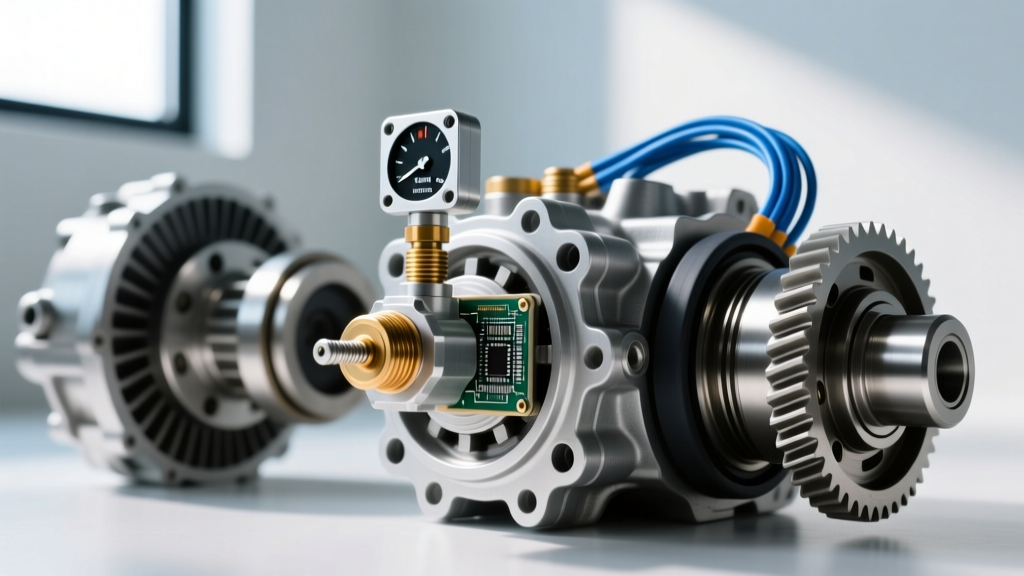
When diagnosing erratic gear changes, delayed upshifts, or sudden limp-mode events, DIY mechanics and professional technicians frequently ask: can throttle position sensor affect transmission shifting? The short answer is yes, but the complete picture requires understanding how the Transmission Control Module (TCM) marries engine load data with internal hydraulic speed metrics. While the Throttle Position Sensor (TPS) dictates when the transmission should shift based on driver demand, the Transmission Input Speed Sensor (ISS) verifies if that shift actually occurred and manages the hydraulic pressure required to execute it smoothly.
In modern 2026 OBD-II CAN-FD networks, the TCM is less tolerant of signal dropouts than ever before. A marginal TPS will alter shift scheduling, but a failing ISS will immediately trigger safety limp modes. This guide breaks down the electronic relationship between these sensors and provides a comprehensive buyer's guide for replacing the ISS on today's most common automatic transmissions.
The Symbiosis: TPS, ISS, and the TCM
To understand why a throttle position sensor affects shifting, we must look at the TCM's shift algorithm. The TPS (often integrated into the electronic throttle body on drive-by-wire vehicles) provides a voltage signal—typically ranging from 0.5V at idle to 4.5V at wide-open throttle (WOT). The TCM uses this data to determine engine load and map out the shift schedule.
Shift Scheduling vs. Shift Execution
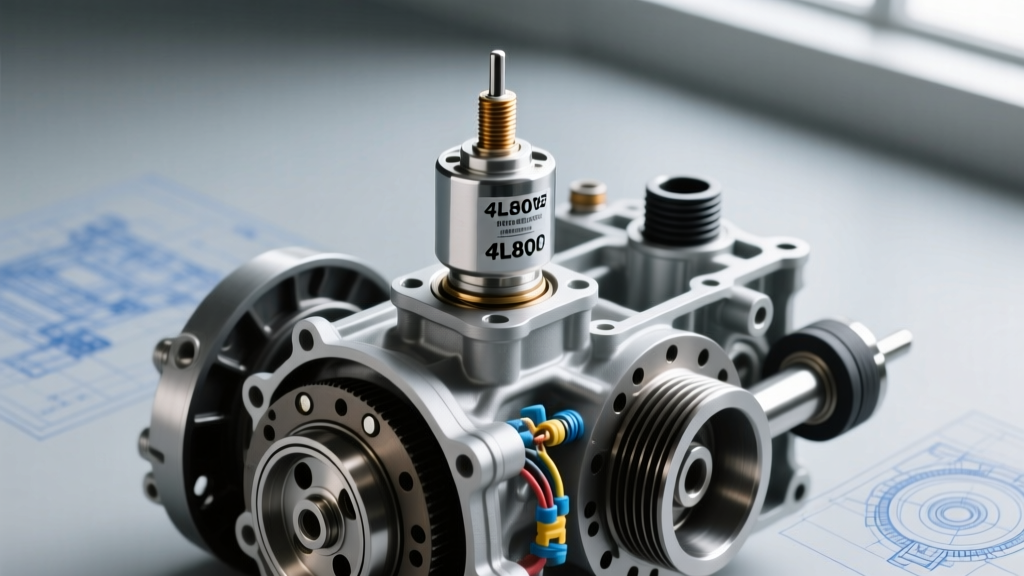
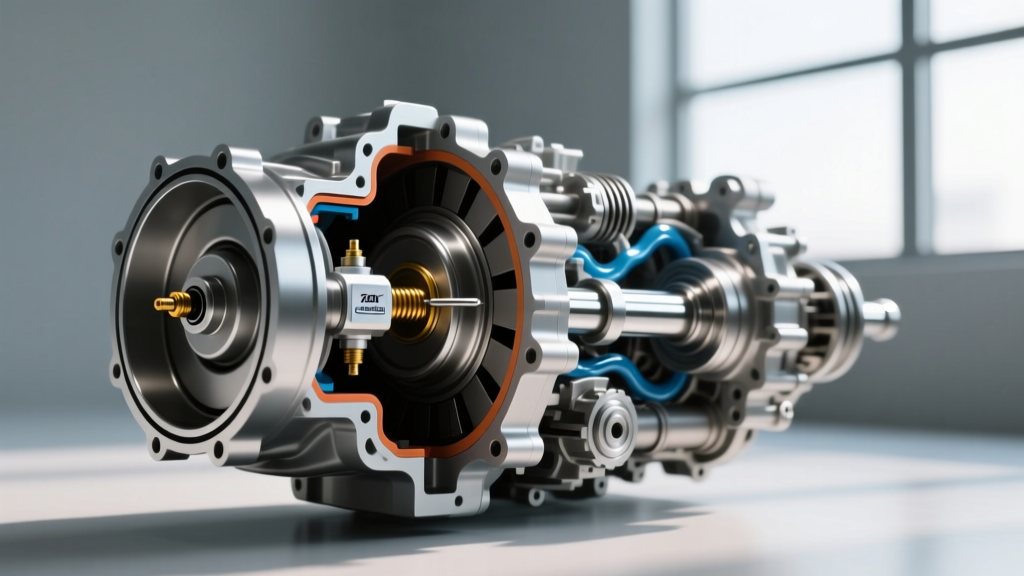
Once the TCM commands a shift based on TPS and vehicle speed data, it relies entirely on the Transmission Input Speed Sensor (ISS) and the Output Speed Sensor (OSS). The ISS is a Hall-effect sensor that reads the rotational speed of the torque converter turbine shaft. By comparing the ISS signal to the OSS signal, the TCM calculates the current gear ratio and monitors clutch slip. If the TPS indicates 80% engine load, but the ISS shows the turbine is still spinning fast (indicating severe clutch slip), the TCM will aggressively ramp up line pressure via the pressure control solenoids or default to limp mode to prevent catastrophic friction material failure.
Therefore, while a faulty TPS can cause harsh or delayed shifts by feeding false load data, a faulty ISS will cause the TCM to abort shifts entirely. For deeper diagnostic strategies on signal dropouts, technicians frequently consult Sonnax Tech Resources for hydraulic and electronic correlation charts.
Diagnostic Matrix: TPS vs. Input Speed Sensor Failures
Before purchasing replacement parts, it is critical to isolate the failure. Below is a comparison of how TPS and ISS failures manifest in the driver's seat and on the scan tool.
| Component | Primary Function | Common Failure Symptom | Frequent DTCs |
|---|---|---|---|
| Throttle Position Sensor (TPS) | Engine Load / Driver Demand | Hunting idle, delayed upshifts, harsh downshifts, incorrect TCC lockup | P0122, P0123, P0222 |
| Input Speed Sensor (ISS) | Turbine Shaft Speed / Slip Calc | No upshifts, immediate limp mode (3rd gear), speedometer erratic | P0715, P0717, P0730 |
Pro Tip: If you see P0730 (Incorrect Gear Ratio) alongside a TPS code, always clear the TPS code and perform a throttle body relearn first. False load data can trick the TCM into commanding the wrong clutch volume, artificially triggering a ratio code.
2026 Buyer’s Guide: Replacing the Transmission Input Speed Sensor
If your scan tool confirms an ISS circuit or signal code, replacement is mandatory. The market is flooded with options, but choosing between OEM and aftermarket requires understanding the internal construction of these sensors. Below is a comparison of top replacements for the most prevalent transmission platforms on the road.
GM 6L80 / 6L90 Applications
The GM 6-speed family is notorious for ISS failures due to heat degradation from the torque converter. The ISS is located directly on the valve body, underneath the transmission pan.
- OEM Option: ACDelco (Part # 24253422). Priced between $95 and $130. Features high-temperature epoxy potting and exact OEM connector pins.
- Aftermarket Option: Standard Motor Products (Part # AX115). Priced around $35 to $50. A viable budget option, though long-term heat resistance in heavy-towing scenarios is slightly inferior to OEM.
Ford 6R80 Applications
Found in millions of F-150s and Mustangs, the 6R80 utilizes a molded lead-frame that houses both the ISS and OSS. However, the ISS can be serviced individually in some configurations, though many technicians replace the entire sensor harness.
- OEM Option: Motorcraft (Part # SW7283 / AL3Z-7F109-A). Priced at $110 to $145. Essential for maintaining precise ZF-derived shift logic.
- Aftermarket Option: Dorman (Part # 917-644). Priced around $45. Dorman's molded harnesses are generally reliable, but ensure the locking tab on the connector is fully seated to prevent fluid intrusion.
ZF 8HP / Chrysler 845RE Applications
In the ZF 8HP family (including the Chrysler 8-speed), the ISS is often integrated directly into the mechatronic unit's conductor plate. You cannot simply swap a $30 sensor; you must replace the entire conductor plate or mechatronic harness.
- OEM Conductor Plate: Mopar / ZF (Part # 68238624AA). Priced between $350 and $500.
- Aftermarket Note: Avoid cheap, unbranded conductor plates from online marketplaces. The integrated Hall-effect sensors in these units require precise air-gap calibration to the reluctor rings. Stick to OEM or verified Tier-1 suppliers like Bosch.
Installation Protocols & Torque Specifications
Replacing the ISS requires dropping the transmission pan, draining the fluid, and accessing the valve body. Adhering to strict torque specifications and cleanliness protocols is non-negotiable to prevent immediate secondary failures.
- Fluid Temperature: Ensure the transmission fluid is below 100°F (38°C) before dropping the pan to prevent burns and excessive fluid loss.
- O-Ring Lubrication: Never install the ISS dry. Lubricate the sensor's O-ring with fresh transmission fluid (e.g., Dexron VI for GM, Mercon LV for Ford) to prevent pinching or tearing during insertion.
- Debris Mitigation: The ISS reads a magnetic reluctor ring. If metallic clutch material or RTV silicone blocks the sensor tip, it will cause a P0717 (No Signal) code immediately upon startup. Wipe the sensor tip and surrounding valve body area with a lint-free cloth.
- Torque Specs:
- GM 6L80/6L90 ISS Bolt (M6x1.0): 11 Nm (97 lb-in).
- Ford 6R80 ISS Bolt (M6): 8 Nm (71 lb-in).
- Filter Replacement: Always replace the transmission filter and pan gasket (or RTV, depending on the application) when performing this service. A 6L80 pan drop typically requires 6 to 7 quarts of Dexron VI.
Final Verdict: OEM vs. Aftermarket ISS
So, can throttle position sensor affect transmission shifting? Absolutely, by skewing the shift schedule. But the Input Speed Sensor is the ultimate gatekeeper of shift execution and transmission survival. When replacing the ISS, the E-E-A-T consensus for daily drivers and heavy-duty towing vehicles is to strictly use OEM sensors (ACDelco, Motorcraft, or ZF). The $60 premium for an OEM unit is easily justified by the cost of a second pan-drop service or a ruined clutch pack caused by an aftermarket sensor's delayed signal response. For budget builds or vehicles destined for the auction lot, Tier-1 aftermarket options like Standard Motor Products offer acceptable reliability, provided installation torque specs and O-ring protocols are strictly followed.