The Core Question: When Adding Transmission Fluid Should Car Be On?
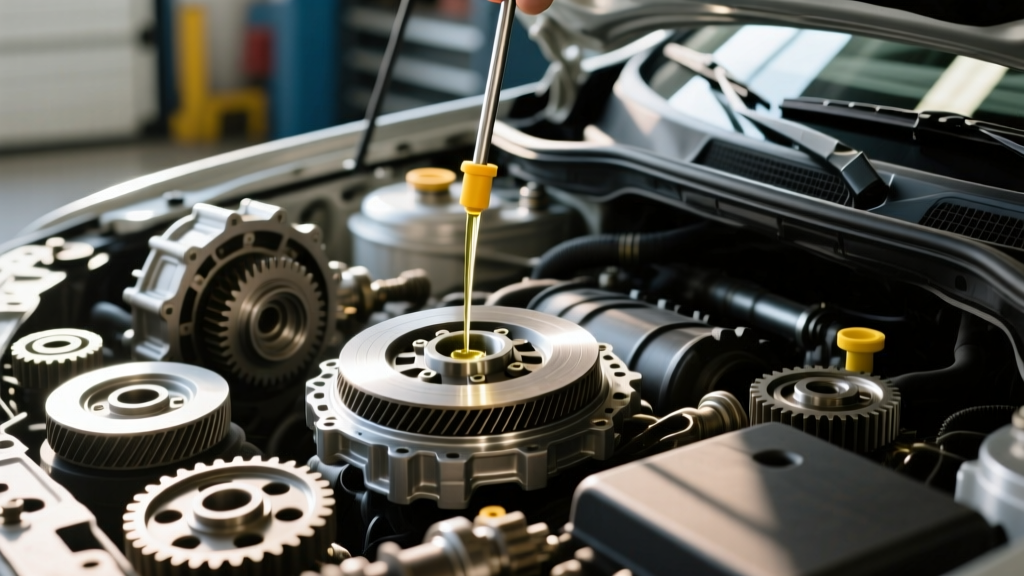
For decades, the standard advice for checking automatic transmission fluid (ATF) was simple: park on level ground, leave the engine idling, and pull the dipstick. However, as automotive engineering has evolved, the dipstick has largely vanished, replaced by sealed units and complex thermal management systems. This brings up a critical question for modern DIYers and technicians alike: when adding transmission fluid should car be on? The short answer is an emphatic yes, but the engineering reason why centers entirely on a tiny, vital component: the Transmission Fluid Temperature (TFT) sensor.
Unlike older hydraulic systems that relied on simple volume displacement, modern transmissions like the GM 6L80, Ford 10R80, and ZF 8HP operate on precise fluid dynamics dictated by thermal expansion. If you attempt to check or add fluid with the engine off, the TFT sensor cannot communicate live operational data to the Powertrain Control Module (PCM), rendering your fluid level check completely inaccurate and potentially leading to catastrophic transmission failure.
The Physics of ATF: Why Temperature Dictates Volume
To understand why the engine must be running, you must understand the physics of modern synthetic transmission fluids. Fluids like Dexron VI, Mercon ULV, and ZF Lifeguard 8 are highly susceptible to thermal expansion. When cold (around 68°F / 20°C), ATF contracts. When brought up to normal operating temperatures (180°F - 200°F / 82°C - 93°C), the fluid expands significantly.
Modern sealed transmissions utilize a 'standpipe' or 'check plug' system inside the transmission pan. The height of this standpipe is calibrated by the manufacturer to allow excess fluid to drain out only when the fluid has expanded to a very specific thermal window. If the car is off, the fluid cools and contracts. If you add fluid until it drips out of the check plug while the car is off, you will severely overfill the transmission once it reaches operating temperature. Overfilling causes the rotating assembly to aerate the fluid, creating foam that leads to slipped clutches, erratic line pressure, and eventual mechanical destruction.
How the TFT Sensor Acts as the PCM's Thermometer
The Transmission Fluid Temperature sensor is typically a Negative Temperature Coefficient (NTC) thermistor. This means that as the temperature of the transmission fluid increases, the electrical resistance of the sensor decreases. The PCM sends a 5-volt reference signal to the TFT sensor and measures the voltage drop to calculate the exact fluid temperature in real-time.
According to technical data from Sonnax, the PCM uses this TFT data for three critical functions:
- Shift Scheduling: Cold fluid is thicker. The PCM delays upshifts and increases line pressure to prevent clutch slippage until the TFT sensor reports optimal operating temperatures.
- TCC Lockup: The Torque Converter Clutch will not engage until the TFT sensor confirms the fluid is warm enough to prevent converter shudder.
- Thermal Management & Fill Procedures: The PCM uses the TFT reading to dictate cooling fan operation and, crucially, to validate the fluid level during preventive maintenance.
Manufacturer-Specific Fill Procedures & TFT Target Temperatures
Because the TFT sensor is the ultimate authority on fluid volume, every manufacturer has a specific 'TFT Window' required for checking and adding fluid. Below is a comparison chart of popular modern transmissions and their exact thermal requirements.
| Transmission Model | Target TFT Range | Level Plug Torque Spec | Fluid Type |
|---|---|---|---|
| GM 6L80 / 6L90 | 86°F – 122°F (30°C – 50°C) | 15 Nm (11 lb-ft) | Dexron VI |
| ZF 8HP45 / 8HP70 | 86°F – 104°F (30°C – 40°C) | 35 Nm (25.8 lb-ft) | ZF Lifeguard 8 |
| Toyota A750E / A760E | 104°F – 113°F (40°C – 45°C) | 22 Nm (16 lb-ft) | Toyota WS |
| Ford 10R80 | 185°F – 202°F (85°C – 94°C)* | 12 Nm (8.8 lb-ft) | Mercon ULV |
*Note: The Ford 10R80 requires a specific high-temperature fill procedure to ensure the internal thermostat is fully open, allowing fluid to circulate through the external cooler before the level is set.
Step-by-Step: Performing a TFT-Monitored Fluid Top-Off
Knowing that the car must be on is only half the battle. You must actively monitor the TFT sensor to ensure you are within the manufacturer's thermal window. Here is the professional procedure for a preventive maintenance fluid top-off.
1. Preparation and Safety
Ensure the vehicle is on a perfectly level two-post or four-post hoist. The engine must be running, which means the driveline will be spinning.
⚠️ Critical Safety Warning: Because the engine must be running and the transmission shifted through the gears during the TFT-monitored fill procedure, the driveline will be in motion. Never reach near the CV joints, driveshaft, or exhaust components while the vehicle is lifted and running on a hoist.
2. Connect a Bidirectional OBD2 Scanner
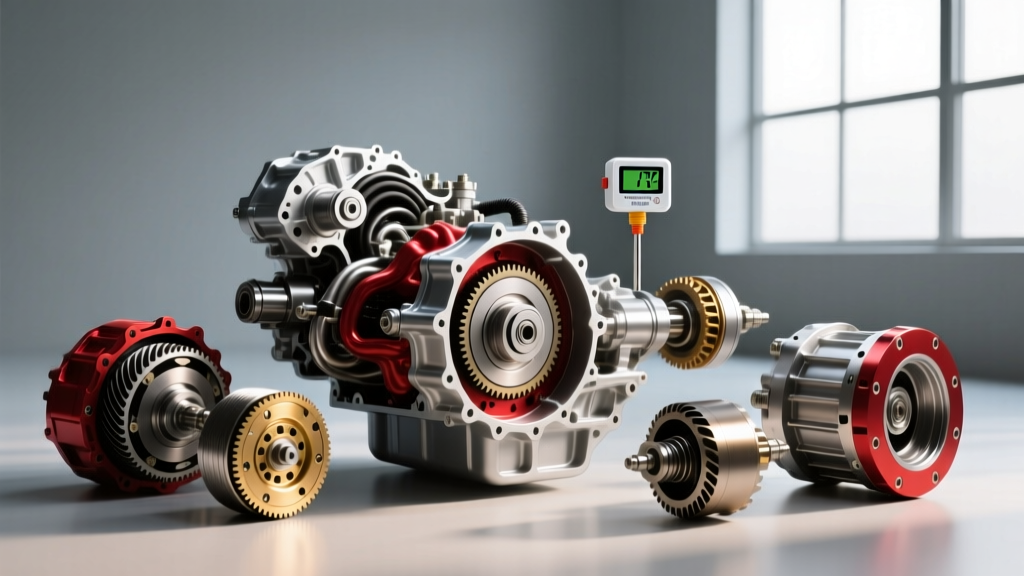
Plug in a high-quality scan tool capable of reading live PCM data. Navigate to the Transmission PID (Parameter Identification) list and select 'TFT' or 'Trans Fluid Temp'. Do not rely on the engine coolant temperature (ECT) gauge on the dashboard; the TFT sensor reads the actual sump temperature, which can differ vastly from the engine block.
3. Cycle the Gears
With your foot firmly on the brake, shift the transmission slowly through P-R-N-D-L, pausing for 2-3 seconds in each gear. This crucial step fills the clutch apply chambers and the torque converter, ensuring the fluid level in the pan is accurate. Leave the vehicle in Park (or Neutral, depending on the specific OEM service manual).
4. Monitor the TFT and Open the Check Plug
Keep the engine idling. Watch the TFT reading on your scanner. Once the temperature enters the target window (e.g., 95°F for a GM 6L80), quickly remove the transmission fluid level check plug. If a steady stream of fluid drips out, the level is correct. If nothing comes out, you must pump in new fluid through the fill tube until it begins to drip, then reinstall the plug and torque it to spec.
Diagnosing a Faulty TFT Sensor During Preventive Maintenance
If you are attempting to perform a fluid check and your scanner reports a TFT reading of -40°F or 300°F, or if the reading never changes from ambient air temperature, your TFT sensor has likely failed. The PCM will typically set a Diagnostic Trouble Code (DTC) such as P0711 (Transmission Fluid Temperature Sensor 'A' Circuit Range/Performance), P0712 (Circuit Low), or P0713 (Circuit High). You can verify this by cross-referencing code definitions on databases like OBD-Codes.
When a TFT sensor fails, the PCM defaults to a 'fail-safe' temperature (usually around 176°F / 80°C) and triggers limp mode. It will inhibit the fluid level check procedure because the thermal expansion baseline can no longer be trusted.
The Cost of TFT Sensor Failure: Evolution of the Design
One of the most important aspects of modern transmission preventive maintenance is understanding that the TFT sensor is rarely a standalone, easily replaceable part anymore. Its integration dictates the cost of failure.
- Legacy Designs (e.g., GM 4L60E): The TFT sensor was a standalone component threaded or clipped directly into the valve body. Part Number: Standard Motor Products AX115. Cost: $20 - $35. Replacement required dropping the pan and valve body.
- Mid-Generation Designs (e.g., GM 6L80 / 6L90): The TFT sensor is integrated into the internal wiring harness, which is hard-molded into the Transmission Electro-Hydraulic Control Module (TEHCM). Part Number: ACDelco 24236933. Cost: $350 - $600. A failure requires replacing the entire TEHCM assembly and performing a proprietary GM security relearn.
- Modern ZF Designs (e.g., ZF 8HP): The TFT sensor is permanently soldered onto the circuit board inside the Mechatronic unit. Part Number: ZF 1087.298.369. Cost: $1,500 - $2,200+. According to ZF Aftermarket technical bulletins, you cannot replace just the sensor; the entire Mechatronic valve body must be replaced and coded to the vehicle.
Conclusion: Respect the Thermal Window
So, when adding transmission fluid should car be on? Absolutely. The era of the cold dipstick check is dead. Modern preventive maintenance relies entirely on the Transmission Fluid Temperature sensor to account for the thermal expansion of synthetic ATFs. By utilizing a live-data OBD2 scanner, adhering strictly to OEM thermal windows, and respecting the precise torque specs of the check plug, you ensure the hydraulic integrity of the transmission. Ignoring the TFT sensor's role in the fill procedure is a fast track to aerated fluid, burnt clutch packs, and thousands of dollars in Mechatronic replacements.