The 'Spin the Tire' Method: Why It Beats the Axle Tag
When enthusiasts and mechanics need to know how to tell gear ratio without cracking open the differential housing, the tire-spin method remains the gold standard. Even in 2026, with advanced OBD2 telemetry, digital dash clusters, and VIN-decoding apps, the physical ring and pinion remain purely mechanical. Axle tags rust off, differential covers get swapped, and VIN decoders frequently fail to account for aftermarket gear swaps or mid-year factory running changes.
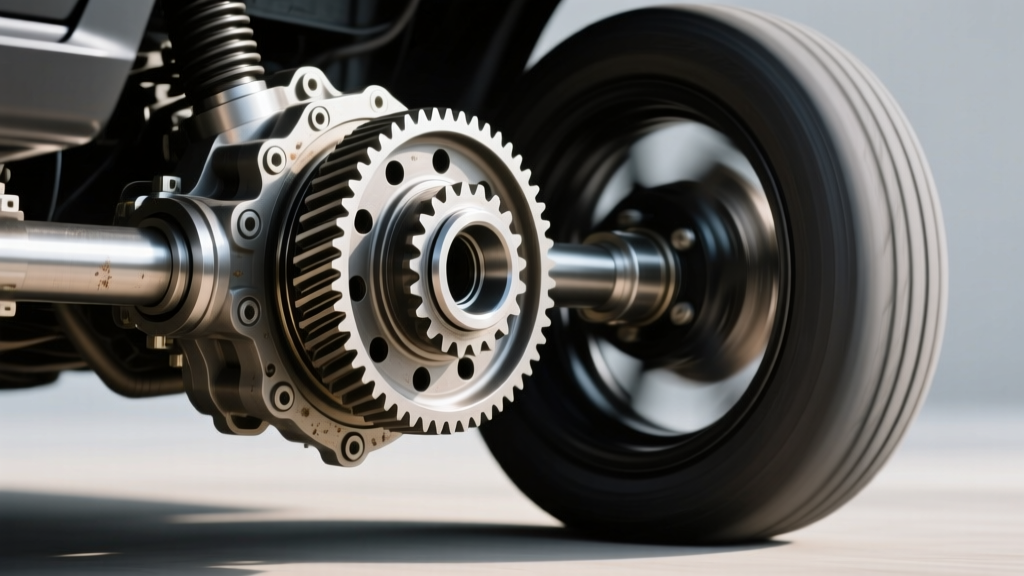
Spinning the tire and counting the driveshaft rotations provides a mathematically verifiable, non-invasive way to identify your final drive ratio. Whether you are diagnosing a slipping 4L60E, recalibrating the speedometer on a lifted truck, or matching a used 10L80 transmission to your current towing setup, understanding this physical calculation is a mandatory drivetrain skill.
Pre-Flight Checklist: Safety & Drivetrain Prep
Before you crawl under a 5,000-pound vehicle, you must establish a safe baseline. The most common mistake amateurs make is leaving the transmission in 'Park' or failing to secure the vehicle, leading to severe injury or damaged drivetrain components.
- Chock the Front Wheels: Use heavy-duty polyurethane wheel chocks on both sides of the front tires.
- Support the Axle Properly: Place jack stands under the solid axle tubes or designated frame lift points. Never rely solely on a hydraulic floor jack.
- Transmission State: The transmission MUST be in Neutral. If left in Park, the transmission's parking pawl will lock the output shaft, preventing the driveshaft from turning and potentially shearing the pawl if forced.
- Transfer Case State (4WD/AWD): If the vehicle is equipped with a transfer case, shift it into 2WD High (2H) or **Neutral**. Leaving it in 4WD will bind the front driveline and skew your rotation counts.
The Differential Factor: Open vs. Limited-Slip
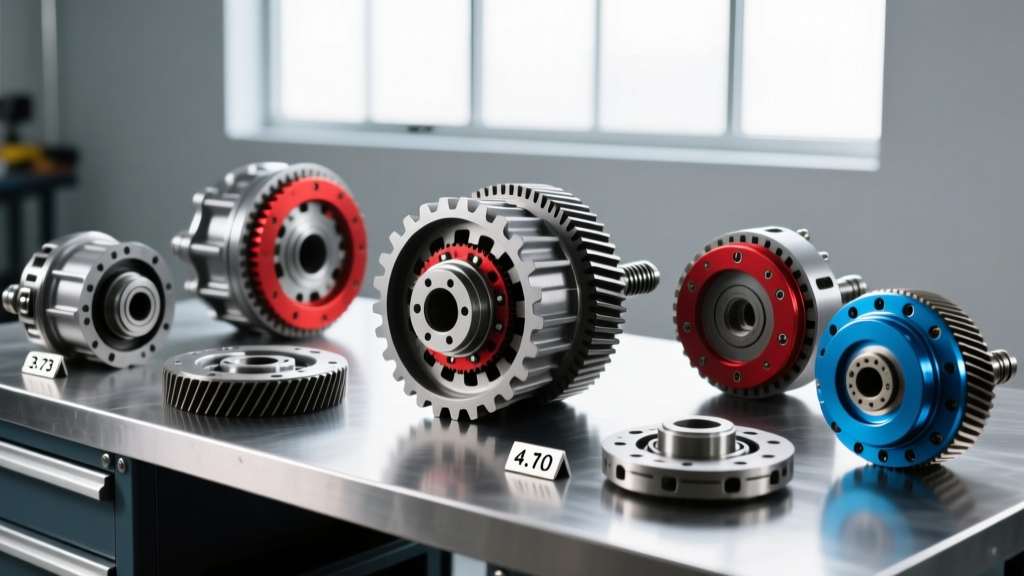
The entire mathematical formula for the tire-spin method hinges on one critical variable: the type of differential installed in the axle housing. The internal physics of an open differential versus a limited-slip (LSD) or locking differential completely changes the multiplier you must apply to your final calculation.
Scenario A: The Open Differential (One-Wheel Spin)
In an open differential (common on base-model trucks and older passenger cars), torque follows the path of least resistance. When you lift both rear wheels and spin only one tire, the internal spider gears 'walk' around the stationary side gear of the opposite wheel. Because the spider gears are dividing the rotational energy, the driveshaft will turn exactly half as many times as it would if both wheels were turning together.
The Rule: If spinning one wheel, you must multiply the driveshaft rotations by 2 to find your true gear ratio. Alternatively, you can hold the opposite wheel completely stationary and spin the free wheel exactly two full rotations to make the math easier.
Scenario B: Limited-Slip or Locking Differential (Two-Wheel Spin)
If your vehicle features a clutch-type LSD (like a Ford 8.8 Traction-Lok), a helical gear LSD (like a Torsen), or a full mechanical locker (like a Detroit Locker or Eaton E-Locker), the spider gears are prevented from walking freely. The axles are mechanically coupled.
The Rule: You must spin both rear tires together in the same forward direction. Because the axles are locked together, the driveshaft rotation is a 1:1 reflection of the ring and pinion ratio. No multiplier is needed; the driveshaft turns equal the gear ratio.
The Gear Ratio Calculation Matrix
Use this reference matrix to determine your ratio based on your differential type and the physical rotations observed. Keep a piece of chalk and a notepad handy.
| Differential Type | Wheels Lifted | Tire Rotations | Driveshaft Rotations (Approx) | Calculation Formula | Example Result |
|---|---|---|---|---|---|
| Open | Both | 1 Wheel (2 turns) | ~7.4 turns | Driveshaft Turns / 1 = Ratio | 3.73 |
| Open | Both | 1 Wheel (1 turn) | ~2.05 turns | Driveshaft Turns x 2 = Ratio | 4.10 |
| LSD / Locker | Both | Both (1 turn) | ~4.56 turns | Driveshaft Turns / 1 = Ratio | 4.56 |
| LSD / Locker | Both | Both (2 turns) | ~6.2 turns | Driveshaft Turns / 2 = Ratio | 3.08 |
Step-by-Step Execution Guide
- Mark Your Reference Points: Use yellow soapstone or automotive chalk to draw a bold line on the bottom of the tire tread. Draw a corresponding line on the floor or place a piece of tape on the ground directly below it. Then, mark the driveshaft and the differential pinion yoke.
- Eliminate Tire Deflection (Optional but Recommended): For extreme precision, remove the rear wheels and spin the brake rotors or drums. Tire sidewall flex can mask a quarter-turn of the driveshaft. If you remove the wheels, ensure you re-torque the lug nuts to factory specs upon reinstallation (e.g., 140 lb-ft for GM 10-bolt applications, 150 lb-ft for Ford F-150s, or 165 lb-ft for heavy-duty Dana 60 SRW setups).
- Execute the Spin: Slowly rotate the tire forward. Count the driveshaft rotations out loud. Have a helper watch the pinion yoke mark while you watch the tire mark.
- Calculate: Apply the matrix formula. If you have an open diff and the driveshaft turns 3 and 3/4 times for one single tire rotation, multiply 3.75 by 2. Your result is 7.5, meaning you likely have a 3.73 gear set (as 3.73 x 2 = 7.46).
Expert Troubleshooting & Edge Cases
While the math is simple, real-world garage conditions introduce variables that can confuse even seasoned mechanics.
Independent Rear Suspension (IRS) Complications
Modern performance cars and trucks (such as the C7/C8 Corvette, Gen 6 Camaro, or modern Ford Mustang) utilize Independent Rear Suspension. Lifting the vehicle by the factory pucks or frame rails often leaves the half-shafts at severe droop angles, which can bind the CV joints and make spinning the wheels incredibly difficult. Furthermore, many modern IRS vehicles feature electronic parking brakes integrated into the rear calipers. You must ensure the EPB is fully disengaged via the cabin switch or diagnostic scan tool before attempting to spin the hub.
4WD and AWD Drivetrain Bind
If you are testing a 4WD truck with an automatic transfer case (like the BorgWarner 4485 or similar active torque-transfer cases), simply shifting into 2H may not fully disengage the front axle if the vacuum actuator or electronic encoder motor is failing. If the driveshaft feels incredibly heavy to turn, or if the front wheels attempt to rotate while the rear is spun, stop immediately. You are fighting the front driveline. Shift the transfer case into Neutral to completely isolate the transmission output from the axles.
Distinguishing Close Ratios
Differentiating between a 3.73 and a 3.55 gear on an open differential by eyeballing a quarter-turn of a driveshaft is notoriously difficult. For absolute certainty, invest $30 in a magnetic base dial indicator. Attach the magnetic base to the differential cover and rest the indicator needle on the driveshaft U-joint cap. Spin the tire exactly 10 full rotations (using a piece of wire wrapped around the tire tread as a physical counter). Record the exact decimal rotation of the driveshaft via the dial indicator, divide by 10, and apply your multiplier. This eliminates human error and easily separates a 3.55 from a 3.73.
Final Verification: Cross-Referencing Your Results
Once you have calculated your ratio, verify it against the vehicle's RPO codes (for GM), the axle code on the driver's door jamb sticker (for Ford), or the build sheet. If the physical spin test contradicts the factory sticker, trust the spin test. Previous owners frequently swap axles or install aftermarket ring and pinion sets from brands like Yukon Gear or Motive Gear without updating the vehicle's documentation.
For further reading on differential mechanics and gear setup tolerances, consult the Ring-Pinion Technical Archives or the 4WP Factory Tech Center. Understanding your gear ratio is the first step in optimizing your drivetrain for fuel economy, towing capacity, or off-road crawling.