The Performance Builder's Dilemma: Mechanical Failure vs. Stall Mismatch
In the 2026 performance tuning landscape, the line between a mechanically failing torque converter and one that is simply mismatched to your engine's torque curve is frequently blurred. Enthusiasts planning a forced induction upgrade or an aggressive camshaft swap often experience sluggish launches, highway RPM surging, or severe driveline shudder. The immediate instinct is to pull out a torque converter stall speed calculator to spec a new 3200-rpm or 3600-rpm billet unit. However, misdiagnosing bad torque converter symptoms can lead to purchasing an expensive upgrade that fails to resolve the underlying mechanical defect.
Before you input your vehicle weight, rear gear ratio, and peak torque RPM into a calculator, you must definitively determine whether your current converter is suffering from internal hardware degradation or if it is merely mathematically inadequate for your modified engine. According to Sonnax Technical Resources, misinterpreting stator clutch failure as a 'low stall' issue is one of the most common diagnostic errors in high-horsepower street/strip applications.
Identifying True Bad Torque Converter Symptoms
To accurately separate a dying converter from a poorly matched one, we must examine the specific internal failure modes that plague both legacy hydraulic automatics and modern clutch-apply systems.
Stator Sprag Failure and Loss of Multiplication
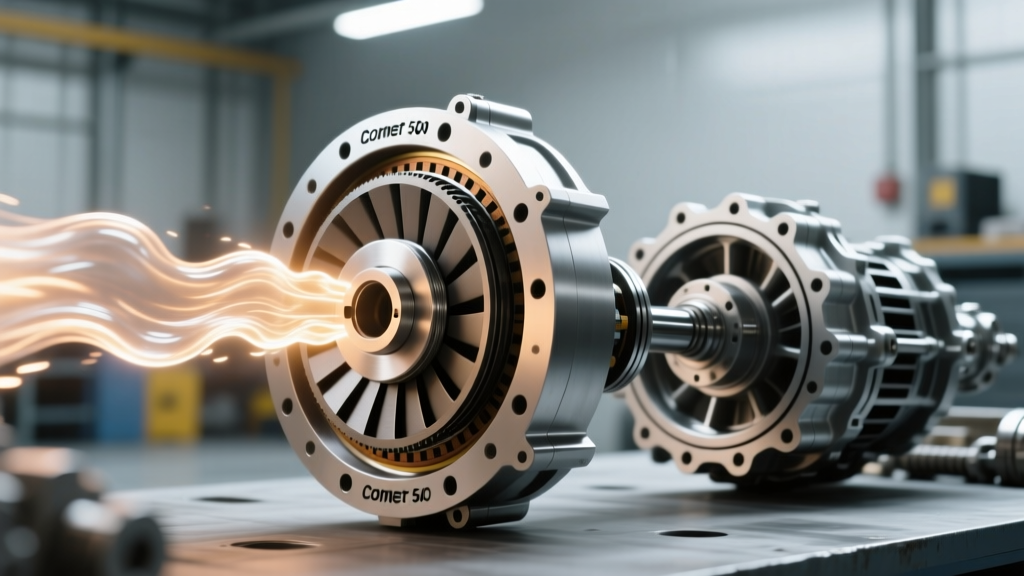
The stator is the heart of torque multiplication. It redirects fluid flow from the turbine back to the impeller, utilizing a one-way clutch (sprag or roller) to lock the stator during initial acceleration. When a sprag fails—often due to shock loading from aggressive trans-brake releases or inadequate line pressure—it 'rolls over' or breaks. The stator then freewheels in both directions. The result? Zero torque multiplication. Your 60-foot times will suffer drastically, and the vehicle will feel as though it is launching in second gear. This is a definitive bad torque converter symptom, not a stall speed mismatch.
TCC Shudder and ECCC Degradation
Modern performance transmissions like the GM 6L80E, 6L90E, and Ford 10R80 utilize Early Converter Clutch Capacity (ECCC) or controlled slip strategies to apply the Torque Converter Clutch (TCC) at low RPMs for fuel economy. In modified applications producing over 450 lb-ft of torque, the OEM carbon-based or Kevlar-lined friction material rapidly glazes. This manifests as a violent 40-60 Hz shudder between 1100 and 1500 RPM under light throttle. While a torque converter stall speed calculator helps you pick the right fluid coupling, it cannot fix degraded friction material or a warped TCC apply piston. Upgrading to a billet cover with a multi-disc clutch pack is mandatory for high-torque builds.
Fin Deformation and Impeller Hub Galling
Under extreme line pressure and horsepower, the internal fins of the impeller and turbine can physically bend or deform. Furthermore, the impeller hub—where the converter mates to the transmission input shaft and front pump gear—can suffer from galling if the transmission fluid becomes contaminated with clutch material or if the cooler circuit is restricted. A deformed fin will cause a sudden drop in flash stall speed and severe overheating (transmission fluid temperatures exceeding 230°F), while hub galling will destroy the front pump bushing, leading to catastrophic fluid leaks from the bellhousing.
Leveraging a Torque Converter Stall Speed Calculator for Upgrades
Once you have confirmed that your current unit is mechanically sound (or accepted that it must be replaced), the torque converter stall speed calculator becomes your most critical tuning tool. However, performance builders must understand the difference between 'True Stall' and 'Flash Stall' to use these calculators effectively.
- True Stall (Footbrake Method): The maximum RPM the engine can reach against the locked brakes with the transmission in gear. This is heavily dependent on the engine's low-end torque and the vehicle's braking capacity.
- Flash Stall: The RPM at which the converter 'catches' and begins to multiply torque during a wide-open-throttle (WOT) launch from a dead stop. This is the metric that actually dictates your 60-foot times and is the primary output of high-end performance calculators.
When inputting data into a calculator, ensure you are using the engine's peak torque RPM, not peak horsepower RPM. A general rule of thumb for street/strip builds is to select a converter that flashes 200-400 RPM below the engine's peak torque RPM. Data from TCI Automotive indicates that matching the flash stall to the onset of the torque curve maximizes the area under the curve during the critical first 1.5 seconds of a pass.
Diagnostic Matrix: Failing Hardware vs. Incorrect Stall
Use the following matrix to cross-reference your driveline behavior before committing to a purchase.
| Symptom | Mechanical Failure (Bad Converter) | Performance Mismatch (Wrong Stall) |
|---|---|---|
| Poor 60-Foot Times | Stator sprag failure; zero torque multiplication. | Stall speed is below engine peak torque RPM. |
| Highway RPM Fluctuation | TCC friction material glazing or solenoid PWM failure. | Converter lacks adequate ECCC capacity for modified torque. |
| Harsh / Delayed Engagement | Internal check ball stuck or damaged stator one-way clutch. | Stall speed too high for mild street cam; low vacuum issues. |
| Excessive Heat (>220°F) | Fin deformation causing internal fluid shear and cavitation. | Driving a high-stall converter in stop-and-go traffic without adequate cooling. |
Real-World Upgrade Scenarios and Installation Specs
As noted in Transmission Digest, the transition from OEM cast converters to aftermarket billet units requires strict adherence to installation protocols and tuning parameters. Below are two common 2026 performance upgrade scenarios.
Scenario A: GM 4L60E / 4L65E with LS Cam Swap
For a naturally aspirated LS build producing 400-450 HP with a 224/228 duration camshaft, the OEM 300mm converter will flash too low, causing the engine to bog off the line. Using a calculator, you determine a 2800-3200 RPM flash stall is required.
- Recommended Upgrade: Circle D 2800-3200 Stall (Part # CD-300-2800-3200). Pricing ranges from $450 to $550.
- Fluid Capacity & Type: 11.5 quarts total system capacity. Must use GM Dexron VI or equivalent synthetic.
- Installation Torque Specs: Flexplate to crank bolts (M10x1.5) must be torqued to 46 lb-ft. Converter to flexplate nuts must be torqued to 46 lb-ft. Ensure a minimum of 0.125-inch clearance between the converter pad and flexplate to prevent front pump gear destruction.
Scenario B: GM 6L80E / 6L90E with LT1/LT4 Supercharger
Adding a centrifugal supercharger to an LT platform pushes torque well beyond the 600 lb-ft threshold. The OEM 258mm converter's single-disc TCC will slip violently under WOT, and the internal fins will balloon under high line pressure.
- Recommended Upgrade: Yank Performance 3000-3200 Billet Multi-Disc (Part # YANK-6L80-3200-MD). Pricing ranges from $850 to $1,150.
- Fluid Capacity & Type: 10.6 quarts (dry). Requires Dexron ULV or high-performance Dexron VI equivalent.
- Tuning Requirements: You must disable ECCC strategies below 1800 RPM via HP Tuners or similar software, and increase TCC apply pressure by 15-20% in the high-torque tables to prevent clutch slip.
- Installation Torque Specs: M10x1.5 flexplate bolts torqued to 46 lb-ft. Use blue Loctite on all converter-to-flexplate hardware.
Expert Insight: Never rely solely on a manufacturer's advertised stall speed. Always perform a footbrake stall test (safely, with upgraded brakes and adequate cooling) after installation to verify the flash stall matches the output of your torque converter stall speed calculator. Atmospheric conditions, engine tune, and rear gear ratios will all influence the final real-world flash point.
Conclusion
Upgrading your driveline requires a methodical approach. By accurately diagnosing bad torque converter symptoms—such as sprag failure, TCC shudder, and fin ballooning—you can avoid wasting time and money on mismatched parts. Once mechanical failure is confirmed or ruled out, utilizing a precise torque converter stall speed calculator ensures your new billet converter perfectly complements your engine's torque curve, resulting in devastating 60-foot times and reliable street manners.