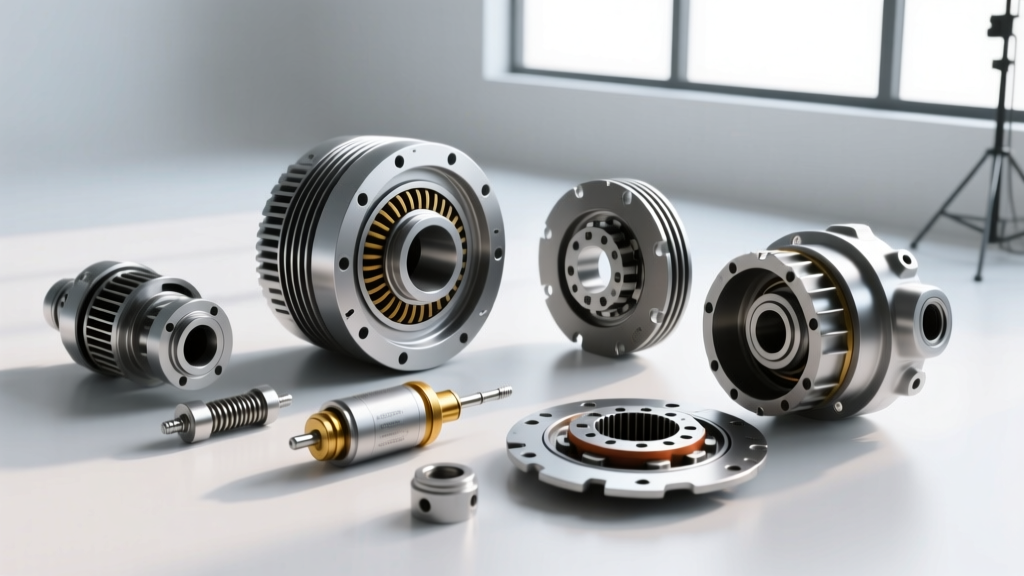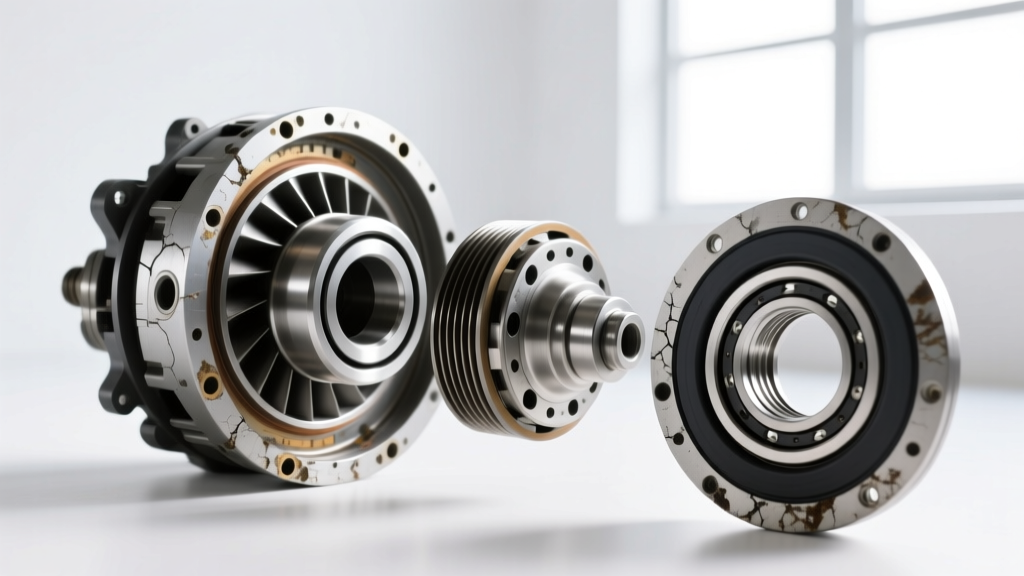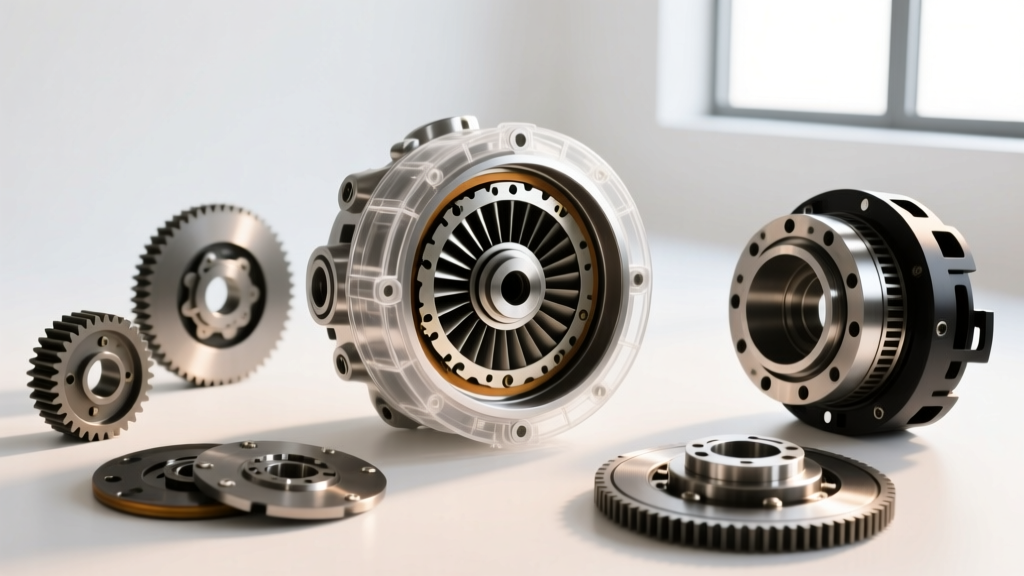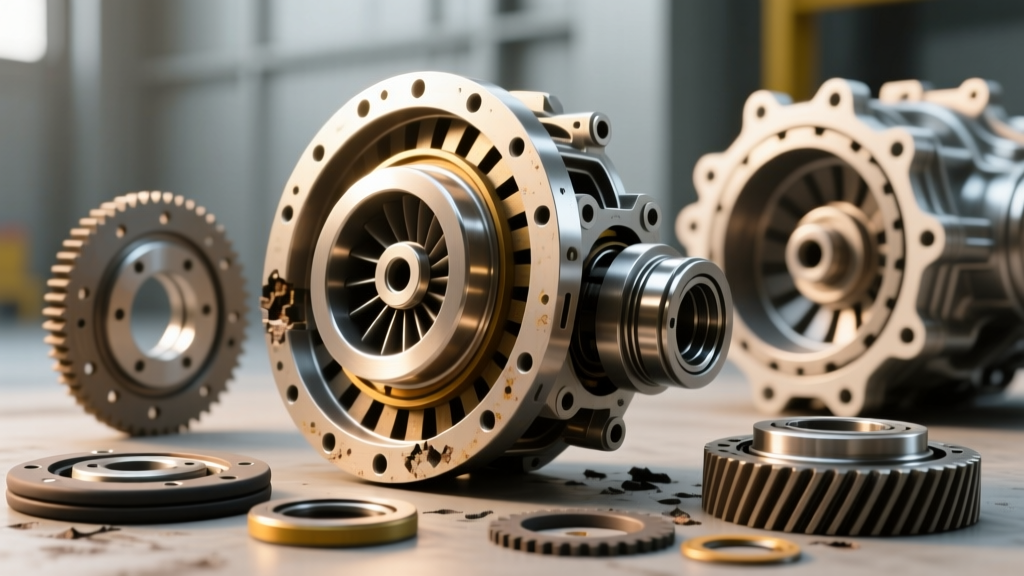
When a torque converter begins to whine, shudder, or leak, the immediate assumption often points toward the torque converter clutch (TCC) or internal transmission damage. However, torque converter bearing and seal issues are among the most insidious failures in modern drivetrains. Not only do these mechanical faults lead to catastrophic fluid loss and debris contamination, but they also fundamentally alter the hydraulic dynamics of the unit. For automotive technicians and informed vehicle owners, understanding the intersection of these mechanical failures, their impact on performance, and the associated 2026 repair costs is critical for accurate diagnosis and budgeting.
The Hidden Link Between Bearing Failure and Torque Converter Stall Speed
It is a common misconception that internal torque converter bearings only affect noise levels. In reality, the health of the stator support, turbine, and impeller bearings directly dictates hydraulic efficiency and rotational freedom. When a stator support bearing (often a Torrington-style needle bearing or a roller bearing in newer units) begins to fail, it introduces severe parasitic drag.
This mechanical binding prevents the stator from freewheeling or redirecting fluid efficiently during the coupling phase. If you perform a stall test on a vehicle with a seizing stator bearing or a dragging one-way clutch, the engine will struggle to overcome the internal friction. Consequently, you will record an artificially low torque converter stall speed. Instead of reaching the manufacturer-specified RPM (typically between 1,800 and 2,400 RPM for stock passenger vehicles), the engine may bog down at 1,400 RPM, mimicking a severe engine misfire or an over-tightened converter.
Conversely, if the turbine shaft seals or stator support O-rings blow out, internal hydraulic pressure drops. The TCC may fail to apply, or the converter may experience massive internal slip under load. This erratic slip can falsely elevate the perceived torque converter stall speed during heavy throttle application, accompanied by a violent shudder and rapid transmission fluid overheating. According to Sonnax Technical Resources, ignoring these early seal and bearing warnings inevitably leads to total transmission failure due to metallic debris circulating through the valve body and cooler lines.
Diagnosing Bearing and Seal Failures
Before tearing down the transmission or ordering a replacement unit, a systematic diagnostic approach is required to confirm bearing and seal degradation.
- Auditory Diagnostics: A failing impeller or turbine bearing typically produces a high-pitched whine that correlates directly with engine RPM, regardless of vehicle speed or gear selection. A stator bearing failure often presents as a deeper growl that changes pitch when the TCC locks and unlocks.
- Fluid Analysis: Pull the transmission dipstick or drain a small sample from the pan. Bearing failure will leave a distinct "glitter" or metallic sheen in the fluid. If the fluid smells burnt and contains brass or steel particulates, the converter bearings have likely disintegrated.
- Pressure Testing: Hook up a transmission pressure gauge. A blown turbine shaft seal will manifest as a severe pressure drop in the TCC apply circuit, often dropping below 40 PSI when it should hold 80-120 PSI depending on the vehicle.
- Stall Testing: Safely perform a stall test (maximum 5 seconds, with adequate cooling time between tests). Compare the recorded RPM against the OEM specification to determine if internal drag is depressing the torque converter stall speed.
2026 Cost Breakdown: Parts, Labor, and Machine Shop Fees
The cost to address torque converter bearing and seal issues varies wildly depending on whether you opt for an OEM replacement, a remanufactured unit, or an in-house cut-and-weld rebuild. Because the transmission must be removed to access the converter, labor constitutes the largest portion of the invoice. Below is a comparative cost analysis for common platforms in 2026.
| Transmission Model | Common Failure Point | OEM TC Cost | Reman TC Cost | Avg. Labor (R&R) | Total Est. Cost |
|---|---|---|---|---|---|
| GM 6L80 / 6L90 | Stator support bearing, Pump cover seal | $950 - $1,300 | $400 - $650 | $900 - $1,400 | $1,450 - $2,700 |
| Ford 6R80 | Front pump seal, Impeller bearing | $800 - $1,100 | $350 - $550 | $850 - $1,300 | $1,300 - $2,400 |
| ZF 8HP (8HP45/70) | Mechatronic sleeve seal, Turbine shaft O-ring | $1,200 - $1,800 | $600 - $900 | $1,100 - $1,600 | $1,900 - $3,400 |
| GM 4L60E (Legacy) | Front seal, Stator roller clutch | N/A (Discontinued) | $250 - $400 | $600 - $900 | $950 - $1,400 |
*Note: Labor rates are calculated based on a national average of $130–$175 per hour for 2026. Total costs do not include mandatory fluid exchanges, filter kits, or rear main seal replacements, which are highly recommended while the transmission is out.
The Economics of In-House Torque Converter Rebuilding
For high-volume transmission shops, buying a $15,000 torque converter rebuilder machine (such as those from ProCut or Raybestos) allows for in-house bearing and seal replacements. A bearing and seal kit for a 6L80 (e.g., Sonnax 104740-01K) costs roughly $85 to $120. However, the labor to cut the converter on a lathe, clean the halves, replace the Torrington bearings, install new O-rings, and weld the unit back together under a controlled argon gas environment takes roughly 2.5 hours. For most independent repair facilities, purchasing a remanufactured unit with a 3-year/100,000-mile warranty remains the most cost-effective and liability-free route.
Model-Specific Failure Points and Repair Nuances
GM 6L80 and 6L90 Platforms
The 6L80 is notorious for stator support bearing wear, which subsequently eats into the pump cover. If the bearing fails and the shop simply replaces the torque converter without inspecting the transmission pump cover, the new converter will fail within 10,000 miles. Shops must use a straight-edge and feeler gauge to check the pump cover mating surface for grooves. If grooves exceed 0.005 inches, the pump cover must be replaced or machined, adding $150–$300 to the parts cost. Furthermore, the 6L80 requires Dexron ULV fluid, which costs approximately $14–$18 per quart. With a dry-fill capacity of over 11 quarts, fluid alone adds $160+ to the repair bill.
ZF 8HP Series (BMW, Chrysler, Audi)
The ZF 8HP utilizes a highly complex internal seal arrangement. Turbine shaft seal degradation is common, leading to TCC shudder and erratic line pressures. Replacing these seals requires specialized alignment tools during the re-welding process. Because ZF does not sell OEM torque converters directly to consumers in many regions, buyers often rely on premium remanufacturers like Circle D or Precision Industries, which charge a premium ($700+) for upgraded Kevlar-lined clutches and billet stator supports to prevent future bearing misalignment.
Shop Foreman Tip: Never install a new or remanufactured torque converter dry. Always pour at least 2 to 3 quarts of the correct transmission fluid directly into the converter hub before mating it to the flexplate. Furthermore, generously lubricate the front pump seal lip and the converter hub with assembly lube or trans fluid to prevent the seal from burning up during the critical first 30 seconds of initial startup.
Critical Torque Specs and Installation Best Practices
Improper installation is a leading cause of premature bearing failure. If the flexplate is warped or the torque converter is not fully seated into the transmission front pump, the converter will be "pulled" forward when the bellhousing is bolted to the engine block. This places immense lateral stress on the impeller and turbine bearings, guaranteeing a failure within 5,000 miles.
Essential Installation Specifications:
- Flexplate Runout: Must be checked with a dial indicator. Maximum allowable runout is typically 0.020 inches (0.50 mm). If the flexplate is bent, it will wobble the converter hub, destroying the front pump seal and bearings.
- Converter Seating: You must feel three distinct "clunks" or drops when seating the converter into the transmission (engagement with the turbine splines, the stator support splines, and the front pump drive gear). Measure the distance from the bellhousing mounting pad to the converter mounting pad. It should be at least 1/8 to 3/16 of an inch recessed.
- GM 6L80 / 4L60E Flexplate-to-Converter Bolts: M10x1.5 (or 3/8"-24 UNF). Torque to 46 lb-ft (62 Nm). Use a star pattern and apply a medium-strength threadlocker (Blue Loctite).
- Ford 6R80 Flexplate-to-Converter Bolts: M10x1.25. Torque to 37 lb-ft (50 Nm).
- Bellhousing-to-Engine Block Bolts: Typically M12 bolts torqued to 37–50 lb-ft (50–68 Nm) depending on the specific OEM service manual.
Final Verdict: Rebuild vs. Replace
When faced with torque converter bearing and seal issues, the data heavily favors replacing the unit with a high-quality remanufactured converter rather than attempting a patch-repair. The internal environment of a modern torque converter operates under extreme hydraulic pressure and thermal stress. Once a bearing has failed, metallic debris has already compromised the internal clutch linings and the one-way stator clutch.
By understanding how these mechanical faults alter the torque converter stall speed and recognizing the early auditory and fluid-based symptoms, technicians and owners can catch the issue before it sends shrapnel through the transmission cooler and valve body. Budgeting between $1,500 and $2,800 for a comprehensive R&R job, including premium synthetic fluid and a remanufactured unit, ensures the vehicle returns to the road with factory-verified hydraulic integrity and performance.
For further technical diagrams and bearing upgrade kits, technicians are encouraged to consult the Automatic Transmission Rebuilders Association (ATRA) technical database or review the latest service bulletins via Transmission Digest.