Introduction: Why Kit Selection Dictates Tacoma Longevity
Executing a flawless Toyota Tacoma clutch replacement begins long before you unbolt the transmission crossmember. Whether you are maintaining a rugged 2nd-generation 4.0L V6 or a modern 3rd-generation 3.5L trail rig, the manual transmission ecosystem in these trucks is highly sensitive to component matching. In 2026, the aftermarket is flooded with budget friction kits that promise OE replacement but deliver chatter, premature wear, and hydraulic failure. As an automotive transmission specialist, I have rebuilt dozens of Toyota RA60, R150F, and AC60 manual gearboxes. The most common point of failure is not the installation technique, but the selection of an incompatible or incomplete clutch kit.
This step-by-step guide will walk you through the exact methodology for selecting the correct clutch kit, verifying hydraulic compatibility, and understanding the precise torque specifications required to keep your Tacoma shifting smoothly for the next 100,000 miles.
Step 1: Identify Your Tacoma’s Transmission & Application
Toyota utilized several manual transmissions across the Tacoma lineup. Ordering a kit based solely on the vehicle year and engine displacement is a rookie mistake that often results in receiving a misaligned throwout bearing or an incorrect spline count. You must first identify your exact transmission model.
Second Generation (2005–2015)
- 2.7L I4 (2TR-FE): Typically paired with the RA60 or RC60 5-speed manual. These require a 23-spline disc and an external hydraulic slave cylinder mounted on the bellhousing.
- 4.0L V6 (1GR-FE): Paired with the robust R150F 6-speed manual. This transmission requires a heavy-duty 23-spline disc capable of handling the V6’s 266 lb-ft of torque. Like the 4-cylinder, it uses an external slave cylinder.
Third Generation (2016–2023)
- 3.5L V6 (2GR-FKS): Mated to the AC60 6-speed manual. Critical Note: The AC60 abandons the external slave cylinder in favor of a Concentric Slave Cylinder (CSC) located inside the bellhousing. If your kit does not include a CSC, or if you reuse the old one, you will be pulling the transmission again within 10,000 miles.
Step 2: Choose the Right Friction Material
Tacomas are frequently used for towing, off-roading, and overlanding. Your friction material must match your use case. Selecting a ceramic puck disc for a daily-driven grocery getter will result in violent engagement and destroyed engine mounts, while an organic disc will glaze instantly if you frequently tow a 4,000-lb trailer in mountainous terrain.
| Material Type | Torque Capacity | Engagement Feel | Best Application | Estimated Cost (Kit) |
|---|---|---|---|---|
| OEM Organic | OE (Up to 280 lb-ft) | Smooth, linear, forgiving | Daily driving, light towing, highway | $180 - $250 |
| Heavy-Duty Organic | +20% over OE | Slightly firmer, very streetable | Overlanding, moderate towing, larger tires | $220 - $320 |
| Ceramic Puck | +60% over OE | Aggressive, on/off switch feel | Drag racing, heavy rock crawling | $300 - $450 |
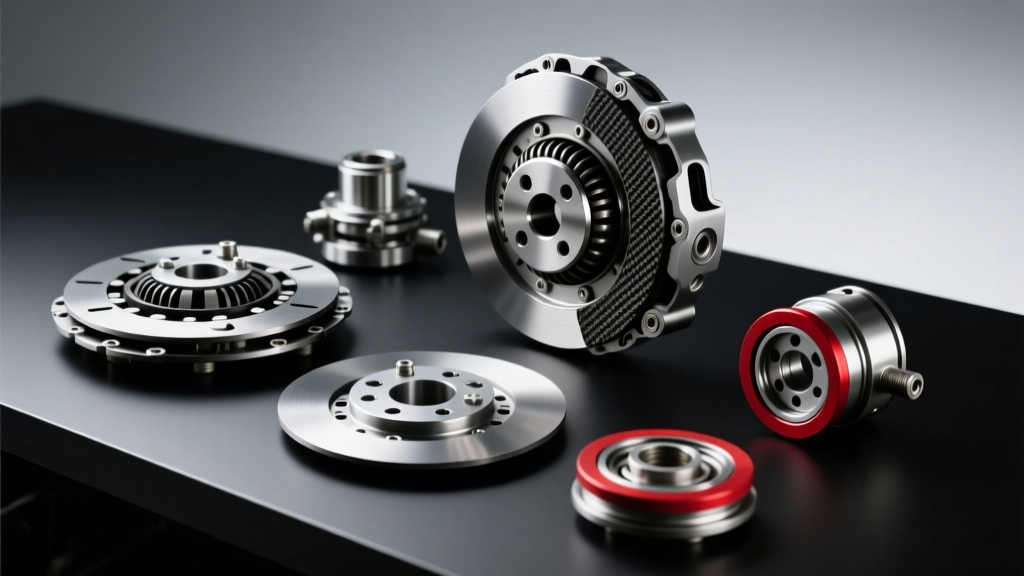
| Kevlar / Carbon | +40% over OE | Progressive but firm, requires break-in | High-performance street, desert running | $400 - $600 |
Step 3: Evaluate Top Kit Brands and Part Numbers
When sourcing parts for a Toyota Tacoma clutch replacement, stick to Tier-1 OE suppliers or premium aftermarket manufacturers. Avoid unbranded 'white box' kits found on budget e-commerce sites, as their pressure plate diaphragm springs are notorious for collapsing under high-RPM shifts.
1. Aisin (The OEM Choice)
Aisin is the original equipment manufacturer for Toyota’s hydraulic and clutch components. Their kits are essentially the genuine Toyota box without the dealership markup. For the 4.0L V6 Tacoma, the Aisin CKT-1004 is the gold standard. It includes an organic disc, a perfectly balanced pressure plate, and a high-quality release bearing. Expect to pay around $190 to $230.
2. Exedy (The Premium Aftermarket)
Exedy builds exceptional replacement and upgraded kits. For the 2nd-Gen 4.0L, the Exedy TYK04 (or KIK05 depending on exact sub-model year) offers a slightly thicker friction material and a reinforced diaphragm spring. For 3rd-Gen owners looking for a reliable OEM replacement that includes the vital CSC, Exedy’s OE replacement lines are highly recommended by the experts at Exedy Global Parts.
3. Genuine Toyota (The Dealership Route)
If you prefer genuine OEM, you will usually buy the components piecemeal rather than as a single box kit. The OEM Clutch Disc for the 4.0L is part number 31250-35340. While guaranteed to fit, sourcing all genuine Toyota pressure plates, discs, and bearings will push your parts cost well over $550.
Step 4: Verify Kit Inclusions (The 'Missing Parts' Trap)
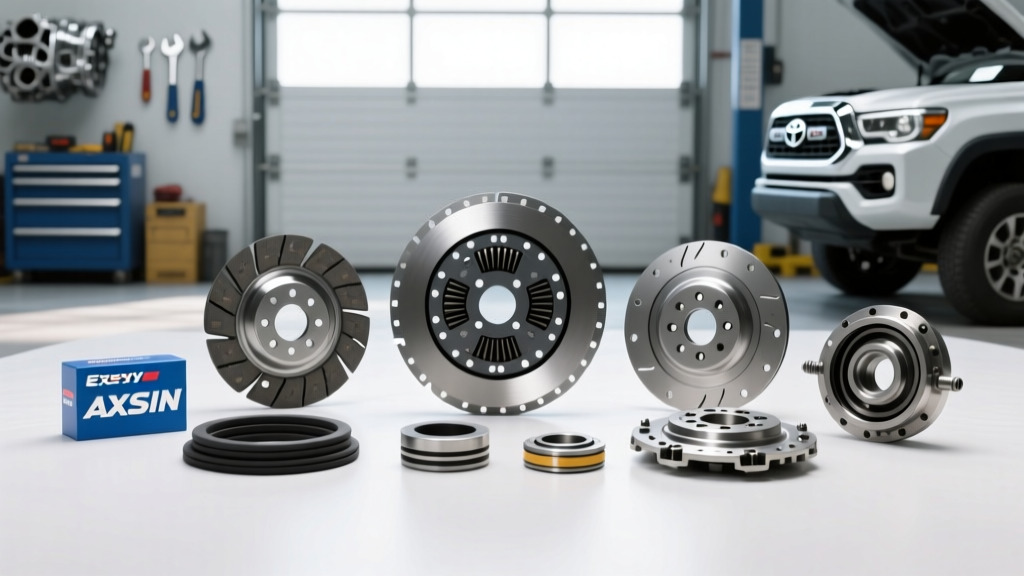
A complete Toyota Tacoma clutch replacement requires more than just the disc and pressure plate. Before finalizing your order, cross-reference your cart against this mandatory checklist:
- Clutch Disc & Pressure Plate: Ensure the spline count (usually 23) and diameter (usually 225mm or 240mm) match your flywheel.
- Throwout Bearing / Release Bearing: Never reuse the old bearing. The labor cost to access it a second time dwarfs the $30 cost of a new bearing.
- Pilot Bearing: Pressed into the rear of the crankshaft. A seized pilot bearing will snap your transmission input shaft. Buy a high-quality NSK or Koyo bearing.
- Slave Cylinder (CRITICAL): As noted in Step 1, 3rd-Gen AC60 transmissions require a Concentric Slave Cylinder (CSC). OEM part number 31360-0K042 is highly recommended. Do not buy cheap aftermarket CSCs; they are prone to internal seal blowouts. Read the deep-dive hydraulic discussions on TacomaWorld to see the catastrophic failure rates of budget CSCs.
- Alignment Tool: Most quality kits include a basic plastic spline tool. If yours does not, purchase a metal 23-spline alignment mandrel to ensure the disc is perfectly centered, otherwise the transmission will not mate to the engine block.
Pro-Tip: The Flywheel Dilemma
Unlike older vehicles with easily resurfaced cast-iron flywheels, many modern Tacomas utilize stepped or dual-mass equivalent flywheels that are difficult to machine locally. If your flywheel has heat spots, bluing, or deep scoring, do not attempt to sand it. Purchase a new OEM flywheel (Part # 13405-75060 for select 4.0L models) or a high-quality single-mass conversion flywheel from a reputable brand like LUK or Sachs. Machining a stepped flywheel beyond its tolerance will result in severe clutch chatter.
Step 5: Pre-Installation Inspection & Torque Specifications
Once your kit arrives, perform a physical inspection. Compare the new pressure plate diaphragm fingers to the old ones; they should sit perfectly level. Check the friction disc for any shipping damage or oil contamination. If the disc has oil on it, do not install it—return it immediately.
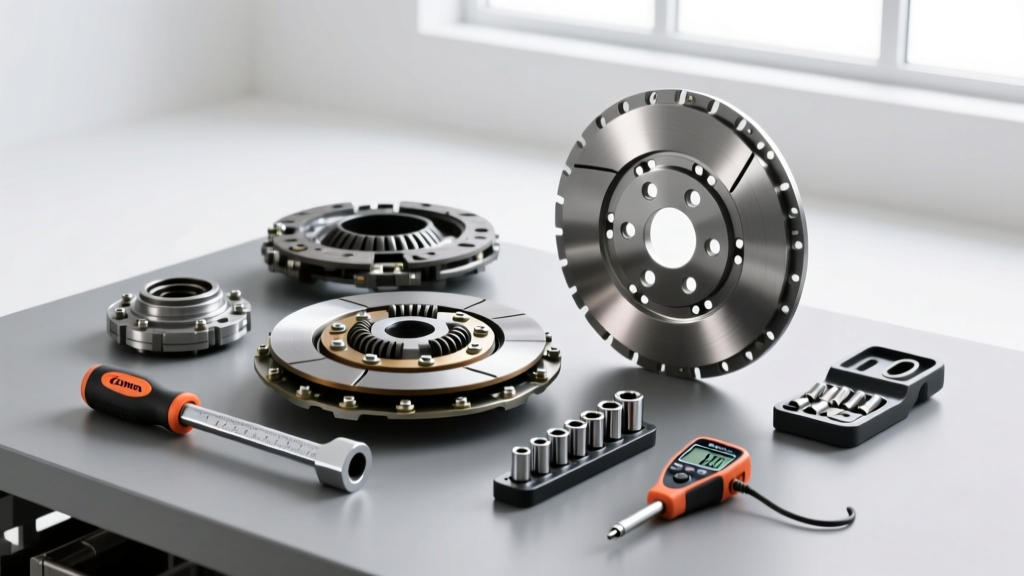
During installation, adhering to factory torque specifications is non-negotiable. Over-torquing the pressure plate can warp the casting, leading to uneven clamping force and premature wear. Below are the critical torque specs for the most common Tacoma manual configurations (always verify against your specific year's factory service manual, which can be accessed via Toyota Owners).
Essential Torque Specifications
- Flywheel to Crankshaft (4.0L 1GR-FE): 65 ft-lbs (Use a star pattern and apply a medium-strength thread locker to the bolts).
- Flywheel to Crankshaft (3.5L 2GR-FKS): 96 ft-lbs (Plus a 90-degree angle turn if specified by your exact model year TIS data).
- Pressure Plate to Flywheel (M8 Bolts): 14 ft-lbs. Do not exceed this. Use a crisscross star pattern, tightening in three progressive steps to ensure the diaphragm spring compresses evenly.
- Bellhousing to Engine Block (Upper Bolts): 47 ft-lbs.
- Bellhousing to Engine Block (Lower Bolts): 23 ft-lbs.
- Rear Driveshaft Flange (4WD Models): 54 ft-lbs.
Conclusion: Bleeding the System and Break-In
After mating the transmission, reinstalling the driveline, and filling the gearbox with the correct GL-4 gear oil (typically 75W-90), the final step of the Toyota Tacoma clutch replacement is bleeding the hydraulic system. Because Tacomas use a long hydraulic line that routes near the exhaust, heat can cause fluid degradation. Flush the system with fresh DOT 3 or DOT 4 brake fluid until no air bubbles are visible in the slave cylinder actuation.
Finally, remember that organic and Kevlar clutch kits require a break-in period. Drive conservatively for the first 500 miles, avoiding hard launches, aggressive towing, and high-RPM shifts. This allows the friction material to mate perfectly to the flywheel surface, ensuring your Tacoma is ready for whatever the trail throws at it next.