The True Honda Civic Clutch Replacement Cost: Why the Flywheel Matters
When calculating the total honda civic clutch replacement cost, ignoring the flywheel is a rookie mistake that leads to premature drivetrain failure. For modern manual Honda Civics—particularly the 8th Gen (FA5/FG2), 9th Gen, and 10th Gen Si models equipped with K-series engines—the flywheel is not just a friction surface; it is a critical harmonic dampener. As we navigate the 2026 automotive repair landscape, labor rates have climbed to an average of $145 to $195 per hour at specialized import shops. Consequently, dropping the transmission twice because a machinist skipped flywheel resurfacing or replacement is a financial disaster.
This preventive maintenance guide dissects the real costs, part numbers, and mechanical protocols required when replacing the clutch and flywheel assembly on Honda's transverse front-wheel-drive platforms.
Preventive Diagnostics: Spotting Flywheel Wear Early
Before the clutch slips or the release bearing disintegrates, the flywheel often broadcasts warning signs. Preventive maintenance begins with recognizing these auditory and tactile symptoms:
- Idle Gear Rattle: A distinct metallic clatter when the clutch pedal is released at idle, which disappears when the pedal is depressed. This indicates worn internal springs in a Dual-Mass Flywheel (DMF) or excessive input shaft bearing play.
- Engagement Shudder: A violent chassis vibration upon releasing the pedal in first gear, caused by uneven friction material deposits or heat-warped flywheel faces (exceeding 0.003 inches of lateral runout).
- Pedal Pulsation: A rhythmic feedback through the clutch master cylinder, signaling that the flywheel's damping mechanism is failing to absorb the K-engine's torsional vibrations.
OEM Dual-Mass vs. Aftermarket Single-Mass: A Cost & Performance Breakdown
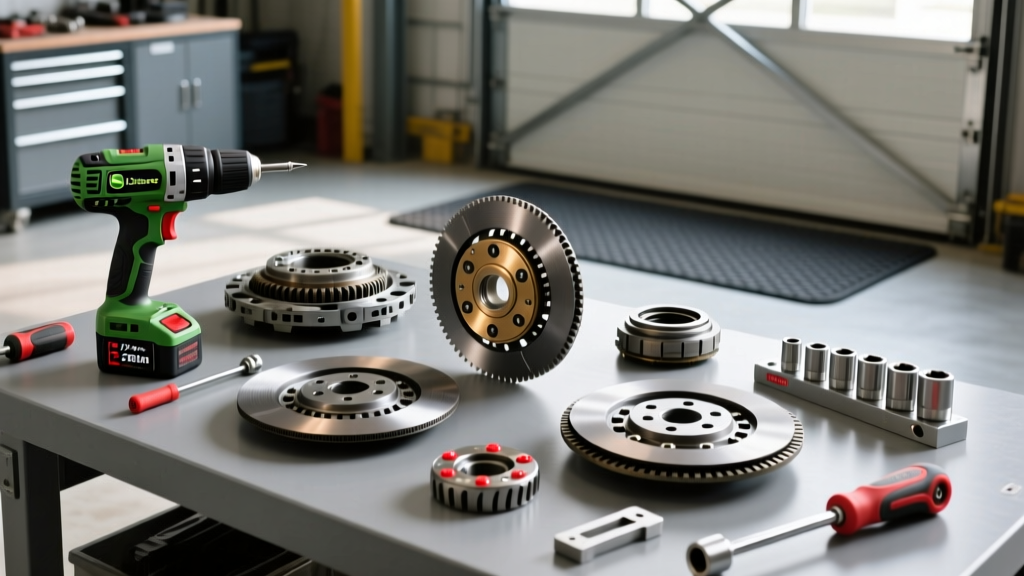
The most significant variable in your honda civic clutch replacement cost is the choice between retaining the factory Dual-Mass Flywheel (DMF) or converting to a Single-Mass Flywheel (SMF). Honda utilizes DMFs on higher-torque applications (like the 1.5T L15B7 and 2.0T K20C1) to protect the transmission gears from low-RPM shock loading.
| Flywheel Type | Example Part Number | Avg. Part Cost (2026) | NVH Impact | Preventive Lifespan |
|---|---|---|---|---|
| OEM Honda DMF | 22100-5A6-A01 (10th Gen Si) | $850 - $1,150 | Stock (Zero cabin vibration) | 80k - 100k miles |
| Exedy SMF Conversion | HFK015 / HFK021 | $450 - $600 | Moderate (Low-RPM gear rattle) | 120k+ miles (with sprung hub) |
| ACT Sprung Hub SMF | Honda ProLite / XACT | $700 - $950 | Low-Moderate (Chromoly construction) | 100k+ miles |
Source data aggregated from RockAuto and Exedy USA 2026 catalogs.
The Financial Reality: Dealership vs. Independent Specialist
If you opt for the OEM DMF route at a Honda dealership, expect the invoice to hover between $2,400 and $3,100. This includes the OEM clutch kit, the DMF, factory M10x1.25 flywheel bolts (which are torque-to-yield and must be replaced), and 7.0 hours of book labor. Conversely, an independent shop performing an SMF conversion using an Exedy Stage 1 Organic kit will typically quote between $1,300 and $1,700. While the SMF saves money upfront and eliminates future DMF spring failures, it transfers torsional vibration to the transmission case, requiring the driver to adopt preventive driving habits (detailed below).
Step-by-Step Preventive Replacement Protocol
Executing a flawless clutch and flywheel swap on a Honda Civic requires adherence to strict engineering tolerances. The transverse layout and compact engine bay demand precision.
1. Hydraulic System Overhaul
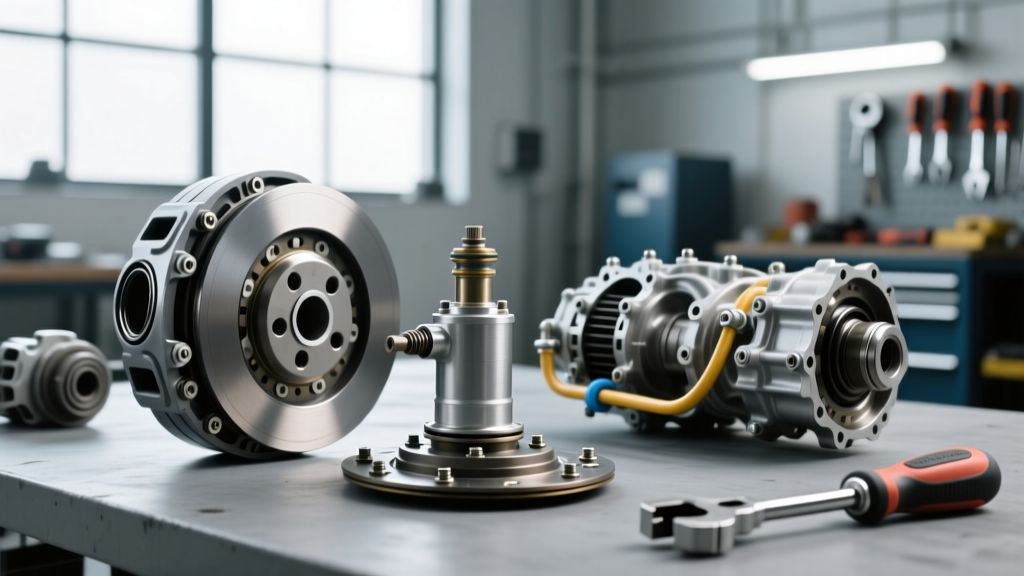
Never reuse the old clutch slave cylinder when the transmission is out. Honda's concentric slave cylinders (CSC) or external push-rod slaves are prone to internal seal degradation. Flush the system with Acura Heavy Duty DOT 4 Brake Fluid (Part #08798-9066) using a Motive power bleeder to ensure zero air pockets in the clutch delay valve circuit. Air in the line causes incomplete disengagement, which grinds the synchronizers and prematurely destroys your new clutch disc.
2. Flywheel Mounting and Torque Specifications
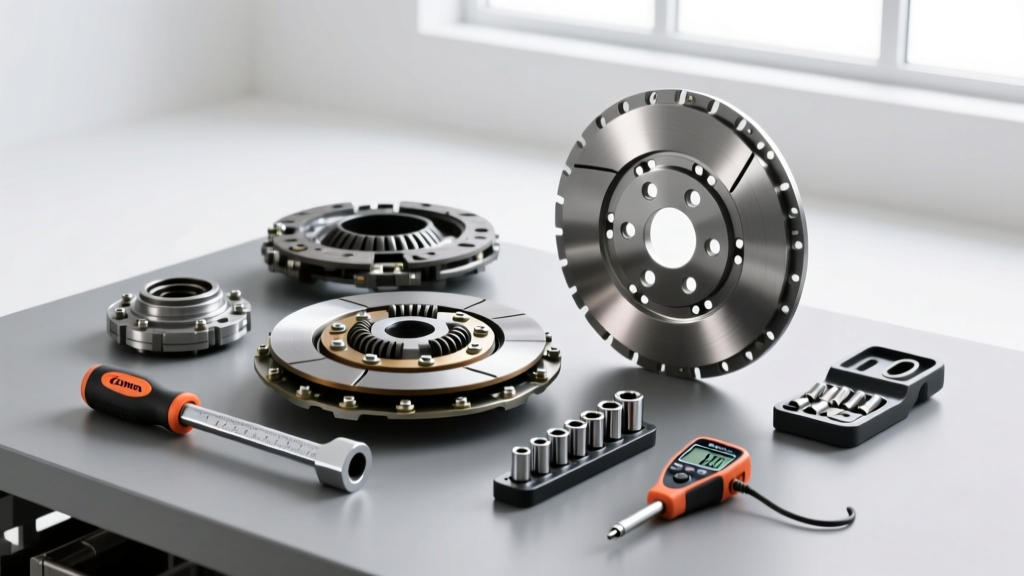
The mating surface between the crankshaft and the flywheel must be surgically clean. Any debris will cause lateral runout, leading to immediate clutch shudder. Consult the Honda-Tech archives for generation-specific nuances, but adhere to these baseline torque specs for K-series and L-series engines:
- Flywheel to Crankshaft Bolts: OEM TTY bolts require a multi-stage torque. Typically 36 lb-ft, followed by 76 lb-ft, and finally a 90-degree turn. If upgrading to ARP flywheel bolts (e.g., ARP 208-2802), torque to 85 lb-ft using ARP Ultra-Torque lube.
- Pressure Plate to Flywheel: 19 lb-ft (26 Nm) in a crisscross star pattern to ensure even diaphragm spring loading.
- Transmission Bellhousing to Block: 12mm bolts at 47 lb-ft; 10mm bolts at 33 lb-ft.
- Front Axle Nuts: 36mm spindle nuts must be torqued to 134 lb-ft (or up to 180 lb-ft on newer CVT/Si hubs) and staked properly to prevent bearing preload loss.
3. Clutch Alignment and Break-In
Use a dedicated Honda input shaft alignment tool (typically 22mm or 24mm depending on the transmission code, such as the QSVL 6-speed). Misalignment by even a fraction of a millimeter will cause the disc to bind on the input shaft splines, resulting in a clutch that refuses to disengage. After installation, mandate a 500-mile city-driving break-in period. Avoid highway slipping or aggressive launches to allow the organic friction material to bed properly into the flywheel's cross-hatch pattern.
Long-Term Drivetrain Preservation: Habits That Save Your Flywheel
Whether you installed an $1,100 OEM DMF or a $500 aftermarket SMF, driver behavior dictates the lifespan of the assembly. To maximize the interval before your next honda civic clutch replacement cost is incurred, implement these preventive driving techniques:
Stop Lugging the Engine
Lugging a high-compression engine like the K20C1 at 1,500 RPM in 6th gear generates massive torsional spikes. In a DMF, this forces the internal arc springs to compress violently against their stops, eventually snapping them. In an SMF, this shock load is transmitted directly to the transmission's main shaft and differential pins. Always downshift to keep RPMs above 2,200 under load.
Master Rev-Matching
Aggressive downshifts without proper rev-matching force the synchronizers to absorb the kinetic energy difference, but the resulting shockwave travels through the input shaft and into the clutch hub springs. Blipping the throttle to match engine speed to wheel speed preserves the brass synchros, the clutch hub dampeners, and the flywheel springs simultaneously.
Avoid 'Resting' on the Pedal
Even a slight 5 lbs of resting pressure on the clutch pedal can overcome the return spring tension, slightly engaging the release bearing against the diaphragm fingers. This causes micro-slipping, generating immense heat that glazes the friction disc and warps the flywheel face. Keep your left foot firmly on the dead pedal.
By understanding the mechanical realities of the Honda manual drivetrain and investing in the correct flywheel setup during your initial service, you transform a recurring maintenance nightmare into a long-term, reliable driving experience.