The Economics of Clutch Service: Accessory vs. Drivetrain
When automotive professionals discuss clutch service, the conversation typically splits into two distinct categories: drivetrain manual transmission clutches and accessory electromagnetic clutches. Understanding the cost and technical requirements for both is essential for accurate shop estimating and DIY budgeting in 2026. In this comprehensive guide, we break down the clutch replacement cost by vehicle type, while providing a deep-dive technical masterclass on the toyota tacoma ac compressor clutch replacement—one of the most common accessory clutch services requested in modern light trucks.
Expert Guide: Toyota Tacoma AC Compressor Clutch Replacement
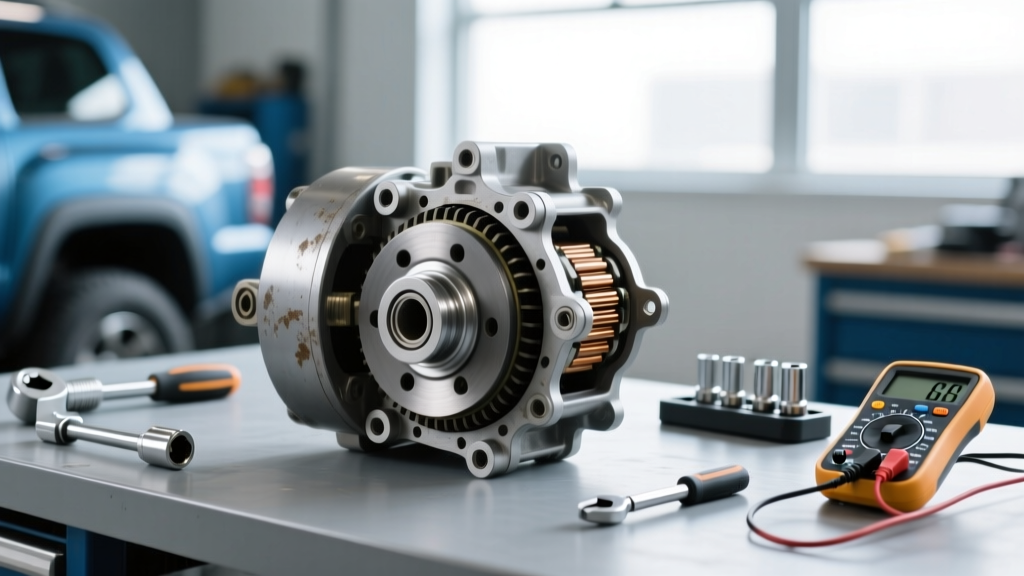
The Toyota Tacoma (particularly models from 2005 through the current generation) frequently utilizes Denso 10S17C or 10PA17C swashplate compressors. A failing AC clutch does not always mandate a full compressor replacement. By isolating the electromagnetic clutch assembly, technicians can save customers hundreds of dollars.
Diagnostic Parameters & Failure Modes
- Electromagnetic Coil Failure: Using a digital multimeter, test the coil resistance. According to Toyota Technical Information System (TIS), a healthy Denso coil should read between 3.5 and 4.5 ohms at 68°F (20°C). An infinite reading indicates an open circuit (burnt coil), while near-zero indicates a short.
- Bearing Degradation: A continuous grinding noise with the AC turned off points to a failed pulley bearing, requiring a complete clutch pulley assembly replacement.
- Air Gap Drift: Over time, the friction surfaces wear, widening the air gap. If the gap exceeds 0.6mm (0.024 inches), the magnetic field cannot pull the pressure plate across the gap when the coil is hot, resulting in intermittent cooling.
Replacement Procedure & Torque Specifications
When performing a toyota tacoma ac compressor clutch replacement, precision is mandatory. You do not need to evacuate the refrigerant system if you are only replacing the external clutch assembly (pulley, coil, and pressure plate).
- Removal: Use a clutch holding tool to prevent the compressor from turning while removing the center pressure plate bolt (typically a 10mm hex). Remove the pressure plate and shim(s).
- Pulley & Coil: Remove the snap ring securing the rotor pulley. Use a specialized 3-jaw puller to extract the pulley. Remove the coil retaining snap ring and slide the electromagnetic coil off the compressor snout.
- Installation: Install the new coil (OEM Denso part #447200 or equivalent UAC CO 29002C). Ensure the electrical connector clocking matches the factory harness to prevent wire chafing.
- Shimming the Air Gap: This is the most critical step. Install the new pulley and pressure plate. Use a feeler gauge to measure the gap at three equidistant points. The target specification is 0.3mm to 0.5mm (0.012" - 0.020"). Add or remove the internal shims on the compressor shaft to achieve this exact tolerance.
- Torque: Torque the center pressure plate bolt to 10 Nm (88 in-lbs). Do not overtighten, as this will strip the aluminum compressor shaft threads.
2026 Clutch Replacement Cost by Vehicle Type
While accessory clutches like the AC compressor require localized precision, drivetrain clutch replacements demand heavy mechanical labor. Below is an expert analysis of manual and CVT clutch replacement costs across different vehicle platforms, reflecting 2026 labor rates and parts pricing sourced from industry databases like RepairPal and RockAuto.
| Vehicle Category | Clutch Type | Avg Parts Cost (2026) | Avg Labor Hours | Total Estimated Cost |
|---|---|---|---|---|
| Passenger Cars (FWD) | Dry Single-Plate (Transaxle) | $150 - $400 | 4.5 - 6.5 | $750 - $1,450 |
| Light Trucks (RWD/4WD) | Dry Single/Dual-Mass | $300 - $900 | 6.0 - 9.0 | $1,200 - $2,800 |
| Heavy Duty Trucks | Dual-Mass / Cerametallic | $800 - $1,800 | 8.0 - 12.0 | $2,200 - $4,500 |
| Motorcycles | Wet Multi-Plate | $80 - $250 | 1.5 - 3.0 | $250 - $650 |
| ATVs / UTVs | CVT Primary / Secondary | $200 - $700 | 2.0 - 4.5 | $450 - $1,300 |
Passenger Cars (FWD Transaxles)
Front-wheel-drive passenger vehicles (e.g., Honda Civic, Hyundai Elantra) require the removal of the entire transaxle, half-shafts, and often the subframe. While the labor is moderately intensive, the parts are relatively inexpensive. A standard LuK or Sachs RepSet (including disc, pressure plate, and release bearing) typically costs under $300. However, if the vehicle utilizes a hydraulic concentric slave cylinder (CSC) located inside the bell housing, the CSC must be replaced concurrently, adding $80-$150 to the parts cost.
Light & Heavy Duty Trucks (RWD/4WD)
Trucks like the manual-shift Toyota Tacoma, Ford F-150, or Dodge Ram present unique challenges. 4WD models require the removal of the transfer case, front and rear driveshafts, and heavy-duty crossmembers. Furthermore, many modern diesel and heavy-duty gas trucks utilize Dual-Mass Flywheels (DMF) to dampen torsional vibrations. A DMF replacement alone can exceed $800 in parts. Expert Tip: When replacing a DMF, always verify the crankshaft endplay and flywheel runout using a dial indicator; maximum allowable runout is typically 0.005 inches. Excessive runout will destroy the new clutch damper springs within 5,000 miles.
Motorcycles (Wet Multi-Plate Clutches)
Motorcycle clutches operate in an oil bath, meaning friction plates, steel separator plates, and clutch springs are submerged in engine oil. Replacement involves draining the oil, removing the right-side engine cover, and unbolting the clutch basket. The primary cost driver here is OEM friction plates (e.g., EBC CK series or OEM Honda/Yamaha). Always measure the free length of the clutch springs with calipers; if they have compressed beyond the manufacturer's service limit (often a 1-2mm reduction from stock), they must be replaced to prevent clutch slip under heavy throttle.
ATVs and UTVs (CVT Primary & Secondary Clutches)
Off-road vehicles like the Polaris RZR or Can-Am Maverick rely on Continuously Variable Transmissions (CVTs). These do not use traditional friction discs but rather variable-diameter pulleys (clutches) connected by a Kevlar drive belt. Rebuilding a primary clutch involves replacing the internal rollers, sliders, and the main bearing. A common failure point is the one-way bearing inside the primary clutch, which can seize and snap the drive belt at high RPMs. Rebuilding a primary clutch requires a specialized clutch puller and a compression tool to safely overcome the massive tension of the torsional spring.
Diagnostic Best Practices & Tool Requirements
Whether you are tackling a toyota tacoma ac compressor clutch replacement or a full manual transmission teardown, having the correct diagnostic tools separates amateur guesswork from professional reliability.
- Dial Indicator & Magnetic Base: Mandatory for checking flywheel runout and bellhousing concentricity on RWD/AWD vehicles. Misaligned bellhousings cause input shaft binding and premature release bearing wear.
- Feeler Gauges: Essential for setting the air gap on AC electromagnetic clutches and measuring motorcycle clutch spring free-length.
- Clutch Alignment Tool: Never attempt to mate a transmission to the engine block without a dummy input shaft alignment tool. Even a 1mm misalignment will prevent the bellhousing from seating and can chip the friction material on the new disc.
- Hydraulic Line Flare Wrenches: When dropping a transaxle, hydraulic clutch lines often need to be disconnected. Use flare-nut wrenches to avoid rounding the soft brass fittings on the slave cylinder.
Final Sourcing Recommendations
For accessory clutches like the Denso AC compressor units, OEM or direct-OEM aftermarket (like Denso or Four Seasons) is the only recommended route. Cheap import electromagnetic coils often feature inferior winding insulation that will short out within a single summer season. For manual drivetrain clutches, stick to Tier 1 suppliers: LuK (Schaeffler), Sachs (ZF), or Exedy. Avoid unbranded online marketplace kits, as their pressure plate diaphragm springs frequently suffer from improper heat treating, leading to pedal stiffness and premature fatigue. By understanding the true cost and technical depth required for clutch replacement across all vehicle types, you can accurately budget your next repair and ensure long-term drivetrain reliability.