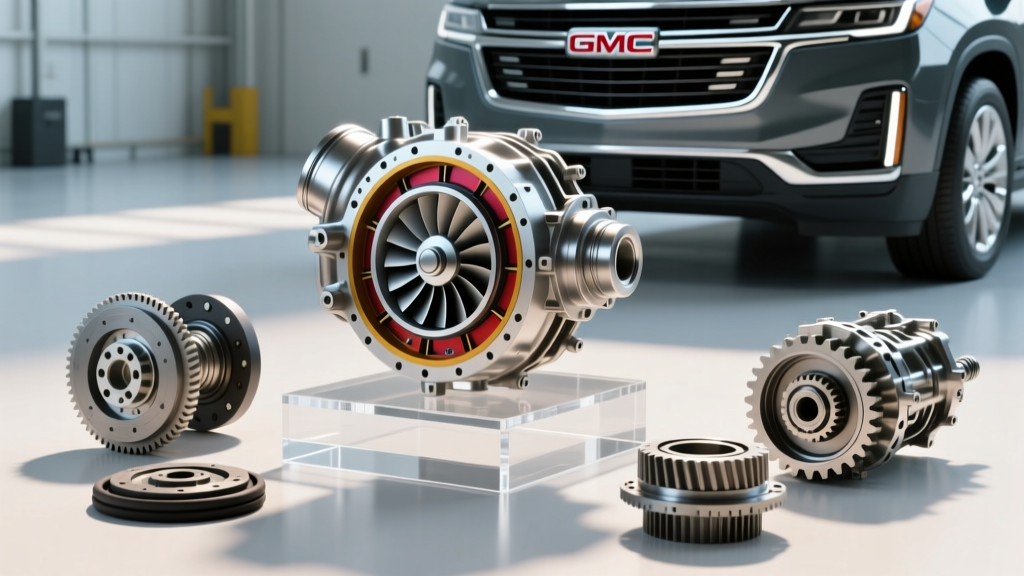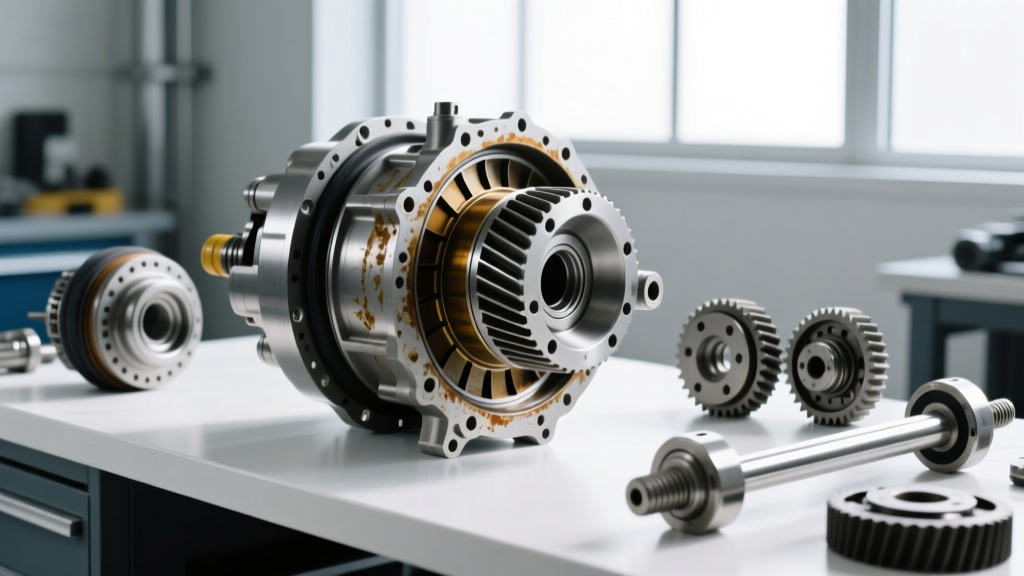
The switch pitch torque converter remains one of the most ingenious, yet misunderstood, hydraulic coupling designs in automotive history. Utilized primarily in the mid-1960s Buick, Oldsmobile, and Cadillac Super Turbine 400 (TH400) transmissions, this variable-stator design requires highly specific maintenance protocols to preserve its dual-angle stator blades and delicate internal solenoid.
As classic car restorations surge in 2026, more enthusiasts are encountering the unique servicing requirements of these vintage automatic transmissions. Unlike modern lockup torque converters that rely on a mechanical clutch, the switch pitch design alters the angle of the stator blades via an electrical solenoid to multiply torque on demand. Flushing and maintaining this system is not as simple as hooking up a modern dialysis machine. Below is your comprehensive comparison and buyer’s guide to properly servicing a switch pitch torque converter.
The Anatomy of a Switch-Pitch Hydraulics System
Before selecting a maintenance method, it is vital to understand why the switch pitch torque converter differs from standard fluid couplings. Inside the stator, the blades are mounted on pivots. When the transmission's electrical solenoid is de-energized, the blades sit in a 'low pitch' angle, providing a standard stall speed ideal for highway cruising and fuel efficiency. When the throttle reaches a specific threshold (usually wired through the carburetor's kickdown switch), the solenoid energizes, shifting the blades to a 'high pitch' angle. This aggressive blade geometry redirects fluid flow, effectively increasing the stall speed by up to 2.5 times for heavy-load launches.
Because the stator relies on tight hydraulic tolerances and an internal electrical pickup ring to actuate the solenoid, introducing high-pressure flushes or incorrect fluid viscosities can catastrophicly damage the variable-pitch mechanism. For a deeper dive into the mechanical operation of these legendary GM transmissions, refer to the Turbo-Hydramatic historical archives.
Machine Flush vs. Manual Drop-Pan: A Critical Comparison
Modern quick-lube shops default to pressurized transmission flush machines. However, applying 2026-era high-pressure flush technology to a 1966 Buick Riviera's TH400 switch pitch converter is a recipe for disaster. The following comparison outlines why manual maintenance is the gold standard for these units.
| Maintenance Method | Pressure Profile | Impact on Switch-Pitch Stator | Debris Risk | Verdict for TH400 SP |
|---|---|---|---|---|
| Pressurized Machine Flush | High (40-60 PSI) | Can force debris into stator pivot joints; risks solenoid screen clogging. | High (Dislodges varnish into tight tolerances) | Avoid (Unless using low-pressure hot-flush) |
| Manual Drop-Pan & Filter | Gravity / Low (5-10 PSI) | Safe; allows physical inspection of solenoid wiring and pan debris. | Low (Only replaces pan volume) | Highly Recommended |
| Hot-Flushing (Dialysis) | Medium (15-20 PSI) | Acceptable if fluid is pre-heated to 160°F to dissolve varnish gently. | Medium | Conditional (Requires specialized vintage settings) |
According to Sonnax transmission tech resources, the TH400's internal hydraulic circuits are robust, but the switch-pitch solenoid pickup and stator splines are vulnerable to the sudden hydraulic shocks generated by modern reverse-flush machines. A manual drain, filter replacement, and gentle top-off is the safest route to preserve the variable-stator geometry.
Fluid Selection for Variable-Stator Hydraulics
The original factory fill for a 1965-1967 switch pitch torque converter was GM Type A Suffix A fluid, which contained whale oil and is long obsolete. Choosing the wrong modern equivalent can lead to stator blade sluggishness or solenoid overheating.
Recommended Modern Equivalents
- Valvoline MaxLife Multi-Vehicle Synthetic: Excellent friction modifiers that prevent the stator pivot joints from binding. Its slightly lower viscosity ensures rapid solenoid actuation.
- Mobil 1 Synthetic ATF: Provides superior thermal stability. The switch-pitch converter generates immense heat when held in the 'high pitch' stall mode; synthetic bases resist shearing under these loads.
- Amsoil Signature Series Fuel-Efficient Synthetic: Offers outstanding shear stability, maintaining the exact hydraulic pressure required to keep the high-pitch blades locked in position during wide-open throttle.
Warning: Avoid using Ford Type F fluid in a switch-pitch TH400. Type F lacks the necessary friction modifiers and operates with a different lockup characteristic that can cause the variable stator to chatter or bind during the transition between low and high pitch. For more on vintage fluid chemistry, consult this Hemmings technical guide on transmission fluids.
Step-by-Step TH400 Switch-Pitch Maintenance Protocol
If you are performing a manual service on a vintage switch-pitch transmission, follow these exact specifications to ensure the integrity of the hydraulic and electrical systems.
1. Pan Removal and Inspection
The TH400 utilizes a cast aluminum pan secured by 13mm (or sometimes 1/2-inch) bolts. Carefully loosen the rear bolts first to allow the fluid to drain away from the exhaust.
- Pan Bolt Torque Spec: Upon reinstallation, torque the pan bolts to exactly 11 ft-lbs (132 in-lbs). Over-torquing will warp the thin aluminum pan, causing chronic leaks.
- Fluid Capacity: A standard pan drop yields approximately 4.5 to 5 quarts. Total dry-fill capacity (including the torque converter) is 11.5 quarts.
2. Filter Replacement
Most switch-pitch applications utilized a shallow pan, though some Cadillac applications used a deep pan. Verify your filter depth. The industry-standard replacement is the AC Delco TF289 or Wix 58704 filter kit. Ensure the new filter neck O-ring is lightly lubricated with fresh ATF and seated fully into the valve body bore. A loose O-ring will cause aerated fluid, leading to delayed high-pitch engagement.
3. Solenoid and Electrical Testing
This is the most critical step unique to the switch pitch torque converter. Inside the pan, you will find a 2-prong electrical connector plugged into the side of the transmission case. This feeds power to the internal stator solenoid.
- Resistance Test: Use a multimeter to test the resistance across the two solenoid pins. A healthy switch-pitch solenoid should read between 18 and 24 ohms at room temperature.
- Below 15 Ohms: Indicates an internal short in the solenoid coil. The converter must be removed, cut open, and the solenoid replaced.
- Infinite/OL: Indicates a broken wire or burnt coil. The stator will be permanently stuck in the low-pitch (cruise) position, robbing the vehicle of its off-the-line torque multiplication.
2026 Buyer’s Guide: Filters, Solenoids, and Flush Kits
Sourcing New Old Stock (NOS) or high-quality reproduction parts for the switch pitch torque converter has become easier in 2026 thanks to specialized restoration suppliers. Here is what you should add to your cart when planning a TH400 SP service.
Top-Tier Filter Kits
- AC Delco TF289 (OEM Style): $18 - $25. Features the correct brass mesh screening that matches original 1960s flow rates, preventing solenoid starvation.
- TransTec TH400 Switch-Pitch Overhaul Kit: $85 - $110. Includes the pan gasket, filter, O-rings, and crucially, the replacement internal solenoid O-rings and pickup seals.
Solenoid Replacements
If your multimeter test fails, you cannot simply buy a solenoid at a local auto parts store. You must source a reproduction switch-pitch solenoid (Part Number: Fatsco 77004 or equivalent NOS GM #8623452). Expect to pay between $65 and $95 for a tested, spec-compliant reproduction unit. Installing this requires dropping the valve body to access the internal retaining clip.
Gentle Flushing Alternatives
If the transmission has sat dormant for a decade and the torque converter is loaded with varnished fluid, a manual drain won't remove the converter's contents. Instead of a pressure machine, purchase a Motiv Powerflush Adapter Kit (TH400 Specific) ($140). This allows you to use the transmission's own internal gear pump to push heated, detergent-rich fluid (like Lubegard Automatic Transmission Flush) through the cooler lines and torque converter at a safe, factory-regulated 12-15 PSI, effectively cleaning the stator pivots without risking hydraulic shock.
Final Thoughts on Vintage Drivetrain Preservation
Maintaining a switch pitch torque converter is an exercise in historical preservation and mechanical empathy. By rejecting high-pressure modern flushes in favor of meticulous manual servicing, verifying solenoid resistance, and utilizing modern synthetic fluids engineered for vintage friction requirements, you ensure that this brilliant piece of 1960s engineering continues to deliver its signature dual-personality performance on the streets today.