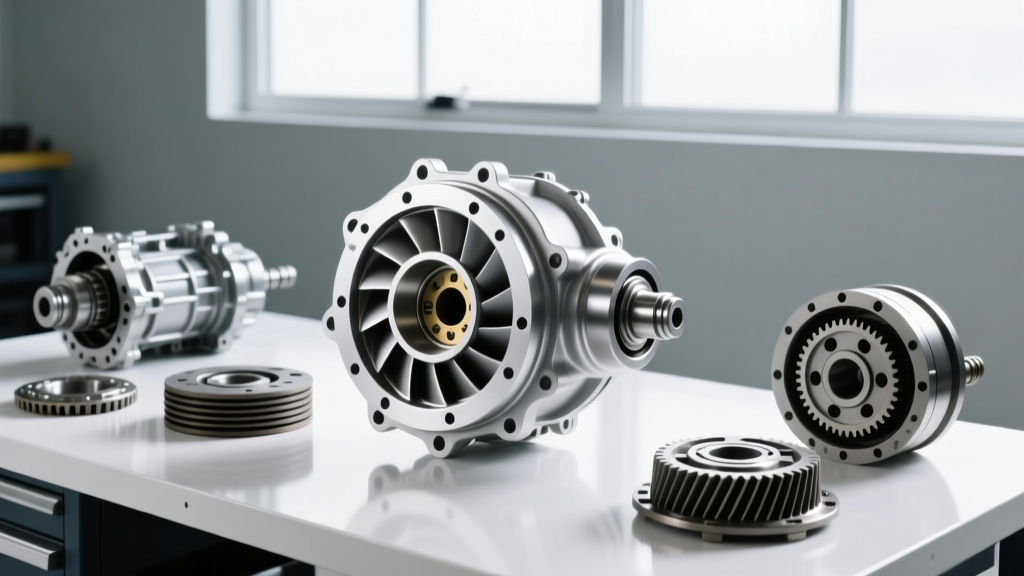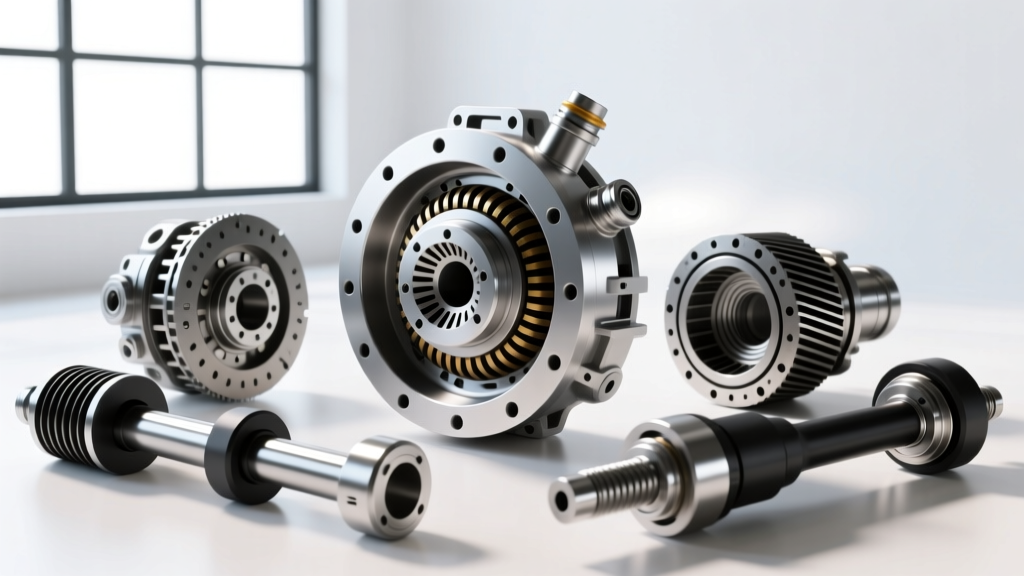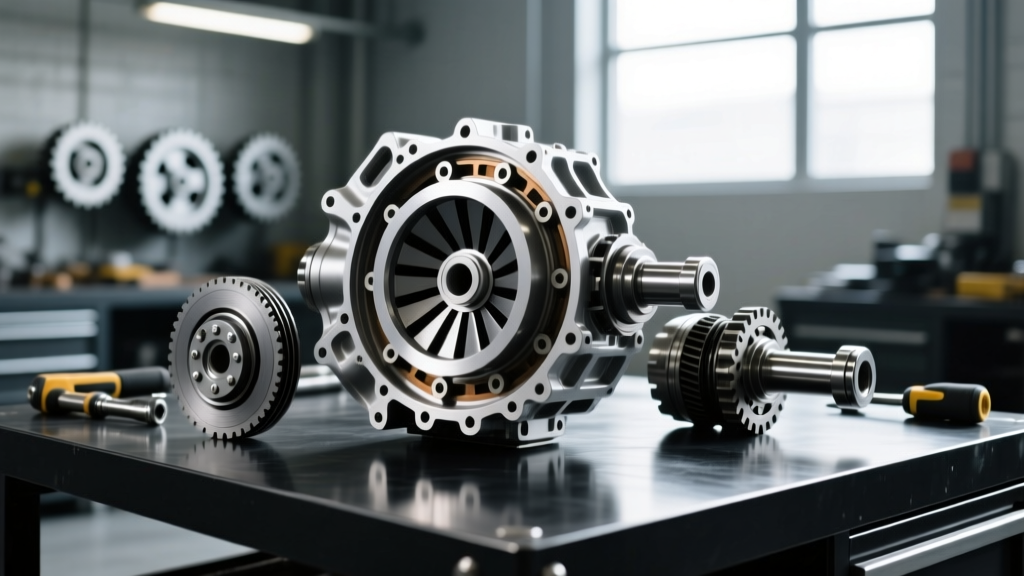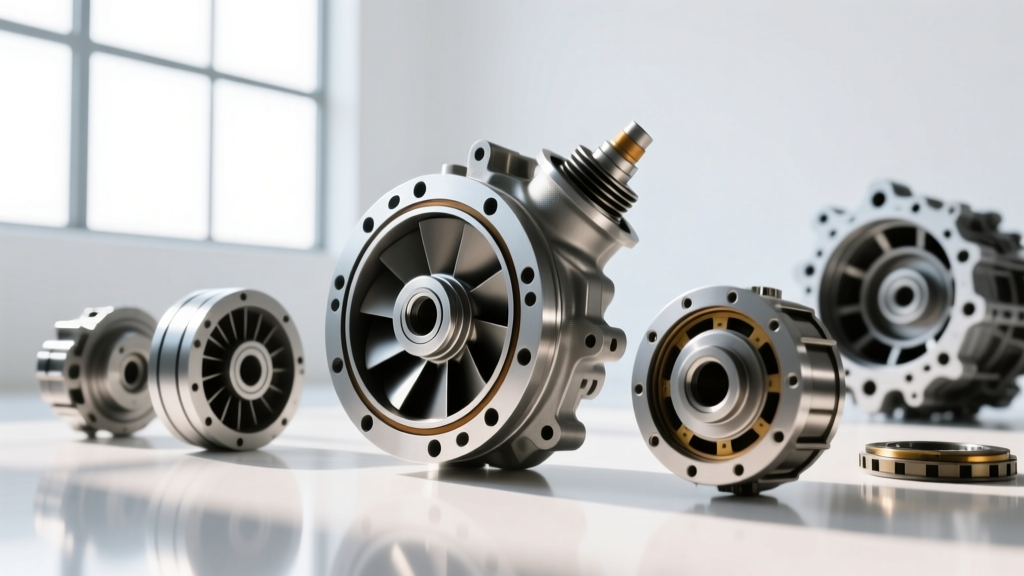
Introduction: The Magic Behind Your Subaru's Smooth Launch
When you press the brake pedal at a red light and shift your Subaru Outback into Drive, the engine keeps spinning, but the wheels remain perfectly still. Unlike a manual transmission, there is no physical clutch pedal to disconnect the engine from the drivetrain. So, how does your vehicle manage this without stalling the engine? The answer lies in the Subaru Outback torque converter.
Whether your Outback is equipped with the older 5EAT 5-speed automatic or the modern Lineartronic Continuously Variable Transmission (CVT), the torque converter is the unsung hero sitting between your engine's flexplate and the transmission input shaft. In this beginner-friendly explainer, we will demystify how this hydraulic marvel operates, why Subaru specifically relies on it for their CVT models, and what you need to know about maintaining it in 2026.
What Exactly is a Torque Converter? (The Basics)
At its core, a torque converter is a type of fluid coupling. It transfers rotating power from the engine (the prime mover) to the transmission (the driven load). Because it uses fluid rather than a solid mechanical connection, it allows the engine to keep running while the vehicle is completely stationary.
Think of a torque converter like two box fans facing each other. If you turn one fan on (the engine), the air it blows will eventually cause the blades of the unplugged fan (the transmission) to spin. In a car, heavy-duty transmission fluid acts as the "air" transferring the energy.
However, a torque converter does something a simple fluid coupling cannot: it multiplies torque. When you launch a heavy, all-wheel-drive Outback from a dead stop, the torque converter can amplify the engine's twisting force by up to 2.5 times, giving you that smooth, powerful surge off the line.
Inside the Shell: The Three Main Components
To understand how the Subaru Outback torque converter achieves this, we need to look inside the sealed, donut-shaped metal housing. There are three primary internal elements:
1. The Impeller (The Pump)
The impeller is bolted directly to the outer shell of the torque converter, which is bolted to the engine's flexplate. As the engine spins, the impeller spins at the exact same RPM. It features curved vanes that act like a centrifugal pump, violently flinging transmission fluid outward and toward the next component. The faster the engine revs, the harder the fluid is thrown.
2. The Turbine (The Output)
Sitting directly across from the impeller is the turbine. The turbine is connected to the transmission's input shaft. When the high-velocity fluid from the impeller strikes the curved blades of the turbine, it forces the turbine to spin, thereby driving the transmission and ultimately your Outback's wheels. After hitting the turbine, the fluid is redirected back toward the center and back into the impeller.
3. The Stator (The Multiplier)
This is the secret weapon. Sitting in the very center, between the impeller and the turbine, is the stator. It is mounted on a one-way clutch. As fluid returns from the turbine to the impeller, it is traveling in a direction that would actually slow down the impeller. The stator's vanes catch this returning fluid and redirect it so that it flows with the impeller's rotation. This redirection is what creates the torque multiplication effect, giving your Outback the extra grunt needed to move 3,500+ pounds of steel from a dead stop.
How the Subaru Outback Torque Converter Differs (CVT vs. 5EAT)
Many automakers abandoned torque converters in early CVT designs, opting instead for multi-plate wet start clutches. These clutches often suffered from overheating, shuddering, and poor low-speed creep. Subaru took a different engineering path. According to Subaru's official technology documentation, the Lineartronic CVT (found in 2010+ Outbacks) retains a traditional torque converter for the launch phase. This provides the smooth, predictable creep of a traditional automatic while allowing the CVT pulleys to handle the endless gear ratios once moving.
| Feature | 5EAT (5-Speed Auto, Pre-2015) | Lineartronic CVT (TR580 / TR690) |
|---|---|---|
| Primary Function | Launch & slip between fixed gear shifts | Launch only; locks up almost immediately |
| Stall Speed | ~2,200 - 2,400 RPM | ~1,800 - 2,000 RPM (Tuned for efficiency) |
| Lock-Up Clutch | Engages in 3rd/4th/5th gears | Engages in "2nd gear" equivalent (very early) |
| OEM Fluid Type | Subaru ATF-HP | Subaru CVTF Lineartronic III |
The Lock-Up Clutch: Why Your Outback Doesn't Slip Forever
While fluid coupling is great for launching, it is terribly inefficient for highway cruising. Slipping fluid generates massive amounts of heat and wastes fuel. To solve this, modern Subaru Outback torque converters feature a Torque Converter Clutch (TCC), also known as a lock-up clutch.
Once you reach a certain speed (often as low as 15-20 mph in the Lineartronic CVT), the transmission's computer commands a solenoid to apply the TCC. This friction plate physically locks the impeller and the turbine together, creating a 1:1 solid mechanical connection. The fluid coupling is bypassed entirely, eliminating slip, reducing transmission temperatures, and improving your highway MPG. If you feel a slight, smooth "thud" or RPM drop shortly after taking off from a stoplight, that is your TCC engaging.
Common Subaru Outback Torque Converter Symptoms
Because the torque converter is a sealed unit, diagnosing it requires paying attention to how the vehicle feels. According to transmission specialists at ATRA (Automatic Transmission Rebuilders Association), internal wear usually manifests in a few specific ways:
- Shuddering at Cruising Speeds: If your Outback vibrates or shudders between 30-50 mph, the TCC friction material may be worn, or the CVTF fluid has degraded, preventing smooth lock-up.
- Slipping or High RPM Launches: If the engine revs high but the car barely moves off the line, the stator's one-way clutch may have failed, or the impeller fins are damaged.
- Whining or Grinding Noises: A failing torque converter bearing (which supports the turbine shaft) will emit a distinct whine that changes pitch with engine RPM, regardless of whether the car is in Park or Drive.
- Overheating Transmission: A torque converter that fails to lock up will continuously shear fluid, generating excess heat and triggering the CVT temperature warning light.
Maintenance: Fluid Specs and Replacement Realities
You cannot service the torque converter directly without removing the transmission, but you can protect it by maintaining the fluid. For modern Lineartronic CVT Outbacks, using the exact fluid is non-negotiable. The TR580 and TR690 transmissions require Subaru CVTF Lineartronic III (Part # SOA868V966). Using generic "universal" CVT fluids can cause the TCC to slip and destroy the converter.
If your torque converter does fail, replacement is a major job. Because the engine and transmission must be separated, expect the following 2026 market averages:
- OEM Torque Converter (e.g., Part # 31100AJ130 for TR580): $650 - $900
- Remanufactured Aftermarket Unit: $400 - $600 (via suppliers like Sonnax or local rebuilders)
- Labor (Drop CVT, replace TC, reseal): 7 to 9 hours ($1,000 - $1,600)
- Total Dealership Replacement Cost: $1,800 - $2,800+
Pro-Tip for DIYers: If you are pulling the CVT to replace the torque converter, the torque converter-to-flexplate bolts (usually 10mm or 12mm depending on the year) must be torqued precisely to 25 Nm (18.4 lb-ft). Over-torquing these can warp the flexplate and cause severe engine vibration.
Summary
The Subaru Outback torque converter is a brilliant piece of hydraulic engineering that bridges the gap between your engine and your drivetrain. By utilizing an impeller, turbine, and stator to multiply torque, and a lock-up clutch to maximize efficiency, it gives the Outback its renowned off-road capability and highway comfort. Understanding how it works—and keeping it fed with the correct OEM CVTF fluid—will ensure your Subaru's drivetrain survives well past the 200,000-mile mark.