The Physics of Torsional Shock: Sprung vs. Unsprung Hubs
When transferring rotational energy from the crankshaft to the transmission input shaft, the clutch disc acts as the critical mechanical fuse and dampener. Internal combustion engines, particularly large-displacement V8s and high-compression inline-4s, do not produce smooth, continuous torque. Instead, they generate violent torsional pulses with every firing event. How a drivetrain manages these pulses defines the boundary between a smooth street car and a rattling, bearing-destroying race machine. This brings us to the fundamental debate in manual transmission engineering: the sprung vs unsprung clutch disc.
While automotive platforms rely heavily on the physical hub design of a single or dual-disc setup to manage this energy, powersports and UTV platforms utilize entirely different architectures. For example, when installing a Rekluse auto clutch kit on a multi-plate wet clutch system (such as those found in the Yamaha YXZ1000R or high-performance dirt bikes), the traditional automotive rules of sprung and unsprung hubs are replaced by centrifugal slip dynamics and basket dampening. Understanding both paradigms is essential for any drivetrain engineer or high-performance builder.
Anatomy of the Sprung Clutch Disc
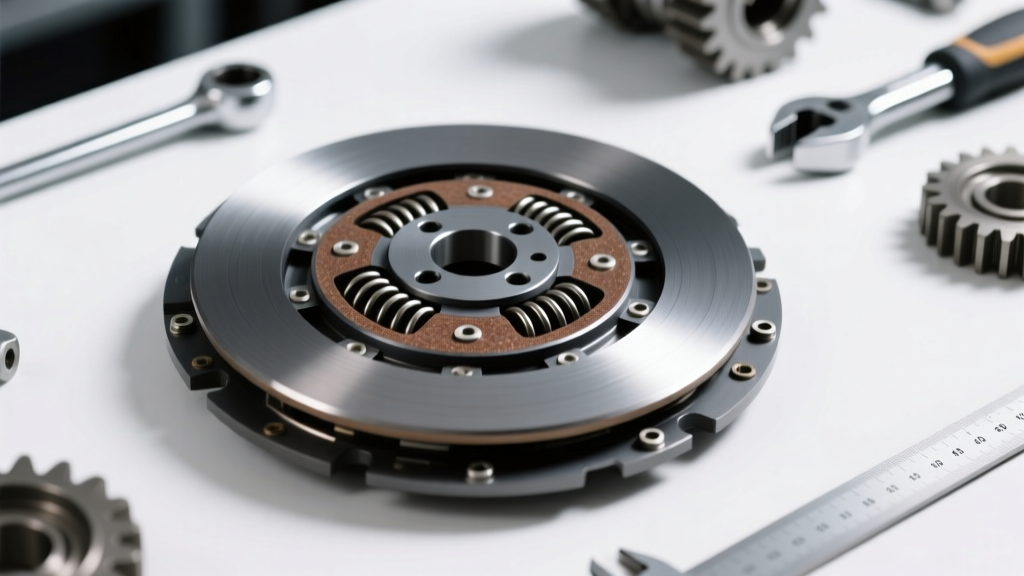
A sprung clutch disc features a hub equipped with torsional dampening springs—typically heavy-duty coil springs or arc springs nestled between the friction disc and the splined center hub. These springs are designed to compress and rebound in response to the engine's firing pulses.
Key Engineering Benefits:
- NVH Reduction: By absorbing the harmonic spikes, sprung hubs prevent 'gear rattle' at idle. Gear rattle occurs when torsional vibrations cause the unloaded transmission gears to clash against each other across the gear lash clearances.
- Drivetrain Protection: The springs act as a mechanical low-pass filter, protecting the transmission input shaft, synchronizers, and differential ring-and-pinion gears from sudden shock loads during aggressive engagement.
- Dual-Mass Synergy: In modern dual-mass flywheel (DMF) setups, the primary torsional dampening is handled by the flywheel's internal arc springs, allowing the clutch disc itself to use lighter, secondary dampening springs for fine-tuning engagement feel.
The Unsprung (Solid Hub) Advantage in Racing
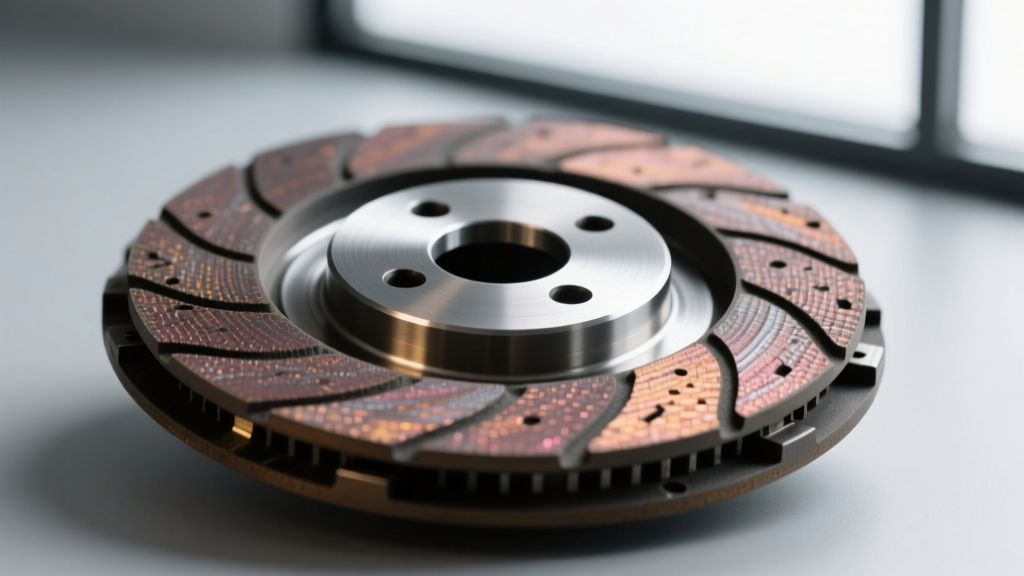
An unsprung, or solid hub, clutch disc eliminates the torsional springs entirely. The friction material is riveted or bonded directly to a rigid, solid steel hub that locks onto the transmission input shaft. This creates a 1:1 mechanical connection with zero deflection.
Why Choose Unsprung?
In drag racing, time-attack, and dedicated track applications, rotational mass and engagement speed are paramount. A solid hub disc is significantly lighter, reducing the moment of inertia (MOI). This allows the engine to rev up and drop down faster, improving shift times. Furthermore, the lack of spring compression means clutch engagement is instantaneous, eliminating the 'squish' that can cause inconsistent launch RPMs in drag racing.
However, the trade-off is severe Noise, Vibration, and Harshness (NVH). Without a sprung hub, every engine pulse is transmitted directly into the transmission. According to Tremec's drivetrain documentation, sustained gear rattle from solid hub discs can prematurely wear transmission input shaft bearings and degrade gear tooth surfaces if the vehicle is subjected to prolonged street driving or idle conditions.
Comparative Data: Sprung vs. Unsprung Specifications
| Feature | Sprung Hub Disc | Unsprung (Solid) Hub Disc |
|---|---|---|
| Rotational Mass | Higher (adds 1.5 - 3.5 lbs) | Lower (reduces MOI for faster revs) |
| Torsional Dampening | High (coil/arc springs absorb pulses) | None (direct mechanical coupling) |
| NVH / Gear Rattle | Minimal to None | Severe at idle and low RPM |
| Engagement Feel | Progressive, cushioned | Instantaneous, harsh |
| Primary Application | Street, Track-Day, OEM Replacement | Dedicated Race, Drag, Drift |
Critical Torque Specifications and Installation
Whether you are installing a sprung disc for a street-driven Tremec T56 Magnum build or a solid hub disc for a drag car, adherence to precise torque specifications is non-negotiable. Improper clamping forces will lead to flywheel warping, pressure plate diaphragm fatigue, or catastrophic fastener failure.
- Flywheel to Crankshaft (GM LS V8): OEM 12mm bolts require 15 lb-ft of torque, followed by an additional 50 degrees of rotation. If using ARP 2000 fasteners, torque to 74 lb-ft using ARP Ultra-Torque lubricant.
- Pressure Plate to Flywheel: Standard M8 pressure plate bolts should be torqued to 22-26 lb-ft in a crisscross star pattern. Always apply a medium-strength threadlocker (e.g., Loctite 243) to prevent vibration-induced backing out.
- Transmission Input Shaft Alignment: Use a precision machined alignment tool matching the exact spline count (e.g., 1-1/8" x 26 spline). Forcing the transmission bellhousing into place without proper alignment will bend the input shaft and destroy the pilot bearing.
The Rekluse Auto Clutch Kit: Rethinking Dampening
While automotive engineers rely on the physical springs inside a clutch disc hub to manage torsional shock, powersports and UTV platforms utilize multi-plate wet clutch systems. In these systems, individual friction and steel plates lack the physical space for a traditional 'sprung hub.' So, how do platforms equipped with a Rekluse auto clutch kit manage the immense shock loads of off-road terrain and high-horsepower tuning without shattering the transmission?
The answer lies in centrifugal slip dynamics and basket dampening.
1. The Clutch Basket as the Primary Dampener
In a multi-plate setup, the torsional shock is absorbed by the clutch basket itself. OEM and aftermarket baskets feature rubber dampers or specialized judder springs located between the basket tangs and the outer housing. These components act as the first line of defense against engine pulses, replacing the function of the automotive sprung hub.
2. Centrifugal Micro-Slip as a Fluid Damper
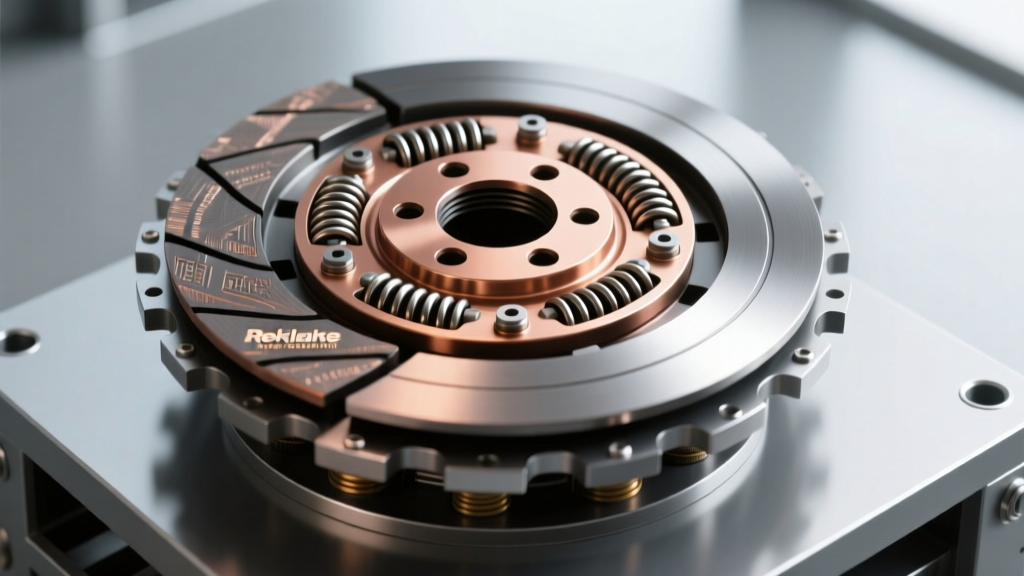
When you install a Rekluse auto clutch kit (such as the Core EXP or RadiusX systems), the engagement is no longer controlled by a mechanical pedal and a rigid pressure plate. Instead, engagement is dictated by centrifugal weights and RPM. This creates a highly controlled 'micro-slip' phase during initial engagement.
Unlike a solid hub automotive disc that transfers 100% of the shock load the moment the friction surfaces lock, the Rekluse auto clutch kit uses the viscosity of the transmission fluid and the calculated slip of the friction plates to act as a fluid dampener. This effectively absorbs the torsional spikes that would otherwise require a heavy sprung hub.
3. Eliminating the Mechanical Fuse
Because the Rekluse system is designed to slip slightly under extreme, sudden shock loads (such as landing a jump or hitting a square-edge rock at speed), it acts as a mechanical fuse. This protects the transmission gears and output shafts from the catastrophic instantaneous torque spikes that often plague rigid, unsprung automotive setups in off-road racing environments.
Friction Material Science: Organic vs. Sintered vs. Cerametallic
The choice of friction material must align with your dampening strategy. If you opt for an unsprung solid hub disc in a car, you are already removing torsional cushioning. Pairing a solid hub with an aggressive cerametallic or sintered iron friction material will result in a drivetrain that is incredibly harsh, prone to tire hop, and highly likely to snap axle shafts.
Conversely, in a Rekluse multi-plate pack, the friction material (often Kevlar, carbon fiber, or specialized sintered bronze) is bathed in oil. The oil provides thermal stability and allows for the micro-slip required by the auto-clutch mechanism without burning up the friction surfaces—a feat impossible in a dry, single-disc automotive clutch.
Final Engineering Verdict
The choice between a sprung and unsprung clutch disc ultimately dictates the character and longevity of your drivetrain. For 95% of automotive applications, including track-day builds and high-horsepower street cars, a high-quality sprung hub disc paired with a properly matched pressure plate is mandatory to preserve transmission bearings and eliminate gear rattle. Unsprung discs should be strictly reserved for dedicated race cars where drivetrain shock is managed by tire slip and suspension geometry rather than the clutch.
Meanwhile, in the realm of multi-plate wet clutches, the Rekluse auto clutch kit proves that mechanical springs aren't the only way to manage torsional harmonics. By leveraging clutch basket dampers, fluid dynamics, and centrifugal engagement, automated multi-plate systems achieve a level of shock absorption and drivetrain protection that rivals the best sprung automotive hubs on the market.