The Hidden Variable in Clutch Disc Replacement
When planning a clutch disc replacement, the vast majority of enthusiasts and even some professional technicians fixate almost exclusively on the friction material. Debates rage over organic compounds, Kevlar blends, and sintered iron pucks. However, focusing solely on the friction surface ignores a critical mechanical interface that dictates drivability, transmission longevity, and cabin comfort: the hub design. Specifically, the choice between a sprung (dampened) hub and an unsprung (solid/rigid) hub.
As we navigate the 2026 automotive landscape—where high-torque turbocharged four-cylinders and heavily modified naturally aspirated V8s are increasingly common—understanding torsional vibration management is no longer optional. Selecting the wrong hub architecture during your clutch disc replacement can lead to catastrophic transmission gear rattle, shattered input shafts, or an undrivable street car. This technical deep-dive explores the physics, applications, and installation nuances of sprung versus unsprung clutch discs.
Sprung Hub Architecture: Torsional Dampers and Marcel Springs
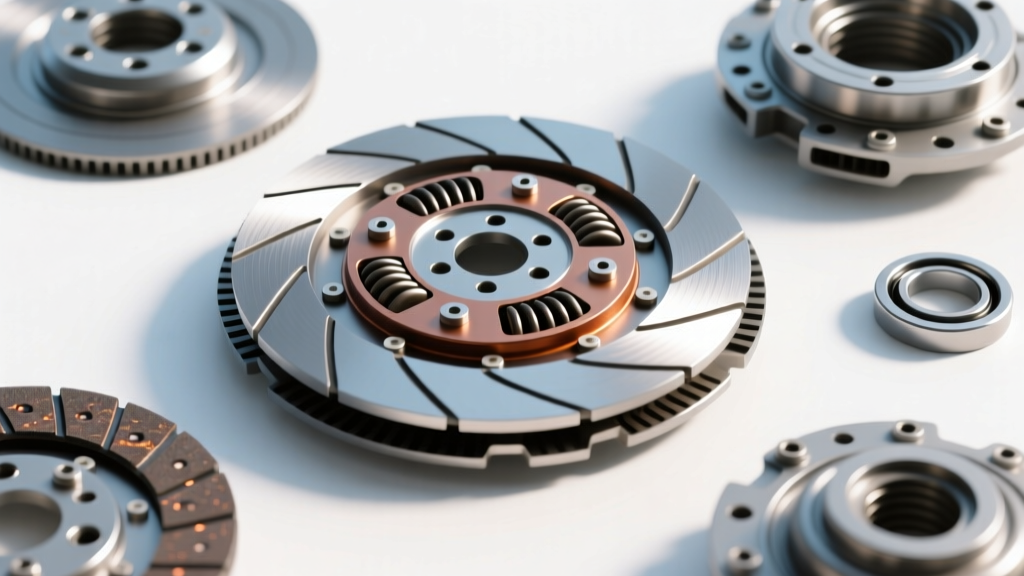
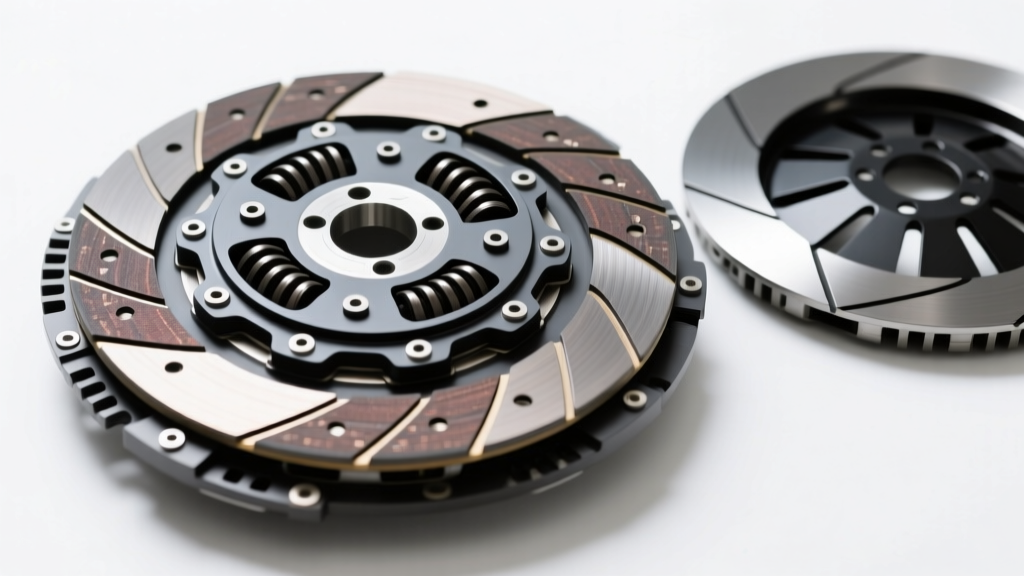
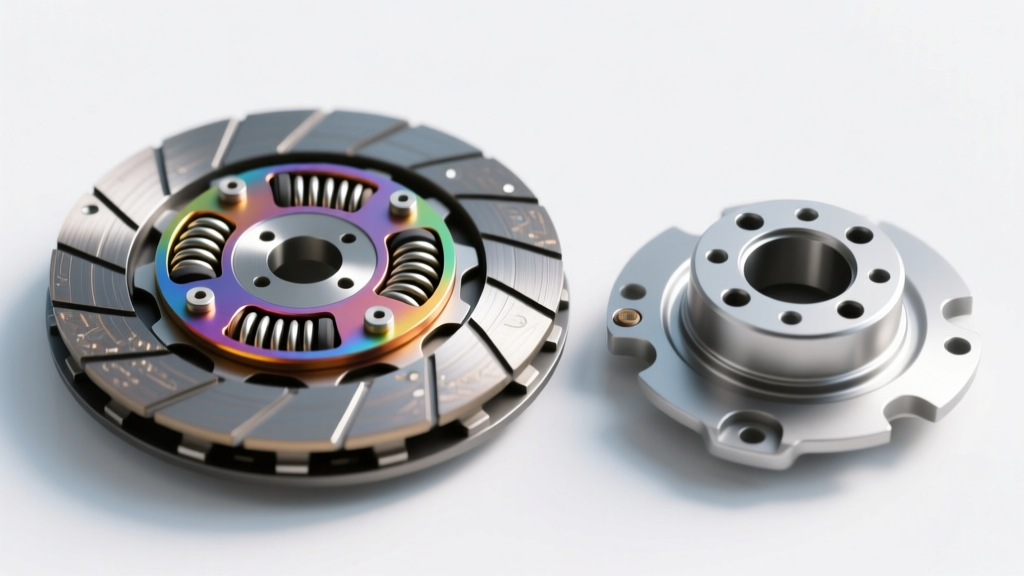
A sprung clutch disc features a multi-piece hub assembly integrated with coil springs and friction washers. This design is not merely a structural choice; it is a precisely tuned mechanical low-pass filter. Internal combustion engines do not produce smooth, continuous rotational torque. Instead, they deliver torque in violent, pulsating spikes corresponding to the firing order of the cylinders.
Inside a sprung hub, the torsion dampers (coil springs) compress and rebound to absorb these rotational spikes before they reach the transmission input shaft. Furthermore, high-quality sprung discs incorporate hysteresis friction washers—often made from specialized polyamide or composite materials—that provide controlled resistance to the spring movement, preventing the springs from oscillating wildly and causing a secondary harmonic resonance.
The Role of the Marcel Spring
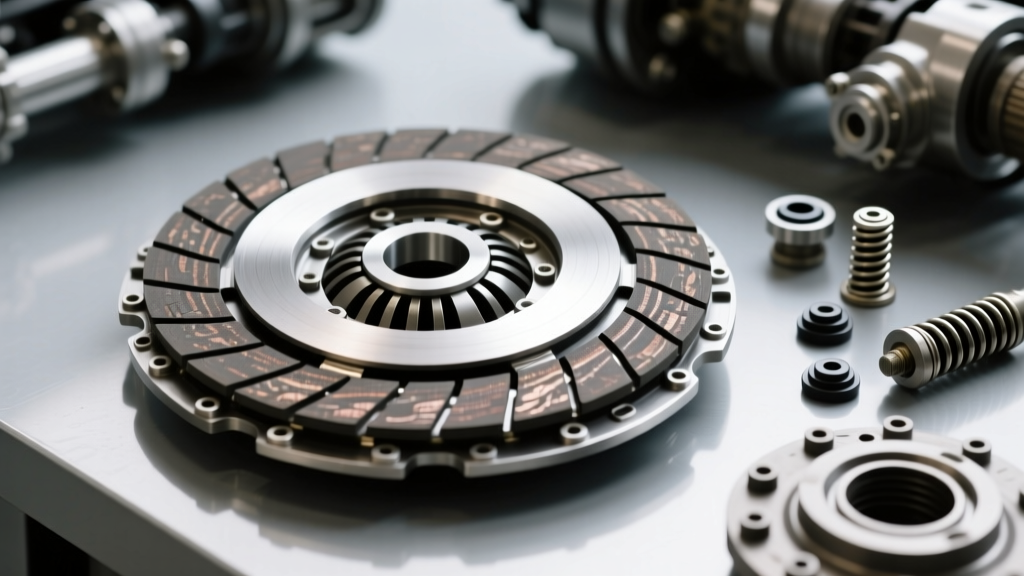
Beyond the hub, the friction face of a premium sprung disc utilizes a 'Marcel spring' (or wave spring). This is a thin, wavy steel ring sandwiched between the friction facings. When the clutch is engaged, the Marcel spring compresses axially, creating a progressive, cushioned take-up. This axial compliance is what allows a 400-horsepower street car to pull away from a stoplight smoothly without requiring the driver to feather the pedal with surgical precision. For daily driven vehicles, OEM replacements from manufacturers like LuK or Sachs universally utilize this dual-dampening approach.
Unsprung (Solid Hub) Discs: The Uncompromising Racing Choice
An unsprung, or solid hub, clutch disc eliminates all torsional dampers and Marcel springs. The friction material is riveted or bonded directly to a rigid, single-piece steel or aluminum hub that slides onto the transmission input shaft. The result is a 1:1, instantaneous transfer of torque from the flywheel to the gearbox.
According to Tilton Engineering's technical resources, solid hub discs are mandatory in high-level motorsport environments like Formula Drift, drag racing, and dedicated time-attack builds. By removing the dampers, you eliminate a point of rotational inertia and mechanical compliance. When a drag car launches at 6,000 RPM, any 'wind-up' in torsion springs represents a delay in power delivery and a potential shock-load when the springs reach their maximum compression and snap back. Unsprung discs offer zero rotational play, ensuring immediate hook-up.
However, on the street, an unsprung disc is a nightmare for NVH (Noise, Vibration, and Harshness). Without dampers, every idle pulse from a high-compression or cammed engine is transmitted directly into the transmission case, causing the unloaded gears to clash against one another—a phenomenon known as gear rattle.
Drivetrain Synergy: Flywheel Pairing Matrix
The most common failure in aftermarket clutch disc replacement is mismatching the disc hub to the flywheel mass. The flywheel and the clutch disc must work as a coordinated dampening system. Below is a decision matrix for pairing components:
| Flywheel Type | Recommended Disc Hub | Technical Rationale & Edge Cases | Estimated Cost (Disc Only) |
|---|---|---|---|
| Dual-Mass Flywheel (DMF) | Sprung (OEM Style) | The DMF contains primary dampening springs. A sprung disc provides secondary hysteresis. Using an unsprung disc on a DMF is generally avoided as it can over-stress the DMF's internal springs during aggressive street launches. | $180 - $350 |
| OEM Single-Mass Flywheel (SMF) | Sprung (Heavy-Duty) | Cast iron SMFs have high rotational mass but no internal dampers. The clutch disc must have robust torsion springs to prevent transmission gear rattle at idle. | $250 - $450 |
| Lightweight Aluminum SMF | Sprung (Stage 2+) or Unsprung (Track Only) | Aluminum flywheels (e.g., Fidanza, ACT) lack mass to smooth out idle pulses. A heavily dampened sprung disc is required for street use. Unsprung is strictly for track use; street use will cause deafening gear rattle and potential bearing wear. | $350 - $700 |
| Multi-Plate Sintered (Racing) | Unsprung (Solid) | Used in dedicated race cars with straight-cut dog-ring gearboxes (e.g., Tremec T56 Magnum XL race prep, Porsche G50/50) where gear rattle is irrelevant and instantaneous engagement is paramount. | $600 - $1,200+ |
Critical Installation Specs and Torque Values
Executing a flawless clutch disc replacement requires adherence to precise torque specifications and alignment protocols. The hub design slightly alters the installation approach, particularly regarding alignment and break-in.
Input Shaft Spline and Alignment Nuances
Because unsprung discs have zero radial give, aligning the disc to the pilot bearing and input shaft spline requires absolute precision. If the bellhousing is misaligned (runout exceeding 0.005 inches), an unsprung disc will bind on the input shaft, leading to incomplete disengagement and destroyed synchros. Always verify bellhousing concentricity using a dial indicator before installing the transmission.
When torquing the pressure plate to the flywheel, follow a crisscross pattern. For standard M8x1.25 pressure plate bolts (common in GM LS and Ford Coyote applications), the spec is typically 26 lb-ft (35 Nm). For larger M10 bolts found in heavy-duty diesel applications (like the G56 transmission behind a Cummins), specs often reach 35 to 45 lb-ft. Always use fresh bolts and a high-quality thread locker if specified by the manufacturer.
Break-In Protocols by Hub and Material Type
The break-in (bedding) procedure is heavily influenced by both the hub design and the friction material. As detailed in Exedy's technical documentation, improper bedding is the leading cause of premature clutch slip and judder.
- Organic / Kevlar (Usually Sprung): Requires a gentle 300-500 mile street break-in. Avoid heavy throttle or lugging the engine at low RPMs. The Marcel spring and torsion dampers help smooth out the heat distribution during this phase, allowing the resin in the organic material to cure evenly against the flywheel.
- Sintered Iron / Ceramic (Often Unsprung): Requires an aggressive, immediate heat-cycle bedding. This involves performing 5 to 8 hard accelerations (from 30 mph to 60 mph in 3rd gear) followed by complete cooling. Because unsprung hubs lack the cushioning of a Marcel spring, engaging a sintered disc at low speeds during the break-in phase will result in violent chassis shudder and severe flywheel scoring.
Summary: Making the Right Choice for Your Build
Expert Verdict: If your vehicle sees any regular street duty, retains air conditioning, or utilizes a standard helical-cut manual transmission, a sprung hub clutch disc is non-negotiable for preserving transmission bearings and your sanity. Reserve unsprung solid hub discs strictly for dedicated drag, drift, or track vehicles equipped with straight-cut gears, solid engine mounts, and a willingness to accept extreme drivetrain NVH. Never compromise on the hub architecture to save $50 during a clutch disc replacement; the resulting transmission damage will cost tenfold.
For further reading on modern dampening technologies, consult ZF Sachs' official clutch systems engineering pages to understand how modern dual-mass and sprung-disc combinations are evolving to handle the immense low-end torque of contemporary turbocharged engines.