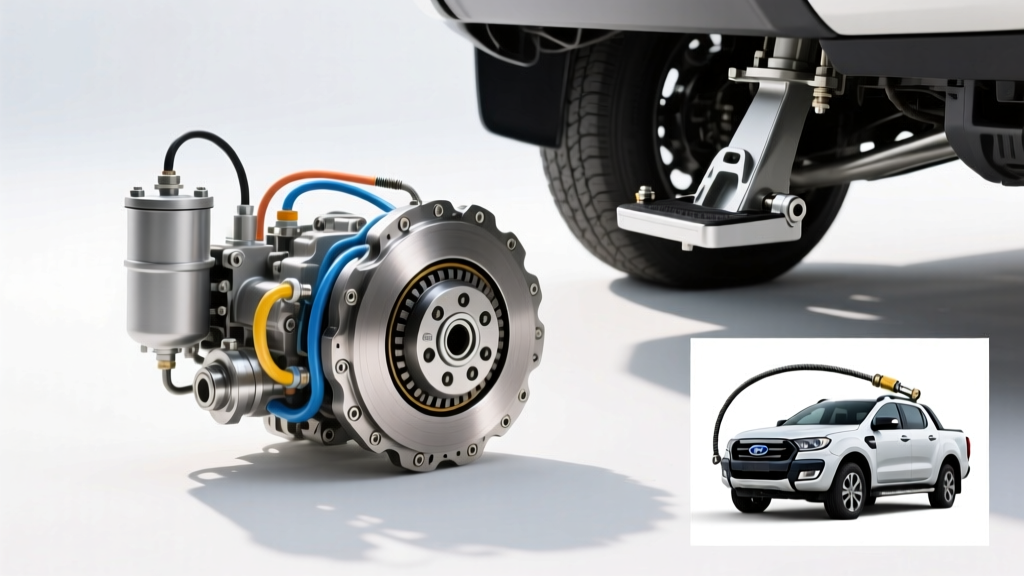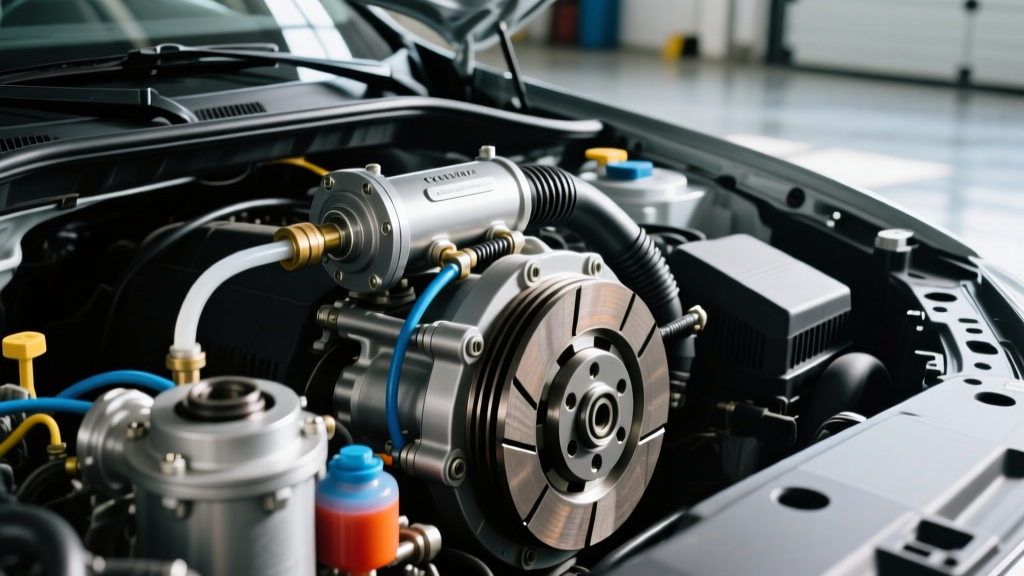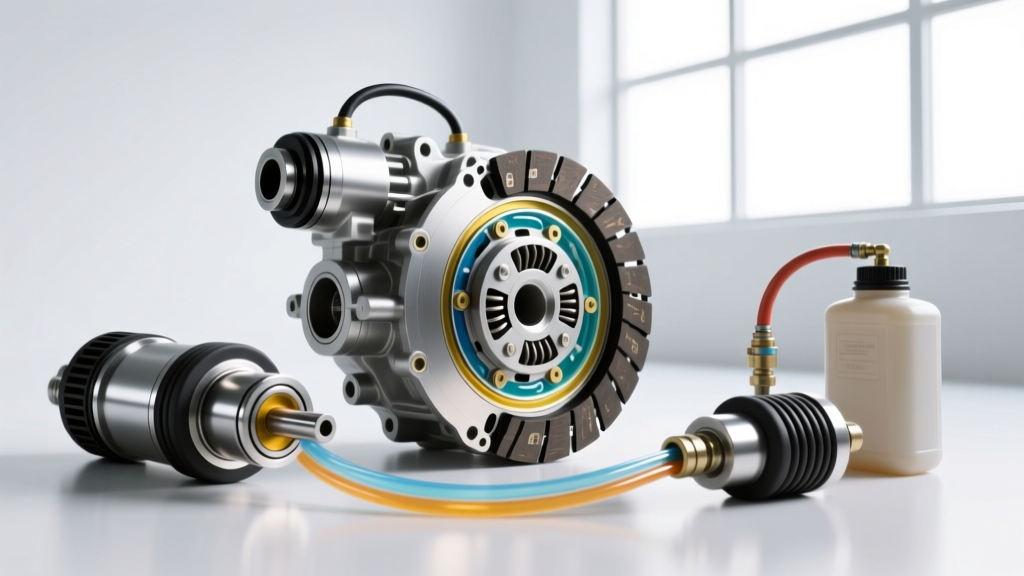
When your left foot drops to the floorboard or you experience severe gear grinding during shifts, your first instinct is likely to search for the symptoms of a failing clutch master cylinder. It is a logical assumption: the master cylinder is the origin of the hydraulic pressure, and a spongy pedal usually points to the firewall-mounted component. However, in modern manual transmission platforms—particularly those utilizing internal Concentric Slave Cylinders (CSC) like the GM T56 Magnum, Ford MT82, and various Porsche transaxles—the slave cylinder is the actual culprit in nearly 65% of hydraulic bypass cases. Misdiagnosing this issue leads to wasted weekends, unnecessary bench-bleeding of master cylinders, and persistent drivability issues. In this 2026 diagnostic guide, we will dissect the overlap between master and slave cylinder failures, outline the definitive isolation tests, and provide a masterclass on internal clutch slave cylinder replacement, torque specs, and high-pressure bleeding protocols.
The Diagnostic Illusion: Master vs. Slave Cylinder Failure
The hydraulic clutch system is a closed-loop circuit. When fluid bypasses internally or leaks externally, the pedal loses its resistance. Because the master cylinder is easily accessible under the hood or in the footwell, it becomes the default suspect. Furthermore, the classic symptoms of a failing clutch master cylinder—such as a pedal that slowly sinks to the floor while held down, or a pedal that fails to return to its resting position—are identical to the symptoms of a blown internal slave cylinder seal.
According to Sachs Powertrain engineering data, internal CSCs operate in a brutal environment. They are subjected to extreme rotational vibration, clutch dust contamination, and massive heat soak from the transmission bellhousing. Over time, the internal PTFE or rubber seals degrade, allowing DOT fluid to bypass the piston or leak directly into the bellhousing. Because the fluid level in the master cylinder reservoir drops in both scenarios, visual inspection of the reservoir alone is insufficient for diagnosis.
The 'Clamp Test' for Hydraulic Isolation
Before you order a new master cylinder or drop the transmission, you must perform the Clamp Test to isolate the fault. This requires a pair of smooth-jawed vise grips or a specialized hose clamping tool, and a helper.
- Locate the Flex Line: Find the flexible rubber or braided hose that bridges the hard chassis line to the transmission bellhousing.
- Clamp the Line: Gently but firmly clamp the flex line to stop fluid flow. Warning: Do not clamp hard plastic OEM lines, as they will crack. Only clamp reinforced rubber hoses.
- Test the Pedal: Have your helper press the clutch pedal. If the pedal is rock hard and cannot move, your master cylinder is perfectly healthy; the fault lies downstream (the slave cylinder is bypassing or leaking). If the pedal still feels spongy or sinks to the floor, the master cylinder's internal seals are failing, or there is air trapped in the hard line.
Symptom Overlap: Master vs. Concentric Slave Cylinder (CSC)
| Symptom | Master Cylinder Cause | Slave Cylinder (CSC) Cause |
|---|---|---|
| Pedal sinks to floor while held | Internal primary cup seal bypass | Internal piston seal bypass due to heat degradation |
| Fluid loss, no visible puddles | Leaking past firewall pushrod into cabin | Leaking internally into the bellhousing (requires trans removal to verify) |
| Inconsistent clutch engagement | Restricted compensation port | Scoring on the CSC bore or worn release bearing preload |
| Pedal fails to return fully | Weak master return spring or bad pushrod clevis | CSC binding on the transmission input shaft bearing retainer |
Why Internal Slave Cylinders Fail Prematurely
Internal slave cylinders, often integrated directly with the hydraulic throwout bearing, are notorious for premature failure in high-performance and heavy-duty applications. The primary enemy is heat soak. When sitting in stop-and-go traffic, the bellhousing acts as an oven. Standard DOT 3 fluid boils at 401°F (205°C). If the fluid boils inside the CSC, vapor lock occurs, resulting in a sudden, total loss of pedal pressure.
Expert Insight: Never reuse an old CSC when installing a new clutch kit. The cost of a $150 slave cylinder is negligible compared to the $800-$1,200 labor cost of pulling the transmission a second time. Always treat the CSC as a mandatory wear item during clutch replacement.
Slave Cylinder Replacement: GM T56 & Ford MT82 Deep Dive
Replacing an internal slave cylinder requires transmission removal. For this guide, we will focus on the highly prevalent GM T56 Magnum and Ford MT82 platforms, which utilize similar internal CSC architectures. The Tremec T56 Magnum service protocols dictate strict adherence to clearance measurements and torque specifications to prevent catastrophic clutch fork or bearing damage.
Required Parts and Real-World Pricing (2026 Estimates)
- OEM/Equivalent CSC: GM 19300432 or Sachs SH5123 (Approx. $180 - $240)
- AN4 Braided Line Conversion Kit: Russell 640365 or Tick Performance kit (Approx. $90 - $130). Highly recommended to replace the failure-prone OEM plastic quick-connect lines.
- High-Performance Fluid: Motul RBF 600 DOT 4 (Approx. $25 per 500ml bottle, system requires ~1.2 Liters)
- Bearing Retainer Sleeve: If the input shaft sleeve is grooved by the old CSC, a new steel sleeve (e.g., McLeod 1407) is required ($45).
Critical Torque Specifications and Clearances
Improper installation of the CSC will result in either a slipping clutch (if preloaded too tightly) or a clutch that won't disengage (if the air gap is too large).
- CSC to Bellhousing Bolts: 89 in-lb (10 Nm). Do not overtighten; the CSC housing is often cast aluminum or reinforced polymer and will crack.
- Bellhousing to Engine Block (M12 Bolts): 37 lb-ft (50 Nm).
- Clutch Fork Pivot Ball Torque: 25 lb-ft with medium-strength threadlocker.
- Air Gap Measurement: Before bolting the transmission to the engine, measure the distance from the bellhousing mounting face to the clutch fingers, and compare it to the CSC's fully compressed height. The ideal air gap (free play) is typically between 0.500' and 0.625'. If the gap is too large, you must install precision machined shims behind the CSC mounting bracket. If the gap is zero or negative, the CSC will constantly ride the clutch fingers, leading to rapid bearing failure and clutch slip.
Advanced Bleeding Protocols for Internal Hydraulics
The most common reason a newly installed slave cylinder 'fails' right out of the gate is improper bleeding. Internal CSCs sit at the lowest point of the hydraulic system, but the hard lines often feature high-point loops near the firewall that trap air. Standard pedal-pumping bleeding is entirely ineffective for these systems and will leave you with a spongy pedal and the false belief that your new slave cylinder is defective.
Pressure Bleeding and Reverse Bleeding
To properly bleed a T56 or MT82 hydraulic system in 2026, you must use either a motive pressure bleeder or a reverse syringe bleeder.
- Reverse Bleeding (Preferred for CSCs): Attach a large syringe filled with fresh Motul RBF 600 DOT 4 fluid to the bleeder screw on the transmission bellhousing. Slowly push the fluid up through the slave cylinder, through the hard line, and into the master cylinder reservoir. This forces air bubbles upward, following their natural buoyancy, directly into the open reservoir.
- Pressure Bleeding: Cap the master cylinder reservoir with a pressure bleeder set to 15-20 PSI. Open the bellhousing bleeder screw and let the fluid flow until it is completely free of micro-bubbles. Close the screw, remove the pressure, and verify pedal firmness.
Final Verification and Bed-In
Once the transmission is installed and the system is bled, verify the pedal free-play. You should have roughly 1/8' to 1/4' of free movement at the top of the pedal travel before you feel the resistance of the hydraulic system engaging the CSC. This free-play is vital; it ensures the master cylinder piston fully retracts, uncovering the compensation port and allowing fluid to expand and contract with temperature changes without pre-loading the clutch release bearing.
By understanding that the classic symptoms of a failing clutch master cylinder are frequently a masquerade for a degraded internal slave cylinder, you can save hours of diagnostic frustration. Utilizing the clamp test, adhering to strict air-gap shimming protocols, and employing reverse-bleeding techniques will ensure your hydraulic clutch system operates with OEM precision and durability for tens of thousands of miles.