High-Precision Delta-P Monitoring in Modern Drivetrains
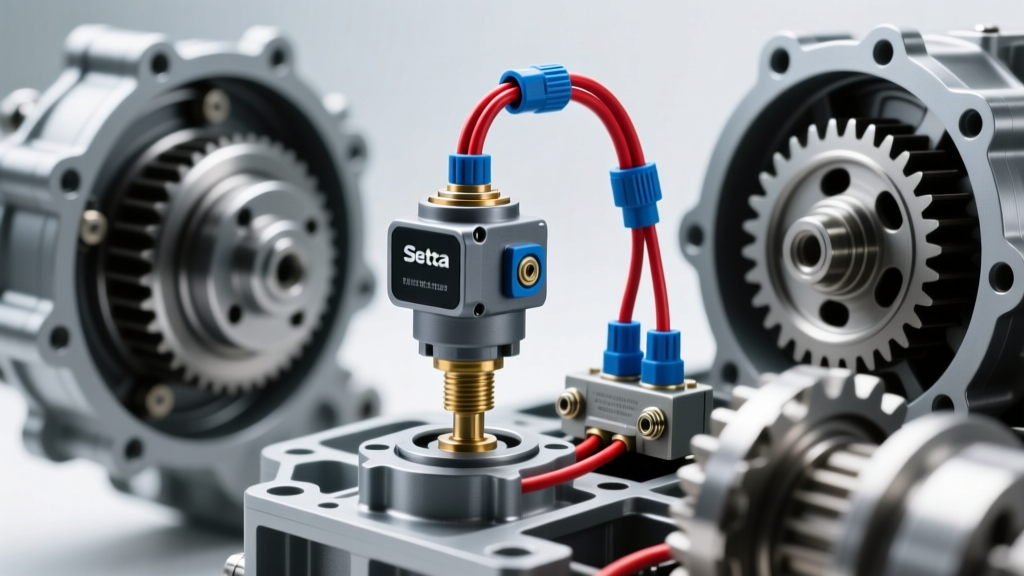
As heavy-duty commercial fleets and performance transmission builders move into 2026, the reliance on high-accuracy hydraulic monitoring has never been greater. While traditional switch-based sensors are being phased out, high-resolution differential pressure sensors—such as the Setra Model 264 and 267 series—are increasingly utilized to monitor transmission filter restriction, torque converter clutch (TCC) slip, and clutch apply delta-P. These sensors provide the Transmission Control Module (TCM) with real-time data to optimize shift timing and predict filter degradation before catastrophic line-pressure loss occurs.
However, the extreme environment of a transmission bellhousing and valve body creates a nightmare for electrical connectivity. Vibration, thermal cycling, and Automatic Transmission Fluid (ATF) exposure frequently compromise the wiring harnesses and connectors attached to these sensitive instruments. This preventive maintenance guide details the exact protocols for inspecting, servicing, and protecting Setra differential pressure sensor wiring and connectors to prevent phantom diagnostic trouble codes (DTCs) and unwarranted limp-mode events.
Anatomy of the Sensor Connector System
Most heavy-duty and industrial transmission applications utilize sealed circular or rectangular connectors to interface with Setra sensors. The industry standard remains the TE Connectivity DEUTSCH DT series (specifically the DT04-2P and DT06-2S for 0-5V analog outputs) or Amphenol ATP equivalents for 4-20mA current loop configurations.
These connectors rely on silicone grommings for environmental sealing and a secondary plastic wedge lock to retain the crimped terminals. Over time, three primary failure modes emerge:
- Fretting Corrosion: Micro-movements caused by high-frequency engine and transmission vibrations wear away the tin or gold plating on the male/female terminal interface, creating copper oxide buildup and increasing circuit resistance.
- Thermal Degradation of Wire Insulation: Standard PVC wire insulation becomes brittle and cracks when exposed to bellhousing temperatures exceeding 250°F (121°C), leading to short-to-ground faults.
- Grommet Extrusion: Repeated mating and unmating of the connector during transmission R&R (Remove and Replace) can dislodge the internal silicone seal, allowing ATF vapor and moisture to infiltrate the terminal cavity.
Preventive Maintenance Protocol: Step-by-Step
To maintain signal integrity, fleet maintenance facilities and transmission dyno operators should implement the following 6-month or 50,000-mile preventive maintenance interval for all external and valve-body-mounted differential pressure sensors.
1. Safe Disconnect and Depinning
Never pull on the wire harness to disconnect the sensor. Always press the primary latch release and pull the connector shell. Once disconnected, inspect the secondary wedge lock. If terminal extraction is necessary for deep cleaning, use the proper extraction tool (e.g., DEUTSCH HDT-48-00). Prying terminals out with a pick will permanently deform the retention barbs, guaranteeing future terminal back-out and intermittent open circuits.
2. Terminal Inspection and Cleaning
Inspect both the male pins (sensor side) and female sockets (harness side). Look for green or white powdery corrosion. If fretting corrosion is present, do not simply wipe it off. The micro-pitting has already compromised the contact surface area. Best Practice: Replace any terminal showing visible discoloration. If minor surface oxidation is present, clean with a specialized electrical contact cleaner (e.g., Electrolube Contact Cleaner) and a lint-free swab. Never use sandpaper or emery cloth, as this strips the protective plating and accelerates future corrosion.
3. Dielectric Grease Application
The application of dielectric grease is mandatory for preventing moisture ingress and damping high-frequency vibration. However, using the wrong grease can trap conductive metallic wear particles. Specification: Use Nyogel 760G or an equivalent high-temperature, electrically insulating fluorocarbon grease. Apply a small bead to the female terminal sockets and the exterior of the silicone grommet before mating. This displaces air and moisture, creating a hermetic seal within the connector cavity.
4. Wedge Lock Seating Verification
After reinserting the terminals, ensure the secondary wedge lock is fully seated. A partially seated wedge lock will allow the terminal to back out by 1-2mm under vibration, breaking the electrical connection just enough to cause a P0700-series communication or rationality fault code without triggering a hard open-circuit DTC.
Wiring Harness Routing and Thermal Protection
The wiring harness connecting the Setra sensor to the TCM or data acquisition module must be routed to avoid both mechanical abrasion and thermal destruction. In heavy-duty applications (e.g., Allison 3000/4000 series or ZF TraXon setups), the area near the torque converter housing routinely sees ambient temperatures of 300°F to 350°F (149°C to 176°C).
Wire Gauge and Insulation Standards
For 4-20mA current loop sensors, voltage drop over long chassis runs is a critical factor. We recommend using 18 AWG XLPE (Cross-Linked Polyethylene) or PTFE (Teflon) insulated wire. XLPE wire (such as SXL or GXL automotive wire) offers superior thermal resistance up to 150°C continuous, while PTFE can withstand up to 200°C. Avoid standard THHN or PVC wire, which will melt and short against the transmission casing.
Shielding and Looming
Because differential pressure sensors output low-voltage analog signals (0.5V to 4.5V), they are highly susceptible to Electromagnetic Interference (EMI) from adjacent alternator wiring or ignition systems. Actionable Tip: Route the sensor harness inside a braided fiberglass sleeve with an internal aluminum foil shield. Ensure the shield drain wire is grounded at the TCM end only (single-point grounding) to prevent ground loops that introduce 60Hz alternator whine into the sensor signal.
Electrical Verification and Diagnostic Testing
During preventive maintenance, verify the electrical health of the circuit using a digital multimeter (DMM) and a breakout box. The table below outlines the expected values for common Setra sensor outputs when testing the wiring harness for voltage drop and continuity.
| Test Parameter | 0-5V Analog Output (3-Wire) | 4-20mA Current Loop (2-Wire) | Acceptable Tolerance |
|---|---|---|---|
| Supply Voltage at Connector | 5.0V DC (± 0.05V) | 12V to 24V DC (Loop Supply) | Max 0.1V drop from TCM |
| Ground Circuit Resistance | < 0.5 Ohms to Chassis | N/A (Returns via Low-Side) | Must be < 1.0 Ohm |
| Signal Wire Continuity | < 2.0 Ohms end-to-end | < 5.0 Ohms (includes shunt) | Zero intermittent opens |
| Insulation Resistance (Megger) | > 10 Megohms @ 50V DC | > 10 Megohms @ 50V DC | Prevents short-to-ground |
Note: Never use a standard Megohmmeter (Megger) on the sensor itself, as the high voltage will destroy the internal ASIC circuitry. Only Megger the disconnected wiring harness.
Sensor Installation Torque and Thread Sealing
While the focus of this guide is wiring, the physical installation of the Setra sensor directly impacts the stress placed on the connector. Setra differential pressure sensors typically feature 1/4" NPT or 1/8" NPT male threads. Over-torquing these sensors into the aluminum transmission case or steel valve body will crack the sensor housing or strip the case threads, leading to ATF leaks that will immediately degrade the connector seals.
- 1/8" NPT Thread Torque Spec: 7 - 10 Nm (5 - 7 lb-ft)
- 1/4" NPT Thread Torque Spec: 14 - 20 Nm (10 - 15 lb-ft)
- Thread Sealant: Use Loctite 567 (PTF Thread Sealant) or a high-temperature PTFE tape wrapped exactly 1.5 times, keeping the first thread clear to prevent tape shreds from entering the hydraulic circuit and clogging the valve body.
The ROI of Connector Preventive Maintenance
In a commercial fleet or high-volume transmission rebuilding environment, diagnosing an intermittent P0734 (Gear 4 Incorrect Ratio) or a custom manufacturer code for 'Filter Delta-P Sensor Rationality' can consume 4 to 6 hours of diagnostic labor at $150/hour. Often, the root cause is a $2.00 corroded Deutsch terminal or a melted wire loom resting against the exhaust downpipe. By integrating Setra differential pressure sensor wiring and connector inspections into standard transmission service intervals, shops and fleets can eliminate phantom electrical faults, extend the life of high-cost hydraulic monitoring equipment, and ensure the TCM has the accurate data required to protect the drivetrain.