The Evolution of Heavy-Duty Automatic Clutches
As of 2026, the Class 8 commercial vehicle landscape is dominated by automated manual transmissions (AMTs) and heavy-duty planetary automatics. Over 65% of new heavy-duty trucks now roll off the line with automated clutch systems, fundamentally changing how fleet technicians diagnose drivetrain faults. When addressing clutch problems in automatic transmissions, technicians must first distinguish between true torque-converter automatics (like the Allison 3000/4000 Rugged Duty Series) and Automated Manual Transmissions (like the Eaton Fuller Advantage or Volvo I-Shift). While both are operated via a two-pedal interface, their internal clutch architectures, failure modes, and replacement protocols are vastly different.
Selecting the correct clutch for semi truck applications requires understanding these mechanical distinctions. A slipping clutch in an AMT usually points to a pneumatic actuator failure or worn friction disc, whereas the same symptom in an Allison transmission typically indicates a degraded torque converter lock-up clutch (TCC) or failing internal hydraulic seals. This comprehensive guide breaks down the diagnostic frameworks, exact failure modes, and buyer considerations for heavy-duty automatic clutch systems.
Anatomy of Heavy-Duty Automatic Clutch Systems
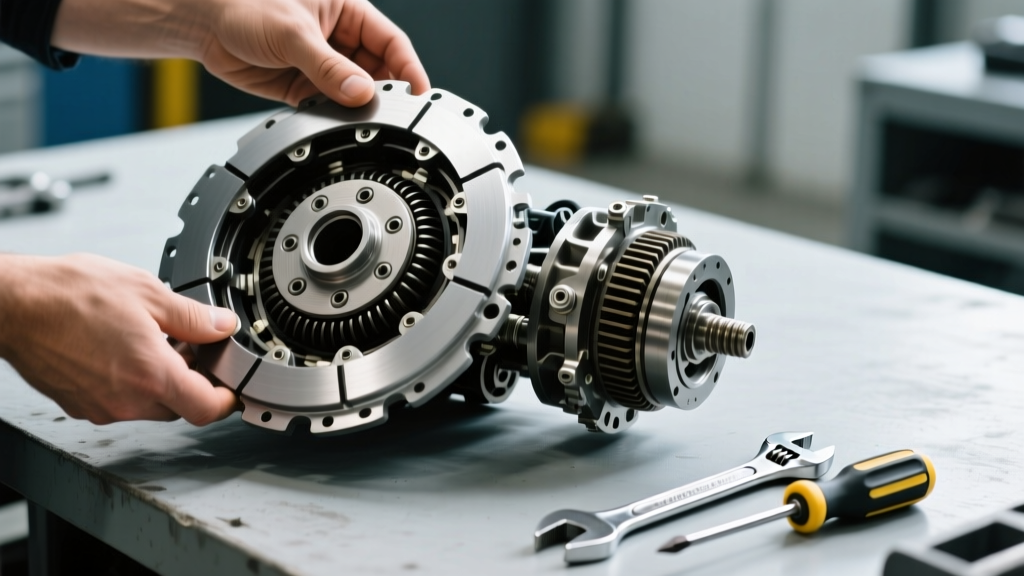
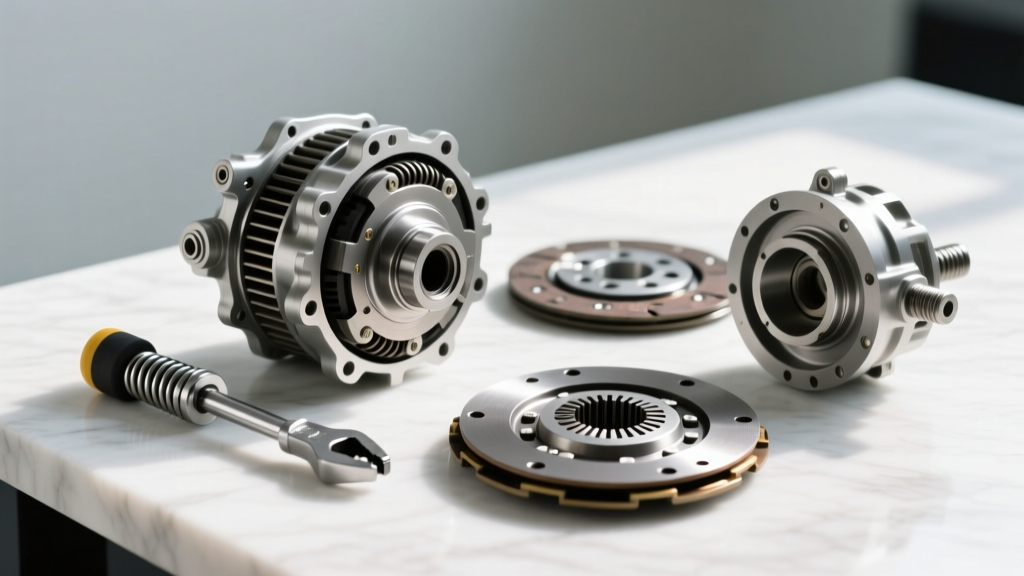
To troubleshoot effectively, you must understand the hardware executing the shifts. In an Eaton AMT system, the traditional mechanical linkage is replaced by a Concentric Clutch Actuator (ConAct) or a pneumatic piston that physically disengages a standard multi-plate friction clutch. Additionally, AMTs utilize a 'clutch brake'—a friction ring that halts input shaft rotation to enable smooth starting gear engagement.
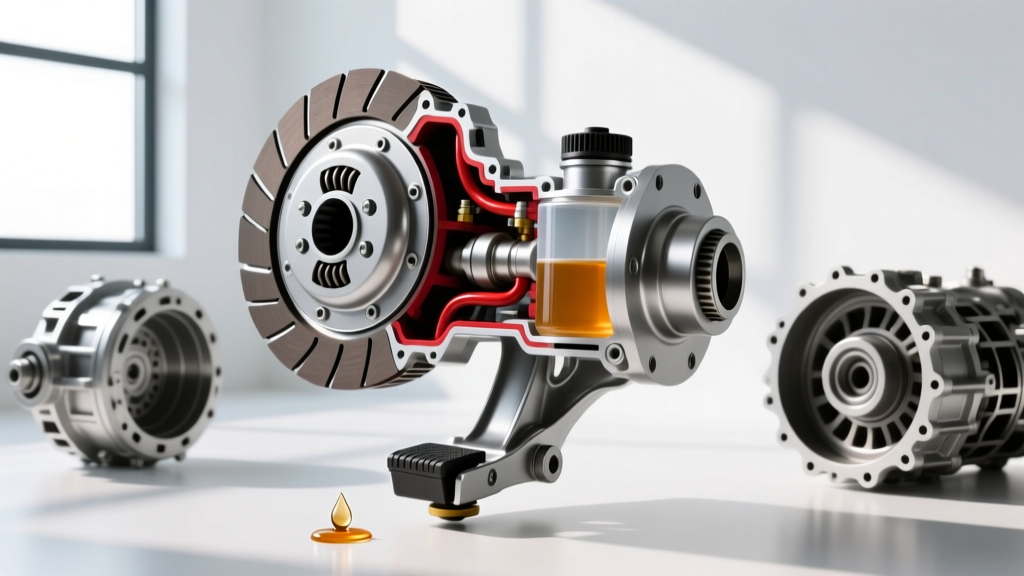
Conversely, the Allison 4000 RDS relies on a hydrodynamic torque converter equipped with an internal lock-up clutch pack. During highway cruising, the Transmission Electronic Control and Hydraulic Module (TEHCM) applies hydraulic pressure to the TCC, creating a 1:1 mechanical lock to eliminate parasitic slip and reduce thermal loads. When drivers report 'automatic clutch shudder,' they are almost always feeling the TCC pack failing to maintain hydraulic clamping force.
Top 4 Clutch Problems in Automatic Transmissions for Class 8 Trucks
1. AMT ConAct Air Leaks and Actuator Failure
In Eaton and Volvo AMTs, the Concentric Clutch Actuator is subjected to extreme thermal cycling. A failing ConAct seal will leak system air pressure, resulting in delayed shifts, incomplete clutch disengagement, and eventually, a 'Clutch Actuator Fault' code. Symptom: Harsh gear grinding when shifting from neutral to drive, or the transmission refusing to engage a starting gear.
2. Allison TCC Lock-Up Shudder
When the friction material on the Allison torque converter lock-up clutch degrades, or when the TEHCM solenoid valves stick due to contaminated fluid, the TCC rapidly engages and disengages. Symptom: A rhythmic, low-frequency vibration (shudder) felt through the chassis at 45-55 MPH under light throttle application.
3. Clutch Brake Wear and Starting Gear Faults
The AMT clutch brake is a sacrificial wear item designed to stop the input shaft. If the clutch brake gap exceeds factory tolerances, the input shaft continues to spin when the vehicle is stopped. Symptom: The dashboard display flashes 'Wait to Engage' or 'Clutch Brake Fault' for 3 to 5 seconds every time the driver selects Drive or Reverse from a standstill.
4. TEHCM Solenoid Faults Mimicking Clutch Slip
In planetary automatics, a slipping sensation is often misdiagnosed as mechanical clutch failure when it is actually a hydraulic issue. Worn clutch apply rings or degraded TEHCM pressure control solenoids fail to deliver the required 180-220 PSI to the C1-C5 clutch packs. Symptom: RPM flares during the 3-4 or 4-5 upshifts without a corresponding drop in engine load.
Diagnostic Framework: Pinpointing the Failure via SPNs
Modern heavy-duty diagnostics rely heavily on Suspect Parameter Numbers (SPNs) broadcast over the J1939 CAN bus. Before pulling a transmission, connect your diagnostic software (ServiceRanger for Eaton, DOC for Windows for Allison) and monitor live data.
- SPN 520600 (Clutch Actuator System): Indicates a pneumatic or hydraulic fault in the AMT clutch actuator. Check the air supply lines for moisture and verify the ConAct position sensor voltage (should sweep smoothly from 0.5V to 4.5V during actuation).
- SPN 710 (Torque Converter Clutch Solenoid): Common in Allison HD series. If the commanded TCC duty cycle is at 85% but the calculated slip remains above 50 RPM, the internal lock-up clutch pack is mechanically worn or the stator support seals are blown.
- Clutch Wear Sensor Data: Volvo I-Shift and modern Eaton Advantage transmissions feature hall-effect clutch wear sensors. If the measured wear index drops below 15%, the software will derate the engine torque to protect the flywheel from thermal scoring.
2026 Buyer’s Guide: Choosing the Right Clutch for Semi Truck Fleets
When sourcing a replacement clutch for semi truck automatic systems, fleet managers must weigh OEM direct replacements against high-quality remanufactured units. The 2026 aftermarket has seen a surge in ceramic-faced AMT clutches that offer superior thermal resistance for vocational applications.
| Transmission Type | Clutch Component | OEM / Aftermarket Example | Est. Cost (2026) | Expected Lifespan |
|---|---|---|---|---|
| Eaton Advantage AMT | ConAct Assembly | Eaton K-3459-1 (OEM) | $1,800 - $2,200 | 450,000 Miles |
| Eaton Advantage AMT | Ceramic Friction Disc Kit | Meritor Reman R99-021 | $1,100 - $1,400 | 600,000 Miles |
| Allison 4000 RDS | TCC Lock-Up Friction Pack | Allison 29543252 (OEM) | $450 - $650 | 300,000 Miles |
| Volvo I-Shift | Pneumatic Actuator Cylinder | Volvo 22584117 (OEM) | $1,500 - $1,900 | 500,000 Miles |
| Any AMT (Class 8) | Clutch Brake Assembly | Universal HD 443-102 | $120 - $180 | 250,000 Miles |
Critical Torque Specs and Installation Clearances
Proper installation is paramount to preventing premature clutch failure. Heavy-duty diesel engines produce immense low-end torque (often exceeding 1,850 lb-ft), meaning fastener stretch and clearance tolerances must be strictly adhered to.
Expert Warning: Never reuse AMT flywheel-to-crankshaft bolts. These are typically torque-to-yield (TTY) Grade 12.9 fasteners. Reusing them risks catastrophic flywheel detachment under heavy load.
- Eaton AMT Flywheel to Crankshaft: Torque to 235 lb-ft (318 Nm) using a star pattern. Apply medium-strength threadlocker to the threads.
- Allison SAE 1 Flywheel Housing to Block: Torque to 258 lb-ft (350 Nm). Ensure the dowel pin alignment is within 0.005 inches to prevent input shaft binding.
- AMT Clutch Brake Gap: Must be set between 0.45 and 0.55 inches. If the gap is too wide, the clutch brake cannot halt the shaft; if too narrow, it will drag and overheat.
- AMT Clutch Free Travel: Measure the release bearing travel. Standard spec is 1.25 to 1.50 inches. Adjust the actuator pushrod accordingly.
Fluid Dynamics and Thermal Management
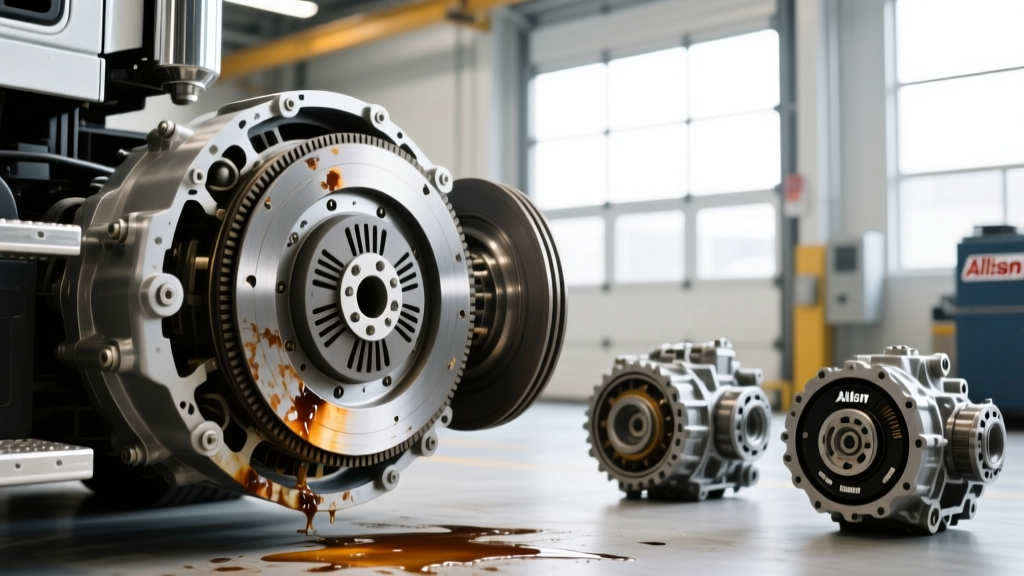
Clutch problems in automatic transmissions are frequently rooted in fluid degradation. In Allison planetary units, the lock-up clutch pack relies on the shear stability of the transmission fluid to maintain friction coefficients. For 2026 models and backward-compatible legacy units, always use fluids meeting the TES 668 or TES 295 specifications (such as TranSynd). Standard Dexron VI will cause the TCC friction material to glaze and slip within 20,000 miles under heavy GCW (Gross Combination Weight) conditions.
For AMTs, the clutch housing itself is generally dry, but the transmission main case requires low-viscosity synthetic gear lubes (e.g., SAE 50 synthetic) to reduce churning losses and ensure rapid hydraulic response times in the shift rail actuators. Always verify the fluid level with the transmission at operating temperature (180°F - 200°F) and idling in neutral to ensure the hydraulic pump is fully primed and the clutch apply circuits are pressurized.
Final Verdict: Rebuild vs. Replace
When diagnosing severe internal clutch problems in an Allison automatic, the labor cost of dropping the transmission, splitting the case, and rebuilding the clutch drums often exceeds the cost of an OEM remanufactured exchange unit. In 2026, a fully remanufactured Allison 4000 RDS with a dyno-tested TCC and updated TEHCM averages $6,500 to $8,200, backed by a 2-year unlimited mileage warranty. Conversely, for AMT systems, replacing the external ConAct, clutch brake, and friction disc through the bellhousing inspection cover or by simply pulling the transmission and swapping the clutch kit remains a highly cost-effective $2,500 repair that can extend the drivetrain's life by another half-million miles.