The Rise of the Manual-Swapped Polaris RZR
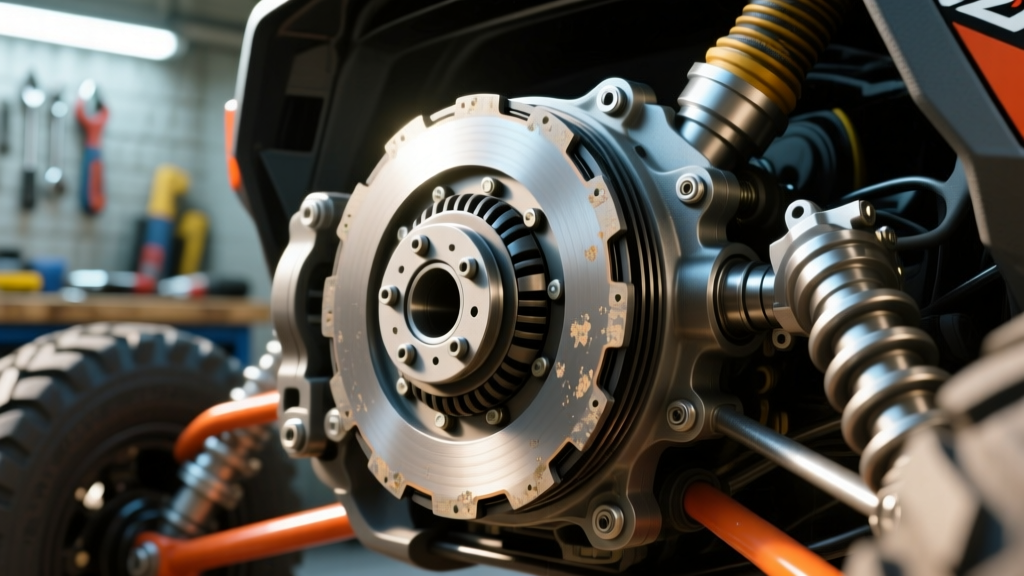
As we move through the 2026 off-road racing season, a massive trend has solidified in the UTV community: abandoning the factory CVT in high-horsepower Polaris RZR Pro XP and Turbo S platforms in favor of manual transmission swaps. Whether dropping in a Honda K24C or a Subaru EJ257, manual swaps eliminate belt slip in deep silt and provide direct drivetrain control. However, this mid-engine chassis conversion introduces a notorious mechanical headache: throw-out bearing (TOB) noise and premature failure.
Because the RZR chassis was never designed for a manual bellhousing, clearance issues are rampant. This leads directly to the most searched pain point in the swap community: how to perform a Polaris RZR clutch alignment without tool access. Standard automotive alignment tools simply will not fit or function correctly in the cramped, offset geometry of an RZR manual swap adapter plate. This guide breaks down the exact diagnostics for TOB failure and the master-class techniques for aligning your clutch in the field or garage without specialized off-the-shelf tools.
Anatomy of Throw-Out Bearing Failure in Swapped RZRs
In a factory manual car, the throw-out bearing rides on the transmission input shaft and presses against the pressure plate fingers to disengage the clutch. In a Polaris RZR swap, the engine and transmission are mated via a CNC-machined adapter plate (such as those from Kennedy Engineering). If the adapter plate is off by even 0.015 inches, or if the engine mounts deflect under heavy off-road G-loads, the TOB is subjected to severe angular misalignment.
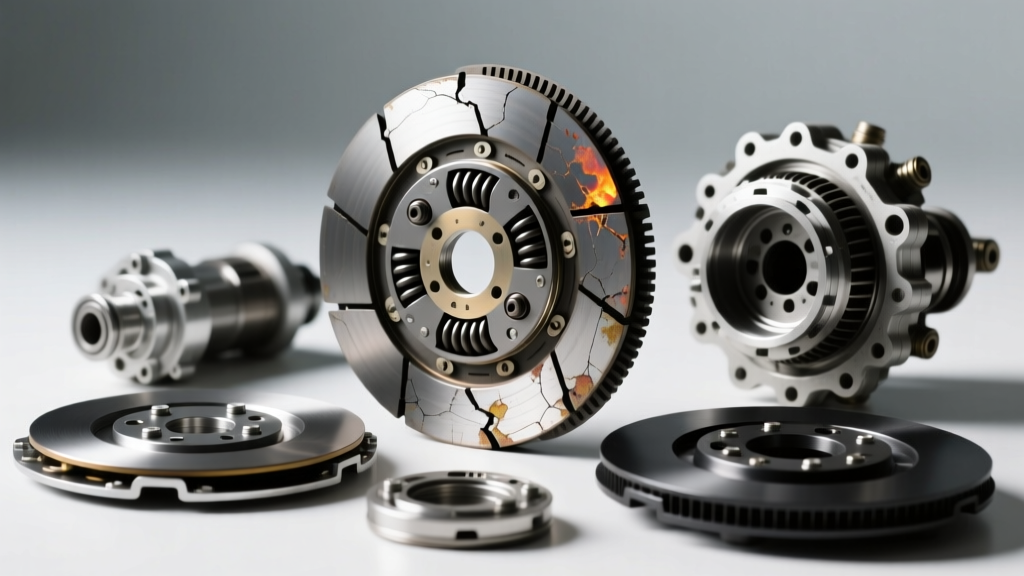
Diagnostic Matrix: Identifying TOB Noise
Before tearing down the drivetrain, you must confirm the noise is actually the throw-out bearing and not a pilot bearing or input shaft bearing. Use this diagnostic checklist:
- Noise when clutch pedal is DEPRESSED: This is the classic TOB failure symptom. The bearing is under load. A high-pitched squeal or grinding indicates a dried-out, scored, or shattered TOB.
- Noise when clutch pedal is RELEASED (at idle): This usually indicates the TOB is riding the pressure plate fingers due to a lack of free-play, or the pilot bearing in the crankshaft is failing.
- Vibration in the clutch pedal: Often caused by a worn TOB pivot ball or a bent clutch fork, forcing the bearing to wobble on the input shaft collar.
- Chatter upon engagement: While often blamed on the friction disc, in RZR swaps, this is frequently caused by the TOB collar binding on the transmission input shaft due to bellhousing misalignment.
The Alignment Dilemma: Why Standard Tools Fail
When replacing a failed TOB, you must reinstall the clutch disc and pressure plate. In a standard front-engine vehicle, you slide a 1-inch or 1-1/8 inch alignment tool through the disc and into the pilot bearing.
In a Polaris RZR, the engine is mounted mid-rear, often utilizing a custom flywheel and a shortened or modified input shaft. Furthermore, the RZR's roll cage and firewall restrict your ability to slide the transmission straight back. If the clutch disc is not perfectly centered, the transmission input shaft splines will bind against the disc hub. Forcing the transmission forward with bellhousing bolts will instantly crack the friction disc marcel springs, warp the TOB fork, and guarantee immediate throw-out bearing failure upon the first pedal press.
Polaris RZR Clutch Alignment Without Tool: 3 Proven Methods
When you cannot access the pilot bearing with a standard alignment arbor, you must rely on advanced mechanical improvisation. Here are the three most reliable methods used by elite UTV fabrication shops in 2026.
Method 1: The Sacrificial Input Shaft (The Gold Standard)
This is the most accurate method for ensuring perfect concentricity between the crankshaft pilot bearing and the transmission input shaft.
- Take a destroyed or spare transmission input shaft (from your donor Honda or Subaru transmission).
- Use an angle grinder or lathe to cut the splines completely off the shaft, leaving only the smooth pilot tip and the main bearing journal.
- Slide the clutch disc onto this smooth, spline-less shaft.
- Insert the shaft into the crankshaft pilot bearing and torque the pressure plate down in a star pattern to 19 lb-ft (for K-series setups).
- Once the pressure plate clamps the disc, the disc is perfectly centered. Simply pull the smooth shaft out—it will slide right off without disturbing the disc.
Method 2: The Dowel Pin and Mirror Technique
If you do not have a spare input shaft, you can use the engine block's alignment dowels to guide the transmission, provided you modify the clutch fork.
- Install two extended guide dowels (at least 4 inches long) into the engine block or adapter plate at the 12 o'clock and 6 o'clock positions.
- Center the clutch disc by eye, using a digital caliper to measure from the disc edge to the flywheel ring gear teeth at four quadrants to ensure it is mathematically centered.
- Suspend the transmission on a floor jack. Use a boroscope or a mechanic's mirror and a high-lumen LED flashlight to visually align the input shaft splines with the disc hub as you slide the transmission forward on the dowels.
Method 3: 3D-Printed Tapered Alignment Cone
With the advent of high-temp ASA and ABS 3D printing in off-road shops, many fabricators now print custom alignment cones. These cones feature a base that snaps perfectly into your specific crankshaft pilot bearing, and a tapered shaft that matches the exact minor diameter of your transmission's input shaft splines. The clutch disc slides over the taper, self-centering as the pressure plate is torqued down. Once torqued, the plastic cone is easily collapsed and removed.
Torque Specs and Reassembly Data
Proper torque is critical. An over-torqued pressure plate can warp the diaphragm spring, altering the TOB clearance and causing immediate bearing noise. Below are the baseline specifications for the most common Honda K-Series RZR swap.
| Component | Fastener Size | Torque Specification | Notes / Lubrication |
|---|---|---|---|
| Flywheel to Crankshaft | M12 x 1.0 | 76 lb-ft + 90° turn | Apply red Loctite 271. Use new stretch bolts. |
| Pressure Plate to Flywheel | M8 x 1.25 | 19 lb-ft (26 Nm) | Torque in a crisscross star pattern. |
| Adapter Plate to Engine Block | M10 / M12 ARP Studs | 45 - 55 lb-ft | Verify 0.002" or less runout with a dial indicator. |
| TOB Pivot Ball | M10 | 22 lb-ft | Coat ball contact point with high-temp moly grease. |
Upgrading the Throw-Out Bearing for Off-Road Abuse
The factory OEM throw-out bearing (such as Honda part #31230-RB1-003) is designed for the smooth, controlled environment of a street-driven Civic or Accord. It is not designed for the violent chassis flex, mud ingestion, and high-RPM clutch dumps of a 250-horsepower Polaris RZR tearing through whoops.
To prevent recurring TOB noise and failure, upgrade to a heavy-duty off-road release bearing. The ACT HD Release Bearing (RB-0015) is the industry standard for K-series swaps. It features a heavier-duty collar, superior high-temperature seals to keep silt and water out of the bearing race, and a stiffer internal spring to maintain constant contact with the pressure plate fingers, eliminating the 'clatter' often heard at idle in off-road builds.
Setting the TOB Clearance (Free-Play)
Even the best bearing will fail if the clearance is wrong. In a push-type manual swap, you must maintain a gap between the TOB face and the pressure plate fingers when the clutch is fully released. Target Clearance: 0.050" to 0.100". To measure this in the tight confines of an RZR bellhousing, use a piece of modeling clay. Place three small balls of clay on the TOB face at 120-degree intervals, bolt the transmission to the adapter plate, and then pull it back off. Measure the squished clay with a caliper to verify your exact clearance. Adjust your clutch master cylinder pushrod or pivot ball depth accordingly.
Final Thoughts on RZR Drivetrain Longevity
Throw-out bearing noise in a manual-swapped Polaris RZR is rarely just a 'bad part'—it is almost always a symptom of misalignment, improper clearances, or chassis-induced binding. By utilizing the Polaris RZR clutch alignment without tool methods detailed above, specifically the sacrificial input shaft technique, you guarantee perfect concentricity. Combine this with an ACT HD bearing and strict adherence to torque specs, and your manual-swapped RZR will survive the harshest 2026 desert racing environments without a hint of drivetrain squeal. For more community-driven swap data and adapter plate troubleshooting, the fabrication threads on RZR Forums remain an invaluable resource for pushing the boundaries of UTV engineering.