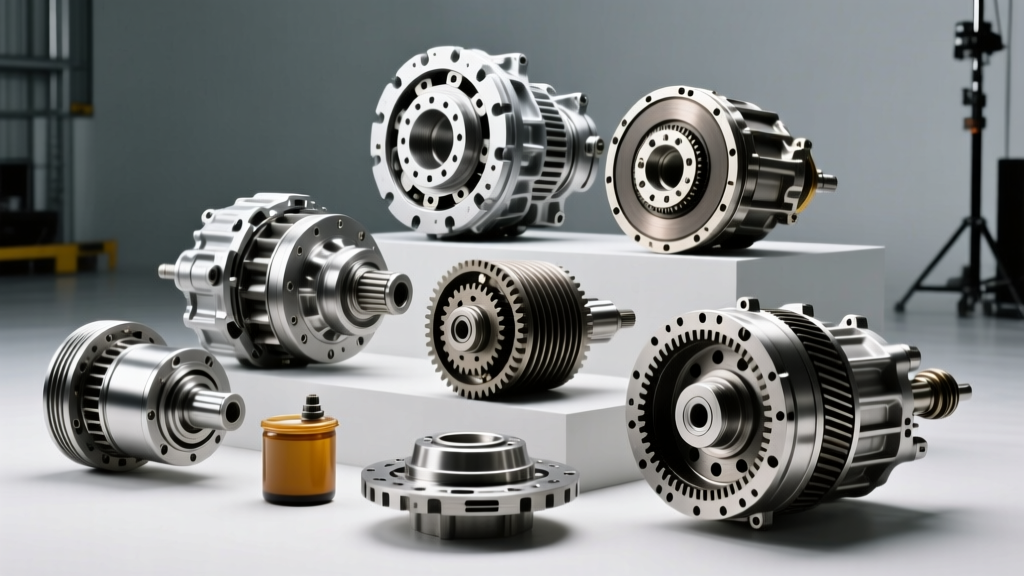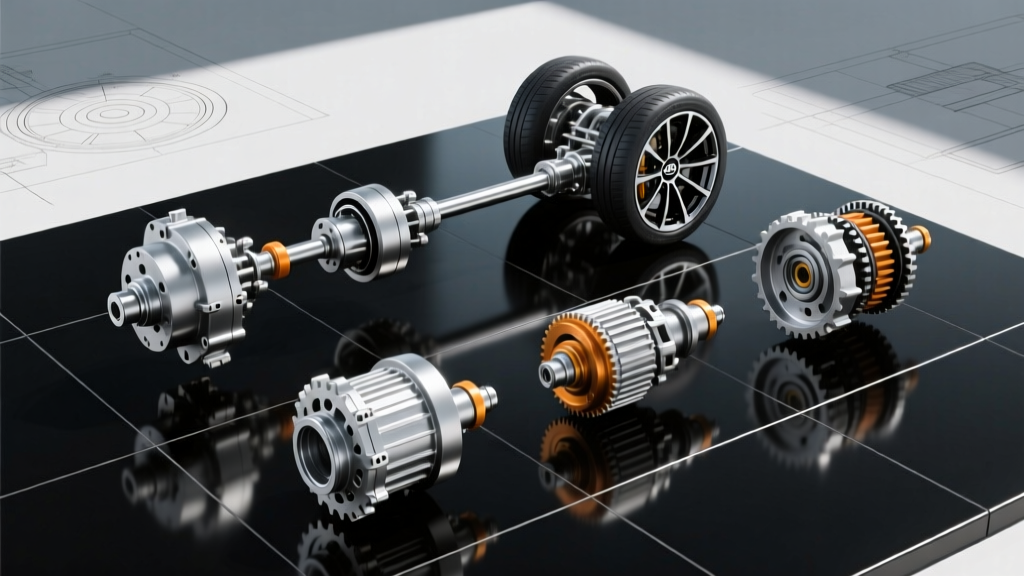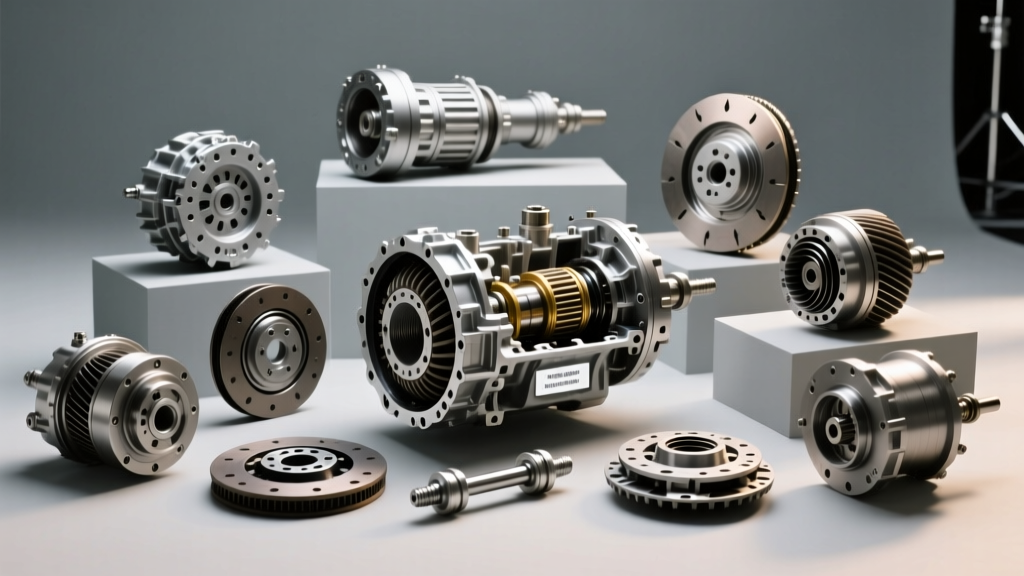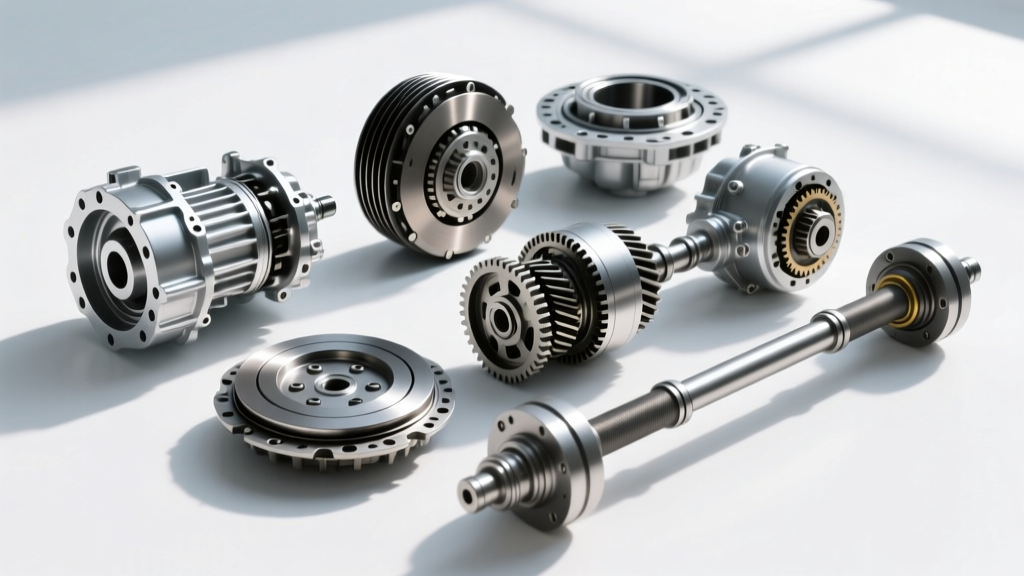
The Anatomy of a Rear-Wheel-Drive System
Diagnosing a rear-wheel-drive (RWD) platform requires a systematic approach to component identification and symptom analysis. Whether you are servicing a traditional internal combustion engine (ICE) layout with a longitudinal transmission and solid rear axle, or a modern 2026 EV rear-motor configuration, the RWD drivetrain is responsible for transferring torque from the powertrain to the rear contact patches. Misidentifying a failing component often leads to unnecessary parts replacement and unresolved NVH (Noise, Vibration, and Harshness) complaints.
In this guide, we break down the exact identification markers, failure modes, and diagnostic procedures for every major component in an RWD drivetrain, backed by precise torque specifications and real-world troubleshooting frameworks.
Component Identification & Symptom Matrix
Before grabbing a wrench, use this diagnostic matrix to correlate customer complaints with specific RWD drivetrain components.
| Component | Location / Function | Primary Failure Symptom | Common Applications / Specs |
|---|---|---|---|
| Slip Yoke | Connects driveshaft to transmission output shaft; allows for suspension travel. | Low-speed 'clunk' on engagement; cyclic squeak at idle in gear. | GM 4L60E (27-spline), 4L80E (32-spline). Ford C6 (28-spline). |
| Universal Joint (U-Joint) | Transfers rotary motion at an angle between the slip yoke, driveshaft, and pinion flange. | High-frequency metallic squeak at low speeds; harsh shudder under load. | Spicer 1310 (3.219' cap), Spicer 1350 (3.625' cap). |
| Driveshaft (Propeller Shaft) | Transmits torque longitudinally from transmission to rear differential. | 60-80 MPH harmonic vibration; floorpan resonance. | Aluminum (lightweight, prone to denting), Steel (heavy, prone to imbalance). |
| Ring and Pinion | Inside the differential; changes power flow 90 degrees and multiplies torque. | Load-dependent howling (coast vs. drive); rhythmic knocking. | Ford 8.8' (31-spline), GM 14-bolt 9.5' semi-floating. |
| Axle Shafts | Transfers torque from differential side gears to the wheel hubs. | Clicking on tight turns; severe vibration during hard acceleration. | Solid axles (C-clip or bolt-in), Independent (CV axles). |
Deep-Dive Troubleshooting: Traditional ICE RWD Layouts
1. High-Speed Harmonic Vibration (60–80 MPH)
When a vehicle exhibits a vibration that peaks between 60 and 80 MPH and can be felt in the floorpan or seat (rather than the steering wheel), the RWD drivetrain is the primary suspect. This is almost always a driveshaft or U-joint issue.
- Driveshaft Runout: Use a magnetic base dial indicator on the driveshaft tube just behind the weld yoke. Maximum allowable runout is typically 0.030 inches. If runout exceeds this, the shaft is bent or the weld yoke is clocked incorrectly. Note: Never attempt to balance a shaft with excessive runout.
- U-Joint Phasing and Binding: Identify the U-joint series. A common light-duty truck application uses the Spicer 5-1310X (1310 series, 3.219-inch cap diameter, 1.062-inch cross width). Disconnect the shaft and rotate the U-joints by hand. They should move smoothly with slight stiction. Any notchiness, rust dust (brinelling), or seized caps mandate immediate replacement.
- Pinion Angle: Driveline vibration is frequently caused by improper pinion angle. The transmission output shaft and the differential pinion flange must be parallel (within 1 to 3 degrees of each other) to allow the U-joints to cancel out their inherent velocity fluctuations. Use a digital angle finder on the pinion flange and the transmission pan rail.
2. Low-Speed Clunk and Driveline Lash
The notorious 'clunk' when shifting from Park to Reverse, or during the 1-2 shift in automatic transmissions, points to excessive backlash in the RWD drivetrain. To isolate the component, perform the 'chalk test'.
Expert Diagnostic Tip: Mark the driveshaft, pinion flange, slip yoke, and transmission output shaft with a paint pen. Have an assistant shift firmly between Drive and Reverse while you observe the marks. The gap between the marks reveals exactly where the rotational slack exists.
Slip Yoke Spline Wear: If the slip yoke moves independently of the transmission output shaft, the internal splines are worn. This is incredibly common in GM 4L60E applications equipped with the standard 27-spline yoke. Upgrading to a hardened billet 32-spline yoke (requiring a matching output shaft swap or adapter) or simply replacing the worn yoke and greasing the splines with a high-molybdenum CV grease (not standard chassis lube) will resolve the issue. Expect to pay $150–$250 for a premium replacement slip yoke.
Differential Backlash: If the clunk originates at the rear axle, suspect excessive ring-and-pinion backlash or worn side gear thrust washers inside the differential carrier. On a Ford 8.8-inch axle, backlash should be measured with a dial indicator at the ring gear; the factory specification is typically 0.008 to 0.012 inches.
3. Load-Dependent Whine and Differential Howl
Differential noise is highly specific to the load state of the RWD drivetrain:
- Drive Noise (Under Acceleration):strong> Worn pinion bearing or tight ring-and-pinion backlash.
- Coast Noise (Deceleration):strong> Worn carrier bearings or loose backlash.
- Constant Pitch Whine: Worn pinion shaft bearings, independent of load.
Diagnosing internal differential failure requires checking the pinion bearing preload. Using an inch-pound torque wrench on the pinion nut (with the axle shafts and brake calipers removed to eliminate drag), measure rotational torque. A typical new crush-sleeve setup requires 180–220 ft-lbs on the pinion nut to achieve a rotational preload of 12–18 inch-lbs. If the preload is near zero, the pinion bearing is failing or the crush sleeve has collapsed, allowing the pinion gear to walk and destroy the ring gear tooth pattern.
The 2026 Shift: EV Rear-Motor RWD Configurations
As the automotive landscape evolves, the definition of an RWD drivetrain has expanded. Vehicles like the Tesla Model 3 RWD, Ford Mustang Mach-E (Select RWD), and VW ID.4 utilize a rear-mounted electric drive unit (DU). Identifying components on these platforms requires a different paradigm.
- Reduction Gearbox: Instead of a multi-speed transmission and longitudinal driveshaft, EV RWD systems use a single-speed reduction gearbox integrated into the drive unit. Ratios typically sit around 9.0:1 to 10.0:1. Whining noises here are often high-frequency gear mesh frequencies, which are normal, but sudden changes in pitch indicate bearing failure or low fluid levels.
- Half-Shafts / CV Axles: Power is transferred directly from the rear drive unit to the wheels via CV axles. The most common failure point is the outer CV joint boot tearing due to debris or age, leading to grease loss, contamination, and a distinct 'click-click-click' on tight, low-speed turns. Unlike ICE RWD solid axles, these independent rear suspensions require regular visual inspection of the elastomeric boots.
- Drive Unit Mounts: EV motors produce instant peak torque (often 300+ lb-ft at 0 RPM). This places immense stress on the polyurethane or hydraulic drive unit mounts. A deep thud during regenerative braking transitions or hard acceleration is frequently a torn motor mount, not an internal gearbox failure.
Precision Measurement & Torque Specifications
When reassembling an RWD drivetrain, adhering to exact torque specifications is non-negotiable to prevent catastrophic failure and NVH issues.
| Fastener / Component | Specification / Torque | Notes & Best Practices |
|---|---|---|
| U-Joint Strap Bolts (1310/1350) | 15–20 lb-ft | Apply blue threadlocker. Do NOT overtighten, or the bearing caps will distort and bind the cross. |
| U-Joint U-Bolts (Saginaw/Dana) | 20–25 lb-ft | Ensure the saddle is seated evenly before tightening. |
| Differential Cover Bolts (Ford 8.8') | 28–38 lb-ft | Use RTV silicone (black or grey) rather than a cork gasket to prevent weeping. |
| Pinion Flange Nut (Crush Sleeve) | 180–250 lb-ft (Varies) | Torque is a byproduct of achieving 12-18 in-lbs of rotational preload. Never reuse a crush sleeve. |
| Driveshaft Center Support Bearing | 35–50 lb-ft | Must be torqued while the vehicle is at normal ride height on alignment racks, not at full droop. |
Fluid Identification and Maintenance
Proper lubrication is critical for RWD drivetrain longevity. Traditional hypoid gear sets require fluids with extreme pressure (EP) additives. For example, a GM 14-bolt 9.5-inch semi-floating differential requires approximately 3.5 quarts of 75W-90 synthetic gear oil. If equipped with an Eaton G80 automatic locking differential, do not add friction modifiers, as they will interfere with the locking mechanism's flyweights.
Conversely, limited-slip differentials (like the Ford Traction-Lok or Auburn Gear units) strictly require a friction modifier additive (typically 4 oz) alongside 75W-140 synthetic fluid to prevent chatter during low-speed cornering. Always verify the specific additive requirements based on the carrier identification tag located on the differential cover.
Authoritative References
For further technical data, cross-referencing manufacturer specifications is essential. The following resources provide in-depth engineering schematics and diagnostic flowcharts for RWD drivetrain systems:
- Dana Spicer Drivetrain Support & U-Joint Catalog - Essential for identifying U-joint series, cap diameters, and cross widths.
- AA1Car Driveline Vibration Diagnostics - Comprehensive guides on NVH troubleshooting, pinion angles, and harmonic balancing.