The Heavy-Duty Commercial UTV Clutch Dilemma
When managing a fleet of heavy-duty commercial off-highway vehicles—such as the Polaris Ranger XP 1000 or Can-Am Defender HD10 used in agriculture, ranching, and industrial site logistics—the continuously variable transmission (CVT) is the most abused component on the machine. As of 2026, commercial fleet managers are increasingly adopting performance CVT upgrades to combat the severe clutch problems inherent in heavy-duty work cycles. When these machines are tasked with towing 2,500-pound trailers, running power take-off (PTO) sprayers, or hauling 1,000-pound payloads up steep grades, the OEM clutch systems rapidly degrade.
Mastering rekluse clutch adjustment is no longer just for off-road racers; it is a critical maintenance skill for commercial fleet mechanics. Diagnosing CVT slip, optimizing spring rates, and tuning weight profiles are essential to keeping heavy-duty workhorses operational and preventing catastrophic belt failures in the field.
Diagnostic Teardown: Why OEM CVTs Fail Under Commercial Payloads
Before performing any aftermarket tuning, a thorough diagnostic teardown of the OEM CVT is mandatory. Heavy-duty commercial use exposes specific failure points in factory clutching that must be addressed before installing an upgrade kit.
1. Thermal Degradation and Belt Slip
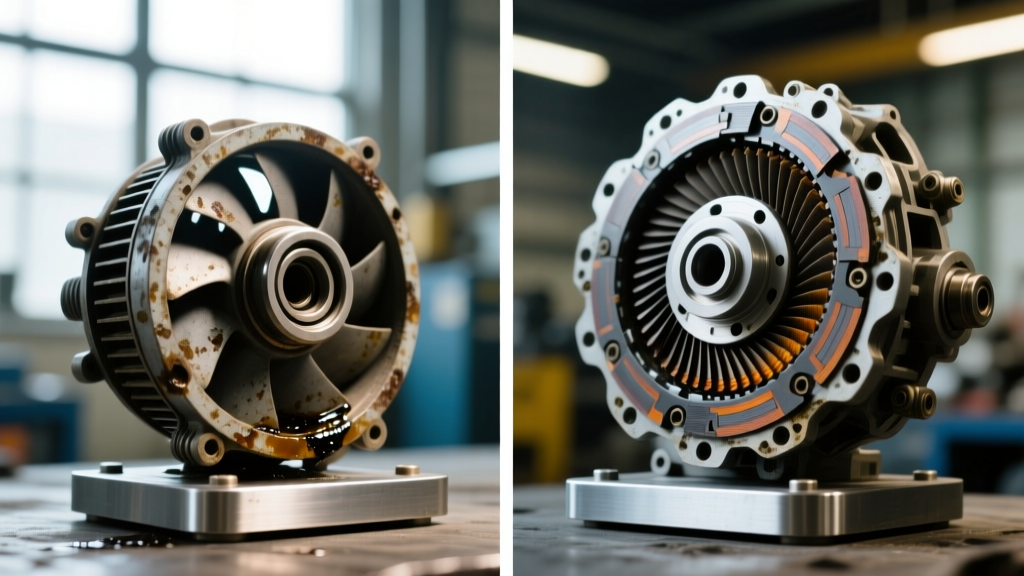
Under maximum gross vehicle weight (GVW), the primary clutch sheaves struggle to maintain adequate pinch force on the drive belt. This micro-slip generates internal CVT temperatures exceeding 400°F (204°C). Over time, this heat glazes the belt cords and warps the movable sheave face. If your diagnostic inspection reveals a dark, burnt residue on the primary sheave or a 'glassy' finish on the belt sidewalls, the clamping force is insufficient for the applied load.
2. Spider Gear and Weight Wear
The OEM primary clutch relies on stamped steel or cast weights that ride against the spider gear arms. In high-dust commercial environments (like mining or large-scale farming), abrasive particles bypass the CVT intake filters. This causes the weights to flat-spot and the spider arms to groove. A grooved spider arm prevents smooth sheave closure, resulting in violent clutch engagement (chatter) when launching a heavy payload from a dead stop.
3. Secondary Clutch Binding
The secondary clutch relies on a helix and torsion spring to maintain back-pressure. Under heavy towing loads, the OEM helix can experience excessive side-loading, causing the grease to bake out and the slider buttons to bind. This prevents the secondary from opening fully, artificially limiting top speed and forcing the primary clutch to over-shift, which accelerates belt wear.
Upgrading to Rekluse: The Commercial Fleet Standard
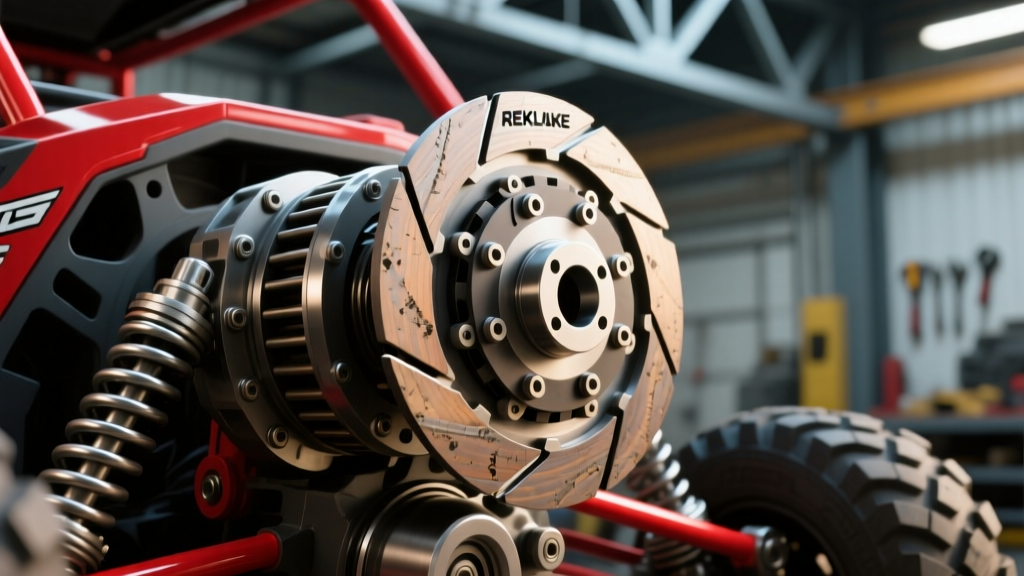
To resolve these heavy-duty clutch problems, fleet mechanics are turning to Rekluse CVT upgrade kits, specifically the RadiusX and Core CVT systems. Unlike OEM cast components, Rekluse utilizes CNC-machined billet aluminum primary spiders and wedge-style weights that eliminate the flat-spotting issue entirely.
| Component | OEM Specification | Rekluse RadiusX Upgrade | Commercial Benefit |
|---|---|---|---|
| Primary Weights | 62g Cast Steel (Round) | 56g-60g Billet Wedge | Prevents spider grooving; maintains RPM under load |
| Primary Spring | 140/220 Rate | 160/310 Rate (Heavy Duty) | Raises engagement to 2,200 RPM; eliminates incline chatter |
| Secondary Helix | Single Angle (e.g., 52°) | Multi-Angle (48°/42°) | Aggressive initial clamping; maintains backshifting speed |
| Clutch Material | Cast Aluminum / Stamped Steel | 6061-T6 Billet Aluminum | Superior heat dissipation; zero flex under 100% throttle |
Step-by-Step Rekluse Clutch Adjustment for Heavy Towing
Proper rekluse clutch adjustment requires precision. A commercial UTV configured for trail riding will fail miserably when hooked to a 2,000-pound water trailer. Below is the definitive tuning protocol for heavy-duty payload applications.
Step 1: Primary Clutch Weight and Spring Tuning
The goal of the primary clutch in a heavy-duty application is to hold the engine in its peak torque band (typically 6,200 to 6,400 RPM for the Polaris 999cc ProStar engine) while the vehicle climbs or pulls.
- Weight Adjustment: Using the Rekluse adjustable wedge weights, set the baseline weight 4 to 6 grams lighter than the OEM equivalent. For a Ranger XP 1000, dropping from a 62g profile to a 58g profile forces the primary to close harder, multiplying torque to the belt.
- Spring Selection: Install a stiffer primary spring (e.g., 160/310). This raises the engagement RPM from a sluggish 1,800 RPM to a positive 2,200 RPM. This is critical for commercial vehicles; it ensures the clutch is fully locked and not slipping during low-speed, high-torque maneuvers like inching a trailer into a loading dock.
Step 2: Secondary Helix and Torsion Spring Setup
The secondary clutch dictates belt clamping force and backshifting. When towing heavy loads downhill or decelerating, the secondary must open rapidly to downshift the transmission, providing engine braking.
- Helix Angle: Install a multi-angle helix, such as a 48/42 degree ramp. The steep initial 48-degree angle provides massive clamping force the moment the throttle is applied, instantly biting the belt and preventing slip. The flatter 42-degree finish angle ensures the clutch doesn't 'hang' in overdrive when the vehicle slows down.
- Torsion Spring: Upgrade to a high-torque torsion spring (often color-coded Black/White or equivalent high-rate spring). This increases the static pinch force on the belt. Warning: Do not exceed the manufacturer's recommended spring rate, as excessive secondary pressure will overwork the primary clutch and cause premature belt cord failure.
Step 3: Belt Deflection and Alignment Verification
No rekluse clutch adjustment is complete without verifying belt deflection. Commercial fleets should exclusively use high-grade aramid-cord belts, such as the Gates Carbon CX series, which resist stretching under high heat.
- Shift the transmission into neutral and set the parking brake.
- Apply exactly 10 pounds of downward pressure to the midpoint of the belt span between the primary and secondary clutches.
- Measure the deflection. For heavy-duty towing applications, target a deflection of 1/4 inch (6.35mm). A tighter deflection (1/8 inch) increases belt heat, while a looser deflection (3/8 inch) guarantees slip under load.
- Verify clutch alignment using a straight edge across the sheave faces. Misalignment exceeding 0.020 inches will cause asymmetric belt wear and catastrophic snapping under commercial loads.
Torque Specifications and Reassembly Protocol
Improper torque on CVT components is a leading cause of catastrophic failure in the field. Always use a calibrated torque wrench and fresh threadlocker.
- Primary Clutch Mounting Bolt: 60 ft-lbs (81 Nm). Apply a medium-strength threadlocker (e.g., Loctite 243). Note: You must use the OEM primary clutch puller tool (e.g., Polaris Tool #2870906) to safely remove and install the clutch without damaging the crankshaft threads.
- Secondary Clutch Mounting Bolt: 45 ft-lbs (61 Nm). Ensure the splines on the transmission jackshaft are completely free of debris and lightly coated with anti-seize compound before installation.
- Rekluse Spider Torque: If adjusting the internal weights of the Rekluse primary spider, torque the spider retaining nut to 110 ft-lbs using a dedicated spider holding tool.
Diagnostic Checklist: Post-Adjustment Shakedown
After completing the adjustment, conduct a loaded shakedown test. Monitor the CVT temperature (using an infrared thermometer on the secondary clutch bell) and observe the following diagnostic parameters:
| Observed Symptom | Diagnostic Root Cause | Corrective Adjustment |
|---|---|---|
| Clutch chatter on incline launch | Engagement RPM too low; belt grabbing/slipping | Install a stiffer primary spring (increase rate by 20 lbs) |
| Engine over-revs (7,000+ RPM) under load | Primary weights too light; clutch over-shifting | Add 2 grams to the Rekluse wedge weights |
| Burning smell after 10 minutes of towing | Insufficient secondary clamping force; belt micro-slip | Upgrade to a higher-rate secondary torsion spring |
| Harsh 'clunk' when shifting into gear | Idle speed too high or primary spring too stiff | Lower base idle to 1,500 RPM; drop primary spring rate |
Commercial Fleet Maintenance Intervals
Even with a perfectly executed Rekluse setup, heavy-duty commercial environments demand rigorous maintenance. Fleet managers must enforce a CVT blow-out with compressed air every 50 operating hours to remove clutch dust, which acts as an insulator and traps heat. The primary clutch must be removed, and the one-way bearing (Part #1521434 on Polaris models) inspected for play every 2,000 miles. By combining precision rekluse clutch adjustment with strict maintenance intervals, commercial fleets can eliminate CVT downtime, maximize towing efficiency, and extend the service life of their heavy-duty off-highway vehicles.