The Preventive Maintenance Litmus Test: Rebuild vs. Replace
When facing a catastrophic drivetrain failure, every vehicle owner eventually asks the same critical question: should I rebuild my transmission or buy a new one? In 2026, with supply chain fluctuations and rising labor rates, the answer is rarely a simple coin toss. As automotive transmission specialists, we look beyond the immediate price tag. The true deciding factor between a cost-effective in-house rebuild and purchasing a remanufactured or new OEM unit lies in your vehicle’s preventive maintenance history.
A transmission that has been subjected to rigorous, interval-based fluid exchanges (e.g., swapping GM Dexron VI every 45,000 miles or ZF LifeguardFluid 8 every 60,000 miles) typically suffers from isolated, predictable wear. In these cases, a rebuild is highly economical. Conversely, a neglected transmission often harbors severe internal scoring, meaning the cost of replacing 'hard parts' will quickly eclipse the price of a remanufactured unit. Below, we break down the exact costs, mechanical failure points, and decision matrices you need to navigate this dilemma.
2026 Transmission Rebuild Cost Breakdown
To understand the financial landscape, we must dissect the anatomy of a professional rebuild. The costs below reflect 2026 national averages for independent transmission specialists and dealership service centers.
| Cost Category | In-House Rebuild (Soft Parts) | In-House Rebuild (Hard Parts) | Remanufactured Unit | New OEM Unit |
|---|---|---|---|---|
| Parts / Unit Cost | $350 - $650 | $900 - $2,200+ | $2,200 - $3,800 | $4,500 - $7,500+ |
| Torque Converter | $300 - $450 (Reman) | $300 - $450 (Reman) | Included | Included |
| Fluid & Filters | $120 - $220 | $120 - $220 | $120 - $220 | $120 - $220 |
| Machine Shop Services | $0 - $150 | $250 - $600 | N/A | N/A |
| Labor (R&R + Build) | $1,400 - $2,200 | $1,800 - $2,800 | $800 - $1,400 (R&R Only) | $800 - $1,400 (R&R Only) |
| Estimated Total | $2,170 - $3,670 | $3,370 - $6,270 | $3,120 - $5,640 | $5,540 - $9,340 |
Note: Labor rates in 2026 average $130–$165 per hour at independent specialists and $175–$225 at dealerships. Data sourced from industry benchmarks via the Auto Care Association.
Case Study 1: GM 6L80E (Silverado, Tahoe, Camaro)
The GM 6L80E is a robust 6-speed automatic, but it has a well-documented Achilles heel: the 3-5-R clutch wave plate. If preventive maintenance was ignored and the transmission experienced repeated overheating, this wave plate can fatigue and shatter.
- The Preventive Scenario: If caught early (e.g., slight slipping diagnosed via solenoid codes), a Master Rebuild Kit (frictions, steels, seals, and an upgraded Sonnax wave plate) costs around $450. Total rebuild cost stays under $3,000.
- The Neglected Scenario: If the wave plate shatters, metallic debris migrates to the transmission pump and torque converter. You now need a new OEM pump assembly ($350), a remanufactured torque converter ($400), and extensive cooler flushing. The rebuild cost balloons past $4,500, making a remanufactured 6L80E (often priced around $2,800 plus core) the smarter financial choice.
Case Study 2: ZF 8HP45 / 8HP70 (Ram, BMW, Audi, Jaguar)
The ZF 8-speed is an engineering marvel, heavily reliant on its Mechatronic unit (the integrated valve body and TCM). ZF officially claims their LifeguardFluid 8 is a 'lifetime' fluid, but industry experts at ATSG (Automatic Transmission Service Group) strongly recommend a 60,000-mile service interval.
If the fluid is never changed, the plastic adapter sleeve connecting the Mechatronic unit to the transmission casing degrades, causing cross-leaks and severe clutch pack burnout. Replacing the Mechatronic unit alone costs between $1,400 and $2,200, plus programming and adaptation. If your maintenance history shows regular ZF fluid drops, a simple $150 sleeve and seal kit rebuild is all that is required. If neglected, the sheer cost of ZF hard parts almost always dictates buying a remanufactured unit.
Hard Parts vs. Soft Parts: The Point of No Return
To accurately answer whether you should rebuild or replace, you must understand the difference between soft and hard parts.
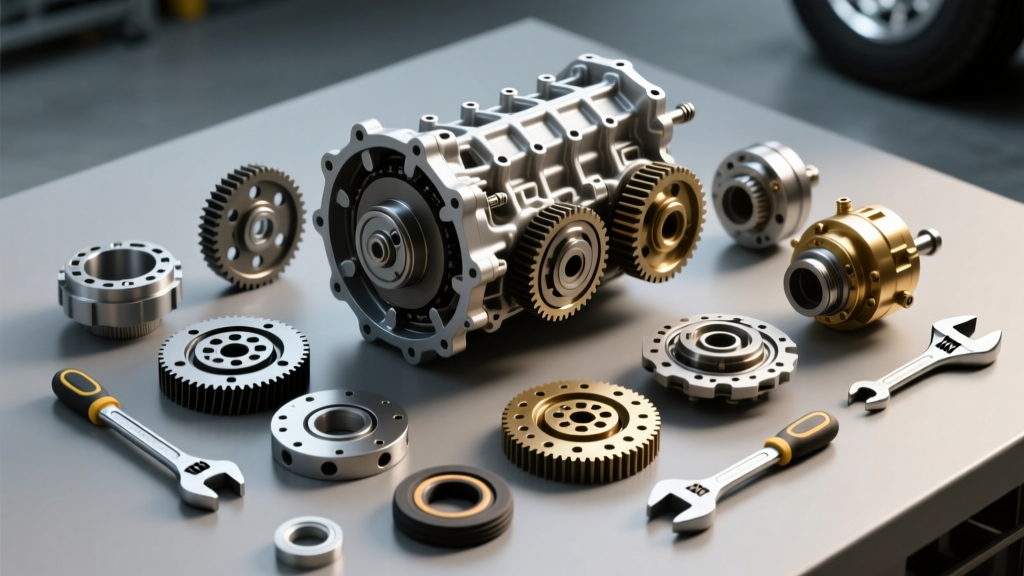
- Soft Parts: Friction clutches, steel separator plates, O-rings, lip seals, and gaskets. These are wear items. A 'soft parts rebuild' is highly cost-effective and restores the transmission to factory specification.
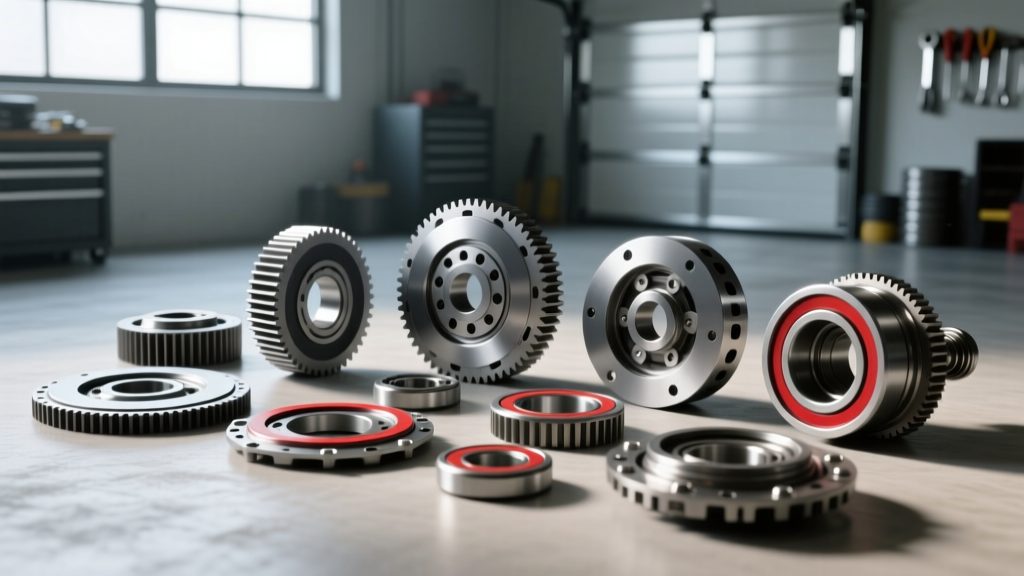
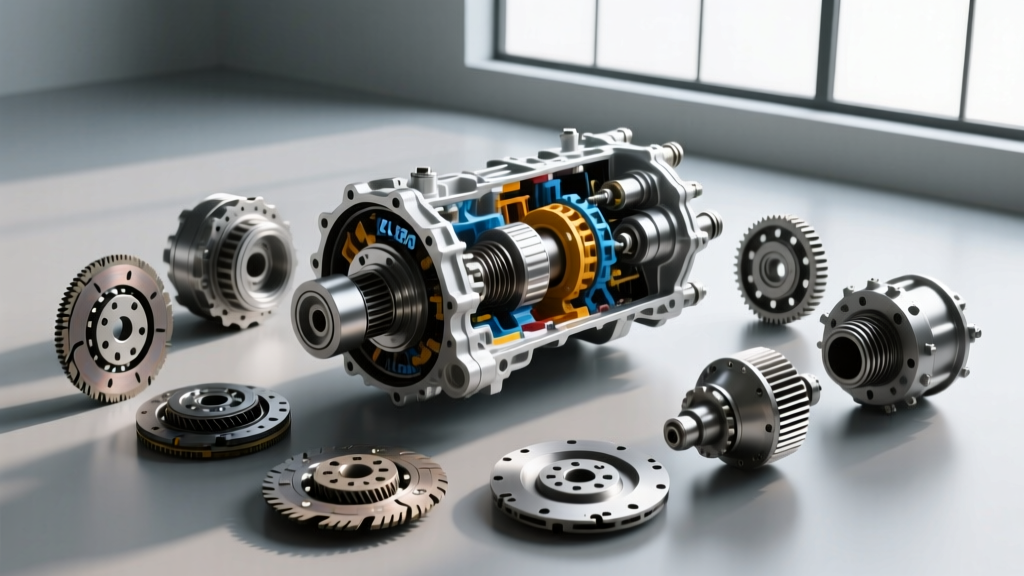
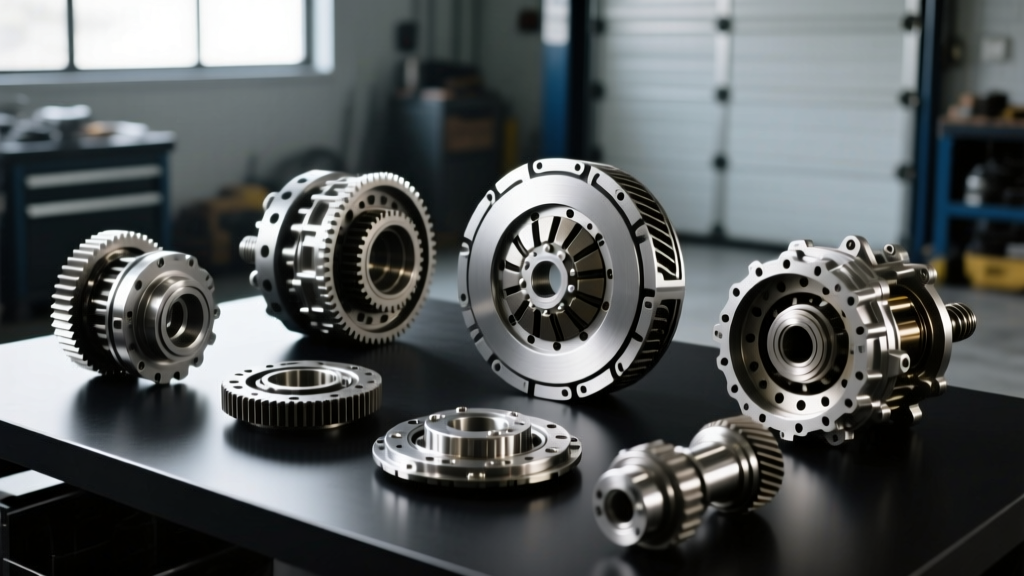
- Hard Parts: Planetary gearsets, drum housings, valve bodies, transmission pumps, and output shafts. These should not wear out under normal, maintained conditions.
Reassembly Precision: Why the Rebuilder Matters
If you opt for an in-house rebuild, the expertise of the technician is paramount. Modern transmissions require exacting clearances and torque specifications that general mechanics often overlook. For example, when rebuilding a 6L80E:
- The oil pump bolts must be torqued to exactly 10 Nm plus a 45-degree turn. Over-torquing warps the pump housing, leading to immediate low-line pressure and clutch slip upon initial startup.
- The bellhousing-to-engine block bolts require 50 Nm of torque. Improper seating causes misalignment between the engine crankshaft and the transmission input shaft, destroying the front pump bushing within 500 miles.
- Clutch pack clearances must be measured with a dial indicator. The 4-5-6 clutch pack in the 6L80E requires a precise air-check and selective snap-ring sizing to ensure a 0.040 to 0.070-inch clearance.
For deep technical specifications and upgrade components, specialists rely on engineering data from Sonnax Industries, which provides critical oversize valves and reinforced components to fix factory design flaws during the rebuild process.
Comparing Warranties and Downtime
Cost is only one side of the equation; downtime and warranty coverage are equally critical.
- In-House Rebuild: Typically takes 5 to 10 days depending on parts availability. Warranties are usually 12 months / 12,000 miles and are often restricted to the specific shop that performed the work.
- Remanufactured Transmission: Swapping in a remanufactured unit takes 1 to 2 days. Reputable builders offer 3-year / 100,000-mile nationwide warranties, covering both parts and labor if the unit fails at a partner shop across the country.
- New OEM Transmission: Offers the ultimate peace of mind with a factory-backed warranty (often 3 years / 36,000 miles, or up to 5 years / 60,000 miles if purchased through a dealership powertrain protection plan), but carries a massive financial premium.
Expert Verdict: Making the Right Choice for Your Drivetrain
So, should I rebuild my transmission or buy a new one? Here is the 2026 decision framework:
- Choose an In-House Rebuild IF: You have verifiable maintenance records, the transmission pan is relatively clean of heavy metal debris, and the failure is isolated to a known soft-part weakness (e.g., a specific solenoid, a burnt clutch pack, or a degraded seal). This route saves you 20% to 40% compared to a new OEM unit.
- Choose a Remanufactured Unit IF: The transmission was neglected, the fluid smells severely burnt, the pan contains large metal shavings, or the vehicle utilizes a highly complex, tightly packaged unit (like the ZF 9HP or Ford 10R80) where specialized machine shop tools are required for proper calibration.
- Choose a New OEM Unit IF: The vehicle is a late-model (2022 or newer) under factory powertrain warranty, or it is a specialized hybrid/EV drivetrain where remanufactured options do not yet exist in the aftermarket.
Ultimately, preventive maintenance is the cheapest 'repair' you will ever buy. Adhering to severe-service fluid intervals (every 30,000 to 50,000 miles for towing/track use) ensures that when a transmission finally needs service, it remains a soft-parts rebuild rather than a catastrophic hard-parts replacement.