The Hidden Culprit Behind Blown Axle Seals and Diff Overheating
When a heavy-duty truck or high-performance SUV presents with repeated rear axle seal failures, degraded gear oil, or whining bearings, most technicians immediately suspect bad seals or worn pinion bearings. However, in modern drivetrains equipped with external cooling loops—such as the AAM 11.5-inch axle found in Ram 2500/3500 trucks or the Ford Sterling 10.5-inch axle—the root cause is often a restriction in the cooling circuit. This restriction leads to localized overheating, fluid varnishing, and catastrophic housing over-pressurization. To accurately diagnose this without resorting to guesswork, a differential pressure tester is the most critical tool in your diagnostic arsenal.
In the context of rear differential service and maintenance, measuring the pressure differential (Delta-P) across the axle’s external cooler and inline filtration system reveals hidden blockages that infrared thermometers simply cannot detect until it is too late. This guide details the exact diagnostic procedures, baseline specifications, and fluid service protocols required to restore your rear axle to optimal operating condition in 2026.
Why a Differential Pressure Tester is Essential for HD Axles
Heavy-duty axles generate immense thermal loads, especially when towing near maximum Gross Combined Weight Ratings (GCWR). To manage this, manufacturers like American Axle & Manufacturing (AAM) integrate gerotor-style lube pumps that push gear oil out of the differential housing, through an external heat exchanger (cooler), and back into the pinion or axle tube bearings.
Over time, microscopic metallic debris, clutch material from limited-slip differentials, and oxidized oil sludge accumulate in the cooler fins and inline magnetic filters. This creates a flow restriction. A differential pressure tester measures the exact pressure drop between the pump’s outlet and the cooler’s return line. If the Delta-P exceeds the manufacturer’s bypass valve threshold, the internal pump will cavitate, or the bypass valve will stick, starving the pinion bearing of lubrication while simultaneously causing the internal housing pressure to spike and blow out the axle shaft seals.
Understanding the Axle Cooling Loop Architecture
Before connecting your gauges, you must understand the fluid dynamics of the specific axle you are servicing. The AAM 11.5, for instance, utilizes a 3/8-inch hydraulic hose routing to a frame-mounted cooler. The system relies on a precise pressure gradient to ensure that the API GL-5 rated 75W-140 synthetic gear oil reaches the outer pinion bearing cage. If the differential pressure across the cooler exceeds 15 PSI, the flow rate drops below the critical 0.8 Gallons Per Minute (GPM) required for adequate thermal transfer.
Step-by-Step: Testing the Rear Diff Cooler Circuit
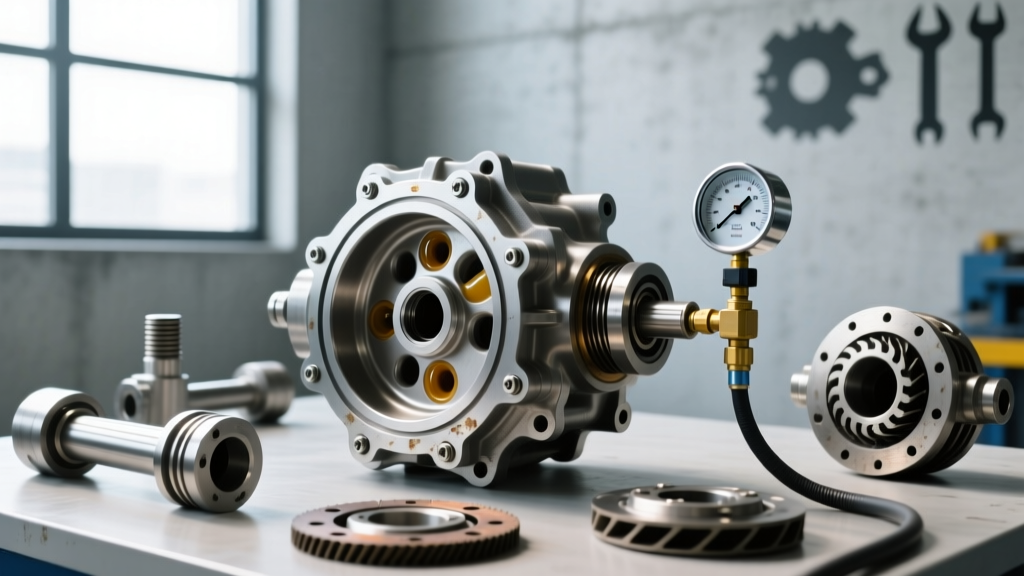
Performing a pressure drop test requires a dual-port differential pressure gauge or two synchronized inline hydraulic pressure gauges. Ensure the axle is at operating temperature (approximately 160°F to 180°F) to allow the 75W-140 fluid to reach its target kinematic viscosity.
- Locate the Test Ports: Identify the supply line exiting the differential housing and the return line entering the axle tube. Install inline T-fittings with Schrader valves or quick-connect pressure taps.
- Connect the Tester: Hook the high-pressure side of your differential pressure tester to the supply line (post-pump) and the low-pressure side to the return line (post-cooler).
- Load the Drivetrain: Safely elevate the vehicle on a lift with the rear wheels off the ground, or use a chassis dyno. Bring the rear axle up to a simulated 65 MPH road speed under light load.
- Read the Delta-P: Observe the pressure differential. A healthy system will show a minimal pressure drop, indicating free flow through the heat exchanger. A spiking Delta-P indicates a severe restriction.
Diagnostic Data: Interpreting Pressure Drop (Delta-P)
Use the following baseline data table to interpret your differential pressure tester readings. These specifications apply to standard HD truck external cooling loops (e.g., Ram 2500/3500, Ford Super Duty).
| Cooler Circuit Condition | Supply Pressure (PSI) | Return Pressure (PSI) | Delta-P (Pressure Drop) | Diagnostic Action Required |
|---|---|---|---|---|
| Optimal Flow (Clean) | 22 - 28 PSI | 18 - 24 PSI | 2 - 5 PSI | No action; standard fluid service. |
| Mild Restriction (Sludge) | 30 - 35 PSI | 15 - 20 PSI | 10 - 15 PSI | Flush cooler lines; replace inline filter. |
| Severe Blockage (Varnish/Debris) | 40+ PSI | < 5 PSI | > 20 PSI | Replace cooler assembly; inspect pinion bearing. |
| Bypass Valve Failure | 15 PSI | 14 PSI | ~1 PSI (at high RPM) | Rebuild internal pump/bypass; check for overheating. |
Note: Always consult the specific OEM service manual for your axle model, as gerotor pump output varies by ring-and-pinion ratio and housing casting.
Housing Over-Pressurization: The Breather Valve Factor
If your differential pressure tester confirms the cooling loop is flowing correctly, but the customer is still experiencing blown axle seals, the issue is likely housing over-pressurization due to a clogged axle breather. As gear oil heats up, the air inside the differential housing expands. The breather valve is designed to vent this expanding air to the atmosphere.
When the breather becomes clogged with mud, water, or road grime, the internal housing pressure can easily exceed 4-6 PSI during sustained towing. Since standard rear axle seals are only designed to retain fluid and handle less than 2 PSI of internal crankcase pressure, the excess pressure forces gear oil past the seal lips. To test this, connect a standard low-pressure manometer to the axle breather tube while the axle is at operating temperature. If internal housing pressure exceeds 1.5 PSI, replace the breather valve and route a remote breather extension higher up into the frame rail to prevent future hydro-locking of the vent.
Corrective Action: Rear Differential Service and Fluid Exchange
Once the cooling circuit restriction or breather issue is resolved, a complete rear differential service is mandatory. Overheated gear oil loses its shear stability and extreme pressure (EP) additive efficacy. According to the American Petroleum Institute (API), GL-5 fluids rely on sulfur-phosphorus additives that degrade rapidly when subjected to sustained temperatures above 250°F, which is common during a cooler blockage.
Draining and Inspection Protocol
- Remove the Cover or Drain Plug: For the AAM 11.5, remove the 10-bolt rear cover. Torque spec for reinstallation is 45 lb-ft in a crisscross pattern using RTV silicone (e.g., Permatex Ultra Black) or the OEM reusable gasket.
- Inspect the Lube Pump Pickup: Ensure the internal pickup screen is free of metallic fuzz. A heavy accumulation of glitter indicates pinion bearing spalling caused by the previous oil starvation event.
- Clean the Housing: Use a dedicated brake cleaner and lint-free shop towels to remove sludge from the bottom of the housing. Do not leave solvent residue.
Fluid Selection and Fill Specifications
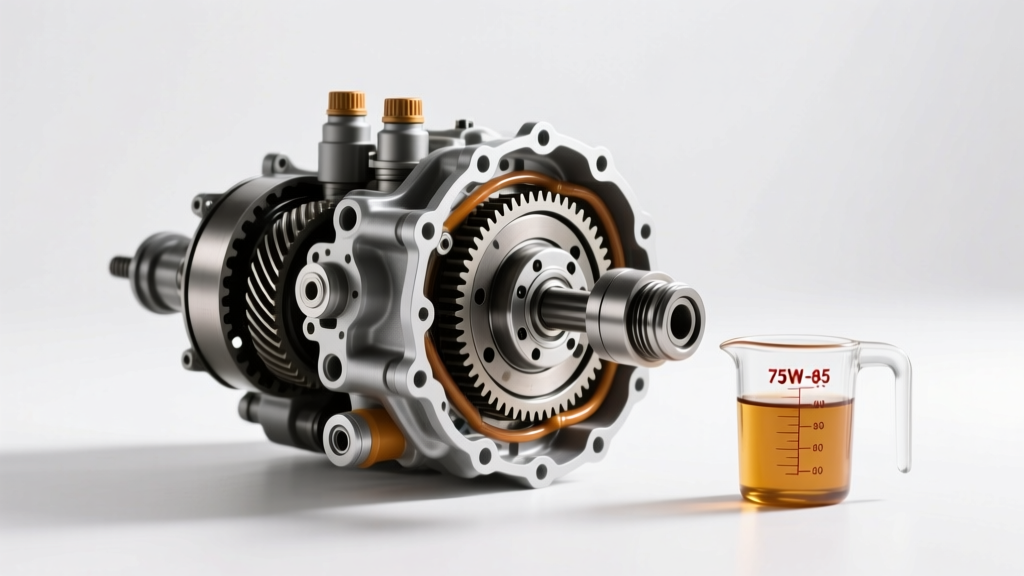
For heavy-duty applications and towing, always upgrade to a full synthetic 75W-140 gear oil. The Lubrizol Corporation notes that synthetic base stocks provide significantly better oxidation resistance and film strength at high thermal loads compared to conventional 80W-90 mineral oils.
- Recommended Fluid: AMSOIL Severe Gear 75W-140 or Mobil 1 Synthetic 75W-140.
- Capacity: AAM 11.5-inch axle holds approximately 3.5 to 4.0 quarts (housing only). If the external cooler loop was fully drained, expect to add an additional 0.5 to 1.0 quarts.
- Friction Modifier: If equipped with a TracRite or Eaton limited-slip differential, add exactly 4 oz of OEM-approved friction modifier prior to filling to prevent clutch chatter.
- Fill Level: Fill until the fluid is level with the bottom of the fill plug threads. For modified trucks with a lifted suspension, the pinion angle may change, requiring the fluid level to be brought up to 1/4 inch above the fill plug hole to ensure the pinion bearing receives adequate splash lubrication.
- Fill Plug Torque: 25 to 30 lb-ft.
Real-World Cost and Part Numbers (2026 Estimates)
- Synthetic 75W-140 Gear Oil (4 Quarts): $80 - $110
- OEM Axle Breather Valve (Mopar/Ford): $15 - $25
- Replacement External Diff Cooler Assembly: $180 - $350 (depending on OEM vs. aftermarket aluminum finned designs)
- Inline Magnetic Filter (if equipped): $35 - $50
Summary
Rear differential service on modern heavy-duty trucks goes far beyond simply swapping out old gear oil. By incorporating a differential pressure tester into your diagnostic workflow, you can uncover hidden cooling loop restrictions that cause chronic overheating and seal failures. Coupled with a thorough inspection of the axle breather system and the use of high-quality synthetic GL-5 lubricants, you ensure the longevity of the ring and pinion set, bearings, and axle seals under the most extreme towing conditions.