The Center Differential vs. Rear Differential Misdiagnosis
In the modern landscape of all-wheel-drive (AWD) and four-wheel-drive (4WD) vehicles, drivetrain diagnostics require a highly methodical approach. As we navigate the 2026 automotive market, characterized by complex active torque-vectoring systems and hybrid e-axles, a pervasive issue plagues both DIY enthusiasts and generalist mechanics: the misdiagnosis of rear differential wear as a center differential failure. When an AWD system exhibits low-speed binding, cornering chatter, or drivetrain shudder, the immediate suspicion often falls on the center differential—especially in vehicles equipped with viscous couplings or Torsen units. However, in a vast majority of cases, the root cause is degraded fluid, depleted friction modifiers, or clutch-pack wear within the rear differential.
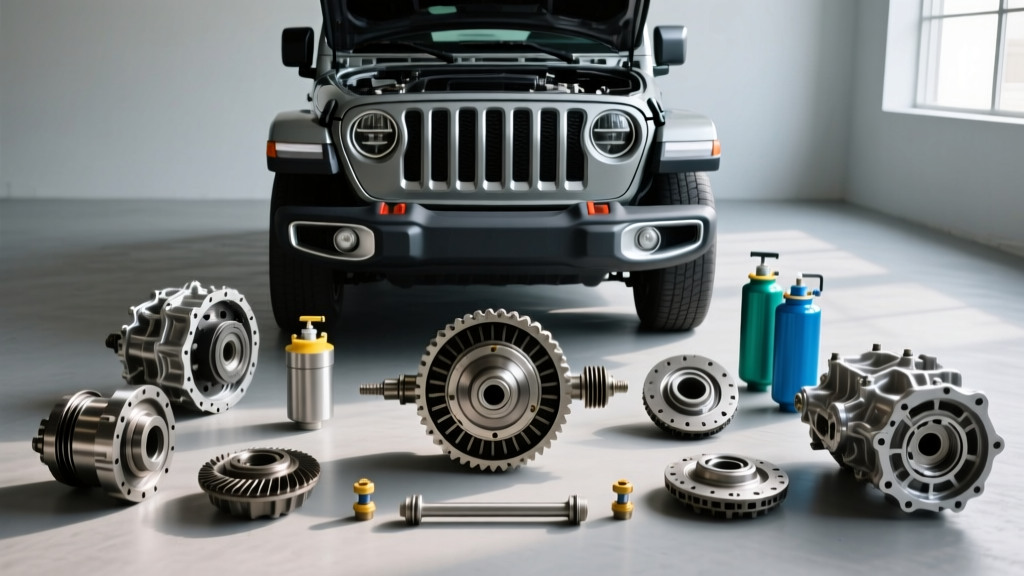
Understanding the symbiotic relationship between the front, center, and rear differentials is critical. The center differential's primary role is to manage the speed differential between the front and rear axles during cornering. If the rear differential's limited-slip clutch pack begins to bind due to contaminated gear oil or a lack of friction modifier, the rear wheels cannot differentiate speed properly. This resistance travels up the driveshaft, forcing the center differential to overcompensate, overheat, or bind. Proper rear differential service and maintenance is the first and most cost-effective step in resolving these phantom center differential symptoms.
Symptom Overlap: Why the Rear Diff Mimics Center Diff Failures
To accurately troubleshoot drivetrain noise and binding, we must isolate the mechanical behavior of the rear differential. Below are the most common symptoms that lead to a false center differential diagnosis.
Low-Speed Cornering Binding (The 'Parking Lot' Shudder)
When executing tight, low-speed turns (such as navigating a parking garage), a healthy rear limited-slip differential (LSD) allows the outer wheel to spin slightly faster than the inner wheel. If the rear differential fluid has sheared down and lost its friction-modifying properties, the clutch plates inside the rear diff will lock up. This causes the rear tires to 'hop' or chatter across the pavement. Because the driver feels the drivetrain resisting the turn, and the center differential is responsible for front-to-rear slip, many incorrectly assume the center differential's viscous fluid has solidified or its mechanical gears are failing.
Harmonic Whine and Drone at Highway Speeds
A whining noise that peaks between 45 and 65 mph is a classic indicator of ring and pinion gear wear. In the rear differential, hypoid gears operate under extreme sliding friction. If the 75W-90 or 75W-85 gear oil has been neglected, the protective boundary layer breaks down, leading to micro-pitting on the gear teeth. This harmonic resonance travels through the driveshaft and transmission tunnel, making it acoustically difficult to distinguish from a failing center differential bearing or transfer case chain.
Diagnostic Matrix: Isolating the Fault
Before ordering a $1,500+ replacement center differential or transfer case assembly, use this diagnostic framework to verify if a simple rear differential fluid service will resolve the issue.
| Symptom | Center Diff Probability | Rear Diff Probability | Definitive Verification Test |
|---|---|---|---|
| Tight-turn binding / Tire hop | Low (unless viscous is melted) | High (LSD clutch pack binding) | Perform rear diff fluid drain and refill with OEM friction modifier. Test drive immediately. |
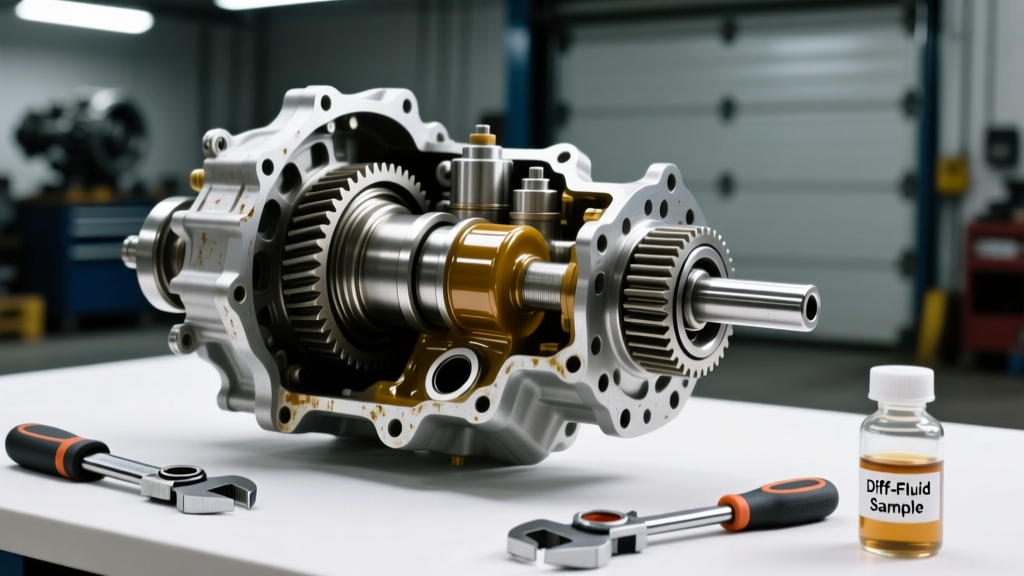
| Whine at 50 mph (Coast vs. Load) | Moderate | High (Hypoid gear wear) | Use a chassis ear or stethoscope on the rear diff housing while on a lift under load. |
| Drivetrain shudder under hard acceleration | High (Torque split failure) | Moderate (Clutch slip) | Monitor AWD ECU torque-split data via OBD2 scanner. Check rear diff fluid for metallic glitter. |
Rear Differential Service: Fluids, Friction Modifiers, and Specs
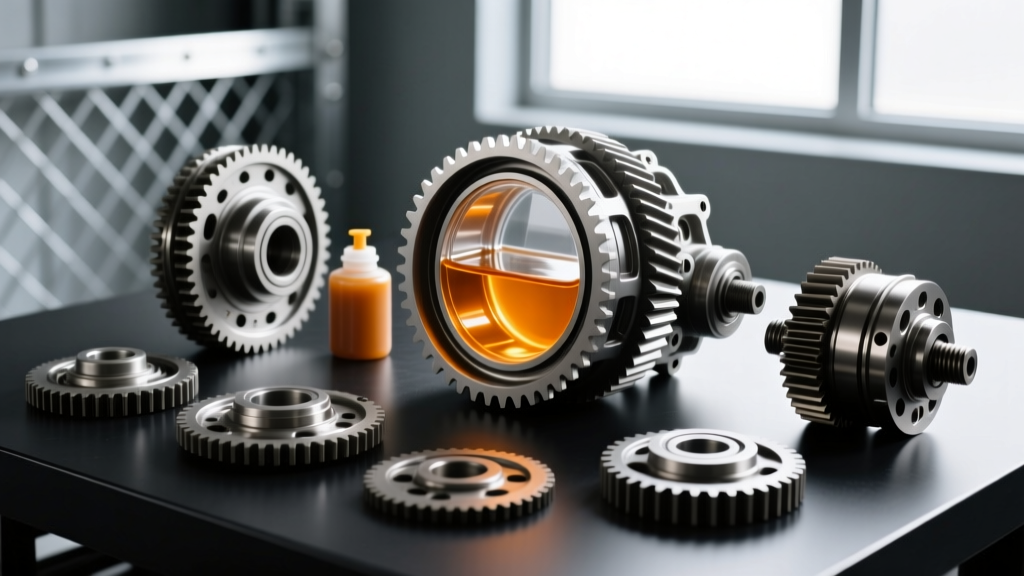
The era of pouring generic 80W-90 into every rear differential is over. Modern AWD systems require precise fluid chemistry to maintain the delicate friction coefficients required by the AWD ECU. According to AMSOIL's technical guidelines on differential maintenance, shear stability and extreme pressure (EP) additives are paramount for hypoid gear longevity, but friction modifiers are what dictate clutch-pack behavior.
Subaru Symmetrical AWD (Viscous/Torsen Center)
Subaru vehicles are notorious for the 'misdiagnosed center diff' scenario. The rear differential in models like the WRX, Outback, and Forester requires a specific 75W-90 GL-5 fluid. More importantly, if equipped with a mechanical LSD, it requires the exact dosage of friction modifier.
- OEM Fluid: Subaru Extra-XT 75W-90 (Part # SOA635079)
- Friction Modifier: Subaru Extra-XT Limited Slip Friction Modifier (Part # SOA635072) - typically 4 oz required.
- Capacity: 0.8 Liters (0.84 US qt)
Audi Quattro & VW 4Motion (Haldex Rear Coupling)
Many owners confuse the rear differential gear oil with the Haldex coupling fluid. The rear differential itself takes a standard 75W-85 GL-5 gear oil (e.g., Liqui Moly Fully Synthetic Hypoid Gear Oil). However, the Haldex coupling attached to the rear differential requires a specialized hydraulic fluid (G 060 175 A2) and a proprietary filter screen cleaning. Neglecting the Haldex fluid causes the rear axle to fail to engage, which the driver perceives as a center differential (Torsen) failure sending zero power rearward.
Step-by-Step Rear Differential Maintenance Procedure
Performing a rear differential service is straightforward but requires strict adherence to torque specifications and cleanliness. Below is the standard procedure for a typical Japanese AWD rear differential (e.g., Subaru, Toyota, Mazda).
- Vehicle Preparation: Raise the vehicle on a level lift or jack stands. The differential must be level to ensure an accurate fluid fill. Remove the undertray skid plate if equipped.
- Crack the Fill Plug First: Critical Step. Always use a 1/2-inch drive socket or hex bit to loosen the upper FILL plug before draining. If the drain plug is removed and the fill plug is seized, the vehicle is stranded until the plug can be extracted.
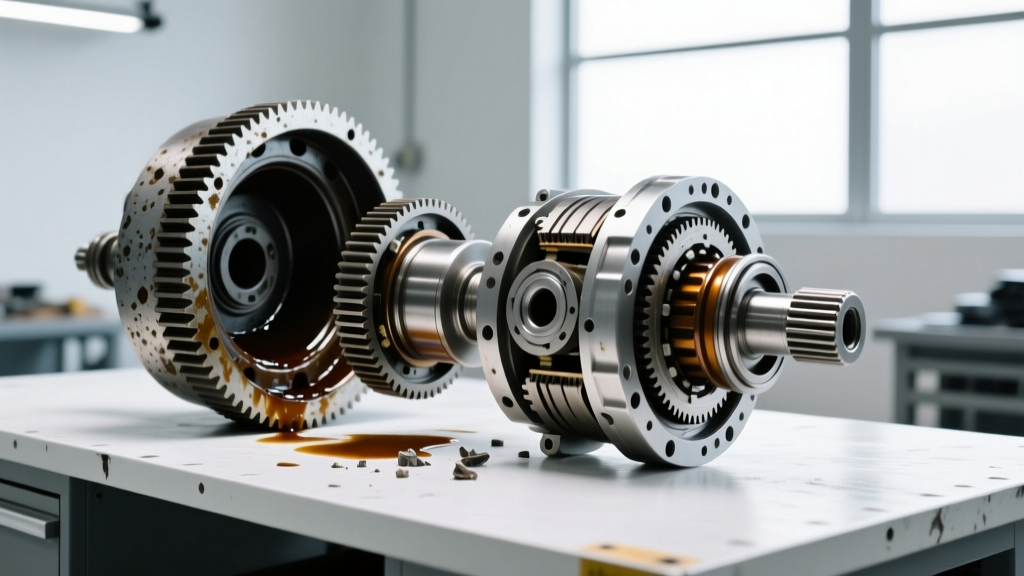
- Drain and Inspect: Remove the lower drain plug. Allow the fluid to drain into a clean catch pan. Inspect the magnetic drain plug for metallic particles. Fine grey paste is normal clutch and gear wear; chunky metallic shards indicate catastrophic ring and pinion failure requiring a rebuild.
- Replace Crush Washers: Never reuse aluminum crush washers. Install new OEM washers (e.g., Subaru Part # 803926090 for both fill and drain).
- Refill Procedure: Using a fluid transfer pump, inject the new 75W-90 gear oil and the required friction modifier into the fill hole until the fluid begins to weep out of the bottom edge of the fill hole threads.
- Torque Specifications: Torque both the fill and drain plugs to 45 Nm (33 lb-ft). Over-torquing can crack the aluminum differential housing or strip the threads, leading to a $2,000 housing replacement.
Cost Breakdown: DIY vs. Dealership in 2026
Understanding the financial implications of rear differential service helps contextualize the importance of doing it before a center differential misdiagnosis leads to unnecessary parts replacement.
- DIY Rear Diff Service: $45 - $85 (Includes 2 quarts of high-quality synthetic 75W-90, friction modifier, and two crush washers).
- Independent Shop Service: $120 - $180 (Labor + Fluid).
- Dealership Service: $220 - $350 (Often billed at 1.0 hour labor plus OEM fluid markups).
- Center Differential Replacement (Misdiagnosis Cost): $1,800 - $3,500+ (Includes transfer case disassembly, OEM center diff unit, and extensive labor).
Conclusion: Trust the Fluid First
As automotive drivetrains become increasingly integrated with active chassis controls and predictive torque-vectoring, the mechanical fundamentals of hypoid gears and clutch packs remain unchanged. If your AWD vehicle is exhibiting binding, shudder, or whining, do not immediately condemn the center differential. A meticulous rear differential service—utilizing the exact OEM-specified gear oil, precise friction modifiers, and correct torque specs—resolves the majority of these symptoms. By maintaining the rear differential, you protect the entire AWD ecosystem, ensuring seamless torque distribution and saving thousands in misdiagnosed drivetrain repairs.
For more foundational knowledge on how power is routed through these complex systems, refer to Car and Driver's comprehensive guide on AWD vs. 4WD systems to better understand the mechanical linkages connecting your front, center, and rear axles.