The Critical Role of Fluid Diagnostics in Drivetrain Maintenance
When enthusiasts and fleet managers schedule a front and rear differential service, the primary objective is often viewed simply as replacing old gear oil with fresh lubricant. However, as a core component of preventive drivetrain maintenance, the fluid draining from your axle housings is a rich diagnostic medium. Much like engine oil analysis, the color, viscosity, odor, and particulate content of differential fluid provide a real-time window into the health of your ring and pinion gears, carrier bearings, and limited-slip clutches. Ignoring these visual and tactile cues during a routine service can lead to missed warnings of impending catastrophic failure, turning a $150 preventive maintenance job into a $2,500 axle rebuild.
As of 2026, modern synthetic gear oils and advanced Extreme Pressure (EP) additive packages have extended service intervals significantly. Yet, severe duty cycles—such as towing heavy trailers, off-road rock crawling, or repeated track use—still degrade these fluids rapidly. Understanding how to read the condition of your gear oil is essential for anyone looking to maximize the lifespan of their drivetrain components.
Decoding Differential Fluid Color and Condition
The visual inspection begins the moment you crack the fill plug and drain plug. The color of the fluid tells a specific story about thermal loads, contamination, and additive depletion.
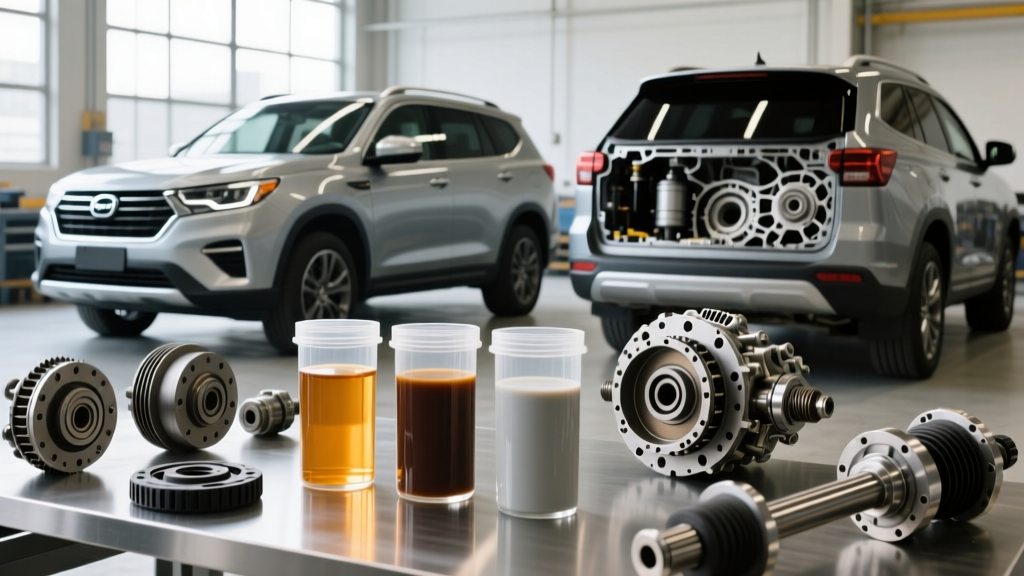
Translucent Amber to Honey Gold
This is the baseline for new or healthy synthetic 75W-90 or 80W-90 GL-5 gear oil. If your fluid retains a translucent amber or deep honey hue after 30,000 miles, it indicates that the sulfur-phosphorus EP additives are intact, the base oil has not suffered from severe oxidative breakdown, and the axle is operating within its designed thermal envelope. No immediate action is required beyond topping off or completing the scheduled interval.
Opaque Black and Viscous Sludge
When gear oil turns pitch black and loses its translucent quality, it is a primary indicator of severe thermal degradation and oxidation. Gear oils rely on complex sulfur-phosphorus compounds to protect the sliding contact points of the hypoid ring and pinion gears. When subjected to sustained temperatures exceeding 250°F (121°C), these compounds break down, forming acidic byproducts and carbon varnish. If the fluid is black but still relatively thin, it has simply reached the end of its service life. If it has thickened into a tar-like sludge, the axle has been subjected to extreme overloading, and you must inspect the gear teeth for heat-induced bluing or spalling.
The 'Chocolate Milk' Emulsion
A milky, frothy, or light brown appearance—often resembling chocolate milk—means water has intruded into the axle housing and become emulsified with the gear oil. This is a critical failure state. Water destroys the load-bearing film strength of the lubricant, leading to rapid rusting of the carrier bearings and pitting on the gear teeth. The most common culprit is a clogged or missing axle breather valve. When the axle heats up, internal pressure expands; when it cools (especially when crossing a cold stream or hitting snow), the vacuum sucks moisture past the pinion seal or axle shaft seals. Always replace the breather valve and inspect seals if you encounter emulsified fluid.
Glitter, Flakes, and Metallic Suspensions
While a fine, almost imperceptible metallic sheen (often described as 'glitter') is normal wear from limited-slip clutch packs and bearing break-in, distinct metallic flakes or chunks are a red flag. Bronze-colored flakes indicate carrier or pinion bearing cage failure. Dark, hardened steel chunks suggest that the ring and pinion teeth are chipping, or the spider gears in the open differential are disintegrating.
Fluid Condition Diagnostic Matrix
Use the following diagnostic matrix during your front and rear differential service to determine the next mechanical steps based on fluid condition.
| Fluid Appearance | Texture / Debris | Odor | Primary Cause | Recommended Action |
|---|---|---|---|---|
| Amber / Gold | Smooth, clean | Mild sulfur | Normal operation | Refill to spec, reset interval |
| Dark Brown | Slight fine fuzz | Burnt toast | Normal aging / mild heat | Standard fluid change |
| Pitch Black | Thick, sludgy | Acrid, rotten egg | Severe thermal breakdown | Flush housing, inspect gear bluing |
| Milky / Frothy | Watery, separated | Musty, damp | Water intrusion | Replace seals, clear breather tube |
| Grey with Glitter | Fine metallic dust | Sharp, metallic | Clutch pack / bearing wear | Add friction modifier, monitor |
| Black with Chunks | Steel shards, brass flakes | Hot metal | Internal mechanical failure | Complete teardown and rebuild |
Olfactory and Tactile Inspections: Beyond the Visual
Visual inspection must be paired with tactile and olfactory diagnostics to complete the assessment during your front and rear differential service.
The Burnt Sulfur Smell
GL-5 gear oils inherently possess a strong sulfur odor due to the EP additives. However, a sharp, acrid, 'rotten egg' or burnt match smell indicates that the fluid has been cooked. This happens when the hypoid gear contact pressures exceed the lubricant's film strength, causing localized micro-welding and extreme friction. If you encounter this smell, verify your gear oil's viscosity rating. Using an 80W-90 in an application that requires a 75W-140 for heavy towing will result in this exact thermal failure.
Tactile Grittiness and Magnet Analysis
Rub a drop of the drained fluid between your thumb and forefinger. It should feel slick and oily. Any grittiness feels like fine sandpaper and indicates suspended silica (dirt) or pulverized bearing material. Furthermore, always inspect the drain plug magnet. According to Ring and Pinion Technical Resources, a light coating of fine grey paste on the magnet is the byproduct of normal clutch pack wear in limited-slip differentials. However, if the magnet is covered in sharp, jagged metal shards, the differential requires immediate disassembly.
Integrating Diagnostics into Your Front and Rear Differential Service
Translating these diagnostics into a proper service requires adherence to precise specifications, correct fluid selection, and meticulous reassembly procedures. As noted by AMSOIL Synthetic Gear Lube Specifications, matching the correct API GL-5 rating and limited-slip friction modifier is non-negotiable for modern drivetrains.
Fluid Selection and Friction Modifiers
For most modern SUVs and light trucks, a full synthetic 75W-90 GL-5 is the standard. However, if your vehicle features a clutch-type limited-slip differential (LSD) such as the Auburn or Eaton Posi, you must ensure the fluid contains the correct friction modifier. Using standard gear oil without a modifier (like Ford XL-3 or GM EOS) will result in severe clutch chatter during tight turns. Conversely, adding modifier to a Torsen (torque-sensing) gear-type LSD is unnecessary and can reduce its biasing efficiency.
Real-World Costs and Part Numbers
- Premium Synthetic 75W-90 GL-5: $18 to $28 per quart (e.g., Mobil 1 Synthetic Gear Lube, Red Line 75W90).
- LSD Friction Modifier: $12 to $18 per 4 oz bottle.
- RTV Silicone (for cover sealing): Permatex Ultra Black (Part #81878) - $8 to $12.
- Professional Shop Labor: $250 to $450 for a complete front and rear axle service, including cleaning the housings and testing the breather valves.
Crucial Torque Specifications and Reassembly
Overtorquing differential cover bolts is a common DIY mistake that leads to warped covers, crushed gaskets, and persistent leaks. Always use a calibrated torque wrench. Below are standard torque specifications for common axle housings:
- Ford 8.8-inch Rear Axle: Cover bolts (10mm or 3/8") to 20-25 ft-lbs. Fill plug to 25 ft-lbs.
- Dana 44 (Jeep JK/JL): Cover bolts to 25-30 ft-lbs. Fill plug to 25 ft-lbs.
- GM 8.5-inch 10-Bolt: Cover bolts to 25 ft-lbs. Fill plug to 25 ft-lbs.
When resealing a differential cover, avoid the temptation to use excessive RTV silicone. A single continuous bead, allowed to tack up for 10 minutes before installation, is sufficient. Excess RTV will squeeze inward, break off into the gear oil, and eventually clog the oil pickup galleries or score the carrier bearings. For further engineering guidelines on axle sealing and bearing preload, refer to the Spicer Drivetrain Technical Resources portal.
Conclusion
A front and rear differential service is far more than a drain-and-fill chore; it is a vital diagnostic opportunity. By systematically evaluating the color, odor, and particulate content of your gear oil, you can intercept minor issues like water intrusion or thermal breakdown before they escalate into catastrophic ring and pinion failures. Treat your differential fluid as a messenger, and your axles will reliably deliver power to the ground for hundreds of thousands of miles.