The Reality of Ram 1500 Drivetrain Stress
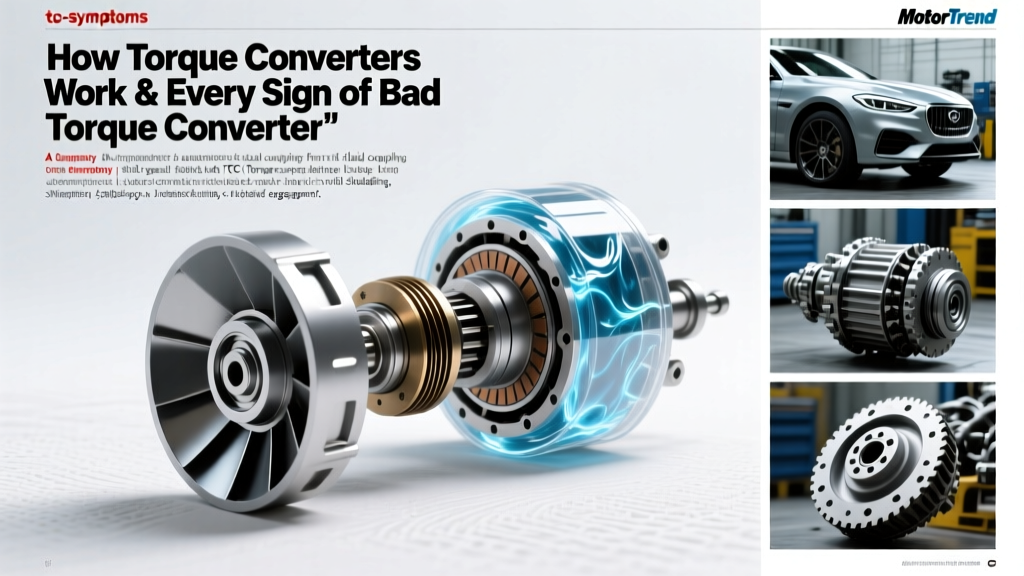
The Ram 1500 is a cornerstone of the American truck market, prized for its blend of daily drivability and heavy-duty towing capability. However, the link between the engine and the transmission—the torque converter—is frequently the weakest link in the drivetrain chain, especially when owners begin modifying their trucks for higher output or heavier loads. Whether you are running a 5.7L Hemi paired with the ZF 8HP70 or an older 4.7L/5.7L mated to the 65RFE/66RFE, identifying bad Ram 1500 torque converter symptoms early is critical. More importantly, for the performance-minded enthusiast, a failing OEM converter presents the perfect opportunity to upgrade to a billet, multi-disc setup that completely transforms the truck's launch characteristics, thermal management, and towing stability.
Decoding Bad Ram 1500 Torque Converter Symptoms
Before pulling the transmission or ordering aftermarket parts, you must accurately diagnose the failure mode. The symptoms vary drastically depending on the specific transmission platform in your Ram 1500.
ZF 8HP70 TCC Shudder and Lockup Aggression
For 2013 and newer gas-powered Ram 1500s, the ZF 8-speed automatic is an engineering marvel, but its torque converter lockup strategy is notoriously aggressive. To maximize fuel economy, the factory TCM commands the torque converter clutch (TCC) to lock up as early as 3rd gear at very low RPMs. This places immense torsional stress on the OEM single-disc or weak multi-disc clutch lining. The most common symptom is a rhythmic shudder felt between 40-55 mph, often mistaken for a bad spark plug or a worn U-joint. If you feel a vibration that changes pitch or disappears entirely when you lightly tap the brake pedal (which commands the TCC to release), your converter's friction material is glazed, or the internal apply piston is leaking hydraulic pressure.
65RFE and 66RFE Slip and Hub Wear
Older Ram 1500 models (2009-2012) utilizing the 65RFE or 66RFE transmissions suffer from a different set of torque converter ailments. The primary symptom here is RPM flaring during the 4-5 or 5-6 upshifts under heavy throttle. This is often caused by a worn converter hub scoring the transmission's front pump bushing, leading to internal hydraulic leaks. Another hallmark symptom is delayed engagement when shifting from Park to Drive, accompanied by a whining noise that correlates with engine RPM, indicating severe stator or fin degradation inside the converter.
Data-Driven Diagnostics: Logging TCC Slip
Guesswork leads to unnecessary parts swaps. As of 2026, any serious Ram owner or independent shop should be utilizing OBD2 data logging to confirm torque converter health. Using a tool like HP Tuners or a high-end bidirectional scanner, you need to monitor the 'TCC Slip Speed' PID.
- Normal Operation: When the TCC is fully applied (locked), slip speed should read between -10 and +15 RPM.
- Early Warning: If you see slip speed bouncing between 30 and 60 RPM while cruising at a steady throttle on a flat grade, the clutch lining is beginning to fail.
- Critical Failure: Slip speeds exceeding 100 RPM under light load, or an inability to achieve lockup in 7th and 8th gears, means the converter is shedding excessive material. This debris will inevitably clog the ZF mechatronic valve body or the 65RFE solenoid pack, turning a $900 converter job into a $3,500 transmission rebuild.
The Performance Upgrade Matrix: Stock vs. Billet
If your OEM converter is failing, replacing it with another factory Mopar unit is a step backward, especially if you have added a cold air intake, exhaust, or a mild supercharger kit. The aftermarket has developed robust solutions that address the OEM flaws while increasing stall speed to match the Hemi's powerband. Below is a comparison of the typical upgrade paths available from industry leaders like Circle D Specialties and Precision Industries.
| Converter Type | Stall Speed | TCC Clutch Design | Best Application | Est. Price (2026) |
|---|---|---|---|---|
| OEM Mopar Replacement | 1800-2000 RPM | Single/Weak Multi-Disc | Strictly stock, warranty-covered trucks | $650 - $800 |
| Stage 1 Billet Towing | 2200-2400 RPM | Heavy-Duty Multi-Disc | Heavy towing, 35-inch tires, mild tunes | $850 - $1,050 |
| Stage 2 Performance | 2800-3200 RPM | Furnace-Brazed Fins, Billet Cover | Supercharged/Turbo Hemis, drag racing | $1,100 - $1,400 |
Why Furnace Brazing and Billet Covers Matter
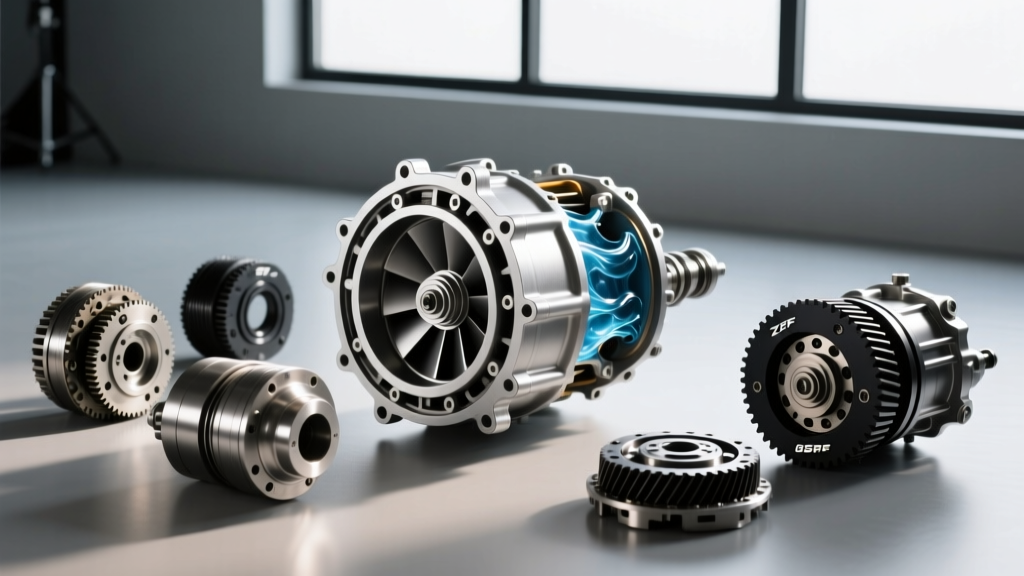
OEM converters use stamped steel fins that can flex and deform under the extreme torque output of a modified 5.7L or 6.2L Hemi. Performance converters utilize furnace-brazed fins, which fuses the steel components together in a high-heat oven, creating a rigid, unbreakable internal structure. Furthermore, a billet steel front cover prevents the converter from ballooning under high line pressures, ensuring that the TCC apply piston maintains perfect clamping force on the multi-disc clutch pack.
Tuning the TCC Apply Tables for Longevity
Upgrading the physical hardware is only half the battle. The ZF 8HP70's factory TCM tuning prioritizes emissions and fuel economy over drivetrain smoothness. When installing a performance torque converter with a slightly higher stall speed, you must modify the TCC apply tables. Using tuning software, you can delay the TCC lockup in lower gears until the vehicle reaches a higher speed threshold, and you can increase the TCC apply pressure (measured in milliamps or kPa depending on the solenoid mapping) to ensure the heavier multi-disc clutch bites firmly without dragging. This single tuning modification eliminates the notorious 'Hemi tick' shudder and drops transmission fluid temperatures by 15°F to 20°F during highway towing.
Installation Realities, Torque Specs, and 2026 Pricing
Replacing the torque converter on a Ram 1500 is a labor-intensive job that requires dropping the transmission. For the ZF 8-speed, the integrated plastic oil pan and mechatronic unit require careful handling. Expect to pay between $800 and $1,200 in labor at an independent shop, while dealership rates will push this closer to $1,600.
Critical Torque Specifications
If you are tackling this in your home garage, adhering to exact torque specifications is non-negotiable to prevent catastrophic drivetrain vibration or flexplate failure. Always use a calibrated torque wrench and new stretch bolts where applicable.
- Flexplate to Crankshaft (5.7L Hemi): 70 Nm (52 lb-ft) + 90-degree turn.
- Torque Converter to Flexplate (M8 Bolts): 28 Nm (21 lb-ft). Apply medium threadlocker.
- ZF 8HP Bellhousing to Engine Block (M10): 35 Nm (26 lb-ft) + 90-degree turn.
- ZF 8HP Bellhousing to Engine Block (M12): 65 Nm (48 lb-ft).
Fluid Capacities and Costs
The ZF 8HP70 requires specific fluid to operate the mechatronic valves and lubricate the clutch packs. ZF Aftermarket strictly mandates the use of ZF LifeguardFluid 8 (or the Mopar ZF 8&9 Speed ATF equivalent). A standard pan-drop and filter replacement will require approximately 5.5 to 6.0 liters, while a completely dry transmission fill takes 9.5 liters. Budget around $150 to $180 just for OEM fluid and a new plastic pan/filter assembly, as the filter is integrated into the pan and cannot be serviced separately.
Expert Verdict: When to Pull the Transmission
If your Ram 1500 is exhibiting TCC shudder, RPM flares, or excessive slip speeds on your OBD2 scanner, the window for a simple fluid flush has closed. Continuing to drive with a slipping converter will contaminate the transmission's valve body with friction material, leading to harsh shifts and eventual mechanical failure. By pivoting from a standard OEM replacement to a billet multi-disc performance torque converter, you not only cure the existing symptoms but also future-proof your drivetrain against the demands of towing, larger tires, and engine tuning. Treat the failure as an upgrade opportunity, tune the TCC tables to match your new hardware, and your Ram 1500 will deliver seamless, reliable power for hundreds of thousands of miles.