Identifying Your 2005 Ram 1500 Rear Axle Assembly
As of 2026, the 2005 Dodge Ram 1500 is crossing the two-decade mark. For a half-ton truck that has likely endured heavy towing, off-road use, and countless miles, the drivetrain requires meticulous attention. Before attempting any 2005 Dodge Ram 1500 rear differential service, you must correctly identify the axle assembly hidden beneath the truck. Dodge primarily equipped the 2005 1500 series with two rear axles:
- Chrysler 9.25-Inch (Semi-Floating): Found in most V8 (4.7L and 5.7L Hemi) models. It features a 12-bolt, asymmetrical cover and 31-spline axle shafts. This is the most common heavy-duty option for the 1500 platform.
- Chrysler 8.25-Inch: Typically found in V6 models or lighter-duty fleet configurations. It features a 10-bolt cover and 29-spline axle shafts.
Correct identification is critical because fluid capacities, seal part numbers, and torque specifications differ between the two. The Chrysler 9.25 requires approximately 2.25 quarts of gear oil, while the 8.25 holds roughly 2.1 quarts.
Common 2005 Dodge Ram 1500 Rear Differential Symptoms
Diagnosing drivetrain noise requires isolating the exact frequency and load condition under which the symptom occurs. Here is how to interpret the most frequent complaints from aging Ram 1500 rear axles.
High-Pitched Whining on Deceleration
A whine that peaks during coasting or deceleration is the classic hallmark of pinion bearing wear. Over 20 years, the pinion bearing preload diminishes as the crush sleeve relaxes and the bearing races wear. This allows the pinion gear to deflect slightly away from the ring gear under load, altering the contact pattern. Diagnostic Test: Before pulling the cover, use an inch-pound torque wrench on the pinion nut to measure rotational torque. A healthy 9.25 axle should show 15-25 inch-pounds of rotational resistance. If it spins freely with less than 10 inch-pounds of resistance, your pinion bearing preload is compromised, and a fluid change alone will not silence the whine.
Chatter During Tight Turns (Trac-Lok LSD)
If your 2005 Ram 1500 is equipped with the Trac-Lok limited-slip differential (LSD), a shuddering or chattering sensation from the rear end during low-speed, tight turns indicates degraded clutch packs. The friction material on the clutches glazes over time, causing them to bind and release erratically rather than slipping smoothly. This is almost always cured by a fluid service utilizing the correct friction modifier, provided the clutches are not physically worn through.
Pinion Seal and Axle Seal Leaks
Inspect the area where the driveshaft meets the differential yoke. A slung ring of oil on the underside of the truck bed indicates a failed pinion seal (Mopar Part # 52070214AA for the 9.25). Conversely, oil weeping past the brake backing plate points to a leaking axle shaft seal. According to RockAuto's catalog, replacement seals are inexpensive (typically $5 to $12 each), but ignoring them will lead to low fluid levels and catastrophic gear scoring.
Fluid Analysis: What Your Gear Oil is Telling You
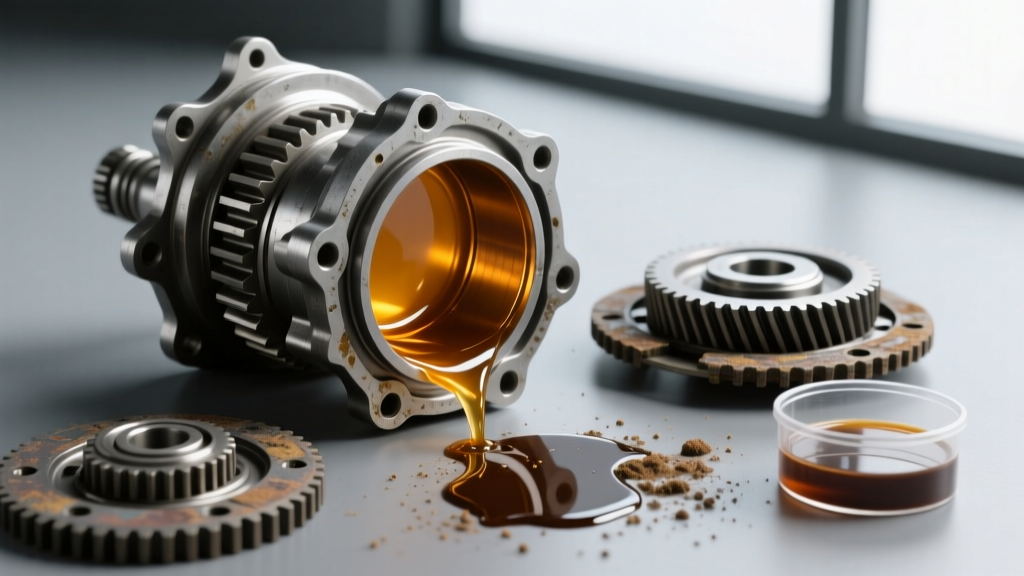
When you remove the differential cover, the condition of the drained fluid provides a direct window into the mechanical health of the ring and pinion set. Use the following diagnostic chart to interpret your findings:
| Fluid Condition | Visual / Olfactory Clues | Mechanical Diagnosis |
|---|---|---|
| Normal / Healthy | Translucent amber to dark brown; mild sulfur smell. | Gears and bearings are wearing normally. Proceed with standard service. |
| Severe Shear / Oxidation | Opaque black, thick, sludge-like; strong burnt odor. | Fluid has exceeded its thermal limits, likely due to heavy towing without synthetic oil. Check for glaze on LSD clutches. |
| Water Intrusion | Milky, chocolate-milkshake consistency. | Water ingested through a submerged axle vent or degraded seal. Requires immediate flush to prevent bearing rust. |
| Catastrophic Wear | Glittering metallic flakes or large steel chunks on the drain plug magnet. | Bearing cage failure or gear tooth spalling. A full teardown and rebuild are mandatory. |
Step-by-Step Troubleshooting and Service Protocol
Performing a rear differential service on the 2005 Dodge Ram 1500 is straightforward, but cutting corners on the sealing and friction modifier processes will lead to immediate callbacks or leaks.
1. Drain, Inspect, and Clean
Unlike some modern differentials, the Chrysler 9.25 and 8.25 axles do not have a dedicated drain plug; you must remove the 12 or 10 cover bolts. Loosen the bottom bolts first to allow the fluid to drain into a catch pan. Once removed, thoroughly clean the differential housing interior with lint-free shop towels and brake cleaner. Do not use wire wheels on the mating surfaces, as metal bristles can break off and contaminate the new gear oil. Inspect the ring gear teeth for pitting or stepped wear patterns.
2. The RTV vs. Pre-Cut Gasket Debate
While aftermarket pre-cut cork or rubber gaskets are available, Chrysler's factory service manual mandates the use of RTV silicone. We recommend Mopar ATF RTV (Part # 04883971) or Permatex Ultra Black. Apply a continuous, unbroken 3mm bead around the cover mating surface, encircling every bolt hole. Allow the RTV to skin over for 10 minutes before mating the cover to the housing to prevent silicone squeeze-out from blocking internal oil galleries.
3. Refill Specifications and Friction Modifier Protocol
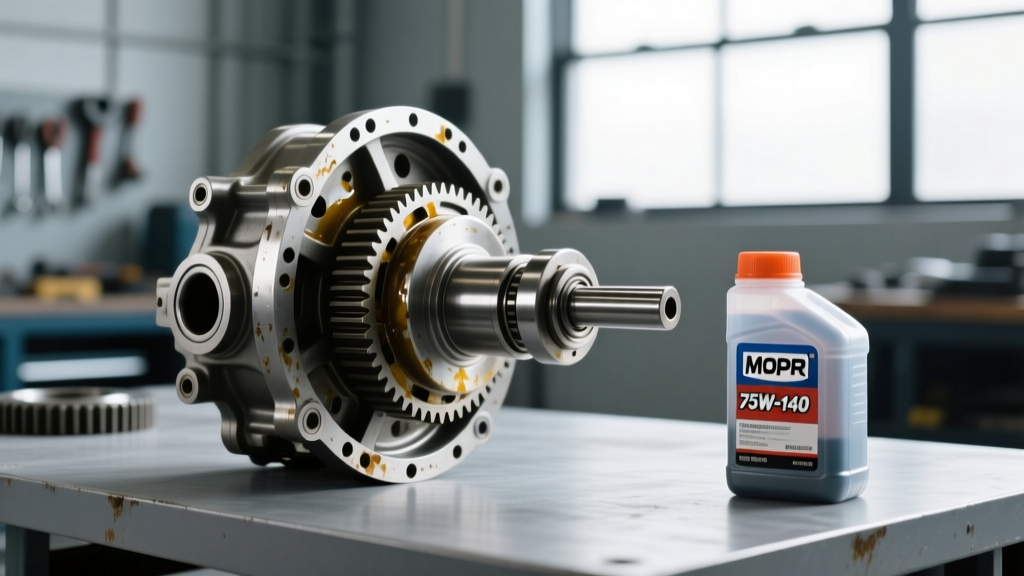
The factory fill for the 2005 Ram 1500 is 75W-90 Synthetic Gear Oil. Excellent modern alternatives include AMSOIL Severe Gear 75W-90 or Mobil 1 Synthetic Gear Lube. If your truck is equipped with the Trac-Lok LSD, the friction modifier is non-negotiable.
Expert Protocol: Always add the Mopar Friction Modifier (Part # 04318060AB) before pouring in the gear oil. The differential requires exactly 4 ounces of modifier for the Trac-Lok clutch packs. Adding it first ensures it pools at the bottom and is immediately drawn into the clutch pack cavities as the gear oil fills the housing, preventing air pockets and ensuring immediate lubrication upon startup.
Fill the differential until the fluid level is exactly at the bottom edge of the fill hole. Overfilling will cause the gear oil to foam, leading to aeration, overheating, and eventual seal blowout due to internal pressure spikes.
Critical Torque Specifications and Clearances
Proper torque is vital to prevent housing distortion and fluid leaks. Reference the following specifications for the Chrysler 9.25 and 8.25 axles:
- Differential Cover Bolts (9.25 & 8.25): 30 ft-lbs (41 Nm). Use a star-pattern sequence to ensure even clamping force.
- Fill Plug (if equipped on aftermarket covers): 25 ft-lbs (34 Nm).
- Brake Backing Plate / Axle Retainer Nuts: 35 ft-lbs (47 Nm).
- Pinion Nut: WARNING: Never use an impact gun to remove or install the pinion nut without first marking the yoke and nut. The pinion nut is a prevailing-torque nut designed to crush the sleeve to a specific depth. Overtightening will destroy the crush sleeve and require a complete pinion bearing reset.
When to Abandon Service for a Full Rebuild
Fluid maintenance is preventative, not curative. If your diagnostic inch-pound rotational test reveals zero resistance, if the gear oil is filled with bearing cage needles, or if the ring gear exhibits severe heel-to-toe spalling, a fluid change is a waste of money. At this stage, the 2005 Dodge Ram 1500 rear differential requires a complete rebuild. According to current drivetrain specialist pricing, a professional ring, pinion, and bearing overhaul on a Chrysler 9.25 axle ranges from $1,200 to $1,800 in parts and labor. You can source master rebuild kits (including Timken bearings and shims) from Mopar Parts Giant or specialized drivetrain retailers for roughly $350 to $500 if you possess the dial indicators and press equipment to perform the setup in your own garage.
By adhering to these precise diagnostic steps and service protocols, you can extend the life of your Ram 1500's rear axle well past the 250,000-mile mark, ensuring reliable torque delivery for years to come.