The Performance Bottleneck: Why Stock Converters Fail
When you begin pushing serious horsepower through a factory automatic transmission, the torque converter is often the first component to expose the limits of your drivetrain. For platforms like the GM 4L60E, 4L80E, or the Ford AOD, the factory torque converter is designed primarily for fuel economy, low-RPM emissions, and smooth highway cruising. It features a narrow lockup clutch, a low-stall stator, and impeller fins that are not furnace-brazed to handle the sheer torsional stress of a modified engine. When subjected to the increased cylinder pressures of a forced-induction setup or an aggressive naturally aspirated camshaft, the stock fluid coupling simply cannot transfer power efficiently, leading to catastrophic heat generation and internal slippage.
Upgrading to a performance-oriented unit is not just about achieving a higher flash stall speed; it is about mechanical survival. In this comprehensive performance and upgrade guide, we will break down the exact failure symptoms of stock units, analyze entry-level performance options, and provide the precise installation data required for your next street or strip build.
Pro-King Automatic Transmission Torque Converter: Product Info and Reviews
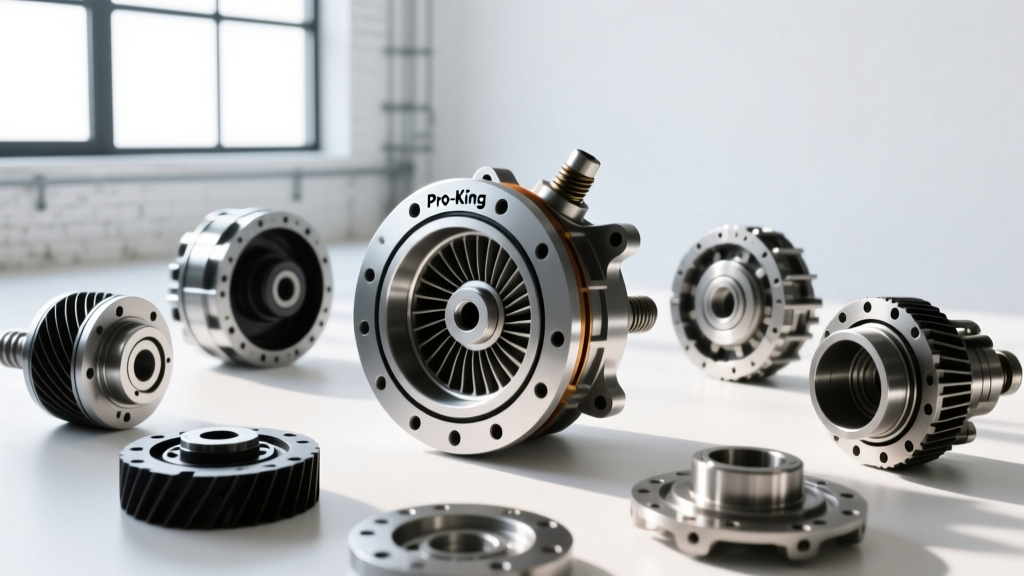
When researching Pro-King automatic transmission torque converter product info and reviews, enthusiasts often find a brand positioned squarely in the budget-to-mid-tier performance market. Pro-King converters are widely utilized by budget-conscious street/strip builders who need a reliable step up from a junkyard pull without spending the premium required for billet, custom-built units.
Build Quality and Internal Architecture
Pro-King performance converters, such as the popular GM-40CW (designed for 700-R4/4L60E applications) and the GM-60CW (for 4L80E applications), typically feature a 12-inch or 13-inch diameter housing. Unlike premium units that utilize fully billet steel covers and CNC-machined stators, Pro-King relies on heavy-duty stamped steel with reinforced furnace-brazed impeller and turbine fins. This furnace brazing is critical; it prevents the fins from peeling off the hub under the violent torque spikes of a trans-brake launch or a high-RPM power shift.
The lockup mechanism in these units usually features an upgraded friction lining, often a Kevlar-infused or high-carbon paper material, designed to withstand the increased apply pressures commanded by aftermarket valve body shift kits or custom PCM tuning. While they may not offer the instantaneous lockup response of a $900 Circle D or Vigilante converter, they provide exceptional value for naturally aspirated or mild-boost applications making up to 550 rear-wheel horsepower.
Diagnosing Stock Converter Symptoms in Modified Vehicles
Before pulling the transmission to install a new converter, it is vital to recognize the symptoms of a failing stock unit. Many enthusiasts mistake a failing torque converter for internal clutch pack wear or valve body failure. If you have modified your engine, watch for these specific torque converter failure symptoms:
- Severe TCC Shudder: A rhythmic vibration between 40-55 MPH under light throttle. This occurs when the factory friction lining begins to delaminate or glaze due to excessive heat, causing the torque converter clutch (TCC) to slip and grab rapidly.
- PWM Solenoid Clogging: In the 4L60E, as the TCC lining flakes apart, the debris is carried by the transmission fluid directly into the Torque Converter Clutch Pulse Width Modulation (PWM) solenoid. This restricts fluid flow, resulting in harsh 1-2 shifts or a complete failure to engage lockup in overdrive.
- Excessive Transmission Heat: A stock converter on a modified cam will slip continuously at idle and during part-throttle cruising. This hydraulic friction generates immense heat. If your transmission fluid temperature routinely exceeds 220°F (104°C) during normal driving, the stock converter is generating too much parasitic heat.
- Delayed Forward Engagement: If the internal stator one-way clutch fails, the stator will freewheel in both directions. This results in a distinct lack of low-speed torque multiplication, feeling as though the vehicle is launching in second gear, accompanied by sluggish engagement when shifting from Park to Drive.
Flash Stall vs. True Stall: Matching Your Powerband
A common pitfall when reviewing torque converter product info is misunderstanding stall speed ratings. Manufacturers typically list 'Flash Stall,' which is the RPM the engine will achieve when the brakes are locked and the throttle is pinned (foot-braking). 'True Stall,' however, is the RPM at which the converter stops multiplying torque and achieves a 1:1 fluid coupling ratio under full load. Matching this to your camshaft's powerband is critical for performance.
| Camshaft Profile | Peak Torque RPM | Recommended Flash Stall | Typical Application |
|---|---|---|---|
| Stock / Mild Towing | 2,000 - 2,500 | 1,800 - 2,200 RPM | Daily Driver, Heavy Towing |
| Mild Performance (216-224 deg) | 2,800 - 3,200 | 2,400 - 2,800 RPM | Street Rod, Mild Bolt-Ons |
| Aggressive Street (228-236 deg) | 3,500 - 4,200 | 3,000 - 3,600 RPM | Street/Strip, Supercharged |
| Strip / Solid Roller | 4,500 - 5,500+ | 4,000 - 5,500 RPM | Dedicated Drag Racing |
If you install a 3,200 RPM stall converter behind a stock camshaft, the engine will be pushed past its peak volumetric efficiency during launch, resulting in slower 60-foot times and excessive heat generation. Conversely, a 2,000 RPM stock converter behind a 232-degree duration cam will 'load' the engine below its powerband, causing the vehicle to bog and fall on its face at the starting line.
Brand Comparison: Pro-King vs. Premium Alternatives
How does Pro-King stack up against the heavy hitters in the aftermarket transmission space? Below is a comparative analysis of entry-level versus premium performance converters for the ubiquitous GM 4L60E platform.
| Feature | Pro-King (e.g., GM-40CW) | TCI Automotive (e.g., Breakaway) | Circle D (e.g., 3200HD) |
|---|---|---|---|
| Approximate Price | $250 - $320 | $450 - $550 | $650 - $850 |
| Cover Material | Reinforced Stamped Steel | Heavy-Duty Stamped Steel | Billet Steel Cover |
| Stator Type | Cast with Brazed Fins | Cast Precision Modified | CNC Billet Aluminum |
| TCC Lining | Upgraded Carbon Paper | High-Energy Kevlar Blend | Triple-Disc Billet / Carbon |
| Best Use Case | Budget Street / Mild Strip | Serious Street / Towing | High-HP Strip / Trans-Brake |
For a comprehensive look at the wider market, you can cross-reference fitment data and user feedback via the Summit Racing Torque Converter Catalog. If your build exceeds 600 horsepower or utilizes a trans-brake, the billet construction of premium brands becomes mandatory to prevent the converter cover from ballooning under extreme line pressure.
Installation Blueprint: Torque Specs and Clearances
Improper installation of a performance torque converter will destroy the transmission oil pump within miles. When upgrading from a stock unit, the physical dimensions and mounting depths often change. You must adhere to strict mechanical clearances and torque specifications.
Measuring Converter Pull-In (Air Gap)
Before bolting the transmission to the engine block, you must measure the distance from the transmission bellhousing mounting surface to the converter mounting pads. Compare this to the distance from the engine block mating surface to the flexplate. The converter must sit fully seated into the transmission oil pump gear. You should have an 'air gap' or pull-in distance of 0.125 to 0.187 inches (1/8 to 3/16 inch). If the converter is flush with the flexplate before the transmission is bolted to the block, the converter is not seated, and you will shatter the oil pump housing upon tightening the bellhousing bolts.
Critical Torque Specifications
- Flexplate to Crankshaft (SBC 350 / 383): 65 lb-ft using high-strength threadlocker.
- Flexplate to Crankshaft (GM LS-Series): 15 lb-ft plus an additional 50 degrees of rotation (Yield bolts) or 74 Nm if using aftermarket ARP hardware.
- Converter to Flexplate: 35 to 40 lb-ft. Always use Grade 8 or ARP hardware with a medium-strength threadlocker (e.g., Loctite 243). Never use standard Grade 5 hardware, as the cyclic loading will cause bolt shear.
- Bellhousing to Engine Block: 35 to 50 lb-ft depending on the specific block material and bolt thread diameter (typically M10 or 3/8-16).
Fluid Selection and Cooling Requirements
A performance torque converter with a higher stall speed inherently generates more heat during the coupling phase. Relying on a factory radiator loop cooler is insufficient for a 3,000+ RPM stall converter. You must install a dedicated, high-flow external transmission cooler (minimum 24,000 GVW rating) mounted in direct airflow.
Furthermore, fluid selection dictates lockup behavior and stator bearing longevity. For performance applications, synthetic fluids like TCI Automotive's specialized synthetic blends or Mobil 1 Synthetic ATF provide superior shear stability. Standard dexron fluids will break down rapidly under the extreme shearing forces generated by a tight, high-stall stator, leading to varnish buildup in the valve body and premature TCC failure.
Final Verdict for Street/Strip Builds
The Pro-King automatic transmission torque converter lineup serves a very specific niche in the performance ecosystem. It is the ideal remedy for a daily driver that has outgrown its factory stall speed due to a camshaft upgrade, gear change, or larger tire fitment. While it lacks the billet internals required for 8-second drag cars or heavy-duty diesel sled pulling, its reinforced furnace-brazed fins and upgraded lockup linings offer a massive reliability upgrade over a fatigued OEM unit. By accurately diagnosing your stock converter's failure symptoms, matching the flash stall to your engine's torque curve, and adhering to strict installation clearances, you can transform the drivability and acceleration of your project car without exhausting your build budget.