The Great Automotive Debate: Powertrain vs. Drivetrain
For beginners stepping into the world of automotive mechanics, few terms cause as much confusion as "powertrain" and "drivetrain." While often used interchangeably at the dealership or in casual conversation, these two systems represent distinctly different halves of your vehicle's anatomy. Understanding the difference is not just a matter of semantics; it dictates how you maintain your vehicle, what your warranty actually covers, and how you diagnose a failure. Furthermore, as we move deeper into the electric vehicle (EV) era, emerging technologies like the swerve drivetrain are completely rewriting the traditional rulebook. In this comprehensive guide, we will break down the fundamental differences between these systems using real-world specifications, and explore how next-generation EV platforms are blurring the lines forever.
Core Definitions: The Heart vs. The Veins
To put it in beginner-friendly terms, think of the powertrain as the "heart and lungs" of the vehicle, while the drivetrain acts as the "veins and muscles" that deliver that energy to the ground.
What is a Powertrain?
The powertrain encompasses every component responsible for generating power and converting it into rotational force. In an internal combustion engine (ICE) vehicle, this includes the engine block, cylinder heads, fuel injection system, and the transmission. In an EV, the powertrain consists of the battery pack, the inverter, and the electric motor(s). If a component is directly involved in creating motive power, it belongs to the powertrain.
What is a Drivetrain?
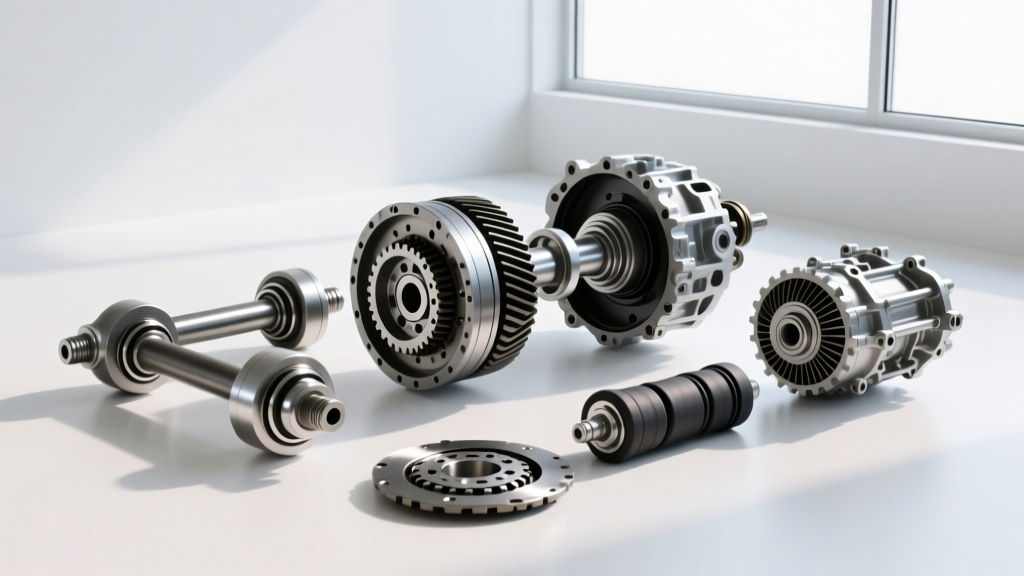
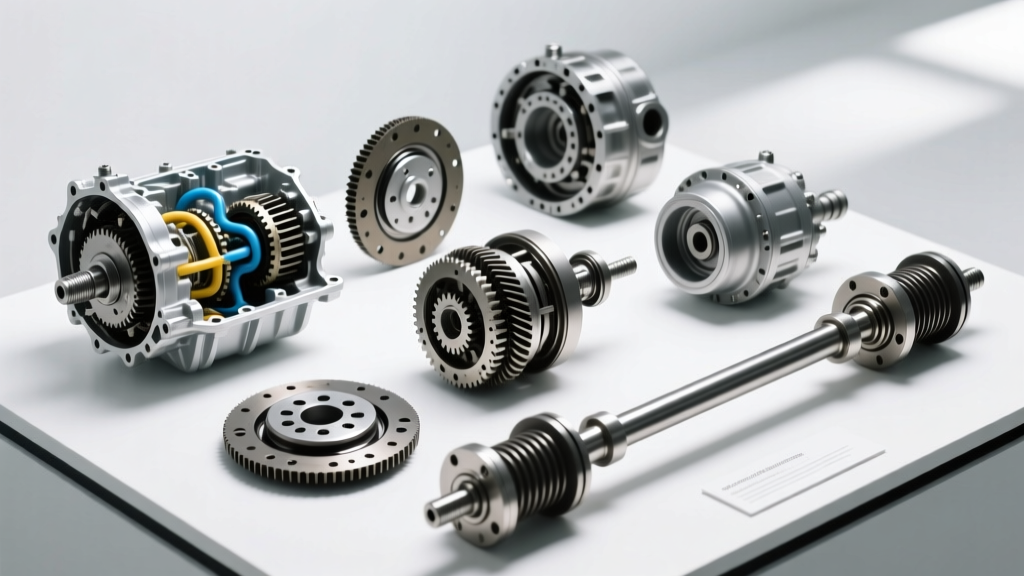
The drivetrain is strictly the delivery system. It includes all the components that transfer the rotational force from the powertrain to the drive wheels. This includes the driveshaft, universal joints (U-joints), constant velocity (CV) axles, differentials, and the wheel hubs. The drivetrain does not create power; it merely manages, multiplies, and routes it.
Traditional ICE Anatomy: Where the Lines are Drawn
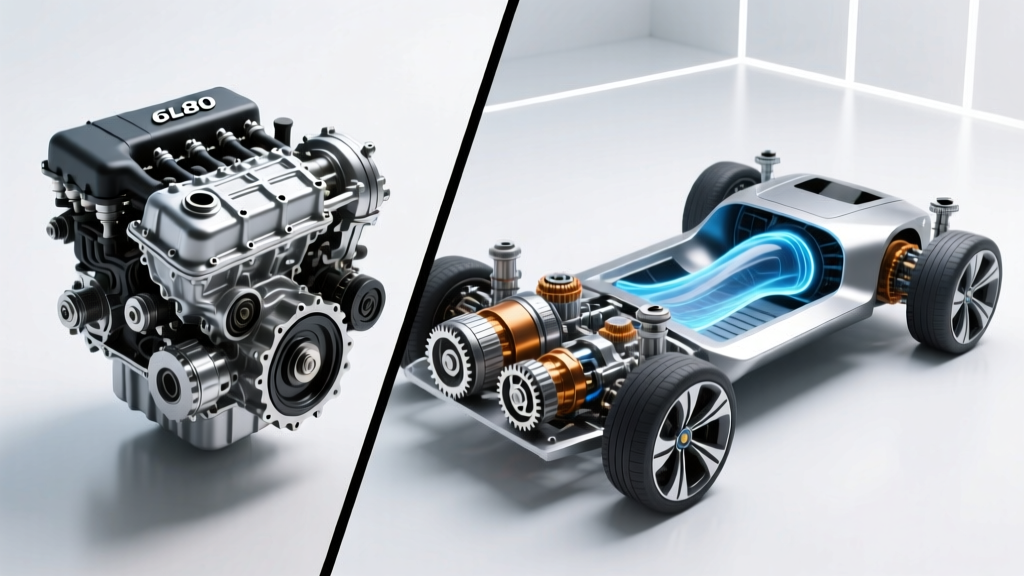
Let us look at a classic, widely understood platform to solidify these definitions: a rear-wheel-drive truck equipped with a GM 6L80 six-speed automatic transmission. According to SAE International technical standards, the demarcation line between powertrain and drivetrain typically occurs at the transmission output shaft.
The Powertrain Side (GM 6L80)
The 6L80 transmission is a powertrain component. It houses the torque converter, planetary gear sets, and the mechatronic valve body. Maintenance here is highly specific. A complete fluid exchange on a 6L80 requires approximately 11.2 quarts (10.6 liters) of Dexron VI automatic transmission fluid. If the torque converter shudders or the valve body solenoids fail, you are dealing with a powertrain repair, which often requires pulling the entire unit and can cost between $2,500 and $4,500 for a remanufactured replacement.
The Drivetrain Side (Spicer Driveshafts and Differentials)
Once the rotational force exits the 6L80's output shaft, it enters the drivetrain. In a typical truck, this force is routed through a Spicer 1350-series driveshaft. The U-joint strap bolts that secure this driveshaft to the transmission output flange require a precise torque specification of 18 lb-ft (25 Nm). Over-torquing these can warp the U-joint caps, leading to premature needle-bearing failure and severe driveline vibration. Further down the drivetrain, the rear differential multiplies the torque before sending it to the CV axles. Replacing a rear differential pinion seal or rebuilding a limited-slip differential (LSD) is strictly a drivetrain repair.
Component Breakdown: Powertrain vs. Drivetrain
| Category | Component Example | Key Specification / Torque | Avg. Replacement Cost |
|---|---|---|---|
| Powertrain | GM 6L80 Transmission | 11.2 Qts Dexron VI | $2,500 - $4,500 |
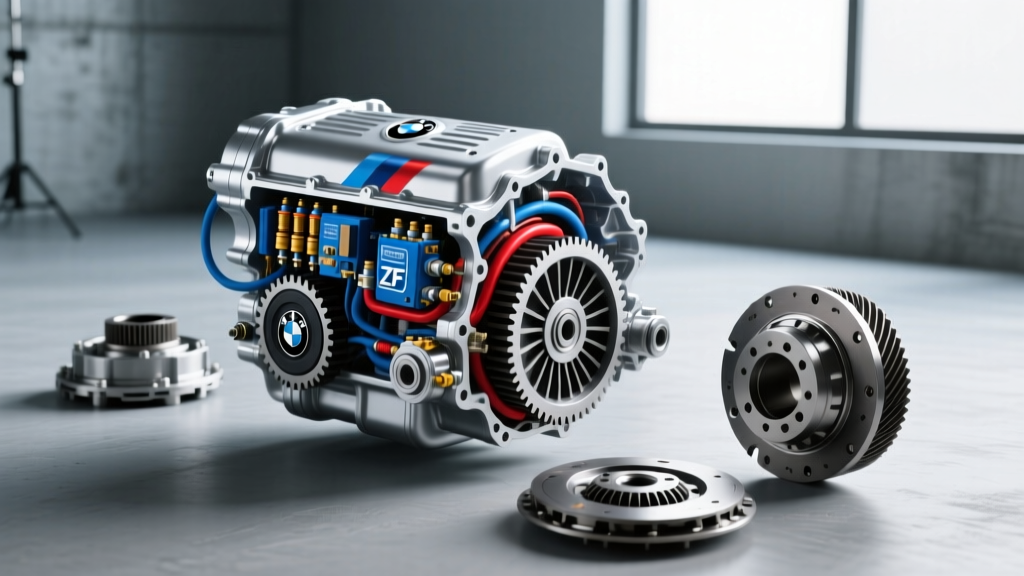
| Powertrain | ZF 8HP Mechatronic Unit | Adapter Sleeve: 55 Nm | $1,200 - $2,000 |
| Drivetrain | Spicer 1350 U-Joint Straps | 18 lb-ft (25 Nm) | $40 - $90 (Parts) |
| Drivetrain | Front CV Axle Assembly | Axle Nut: 150-200 lb-ft | $150 - $400 |
The EV Shift and the "Swerve Drivetrain" Revolution
While the lines between powertrain and drivetrain are clearly drawn in ICE vehicles, the electric vehicle revolution has begun to smudge them. In a standard EV, the "transmission" is often just a single-speed reduction gear bolted directly to the motor. But as we look at advanced 2026 EV platforms, the industry is adopting a concept borrowed from advanced robotics: the swerve drivetrain.
What is a Swerve Drivetrain?
In robotics, a swerve drive allows independent steering and driving at every single wheel, enabling omnidirectional movement. In the automotive sector, this translates to "e-corner" modules (popularized by concepts like the Hyundai Mobis e-Corner system). A swerve drivetrain integrates the electric motor (powertrain), the steering actuator, and the suspension directly into the wheel hub or steering knuckle assembly.
According to the U.S. Department of Energy, integrating powertrain components directly into the chassis corners drastically reduces the need for traditional drivetrain components. In a true swerve drivetrain EV, there are no driveshafts, no central differentials, and no CV joints. Each wheel is an independent powertrain and drivetrain unit capable of steering up to 90 degrees, allowing for "crab walking," tank turns, and extreme evasive swerve maneuvers that traditional steering racks simply cannot achieve.
How Swerve Tech Blurs the Definitions
If your electric motor is physically located inside the wheel hub, and it directly turns the wheel without a driveshaft, is it a powertrain or a drivetrain? The answer is both. The swerve drivetrain represents the ultimate consolidation of automotive engineering. However, this consolidation brings unique engineering challenges, specifically regarding unsprung weight and thermal management of the in-wheel motors.
Maintenance, Warranties, and Real-World Costs
Understanding whether a failing part belongs to the powertrain or the drivetrain is critical when navigating dealership warranties and out-of-pocket repair costs.
Warranty Coverage Discrepancies
Most manufacturers offer a standard "Powertrain Warranty" (typically 5 years/60,000 miles) and a separate "Drivetrain Warranty" or bumper-to-bumper coverage. A failing transmission solenoid in a ZF 8HP is covered under the powertrain warranty. However, if your rear driveshaft carrier bearing fails, or a CV axle boot tears and destroys the joint, many manufacturers classify this as a drivetrain or wear-and-tear issue, which may fall outside the powertrain warranty window. Always read the fine print: U-joints and wheel bearings are frequently excluded from extended powertrain contracts.
The Cost of Swerve Drivetrain Maintenance
As swerve drivetrain technology moves from concept to production, maintenance costs will shift dramatically. Replacing a traditional CV axle might cost $300 at an independent shop. In contrast, replacing a single integrated e-corner swerve module—which houses the steer-by-wire actuator, in-wheel motor, and integrated brake caliper—requires specialized high-voltage calibration and proprietary alignment racks. Early industry estimates place the replacement cost of a single swerve drivetrain corner module between $4,000 and $8,500, making collision repair and out-of-warranty maintenance a significant consideration for early adopters.
Summary: Knowing Your Vehicle's Anatomy
Whether you are wrenching on a classic truck with a Spicer driveshaft or evaluating the latest omnidirectional EV, knowing the boundary between the powertrain and drivetrain is essential. The powertrain generates the force; the drivetrain delivers it. As automotive engineering evolves toward the swerve drivetrain paradigm, these two systems will continue to merge, demanding new diagnostic tools, new fluid specifications, and a new generation of technicians ready to tackle the future of mobility.