The Post-Repair Clutch Band Discography: Cataloging the 'Hits'
When a vehicle returns to the shop with slipping, shuddering, or missing gears shortly after a transmission rebuild, technicians are essentially listening to a bad track on the clutch band discography. In the transmission industry, this 'discography' is our metaphorical catalog of the most common, recurring failure modes that play out after a repair or replacement is completed. While a fresh rebuild should offer a clean slate, improper clearances, missed machine shop steps, or overlooked hydraulic leaks often lead to premature clutch pack and band burnout.
As we move through 2026, the rising cost of labor and remanufactured cores means that diagnosing and repairing post-replacement clutch problems requires surgical precision. This guide breaks down the exact costs, torque specifications, and root causes of the most notorious post-repair clutch failures across popular automatic and manual platforms.
Track 1: The GM 4L60E 3-4 Band Burnout (The Platinum Hit)
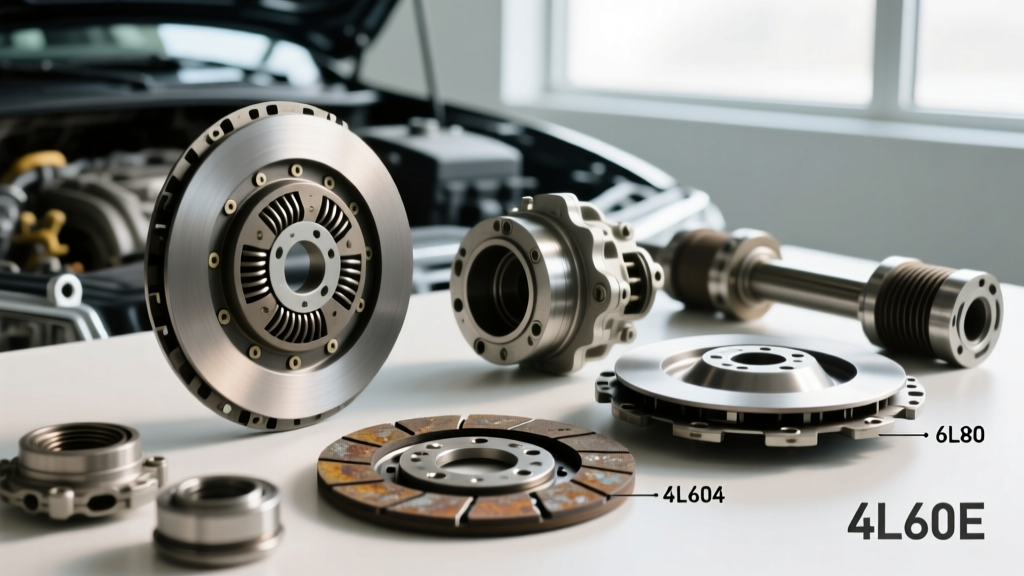
No clutch band discography is complete without the infamous 3-4 band failure in the GM 4L60E transmission. If a customer returns 500 miles after a rebuild complaining of no 3rd or 4th gear, the 3-4 clutch pack or the 2-4 band is almost certainly toast. The root cause is rarely the band itself; it is usually the 4th gear servo apply pin wearing into the case or the band anchor pin walking out of its pocket.
Technical Specifications & Part Numbers
- OEM 2-4 Band Part Number: 24226945
- Heavy Duty Band (Optional): BorgWarner High-Energy Band
- Servo Pin Upgrade: Sonnax 77765-01K (Prevents case wear)
- 3-4 Clutch Pack Clearance Spec: 0.040' to 0.060' (Rule of thumb: 0.010' per friction surface)
According to technical bulletins from Sonnax, failing to upgrade the servo pin or ignoring case wear at the band anchor will guarantee a repeat failure, regardless of how many new friction discs you install.
2026 Cost Breakdown: 4L60E Band & Servo Re-Repair
| Line Item | Estimated Cost (2026) | Notes |
|---|---|---|
| Transmission R&R Labor | $780 - $950 | 6-7 hours @ $130-$135/hr |
| Teardown & Diagnostic Bench Time | $250 - $350 | 2-3 hours |
| Hard Parts (Drum, Band, Servo Kit) | $180 - $260 | Includes upgraded Sonnax pin |
| Soft Parts (Seals, Frictions, Fluid) | $120 - $180 | ACDelco Dexron VI (12 qts) |
| Total Re-Repair Cost | $1,330 - $1,740 | Often absorbed by shop warranty |
Track 2: GM 6L80 & 6L90 Clutch Pack Distortion
The 6L80 and 6L90 transmissions rely heavily on precise wave plate positioning and selective thrust washers to maintain clutch pack clearances. A common post-repair symptom is a harsh 2-3 shift or a slipping 3-5-R clutch. This happens when the rebuilder fails to check the wave plate orientation or reuses fatigued selective thrust washers, resulting in improper end-play and delayed hydraulic apply.
Expert Insight: The 3-5-R clutch wave plate (Part # 24241468) has a specific convex/concave orientation. Installing it upside down during a rebuild alters the apply stroke, leading to immediate friction material glazing and post-repair shudder.
Critical Torque Specs for the 6L80 Rebuild
Improper torque on the oil pump can warp the pump stator, binding the torque converter hub and causing immediate clutch starvation upon startup.
- Oil Pump Bolts (M8 x 1.25): 11 Nm (97 lb-in) in a star pattern.
- Valve Body to Case Bolts (M6): 10 Nm (89 lb-in).
- Extension Housing Bolts: 25 Nm (18 lb-ft).
Track 3: The ZF 8HP Mechatronic Adapter Sleeve Leaks
The ZF 8HP45, 8HP70, and 8HP90 transmissions (found in BMW, Audi, Dodge, and Ford applications) do not use traditional bands; they utilize overlapping clutch packs controlled by the mechatronic unit. However, the 'clutch band discography' of post-repair failures here is dominated by the mechatronic adapter sleeves.
These plastic and rubber sleeves seal the hydraulic passages between the valve body and the clutch packs. If a rebuilder reuses the original sleeves or fails to lubricate them with assembly gel during installation, the O-rings tear. This causes a cross-leak, leading to a slow apply of the 'A' or 'B' clutch packs. The result? The transmission computer commands a gear, but the clutch slips until it burns out.
ZF 8HP Post-Repair Diagnostic & Repair Costs
- ZF Adapter Sleeve Kit (OEM 0501 216 243): $85 - $120
- Mechatronic Unit (Remanufactured): $1,400 - $2,200 (if solenoids are damaged)
- ZF 8HP Fluid (Lifeguard 8): $35 - $45 per liter (Requires 8-10 liters for dry fill)
- Total Post-Repair ZF Clutch Fix: $1,100 - $1,800 (Assuming only sleeves and clutches need replacing, not the entire mechatronic).
Track 4: Manual Transmission 'Disc' Cataloging (The Chatter Symphony)
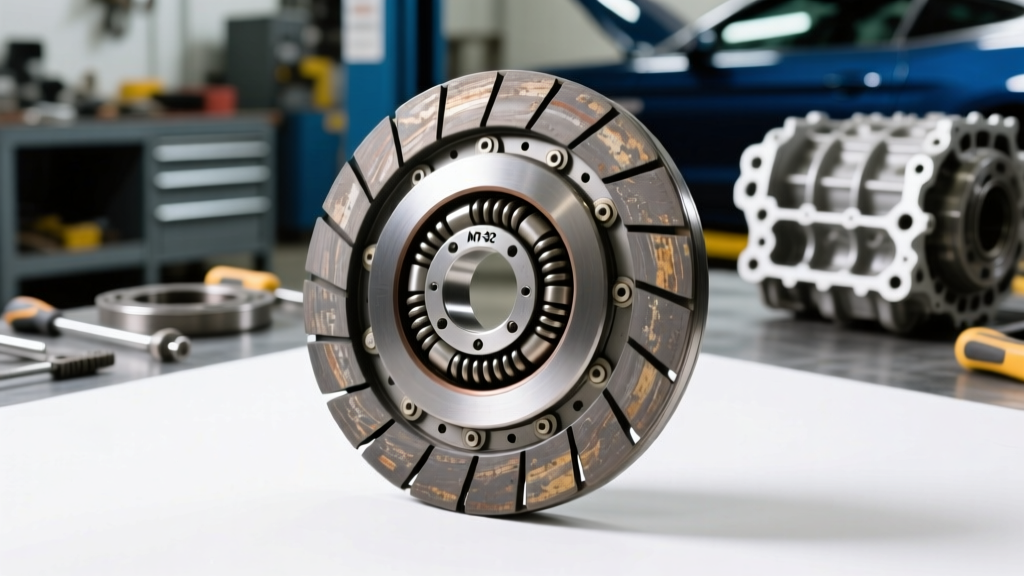
While automatic transmissions dominate the band and clutch pack conversation, manual transmissions have their own discography of post-replacement nightmares. The most common complaint after a manual clutch replacement is severe engagement chatter or a high-pedal bite point that won't adjust.
Root Causes of Post-Replacement Manual Clutch Chatter
- Flywheel Runout: If the machinist does not turn the flywheel, or if resurfacing leaves a runout greater than 0.005 inches, the clutch disc will grab and release cyclically, causing violent chatter.
- Bellhousing Misalignment: Using a dial indicator on the bellhousing bore is mandatory for high-torque applications. Maximum Total Indicator Runout (TIR) must not exceed 0.010 inches. Misalignment binds the transmission input shaft, preventing the clutch disc from fully disengaging or engaging smoothly.
- Hardware Re-use: Clutch pressure plate bolts and flywheel bolts are often Torque-To-Yield (TTY). Reusing them leads to uneven clamping force across the pressure plate diaphragm.
The 2026 Diagnostic Cost Matrix: Where Does the Money Go?
When a vehicle comes back with a clutch-related complaint under warranty, the shop must determine if it is a parts defect, a machining error, or a hydraulic issue. According to data from the Automatic Transmission Rebuilders Association (ATRA), diagnostic accuracy is the key to minimizing warranty losses.
| Diagnostic Step | Time Allotted | 2026 Shop Rate | Purpose |
|---|---|---|---|
| Line Pressure Testing | 1.0 Hour | $140 | Verify pump output and check for cross-leaks at clutch apply circuits. |
| Stall Speed Test | 0.5 Hour | $70 | Identify torque converter clutch (TCC) or forward clutch slippage. |
| Teardown & End-Play Check | 3.0 Hours | $420 | Measure selective thrust washers and verify clutch pack clearances. |
| Valve Body Air-Check | 1.5 Hours | $210 | Isolate stuck shift valves or leaking bore plugs causing delayed apply. |
Why Do Re-Replacements Happen? The Root Cause Analysis
The most expensive track on the clutch band discography is the one caused by skipped cleaning procedures. Automatic transmissions generate immense metallic debris during a failure. If the torque converter is not flushed or replaced, and the transmission cooler lines are not purged with a high-pressure flush machine, metallic particulates will immediately lodge in the new valve body's solenoid screens. This restricts fluid volume to the clutch packs, causing them to slip and burn up within the first 100 miles of the post-repair test drive.
Furthermore, failing to program the Transmission Control Module (TCM) with the new clutch adapt values (especially on ZF 8HP and GM 10-speed platforms) forces the computer to use old, degraded hydraulic profiles. The TCM will under-apply the new clutches, leading to instant friction glazing.
Conclusion: Skipping the Encore
Navigating the clutch band discography of post-repair failures requires a commitment to exact tolerances, updated tooling, and rigorous diagnostic protocols. Whether you are measuring the 0.040' clearance on a 4L60E 3-4 clutch pack, torquing a 6L80 oil pump to exactly 11 Nm, or checking bellhousing runout on a manual swap, the math does not lie. By investing time in the machine shop and on the bench, rebuilders can ensure that when the vehicle finally hits the road, the only thing the customer hears is the sound of a perfectly shifting transmission—not the expensive encore of a warranty return.
For further reading on transmission rebuilding standards and hydraulic diagnostics, technicians are encouraged to consult the engineering resources available via ZF Friedrichshafen and OEM service manuals.