Introduction: The Carolina Coyote Owner's Dilemma
While local business journals might be busy reporting on how dutch bros acquired clutch coffee bar to expand into carolinas, Mustang owners across the Carolinas are dealing with a far more pressing 'clutch' issue: the notorious MT-82 throw-out bearing (TOB) failure. Whether you are navigating the stop-and-go traffic on I-77 in Charlotte or carving the Tail of the Dragon, the 6-speed MT-82 and MT-82D4 manual transmissions found in the 2011–2023 Ford Mustang GT (5.0L Coyote) require meticulous attention to the clutch release system.
In 2026, as the automotive landscape shifts heavily toward EVs, the internal combustion Mustang remains a staple of the used and enthusiast market. However, the MT-82's hydraulic concentric slave cylinder (CSC)—which integrates the throw-out bearing—is a known weak point. This model-specific repair guide dives deep into diagnosing TOB noise, executing a bulletproof replacement, and upgrading the weak factory components.
Anatomy of MT-82 Throw-Out Bearing Failure
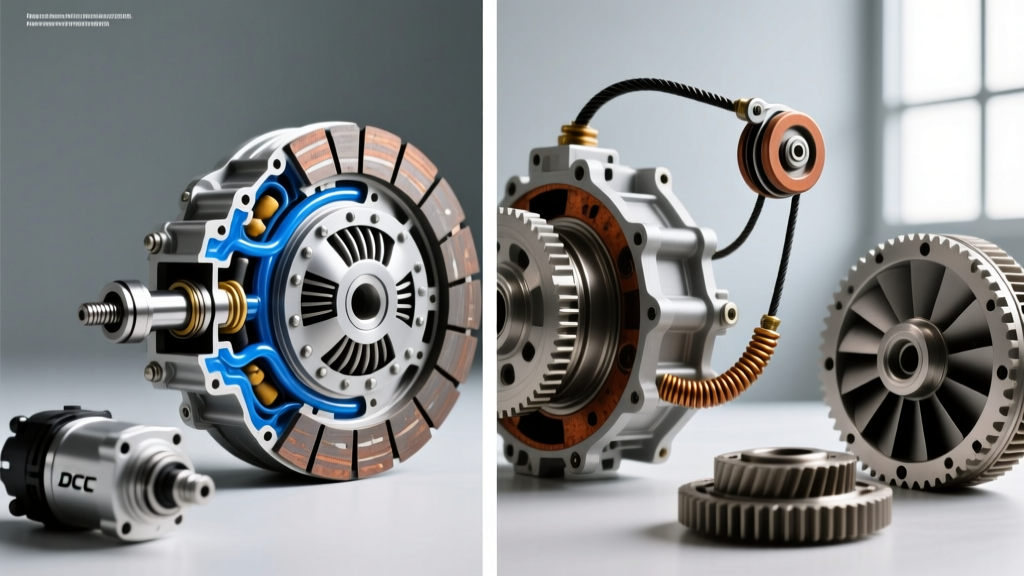
Unlike older mechanical linkage systems, the MT-82 utilizes a hydraulic Concentric Slave Cylinder (CSC). The CSC wraps around the transmission input shaft and acts as both the hydraulic actuator and the throw-out bearing. When you depress the clutch pedal, fluid pressure pushes the CSC forward, forcing the bearing against the pressure plate diaphragm fingers.
Why the Factory Design is Prone to Wear
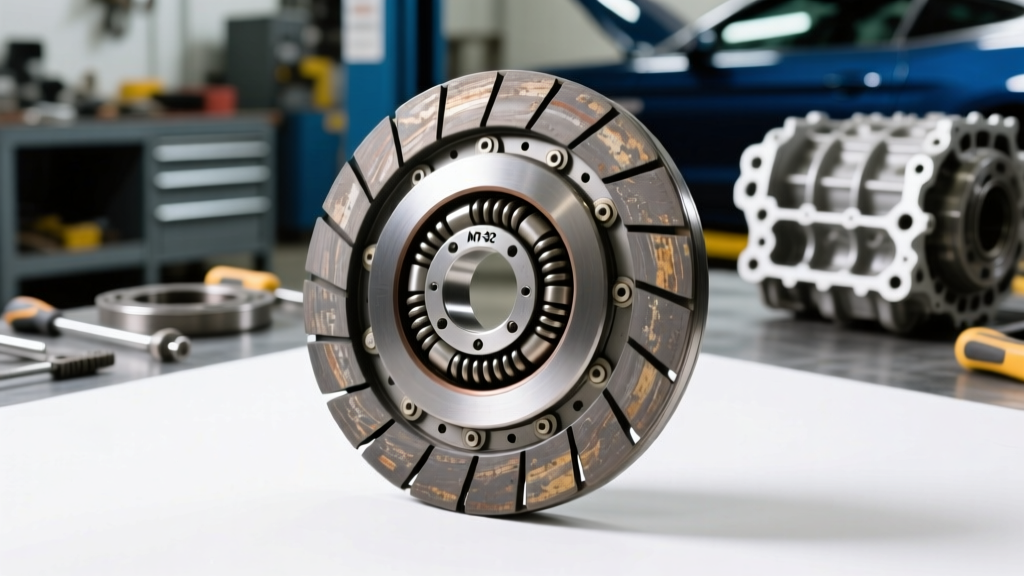
The primary failure mode of the MT-82 TOB isn't always the bearing itself; it is the interaction between the CSC, the clutch fork, and the pivot ball. The factory plastic wear inserts on the clutch fork degrade rapidly under the high clamp load of modern performance clutches. Once the plastic wears through, the steel fork grinds against the steel pivot ball, creating catastrophic dust that contaminates the CSC bearing sleeve, leading to seizure and intense vibration.
Expert Insight: Never reuse the factory plastic clutch fork pivot liner. In 2026, upgrading to a bronze pivot ball or an aftermarket billet fork is considered mandatory for any MT-82 rebuild to prevent repeat TOB failures.
Diagnostic Matrix: Identifying Your TOB Symptoms
Throw-out bearing noise can easily be confused with input shaft bearing failure or pilot bearing degradation. Use the following diagnostic matrix to isolate the exact source of the noise before ordering parts.
| Symptom / Noise Profile | Pedal State | Probable Root Cause (MT-82) | Required Action |
|---|---|---|---|
| High-pitched 'cricket' chirp or squeal | Lightly depressed (taking up slack) | Dry or failing CSC bearing sleeve; lack of lubrication on the input shaft collar. | Replace CSC, polish input shaft collar, apply high-temp synthetic grease. |
| Heavy metallic grinding or growling | Fully depressed | CSC bearing internal cage failure; clutch fork pivot ball wear-through. | Drop transmission, replace CSC, upgrade fork and pivot ball. |
| Pedal pulsation / vibration | Mid-travel (engagement zone) | Uneven pressure plate diaphragm fingers or CSC hanging on a scored input shaft. | Inspect flywheel runout, replace CSC, check input shaft for grooves. |
| Whining that changes with RPM (pedal up) | Released (foot off pedal) | Input shaft bearing (ISB) failure, NOT the throw-out bearing. | Transmission rebuild required; TOB replacement will not fix this. |
Step-by-Step MT-82 Clutch & TOB Replacement Guide
Replacing the TOB on an MT-82 requires dropping the transmission. Because the labor overlap is nearly 100%, it is highly recommended to replace the clutch assembly, flywheel, and hydraulic line simultaneously.
1. Drivetrain Extraction & Teardown
After safely supporting the vehicle and removing the exhaust H-pipe, driveshaft, and starter, unbolt the MT-82 bellhousing. The factory bellhousing bolts are 13mm and torque to 33 lb-ft. Once the transmission is out, remove the clutch fork and inspect the pivot ball stud. If the stud shows any grooving, it must be replaced. Extract the CSC from the input shaft. According to Schaeffler's RepXpert technical portal, you must inspect the transmission input shaft bearing retainer collar. If the old CSC bearing wore a groove into this steel collar, the collar must be replaced, or the new CSC will bind and fail prematurely.
2. Upgrading the Pivot Ball and Clutch Fork
The factory clutch fork is stamped steel with a plastic liner. For high-torque Coyote builds, upgrade to a billet aluminum or reinforced steel fork. Install a bronze or hardened steel pivot ball upgrade kit. Apply a thin layer of molybdenum disulfide (moly) grease to the pivot ball contact patch and the input shaft sleeve where the CSC rides. Warning: Do not over-grease the input shaft; excess grease will sling onto the clutch friction disc and cause slipping.
3. Torque Specifications & Reassembly
Precision torque is critical for the MT-82's alignment and the Coyote engine's balance. Refer to the Ford Service Content database for exact OEM specifications. Below are the critical torque specs for the reassembly:
- Flywheel to Crankshaft (M12 bolts): 59 lb-ft, plus an additional 90-degree turn.
- Pressure Plate to Flywheel (M8 bolts): 22 lb-ft (tighten in a crisscross star pattern to prevent warping).
- Bellhousing to Engine Block: 33 lb-ft.
- Driveshaft to Pinion Flange: 15 lb-ft, plus an additional 60-degree turn.
- Clutch Fork Pivot Ball Stud: 28 lb-ft (use medium threadlocker).
Hydraulic Bleeding & The Clutch Delay Valve (CDV)
The MT-82 hydraulic system is notorious for trapping air in the CSC line. Furthermore, Ford installed a Clutch Delay Valve (CDV) in the slave cylinder line to smooth out engagement for novice drivers. In 2026, almost all track and enthusiast builds delete this valve to achieve direct, 1:1 pedal feel and faster shifts. When bleeding the system, use Motorcraft DOT LV High Performance Brake Fluid (PM-20). Gravity bleeding is rarely sufficient; use a pressure bleeder set to 15 PSI and have an assistant pump the pedal while cracking the bleeder screw on the CSC.
Sourcing Parts: OEM vs. Aftermarket for 2026 Builds
Selecting the right components ensures you won't be back under the car in 10,000 miles. Below is a curated parts list for a reliable MT-82 TOB and clutch replacement.
| Component | Recommended Brand / Part Number | Est. Price (2026) | Notes |
|---|---|---|---|
| Concentric Slave Cylinder (TOB) | Schaeffler LuK (LCSC039) | $140 - $180 | OEM supplier; includes bearing and hydraulic line adapter. |
| Clutch Fork Upgrade | Steeda (555-1002) or McLeod | $110 - $150 | Billet aluminum or reinforced steel; eliminates flex. |
| Pivot Ball Upgrade | Motive Gear (10134235) | $25 - $40 | Hardened steel; prevents fork wear-through. |
| Heavy Duty Clutch Kit | Ford Performance (M-7563-M8) | $450 - $550 | Handles up to 800 lb-ft; includes alignment tool. |
| CDV Delete Line | Braided Stainless OEM Replacement | $60 - $90 | Improves pedal feel and bleed consistency. |
Labor Costs and The Bottom Line
If you are tackling this in a home garage in the Carolinas, expect the job to take 8 to 12 hours, requiring a transmission jack and ideally a second set of hands to mate the MT-82 back to the Coyote block. For those seeking professional installation, independent drivetrain shops in the region typically quote between $900 and $1,400 for labor alone, bringing the total out-the-door cost to roughly $1,600 to $2,200.
Addressing throw-out bearing noise early is critical. Ignoring a chirping CSC can lead to a shattered diaphragm spring or a destroyed input shaft, turning a $600 maintenance job into a $3,500 transmission replacement. By upgrading the fork, pivot ball, and hydraulic line during the TOB replacement, you effectively bulletproof the MT-82's release system for the next 60,000 miles of spirited driving.
Further Reading & Technical Resources
For deeper technical schematics and torque-angle diagrams, consult the Ford Service Content Portal or explore aftermarket installation guides via Ford Performance Parts. Always verify your specific VIN and transmission build code, as the MT-82D4 (introduced in later GT350 and Mach 1 variants) features slightly different internal clearances and fluid requirements.