Beyond the Basics: The Performance Manual Driving Paradigm
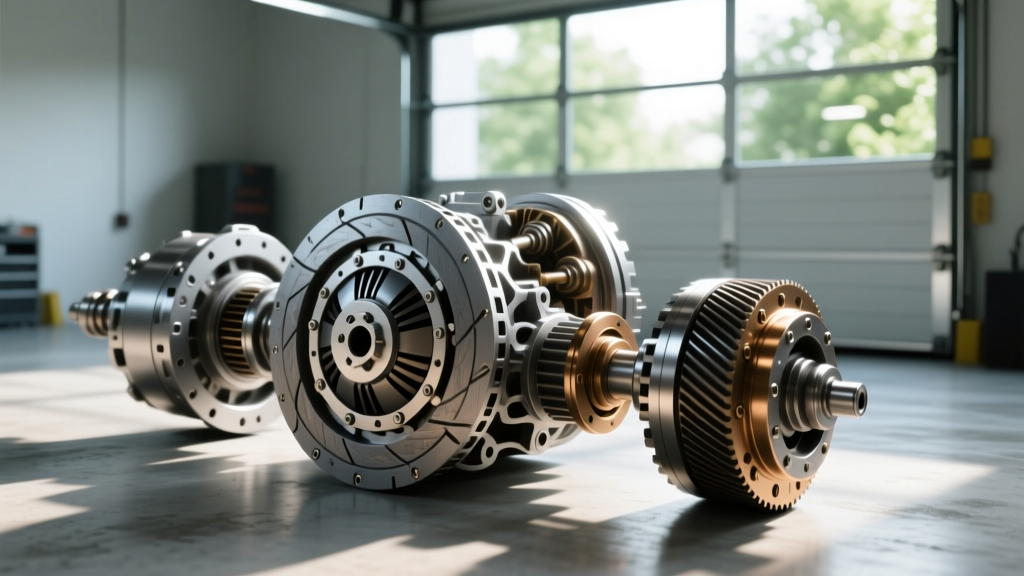
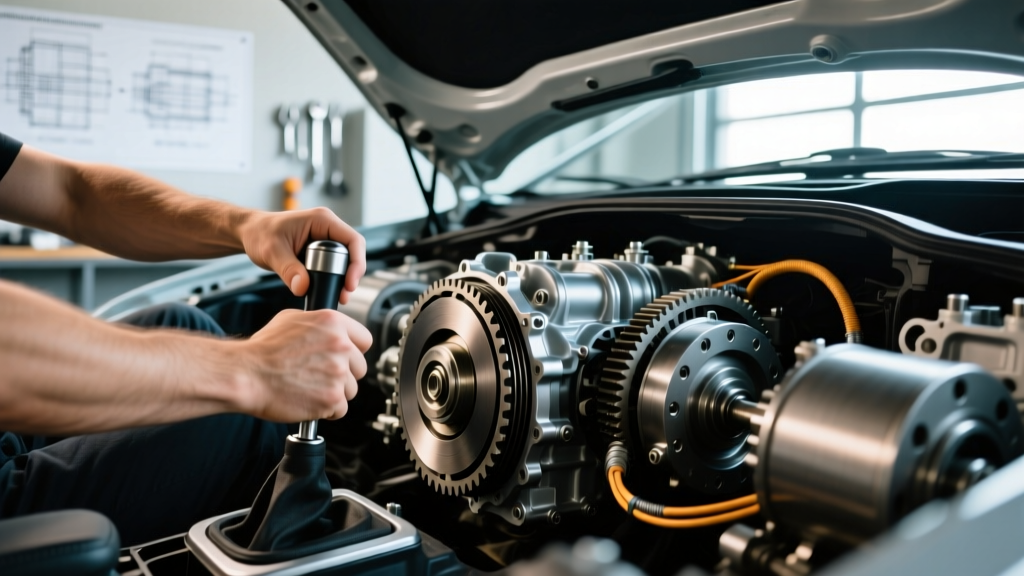
Most automotive tutorials answering the question of how to drive a manual transmission car focus on basic commuter survival: finding the friction zone, avoiding stalls in traffic, and achieving decent fuel economy. However, when your objective shifts from commuting to extracting maximum lap times or dominating drag strips, the fundamental physics of the drivetrain change entirely. Performance driving a manual gearbox—whether it is a robust Tremec T56 Magnum, a precision Porsche G50, or a high-revving Honda S2000 AP2 transmission—requires an intimate understanding of rotational mass, synchronizer engagement, and clutch slip dynamics.
At Hagerty Media, the emphasis is often on preservation and smooth operation. In the performance and upgrade sector, we focus on controlled aggression, minimizing shift times, and managing the immense torque loads transferred through the input shaft during hard launches and aggressive downshifts.
Preparing the Drivetrain for Track Abuse
You cannot execute high-performance driving techniques on compromised or purely OEM hardware designed for comfort. Before attempting track-level heel-toe downshifting or 6,000 RPM drag launches, your hardware baseline must be addressed.
Clutch and Flywheel Upgrades
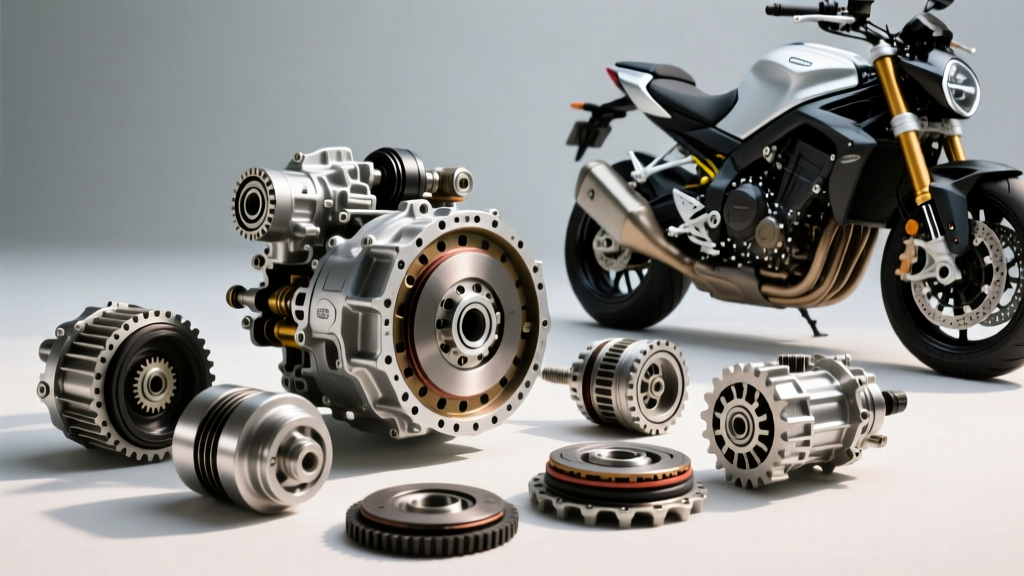
Original equipment clutches are designed for progressive engagement and low pedal effort (typically 25-35 lbs of pedal pressure). For performance applications, you need higher clamp loads to prevent slip under high boost or aggressive launch conditions. An ACT HD/Performance Street clutch kit (often priced between $650 and $850) increases clamp load by up to 40%, pushing pedal effort closer to 50 lbs but ensuring zero slip at 500+ wheel horsepower.
Pairing this with a lightweight flywheel reduces rotational inertia, allowing the engine to rev and drop RPMs much faster—crucial for rev-matching. For example, swapping a 35-lb OEM GM LS cast-iron flywheel for a 15-lb Fidanza aluminum unit drastically improves throttle response. When installing, hardware specs are non-negotiable. Always use upgraded fasteners like ARP 200-2805 flywheel bolts, torqued precisely to 85 ft-lbs using ARP Ultra-Torque fastener assembly lubricant to ensure accurate clamping force without thread galling.
Shifter Geometry and Throw Reduction
Shift times cost you tenths of a second per gear change. Upgrading to a B&M Precision Sports Shifter or a Hurst Billet/Plus shifter reduces the shift throw by 30% to 50% and eliminates the sloppy rubber isolation found in OEM shift linkages. This provides the direct, mechanical feedback required to find the synchro windows rapidly during high-RPM shifts.
The Mathematics of Rev-Matching and Heel-Toe Execution
Knowing how to drive a manual transmission car at the limit means eliminating drivetrain shock during deceleration. When you lift off the throttle and brake, the engine drops to idle (e.g., 900 RPM). If you simply engage the clutch in a lower gear, the transmission forces the engine to instantly match the driveshaft speed, causing severe weight transfer, locking the drive wheels momentarily, and tearing up your engine mounts and synchros.
Calculating the RPM Blip
Rev-matching requires you to artificially raise the engine RPM to match the exact speed of the lower gear before the synchronizer locks. The required RPM increase is dictated by the gear ratio step. Below is a data chart for the popular Tremec T56 Magnum (GM variant) illustrating the RPM compensation required when downshifting at a 4,000 RPM entry speed.
| Shift Sequence | Gear Ratios | Ratio Step | Target RPM (at 4k Entry) | Required Throttle Blip |
|---|---|---|---|---|
| 6th to 5th | 0.67 to 0.80 | 1.19x | 4,760 RPM | +760 RPM (Light) |
| 5th to 4th | 0.80 to 1.00 | 1.25x | 5,000 RPM | +1,000 RPM (Moderate) |
| 4th to 3rd | 1.00 to 1.30 | 1.30x | 5,200 RPM | +1,200 RPM (Heavy) |
| 3rd to 2nd | 1.30 to 1.89 | 1.45x | 5,800 RPM | +1,800 RPM (Aggressive) |
Heel-toe downshifting is the physical execution of this math while maintaining brake pressure. By rotating your right foot to blip the throttle while the toe maintains steady pressure on the brake pedal, you balance the chassis. This requires precise pedal spacing; many track-prepped cars utilize aftermarket pedal boxes (like those from Tilton or Wilwood) to align the brake and throttle pedals perfectly at full brake depression.
The Art of the Performance Launch
Launching a high-horsepower manual car is a violent exercise in managing friction and traction. The objective is not to simply dump the clutch, which sends a massive shockwave through the drivetrain—often resulting in shattered bellhousings, twisted driveshafts, or snapped axle half-shafts.
The correct performance launch involves slipping the clutch deliberately to act as a secondary torque converter. You hold the engine at the optimal torque RPM (often between 4,500 and 5,500 RPM depending on the cam profile and turbo spool characteristics). As you release the clutch pedal, you modulate the slip to keep the tires at the threshold of traction (around 10-15% wheel slip). Once the vehicle reaches a speed where aerodynamic downforce and mechanical grip can handle the torque, you fully engage the clutch. This technique generates immense heat; hence the necessity for the high-clamp-load, sintered-iron or ceramic puck clutches mentioned earlier, as organic friction material will glaze and burn under these extreme thermal loads.
Fluid Dynamics and Synchronizer Preservation
Performance driving generates substantial heat within the gearbox casing. Furthermore, the chemical composition of your transmission fluid dictates how well your synchronizers function during rapid, high-RPM shifts.
A critical rule in manual transmission maintenance is avoiding API GL-5 rated gear oils in synchromesh gearboxes unless explicitly mandated by the manufacturer. GL-5 fluids contain high levels of sulfur-phosphorus extreme pressure (EP) additives, which are highly corrosive to the yellow metals (brass or bronze) used in synchronizer rings. Instead, performance applications require high-quality GL-4 fluids.
- Red Line MT-90 (Part #50104): A 75W90 GL-4 synthetic ideal for heavy-duty track use, providing excellent shear stability and synchro friction coefficients at operating temperatures exceeding 250°F. (Priced around $22 per quart).
- GM OEM Synchromesh (Part #12345349): Essential for older Tremec T5 and T56 gearboxes that utilize carbon-fiber or specific paper-lined synchros. Carbon synchros require specific friction modifiers found in this fluid to engage properly without grinding.
- Pennzoil Synchromesh: A highly regarded, budget-friendly alternative (approx. $10/quart) for Honda B/K-series and Nissan FS5W71C gearboxes.
When performing a track-day fluid service, ensure you are filling to the exact capacity (e.g., 3.9 quarts for a standard T56 Magnum). The fill and drain plugs typically feature a 3/8-inch square drive or an 8mm hex socket. Always torque the drain and fill plugs to 18-22 ft-lbs to prevent casing cracks on aluminum housings while ensuring a leak-free seal under high internal case pressures generated by aerated, hot gear oil.
Conclusion: Synergy of Machine and Driver
Understanding how to drive a manual transmission car in a performance context is an ongoing dialogue between the driver's inputs and the mechanical limits of the drivetrain. By upgrading to high-clamp-load clutches, utilizing lightweight flywheels, mastering the mathematical precision of heel-toe rev-matching, and protecting your synchros with dedicated GL-4 synthetics, you transform a standard manual gearbox into a race-bred weapon capable of withstanding the rigors of the track.