Understanding P0706 and Transmission Sensor Shifting Problems
When your vehicle suddenly refuses to shift out of third gear, experiences harsh garage shifts, or triggers a no-crank condition, the culprit is often hidden in plain sight on the side of your transmission case. The P0706 Transmission Range Sensor Circuit Range/Performance code is one of the most disruptive OBD-II faults a driver can encounter. Unlike internal hydraulic failures, transmission sensor and shifting problems linked to the TR (Transmission Range) sensor are entirely electronic, yet they completely paralyze the mechanical operation of the drivetrain.
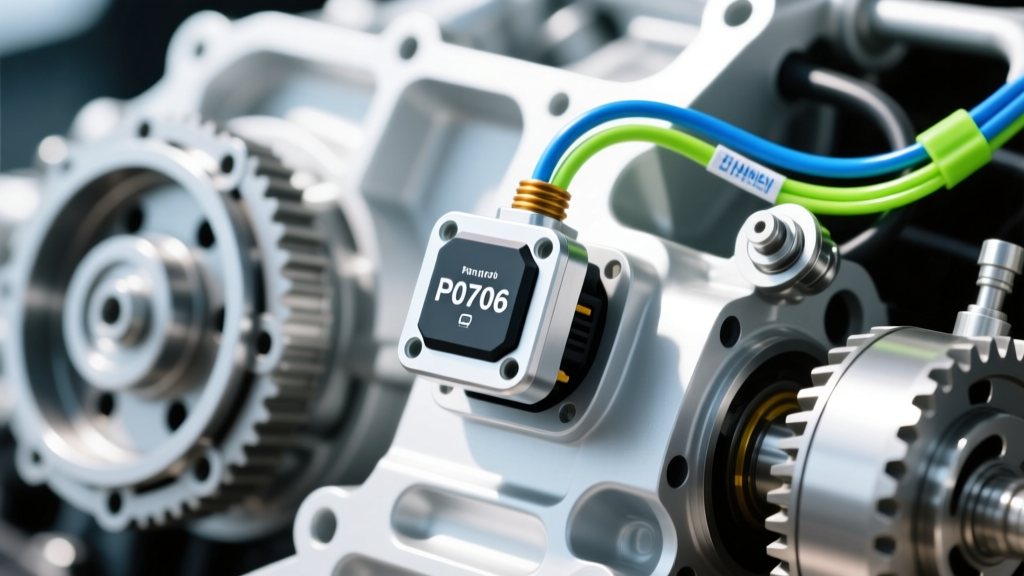
The Transmission Control Module (TCM) relies on the TR sensor—sometimes called the neutral safety switch or gear position sensor—to know exactly what gear the driver has selected via the shift linkage. If the TCM receives a voltage signal that falls outside the expected parameters for Park, Reverse, Neutral, or Drive, it defaults to a fail-safe 'limp mode' to protect the clutch packs from catastrophic cross-chamfering. In 2026, as transmissions like the Ford 10R80 and GM 10L90 rely on hyper-precise shift scheduling, even a micro-second dropout in the TR sensor signal will cause the TCM to abort a shift, resulting in severe flaring or neutraling out on the highway.
The Anatomy of a TR Sensor Failure
Most external TR sensors operate as multi-position voltage dividers. Inside the sealed plastic housing, a series of resistors and a wiper contact move across a conductive track as the manual valve shaft rotates. The TCM sends a 5-volt reference signal to the sensor. Depending on the gear selected, the sensor returns a specific voltage (e.g., 4.1V for Park, 3.2V for Reverse, 2.4V for Neutral, 1.5V for Drive).
A P0706 code triggers when the TCM sees a voltage that doesn't match any known gear state, or if the voltage fluctuates erratically while driving. Common failure modes include:
- Internal Track Wear: The carbon wiper wears a groove into the resistor board, causing 'dead spots' between Drive and Low.
- Moisture Ingress: Cracked housings allow road salt and water to bridge the circuits, sending scrambled voltage to the TCM.
- Mechanical Misalignment: The sensor was installed slightly off-center, meaning the physical shifter is in 'Drive' but the sensor is reporting 'Neutral'.
2026 TR Sensor Buyer’s Matrix: OEM vs. Aftermarket
When resolving transmission sensor and shifting problems, part selection is critical. The market is flooded with cheap, uncalibrated aftermarket switches that can cause immediate P0706 recurrence. Below is our expert comparison of the top TR sensors for the most common platforms on the road today.
| Brand / Part Number | Target Transmission | 2026 Price Range | Warranty | Expert Verdict |
|---|---|---|---|---|
| Motorcraft SW-7189 (AU5Z-7002-A) | Ford 6R80 / 6R140 | $95 - $120 | 2-Year Unlimited | OEM Standard. Exact factory calibration. Mandatory for Ford 6-speeds. |
| AC Delco 24268895 | GM 6L80 / 6L90 | $70 - $85 | 1-Year Limited | Best OEM. Features upgraded sealing grommets over early 2010s revisions. |
| Dorman 609-105 | Chrysler/Dodge NAG1 (W5A580) | $45 - $60 | Limited Lifetime | Budget Fix. Acceptable for older NAG1s, but prone to stiff detent springs. |
| Standard Motor Products SPS32 | Various GM 4L60E / 4L80E | $35 - $50 | 3-Year / 36k | Aftermarket Alt. Good for budget 4L60E builds, but verify pin tension. |
Source: Pricing and fitment data aggregated from the RockAuto Parts Catalog and current OEM dealer networks.
Deep Dive: Ford 6R80 & 10R80 Platforms
For Ford F-150 and Mustang owners dealing with P0706, the Motorcraft SW-7189 is the undisputed champion. Ford's TCM software is notoriously sensitive to voltage variance. Installing a $25 generic eBay sensor on a 6R80 will almost always result in delayed reverse engagement or a flashing PRNDL indicator on the dash. The Motorcraft unit uses a Hall-effect design in later revisions, eliminating the physical contact wear that plagued early 2010s models. You can verify you are buying genuine OEM by checking for the laser-etched Ford engineering number on the harness pigtail, a detail counterfeiters often miss.
Deep Dive: GM 6L80 & 8L90 Platforms
GM's 6L80 and 8L90 transmissions utilize an external TR switch mounted on the side of the case, actuated by the manual shaft. The AC Delco 24268895 is the recommended replacement. A known issue with GM units is not the sensor itself, but the 'rooster comb' (the manual valve detent lever) wearing down the plastic actuator pin on the sensor. If you replace the TR sensor but fail to inspect the rooster comb for grooving, the new sensor will bind and throw a P0706 within 500 miles.
The ZF 8HP Exception: When There Is No External Sensor
If you are driving a modern Chrysler, Dodge, or BMW equipped with the ZF 8HP (8-speed) transmission, a P0706 code means something entirely different. The ZF 8HP does not use an external transmission range sensor. Instead, gear position is calculated internally via the Transmission Electro-Hydraulic Control Module (TEHCM) using the position of the manual valve and internal Hall-effect sensors integrated into the mechatronics valve body. If you pull a P0706 on a ZF 8HP, you are likely looking at a failed internal ribbon cable, a contaminated TEHCM connector, or a complete mechatronics replacement—a $1,200+ repair that requires ZF-specific software to program the new unit.
Masterclass: TR Sensor Alignment and Torque Specifications
The most common reason a brand-new OEM TR sensor triggers a P0706 code immediately after installation is improper mechanical alignment. The sensor must be perfectly synchronized with the transmission's internal manual valve. If the sensor reads 'Neutral' while the transmission is mechanically in 'Drive', the vehicle will lurch forward upon cranking, or the TCM will inhibit the starter and set a P0706/P0705 code.
Step-by-Step Alignment Protocol
- Set the Cabin Shifter: Place the gear selector inside the vehicle exactly in the 'Neutral' (N) detent.
- Set the Transmission Shaft: Under the vehicle, rotate the transmission manual shaft clockwise until it clicks fully into Park, then rotate it counter-clockwise exactly one or two detents (depending on the specific transmission) until it rests in the Neutral position.
- Use the Alignment Pin: Most OEM sensors (like the Motorcraft and AC Delco units) feature two small alignment holes on the face of the sensor and the inner rotor. Insert a 4mm drill bit or a specialized alignment pin through these holes. This locks the internal wiper to the exact Neutral voltage specification.
- Mount and Torque: Slide the sensor onto the manual shaft. Do not force it; if it doesn't slide on easily, the shaft splines are damaged or misaligned. Tighten the mounting bolts to the manufacturer's specification. For most GM and Ford external switches, the torque spec is 9 Nm (80 lb-in). Do not over-torque, as the plastic housings will crack and allow water ingress.
- Remove the Pin: Crucial step! If you forget to remove the 4mm alignment pin before shifting into gear, you will snap the internal wiper board, instantly destroying the new sensor.
For more detailed diagnostic flowcharts and voltage tables, the OBD-Codes P0706 Database provides excellent baseline reference data for multimeter testing.
Wiring Harness & Connector Edge Cases
Before spending money on a new sensor, you must rule out the wiring harness. Transmission sensor and shifting problems are frequently caused by degraded wiring rather than a failed switch. The TR sensor sits low on the transmission case, directly exposed to road debris, heat from the exhaust crossover, and corrosive brine.
The 'Pull Test' and Pin Tension: Disconnect the TR sensor harness. Inspect the female terminals for green copper oxide corrosion. Even a microscopic layer of corrosion will add enough resistance to drop the 5V reference signal down to 4.2V, which the TCM will interpret as an invalid gear state. Use a specialized electrical contact cleaner and a micro-brush. Furthermore, perform a 'pull test' on the wires about two inches back from the connector. On high-mileage GM trucks, the wires often break internally inside the plastic loom due to engine torque roll vibrating the harness against the bellhousing.
TCM Pinout Verification: If the sensor tests fine and the wiring shows continuity, the issue may lie at the TCM connector. On vehicles where the TCM is mounted directly to the transmission case (like the GM 6L80 TEHCM or Ford 10R80 solenoid body), thermal cycling causes the solder joints on the circuit board to crack. A P0706 that only appears when the transmission fluid reaches 180°F+ is a classic symptom of a cracked TCM solder joint expanding under heat, breaking the circuit to the TR sensor.
Final Verdict: Fixing Shifting Problems the Right Way
Resolving a P0706 code requires a methodical approach that bridges mechanical alignment and electronic diagnostics. When sourcing replacement parts, always defer to OEM suppliers like Motorcraft Electrical Components or AC Delco. The $30 you save on a budget aftermarket sensor will quickly be lost in towing fees and repeated diagnostic labor. By verifying your wiring harness integrity, utilizing the 4mm alignment pin trick, and adhering strictly to 9 Nm torque specs, you can permanently eliminate transmission sensor and shifting problems, restoring your drivetrain to factory-smooth operation.