The Symmetrical AWD Layout and Leak Vulnerabilities
As we navigate the 2026 service landscape, a massive wave of 5th and 6th generation Subaru Outbacks (2015–2023) are crossing the critical 100,000-mile threshold. At this mileage, the factory rubber seals in the Symmetrical All-Wheel Drive system begin to harden, shrink, and ultimately fail. Unlike traditional front-wheel-drive crossovers, the Outback utilizes a complex, multi-chambered drivetrain. The front differential is integrated directly into the transmission housing, while the rear differential is an isolated, hypoid-gear-driven unit bolted to the rear subframe.
When you spot a puddle of oil on your garage floor, identifying the exact source is paramount. A leak in the rear differential requires a completely different repair approach—and different fluid—than a leak at the transmission extension housing. This model-specific repair guide will walk you through triaging the leak, sourcing the correct OEM components, and executing the repair with factory-level precision.
Triaging the Leak: Gear Oil vs. CVT Fluid
Before you order parts or drain a single drop of fluid, you must confirm what is actually leaking. The Outback's CVT (Lineartronic) and its differentials use entirely different lubricants. Misdiagnosing the leak can lead to catastrophic drivetrain failure.
The Visual and Olfactory Tests
- Subaru CVT Fluid (Lineartronic II): Typically greenish or light amber when new, darkening to a murky brown over time. It has a mild, slightly sweet chemical odor.
- Gear Oil (75W-90 GL-5): Golden or honey-colored when fresh, but usually dark brown or black in a high-mileage Outback. It has an unmistakable, pungent sulfur smell (resembling rotten eggs) due to the extreme-pressure (EP) additives required for hypoid gears.
- Engine Oil (0W-20): Black or dark brown, smells of carbon and combustion byproducts, and usually pools further forward near the oil pan or valve covers.
If the fluid smells like sulfur and is pooling near the rear axle or the center driveshaft, you are dealing with a differential leak. Choosing the correct subaru outback differential fluid is only half the battle; keeping it sealed inside the housing is the real challenge.
Common Subaru Outback Differential Leak Sources
Based on service data and technician reports from Subaru Technical Information System (STIS), the following are the most frequent failure points for gear oil leaks on 2015+ Outback models.
| Component | OEM Part Number | Location | Repair Difficulty |
|---|---|---|---|
| Drain/Fill Crush Washer | 803918060 | Plug seating surface | Very Easy |
| Rear Axle Seal (L/R) | 803338030 | Half-shaft entry point | Easy |
| Rear Pinion Seal | 803335070 | Driveshaft entry (front of rear diff) | Moderate/High |
| Front Ext. Housing Seal | 803333060 | Rear of CVT (driveshaft exit) | Hard (Requires exhaust drop) |
Rear Differential Pinion and Axle Seal Replacement
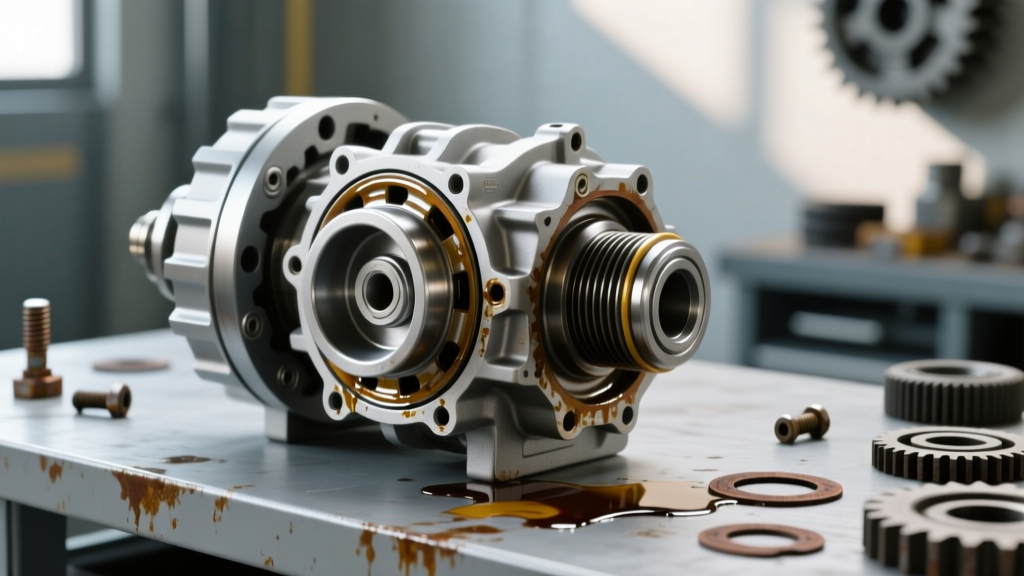
The rear differential is the most common culprit for gear oil leaks. If the leak is originating from where the rear driveshaft enters the differential, you have a failed pinion seal. If it is leaking from the sides where the CV axles enter, you need axle seals.
Tools Required for Rear Axle Seal Repair
- 12mm and 14mm sockets (for backing plate and crossmember)
- 32mm socket (for rear axle nut)
- Seal puller or pick tool
- 70mm seal driver or large PVC pipe coupling
- Torque wrench (inch-pound and foot-pound)
Step-by-Step Rear Axle Seal Repair
Replacing the rear axle seal (Part # 803338030) is a straightforward job that can be done in your driveway. First, safely lift and support the rear of the Outback on jack stands. Remove the rear wheel and use a breaker bar with a 32mm socket to remove the staked axle nut. Disconnect the lower shock bolt and the two rear lateral link bolts to allow the knuckle to swing outward, giving you enough clearance to pull the CV axle from the differential.
Once the axle is out, use a pick tool to carefully pry the old seal out of the differential housing. Be extremely careful not to score the aluminum bore. Clean the bore with brake cleaner, apply a thin film of fresh gear oil to the lip of the new seal, and tap it in flush using a seal driver. Reassembly is the reverse of removal. Always use a new 32mm axle nut and stake it properly after torquing.
The Pinion Seal Dilemma: Crush Sleeve Preload
Expert Warning: The rear differential pinion nut on the Outback does not use a standard torque spec. It seats against a collapsible crush sleeve to set bearing preload. If you remove the pinion nut to replace the pinion seal (Part # 803335070), you must replace the crush sleeve and measure rotational torque with an inch-pound dial wrench, or risk catastrophic gear whine and bearing failure. For simple seal leaks, experienced techs often use a specialized hook tool to pull the seal through the dust shield gap without removing the pinion nut whenever possible.
Front Differential Extension Housing Considerations
On 2015 and newer CVT-equipped Outbacks, the front differential has its own isolated fluid chamber, separate from the CVT variator fluid. The seal where the rear driveshaft exits the transmission extension housing (Part # 803333060) is a known leak point. Replacing this seal is labor-intensive. It requires dropping the exhaust system, removing the heat shields, and supporting the transmission with a jack to remove the rear crossmember. Because the labor cost is so high, if you are doing this repair, it is highly recommended to replace the center support bearing and inspect the U-joints on the driveshaft simultaneously.
Subaru Outback Differential Fluid Specs and Torque Chart
When performing a subaru outback differential fluid service after a seal repair, using the correct viscosity and API rating is non-negotiable. The hypoid gears require GL-5 rated fluid to prevent wear. While the OEM Subaru Extra-HP 75W-90 (Part # SOA635040) is excellent, high-quality alternatives like Motul Gear 300 75W-90 or Amsoil Severe Gear 75W-90 are widely used by enthusiasts and offer superior thermal stability for heavy towing or off-road use. Always refer to SubaruParts.com or your local dealer for the latest fluid supersessions.
| Specification / Fastener | Value | Notes |
|---|---|---|
| Front Diff Fluid Capacity | 1.2L (1.27 US qt) | CVT models only (separate chamber) |
| Rear Diff Fluid Capacity | 0.8L (0.84 US qt) | Fill until it weeps from the plug hole |
| Fluid Specification | API GL-5 75W-90 | Do NOT use GL-4 or LSD additives unless specified |
| Drain/Fill Plug Torque | 33 lb-ft (45 Nm) | Always use new crush washers (803918060) |
| Driveshaft Flange Bolts | 58 lb-ft (79 Nm) | Mark flange alignment before removal |
| Rear Axle Nut Torque | 140 lb-ft (190 Nm) | Use new nut, stake collar into groove |
Final Thoughts on Drivetrain Longevity
Differential leaks on the Outback are rarely a sign of internal mechanical failure; they are simply a byproduct of aging elastomers and exposure to road salt, mud, and extreme temperature cycles. By accurately triaging the leak source, respecting the crush-sleeve preload on the pinion gear, and refilling with high-quality 75W-90 GL-5 gear oil, you can easily extend the life of your Symmetrical AWD system well past 200,000 miles. For further teardown procedures and wiring diagrams, technicians should consult the RockAuto Catalog for cross-referencing aftermarket seal kits from trusted manufacturers like Timken and National.