The MT-82 Clutch Pedal Conundrum
If you own a 2011-2023 Ford Mustang GT equipped with the Tremec MT-82 or MT-82 Tremec manual transmission, you are likely familiar with the notorious clutch pedal issues that plague this platform. From a spongy, floor-bound pedal to aggressive vibrations at the bite point, the hydraulic and mechanical layout of the Coyote V8 engine bay presents unique diagnostic challenges. Unlike older pushrod setups, the MT-82 relies on a complex Concentric Slave Cylinder (CSC) and a plastic hydraulic line that is highly susceptible to heat degradation and expansion.
As an automotive transmission specialist, I have diagnosed hundreds of manual drivetrain complaints. In this model-specific repair guide, we will break down the exact failure modes of the MT-82 clutch system, provide actionable diagnostic frameworks for soft, hard, and vibrating pedals, and explain the critical engine bay clearance procedures—including the often-overlooked necessity of specialized holding tools during teardown.
Symptom Matrix: Soft, Hard, Spongy, or Vibrating?
Before tearing into the bellhousing or bleeding the hydraulics, you must accurately categorize the pedal feedback. Use the diagnostic matrix below to isolate the primary subsystem failure.
| Pedal Symptom | Primary Culprit (MT-82 Specific) | Diagnostic Test Procedure |
|---|---|---|
| Spongy / Soft | Air in lines, failing CSC, expanded plastic hose | Pump pedal 10x, hold pressure for 60s. If it drops, internal bypass or external leak is present. |
| Hard / Stiff | Binding pivot ball, misaligned master pushrod | Remove pedal assist spring. Check for lateral binding on the clutch fork pivot ball inside the bellhousing. |
| Vibrating / Shuddering | Worn input shaft bearing, cracked clutch fork | Engage 3rd gear, slip clutch at 1,500 RPM. If vibration is RPM-dependent, suspect flywheel or input shaft. |
| Delayed Engagement | Master cylinder pushrod clearance gap | Measure free-play at the pedal pad. Spec is 0.5mm - 1.0mm. More indicates pushrod retraction. |
Deep Dive: Spongy Pedals & Hydraulic Failures
The most common complaint on the MT-82 is a spongy clutch pedal that requires 'pumping' to engage gears. This is almost exclusively a hydraulic issue. The OEM hydraulic line is manufactured from a reinforced plastic composite that expands under the high thermal loads of the Mustang's exhaust tunnel. Furthermore, the plastic quick-connect fittings at the master cylinder and slave cylinder are notorious for developing micro-leaks that allow air to enter the system without necessarily dripping fluid onto the garage floor.
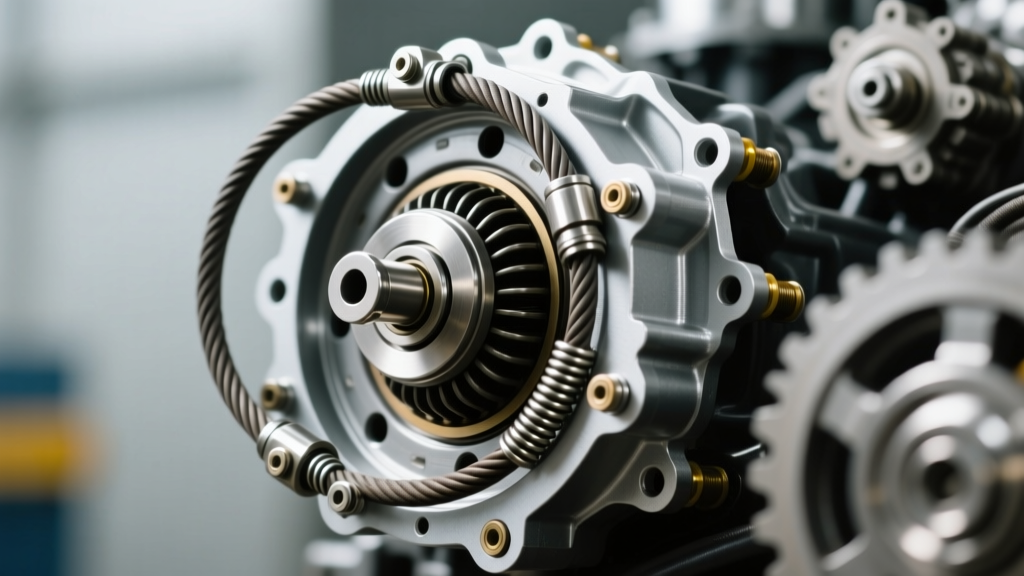
Upgrading to the Ford Performance Braided Line & CSC
If your diagnostic test reveals a pressure drop, the OEM plastic line must be replaced. I exclusively recommend the Ford Performance Hydraulic Slave Cylinder and Braided Line Kit (Part # M-7515-A). This kit replaces the plastic quick-connects with AN-style braided stainless steel fittings and features an upgraded CSC with a reinforced internal seal. When installing this kit, ensure you are using Motorcraft DOT 4 LV (Low Viscosity) fluid (Part # PM-20), available via Motorcraft. Standard DOT 3 fluid will boil under track conditions, leading to immediate pedal fade.
Engine Bay Access: Navigating the A/C Compressor
Diagnosing a leak at the CSC or inspecting the MT-82 flywheel inspection cover on the 5.0L Coyote V8 requires significant under-hood and under-car maneuverability. The engine bay is incredibly tight, and the A/C compressor sits directly in the path of the starter, the lower bellhousing bolts, and the rearward routing of the clutch hydraulic line.
Why an AC Clutch Holding Tool Matters Here
To properly access the slave cylinder hydraulic line routing or to drop the transmission crossmember without binding the A/C lines, the A/C compressor often needs to be unbolted from its bracket and suspended. If the serpentine belt is still routed, or if you are attempting to maneuver the compressor pulley to clear the subframe, the pulley will freewheel. Applying lateral force to a spinning or seized compressor pulley can easily snap the serpentine belt or, worse, apply destructive torque to the electromagnetic clutch coil, destroying the A/C system.
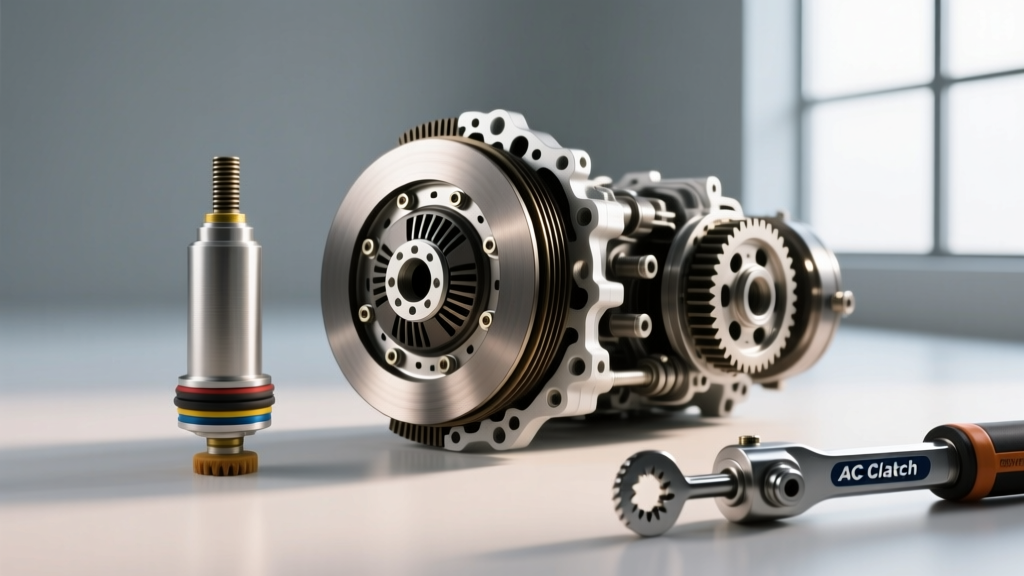
This is where an ac clutch holding tool becomes a mandatory part of your MT-82 service workflow. By securing the compressor pulley face with a dedicated holding tool (or a specialized strap wrench designed specifically for the clutch friction face), you lock the pulley to the compressor shaft. This allows you to safely relieve the belt tensioner, maneuver the heavy compressor out of the way to access the MT-82 hydraulic quick-connects, and prevent catastrophic damage to the A/C clutch gap and coil. Never use standard channel locks on the A/C clutch face; the precision-machined friction surface will gouge, leading to clutch slip when the AC is engaged.
Vibrating Pedals: MT-82 Input Shaft & Fork Wear
A vibrating clutch pedal—often described as a 'buzzing' sensation through the driver's left foot at the exact bite point—is a mechanical issue, not a hydraulic one. On the MT-82, this is typically traced to two specific failure modes:
- Clutch Fork Pivot Ball Wear: The OEM stamped steel clutch fork rides on a hardened steel pivot ball. Under high torque loads (especially on modified Coyote engines), the fork can wear a groove into the ball, or the ball itself can loosen from the bellhousing boss. This creates a harmonic vibration that transfers directly through the hydraulic fluid to the pedal. Inspect the pivot ball (Part # BR3Z-7A548-A area) for scoring.
- Input Shaft Bearing Rattle: The MT-82 is known for 'neutral rattle,' but when the input shaft bearing begins to fail, the vibration is isolated to the pedal during clutch slip. According to Tremec service documentation, input shaft endplay exceeding 0.005 inches indicates bearing failure, requiring a complete transmission teardown.
Step-by-Step Hydraulic Bleed Procedure
Bleeding the MT-82 CSC requires patience. The slave cylinder sits deep inside the bellhousing, and the bleeder screw is angled upward, making air trapping highly likely. Follow this exact sequence:
- Preparation: Fill the master cylinder reservoir with fresh Motorcraft DOT 4 LV fluid. Do not let the reservoir drop below the MIN line during the process.
- Gravity Bleed: Attach a clear silicone hose to the CSC bleeder screw (requires a 10mm flare nut wrench). Route the hose upward into a catch bottle elevated above the bellhousing to encourage air migration.
- Pedal Actuation: Have an assistant press the clutch pedal to the floor slowly, hold for 3 seconds, and release slowly. Repeat 20 times. Close the bleeder screw before the pedal returns to the top to prevent air suck-back.
- Vacuum Assist: If bubbles persist, attach a pneumatic vacuum bleeder to the master cylinder reservoir cap. Pull 20 in-Hg of vacuum while simultaneously cracking the CSC bleeder screw. This forces the fluid down and pulls micro-bubbles out of the plastic OEM line joints.
- Free-Play Verification: After bleeding, measure the pedal free-play. It must be between 0.5mm and 1.0mm. If free-play is zero, the master cylinder pushrod is too long and is holding the CSC partially engaged, which will burn out the clutch disc in under 500 miles.
Torque Specs & Parts Reference Chart
Precision torque is critical when reassembling the MT-82 bellhousing and surrounding Coyote V8 components. Use the following reference chart to ensure proper clamping force and component longevity.
| Component | Part Number (Reference) | Torque Specification |
|---|---|---|
| MT-82 Bellhousing to Engine Block | W714606-S437 | 40 Nm (30 lb-ft) |
| Clutch Fork Pivot Ball Stud | BR3Z-7A548-A | 35 Nm (26 lb-ft) |
| A/C Compressor Mounting Bolts | W714104-S437 | 25 Nm (18 lb-ft) |
| Driveshaft to Rear Flange (6L80/MT-82) | W719421-S439 | 80 Nm (59 lb-ft) |
| Pressure Plate to Flywheel | M-6340-A (Ford Perf) | 35 Nm (26 lb-ft) + 90 deg |
Expert Tip: When reinstalling the MT-82 transmission to the Coyote engine block, never use the bellhousing bolts to 'draw' the transmission into place. The aluminum input shaft bearing retainer will crack. Always use alignment dowels and guide pins to seat the transmission flush before applying torque.
Diagnosing clutch pedal problems on the MT-82 requires a methodical approach to both the hydraulic circuit and the mechanical clearances within the engine bay. By upgrading to braided lines, utilizing the correct AC clutch holding tool to protect your A/C system during teardown, and adhering to strict bleeding protocols, you can restore the crisp, predictable pedal feel that a manual Mustang GT deserves.