The Intersection of Sim Hardware and Real-World Diagnostics
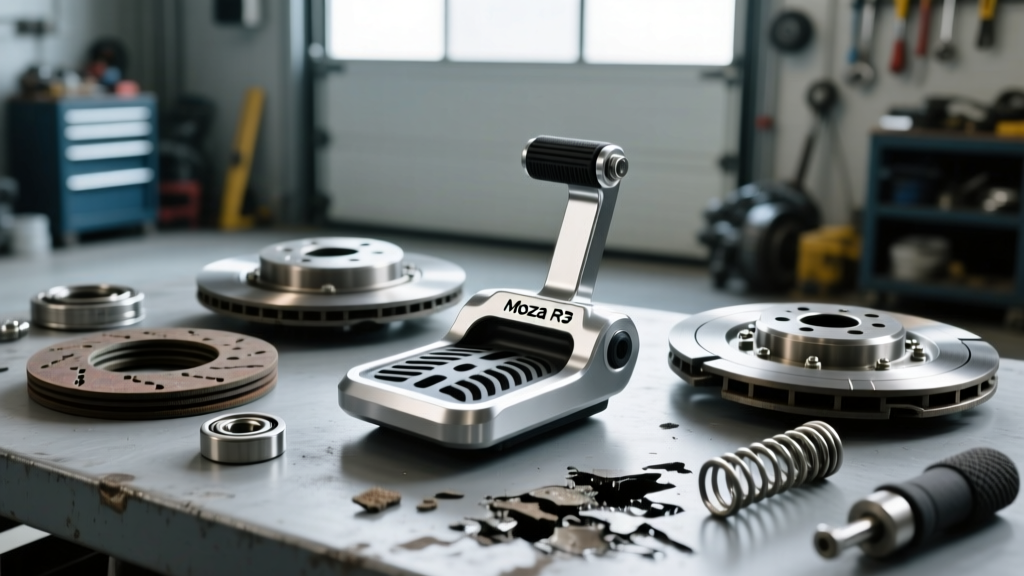
As sim racing hardware matures in 2026, the line between virtual simulation and real-world mechanical training continues to blur. The moza r3 clutch pedal has emerged as a highly accessible, mid-tier peripheral featuring precise hall-effect sensors and customizable elastomer stacks. But beyond chasing lap times, a growing demographic of mechanic trainees, engineering students, and hardcore sim racers are using hardware like the R3 to study and replicate actual automotive drivetrain behavior. To truly leverage this hardware for diagnostic training, one must understand real-world clutch failure modes and root cause analysis. How does a 16-bit digital sensor compare to the brutal, fluid-dynamics reality of a failing Tremec T56 Magnum or a ZF S6-53 hydraulic system? This guide bridges the gap between sim hardware and physical transmission diagnostics.
Deconstructing Real-World Clutch Failure Modes
Before tuning any sim pedal to mimic degradation, we must establish the mechanical realities of physical clutch systems. Automotive clutches fail in distinct, measurable ways, each with a specific root cause.
1. Friction Disc Glazing and Thermal Overload
Real-world friction discs utilize organic, Kevlar, or ceramic resins designed to operate within specific thermal windows. When subjected to slip-rpm differentials exceeding 2,000 RPM during aggressive launches, surface temperatures can spike past 600°F (315°C).
- Root Cause: Improper clutch engagement technique, mismatched flywheel step height, or using an organic disc in a high-torque drag application.
- Failure Mode: The resin melts and forms a glass-like, impermeable layer on the friction surface. The coefficient of friction drops drastically.
- Symptom: High-RPM slipping under load, severe power loss, and a distinct burning odor. In a sim environment, this translates to a sudden drop in virtual RPM traction limits despite full pedal engagement.
2. Diaphragm Spring Fatigue and Clamp Load Loss
The diaphragm spring (or Borg & Beck style fingers) provides the necessary clamp load to keep the friction disc locked to the flywheel. A performance T56 Magnum setup might require upwards of 2,400 lbs of clamp force.
- Root Cause: 'Riding' the clutch pedal creates micro-slippage. This generates immense heat, which transfers through the pressure plate and into the spring fingers, causing metallurgical fatigue and annealing.
- Failure Mode: The spring loses its tensile strength and cannot maintain adequate clamp load under peak engine torque.
- Symptom: The physical pedal effort noticeably decreases over time. The clutch begins to slip in higher gears (e.g., 4th or 5th) where engine torque multiplication is highest.
3. Hydraulic Bypass and Concentric Slave Cylinder (CSC) Failure
Modern manual transmissions, such as those found in late-model Mustangs or BMWs, rely on hydraulic actuation. Many utilize a Concentric Slave Cylinder (CSC) mounted inside the bellhousing.
- Root Cause: DOT 4 brake fluid is hygroscopic (absorbs moisture). Over time, water contamination lowers the fluid's boiling point and causes internal rubber seals to swell, degrade, or bypass. Furthermore, the extreme ambient heat inside the bellhousing accelerates seal failure.
- Failure Mode: Internal fluid bypass within the master or slave cylinder, or external leaks at the CSC weep hole.
- Symptom: A 'spongy' pedal feel, failure to fully disengage the clutch, and gear clash when shifting. According to Novak Conversions, proper hydraulic bleed procedures and master cylinder bore sizing (typically 3/4-inch for heavy-duty applications) are critical to preventing these hydraulic failures.
4. Throwout Bearing and Bellhousing Runout
The throwout bearing (release bearing) bridges the gap between the stationary hydraulic fork and the spinning pressure plate fingers.
- Root Cause: Lack of pedal free-play causes the bearing to ride constantly against the spinning diaphragm fingers. Alternatively, improper bellhousing alignment (runout exceeding 0.005 inches) forces the bearing to operate at an angle, destroying the internal races.
- Failure Mode: Bearing seizure or catastrophic disintegration.
- Symptom: A high-pitched whining or grinding noise that changes pitch when the clutch pedal is depressed. If the bearing seizes, it can snap the transmission input shaft or destroy the pressure plate.
Hardware Comparison: Moza R3 vs. OEM Hydraulic Systems
Understanding the physical limitations of OEM parts highlights the engineering compromises and advantages of sim hardware like the R3. Below is a structural comparison between the digital simulation and physical automotive benchmarks.
| Feature / Specification | Moza R3 Clutch Pedal (Sim) | Tremec T56 Magnum (Real OEM) | ZF S6-53 (Real OEM) |
|---|---|---|---|
| Actuation / Sensor | 16-bit Hall Effect / Elastomer Stack | 3/4-inch Bore Hydraulic Master Cylinder | 8mm Hydraulic Line / Internal CSC |
| Max Force / Effort | ~90 kg (Simulated Peak Resistance) | ~35-45 lbs (Physical Pedal Effort) | ~25-30 lbs (Physical Pedal Effort) |
| Fluid / Medium | None (Digital Telemetry) | DOT 4 Brake Fluid | DOT 4 / Mineral Oil (OEM specific) |
| Primary Failure Mode | Sensor Drift / Elastomer Tear | Fluid Boil / Master Cylinder Bypass | CSC Seal Degradation / Heat Soak |
| Diagnostics | Moza Pit House Software Telemetry | Hydraulic Pressure Gauge / Visual Leak Check | Ultrasonic Leak Detection / Pedal Drop Test |
Buyer’s Guide: Tuning the Moza R3 to Simulate Failures
For the buyer looking to use the moza r3 clutch pedal as a diagnostic training tool or an ultra-realistic immersion device, the hardware is only half the equation. The true value lies in the Moza Pit House software, which allows users to manipulate the clutch curve to mimic the exact failure modes detailed above.
Simulating a Bypassing Master Cylinder
A failing hydraulic master cylinder often suffers from internal seal bypass. The pedal feels normal for the first half of the travel, but suddenly 'drops' or becomes spongy as fluid bypasses the internal cup seal.
Pro-Tuning Tip: In the Moza software, create a custom non-linear clutch curve. Set a linear progression from 0% to 60% pedal travel. Then, introduce a sharp 'dip' or plateau between 60% and 80% travel before ramping up to 100%. This forces the driver to adapt to a sudden loss of hydraulic pressure, perfectly mimicking a worn OEM master cylinder.
Simulating Diaphragm Spring Fatigue
As a physical clutch spring anneals from heat, the pedal effort required to reach the bite point decreases, and the engagement window becomes erratic. You can replicate this by softening the physical elastomer bump stops on the R3 pedal assembly and flattening the software curve in the upper 20% of the travel zone. This trains the driver's left foot to modulate a highly sensitive, degraded clutch—a vital skill for vintage car restorers and mechanics testing rebuilt transmissions.
Who Should Buy the R3 for Diagnostics?
- Sim Racers: Those competing in endurance leagues where virtual clutch wear and thermal degradation are simulated by engines like iRacing or Assetto Corsa Competizione.
- Mechanic Trainees: Students learning heel-toe downshifting and rev-matching muscle memory without burning out physical friction discs in a shop environment.
- Drivetrain Engineers: Professionals using the 16-bit telemetry output to map pedal travel against virtual ECU torque-request tables.
Final Verdict: Is the R3 Right for Diagnostic Training?
The moza r3 clutch pedal punches well above its weight class in 2026. While it lacks the raw, bone-crushing hydraulic resistance of a twin-disc ceramic setup found in a Dodge Viper or a heavily modified track car, its 16-bit resolution and software tunability make it an unparalleled tool for simulating clutch failure modes and root cause analysis. By understanding the physical realities of thermal glazing, hydraulic bypass, and spring fatigue, users can transform this peripheral from a simple gaming accessory into a sophisticated diagnostic and training rig. For those looking to bridge the gap between virtual telemetry and real-world wrenching, the R3 is a highly recommended investment.