The Real Cost of a Motorcycle Clutch Change in 2026
When your motorcycle begins to slip under heavy acceleration or the lever feels increasingly spongy, a motorcycle clutch change transitions from a maintenance item to an urgent necessity. In 2026, the powersports aftermarket has stabilized, meaning OEM and high-performance aftermarket clutch kits are readily available. However, dealership labor rates have continued their upward climb, now averaging between $130 and $175 per hour across major metropolitan areas.
Understanding the true cost of a clutch replacement requires looking beyond the sticker price of the friction plates. You must factor in steel separator plates, clutch springs, gasket kits, primary fluids, and the specialized tools required for the job. In this model-specific repair guide, we break down the exact costs, part numbers, and torque specifications for three of the most popular motorcycles on the road today.
Model-Specific Cost & Repair Breakdown
Different engine architectures dictate vastly different clutch designs, labor times, and part costs. Below, we analyze the financial and mechanical realities of servicing three distinct platforms.
1. Honda CBR600RR (Sportbike Wet Multi-Plate)
The inline-four sportbike engine spins high RPMs, generating immense heat in the clutch basket. The CBR600RR utilizes a traditional wet multi-plate clutch. When replacing the clutch on this platform, it is highly recommended to replace both the friction and steel plates simultaneously, as the steels often warp under track-day abuse.
- Friction Plates: EBC CK3158 (Approx. $85) or OEM Honda (Approx. $110)
- Steel Separator Plates: OEM Honda 22201-KYJ-900 (Approx. $75 for the set)
- Clutch Cover Gasket: OEM 11395-MFJ-D00 (Approx. $18)
- Fluid: 3.5 Quarts of JASO MA2 Certified 10W-40 (e.g., Motul 7100, $65)
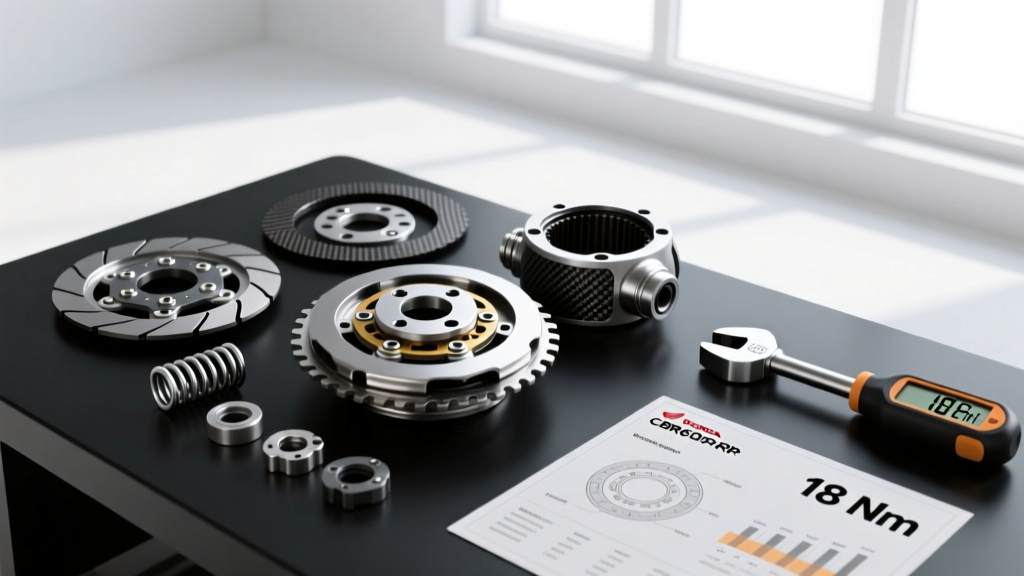
Mechanic's Note: The clutch spring bolts on the CBR600RR are small and easily stripped. Torque them precisely to 12 Nm (8.7 lb-ft). You will also need a universal clutch holding tool ($30) to prevent the transmission from binding while removing the center nut.
Total DIY Cost: ~$243 | Professional Shop Cost: ~$550 (Parts + 2.5 hrs Labor)
2. Yamaha MT-07 (Standard/Naked with Assist & Slipper)
Yamaha's CP2 engine features an Assist & Slipper (A&S) clutch. This design uses a ramp mechanism to reduce lever pull weight and prevent rear-wheel hop during aggressive downshifts. Because of the A&S mechanism, the clutch boss and pressure plate are more complex than a standard sportbike setup.
- Friction Plates: EBC SRC Series CK3508 (Approx. $105)
- Clutch Spring Kit: EBC Heavy Duty Springs (Approx. $25)
- Gasket & O-Ring Kit: Athena P400485900550 (Approx. $45)
Mechanic's Note: The clutch boss lock nut on the CP2 engine requires significant torque and must be secured. Torque the lock nut to 65 Nm (48 lb-ft) and apply a drop of Loctite 243 (blue) to the threads, as Yamaha uses a staked nut from the factory that loses its locking ability once removed.
Total DIY Cost: ~$235 | Professional Shop Cost: ~$580 (Parts + 2.8 hrs Labor)
3. Harley-Davidson Softail Milwaukee-Eight (Cruiser)
Cruisers subject their clutches to massive low-end torque and frequent stop-and-go lugging, which accelerates friction material wear. The Milwaukee-Eight 107/114 engines require a robust clutch pack. Many riders opt for aftermarket Kevlar setups to handle big-torque builds and heavy touring loads.
- Clutch Pack: Barnett Kevlar Extra Plate Kit 303-30-1004 (Approx. $285)
- Primary Chaincase Lubricant: Harley Formula+ or AMSOIL V-Twin Primary (2 Quarts, $40)
- Primary Cover Gasket: Cometic C3201 (Approx. $22)
Mechanic's Note: The Barnett Extra Plate kit adds an additional friction and steel plate to increase surface area without requiring stiffer springs, maintaining a smooth lever feel. The main clutch hub nut requires a heavy-duty impact wrench or a specialized primary locking tool to remove. Torque the hub nut to 75 ft-lbs (101 Nm).
Total DIY Cost: ~$347 | Professional Shop Cost: ~$820 (Parts + 3.5 hrs Labor)
2026 Component Cost Comparison Matrix
Choosing between OEM and aftermarket components is the biggest variable in your motorcycle clutch change cost. Below is a comparison of current market options.
| Component Type | OEM Equivalent | EBC Brakes/Clutches | Barnett Heavy-Duty | Best Application |
|---|---|---|---|---|
| Standard Friction Pack | $110 - $140 | $85 - $105 | N/A | Commuting, OEM Restoration |
| Kevlar/Carbon Pack | $180 - $250 | $130 - $160 (SRC) | $250 - $320 | Track Days, Heavy Touring |
| Clutch Springs | $35 - $50 | $20 - $30 | $45 - $65 | Fixing high-RPM slip |
| Complete Basket Assembly | $450 - $800 | $350 - $500 | $600 - $950 (Billet) | Severe basket notching |
Data sourced from 2026 aftermarket catalog pricing. For detailed fitment, consult the EBC Clutch Catalog or Barnett Clutches Tech Docs.
Hidden Costs and Edge Cases
A standard clutch replacement assumes your clutch basket and inner hub are in perfect condition. In reality, high-mileage motorcycles often present edge cases that inflate the final bill.
Clutch Basket Notching
Over time, the tangs of the friction and steel plates hammer into the aluminum fingers of the outer clutch basket and inner hub, creating deep notches. This causes the clutch to 'drag,' making it difficult to find neutral or causing the bike to creep forward with the lever pulled in. If filing the notches smooth with a flat file isn't sufficient, you must replace the basket. An OEM outer basket can cost between $250 and $500, adding significant parts cost and an extra hour of labor.
Hydraulic Clutch Bleeding
If your motorcycle utilizes a hydraulic clutch actuator (common on modern Ducatis, KTM LC8s, and Harley-Davidsons), opening the system or replacing the master cylinder requires a complete bleed. Shops typically add 0.5 hours of labor ($65–$85) for a proper vacuum bleed to ensure zero air remains in the banjo bolts.
Warped Steel Plates
Never reuse old steel plates if you are experiencing clutch slip. The friction material transfers immense heat to the steels, causing them to warp. A warped steel plate will ruin a brand-new set of friction plates in under 500 miles. Always budget for a complete OEM steel plate set.
Diagnostic Checklist Before You Pay
Before authorizing a $600+ repair bill, verify that your motorcycle actually needs a clutch replacement. Use this diagnostic framework:
- The RPM Test (Slipping): Put the bike in top gear at 3,000 RPM and roll on the throttle hard. If RPMs rise faster than vehicle speed, your friction plates are worn or your springs are fatigued. Verdict: Clutch change required.
- The Neutral Test (Dragging): With the bike idling in neutral, pull the clutch lever in and click into first gear. If the bike lurches forward violently or stalls, and the lever has proper free-play, your plates are warped or the basket is notched. Verdict: Clutch teardown and basket inspection required.
- The Cable Adjustment (False Alarm): If the lever feels tight to the handlebar and shifting is clunky, check your free-play at the lever perch. You should have 10-15mm of slack. A simple cable adjustment is free and takes two minutes.
Expert Tip: When performing a DIY motorcycle clutch change, always soak your new friction plates in the exact JASO MA2 engine oil you plan to run in the bike for at least 2 hours prior to installation. Installing dry plates will cause immediate glazing and premature failure upon first startup.
Final Verdict: DIY vs. Professional Service
The cost gap between a DIY motorcycle clutch change and professional service is substantial, often exceeding $400 in labor savings. If you possess a torque wrench, a clutch holding tool, and the patience to meticulously measure your stack height and spring lengths with digital calipers, the DIY route is highly rewarding. However, if your motorcycle requires specialized primary locking tools, hydraulic bleeding, or if you suspect inner hub damage requiring a press, handing the keys to a certified dealership or reputable independent shop is the safest investment for your drivetrain's longevity.