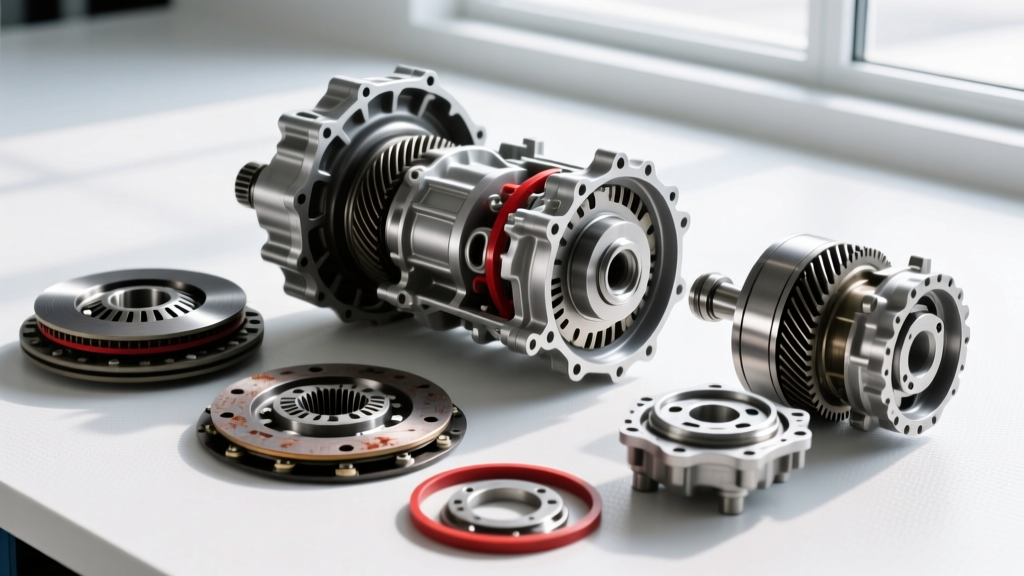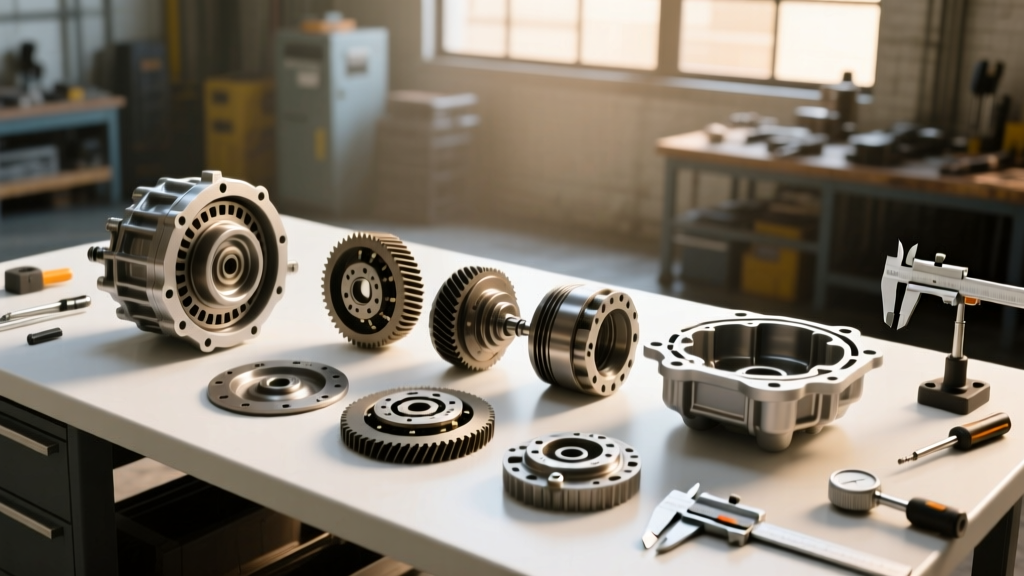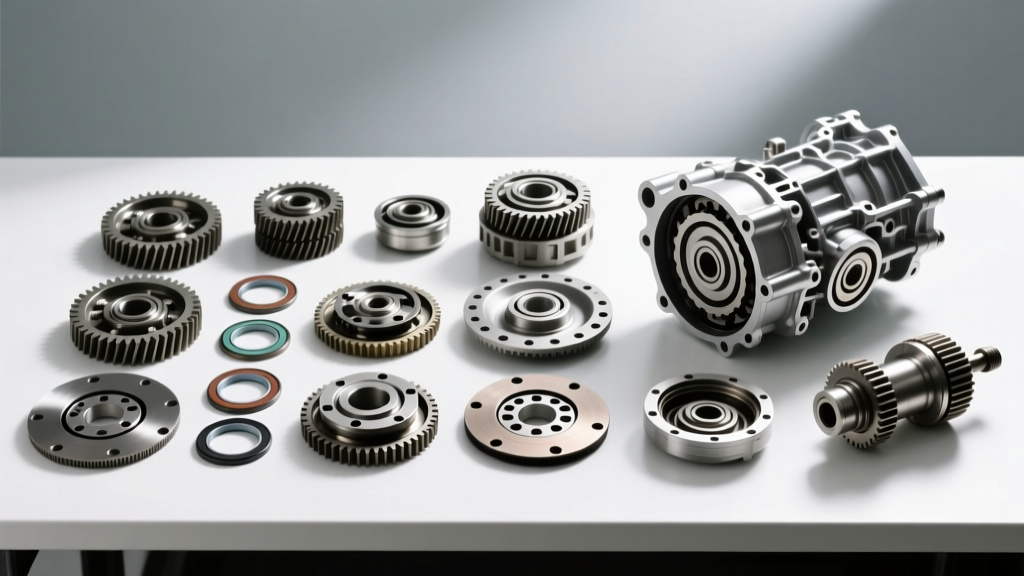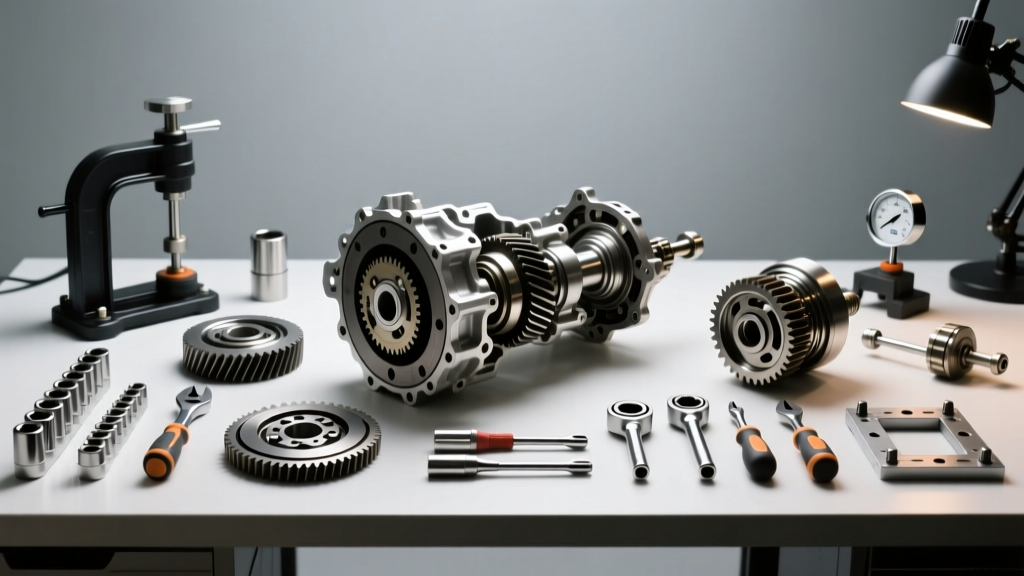
The Hidden Variable in Manual Transmission Rebuild Cost: Tooling
When automotive enthusiasts and independent mechanics calculate the projected manual transmission rebuild cost, the focus almost exclusively lands on the hard parts: the rebuild kit, synchro rings, bearings, and seals. Depending on the application—whether it is a classic Porsche G50, a high-performance Tremec T-56 Magnum, or a high-revving Honda K-series—the parts alone can range from $400 to $1,800. However, this parts-only estimation ignores the most critical factor separating a reliable gearbox from a catastrophic failure: the tooling required to assemble it.
A manual transmission is a precision instrument governed by tight tolerances, specific endplay measurements, and exact fastener torque values. Attempting a rebuild without the proper specialty tools does not just risk damaging the new components; it fundamentally skews the true manual transmission rebuild cost by guaranteeing a second teardown. In this technical deep-dive, we will break down the exact tooling required for a professional-grade manual transmission rebuild, analyze the associated costs, and explore how DIY tooling investments compare to professional shop amortization.
Precision Measurement: The Core of Gearbox Tolerances
Manual transmissions live and die by axial endplay and synchro clearances. Unlike automatic transmissions that rely on hydraulic pressure to manage clutch packs, manual gearboxes rely on the physical engagement of dog teeth and the friction of synchronizer rings. If mainshaft endplay is excessive, the gears will wobble, causing premature synchro wear and eventual gear pop-out under load.
To measure these tolerances, standard automotive feeler gauges are insufficient. You must invest in high-precision measurement instruments. According to Mitutoyo's engineering guidelines, a dial indicator with a magnetic base and a resolution of 0.0005 inches is mandatory for checking mainshaft and countershaft endplay.
- Tremec T-56 Magnum: Mainshaft endplay specification is strictly 0.004" to 0.008". This requires selecting the correct thickness thrust washer from a shim kit during assembly.
- Honda K-Series (FWD): Shift fork-to-sleeve clearance must not exceed 0.020" (0.50mm). Measuring this requires a specialized feeler gauge and a dial indicator to check synchro ring clearance (typically 0.030" to 0.050" when new).
- Porsche G50: Pinion depth and mainshaft bearing preload require specialized factory-style dial indicator fixtures (such as those replicated by Sir Tools) to ensure the ring and pinion mesh correctly without whining under deceleration.
Essential Measurement Tooling Cost Breakdown
| Tool Category | Recommended Brand / Spec | Estimated Cost | Primary Application |
|---|---|---|---|
| Dial Indicator w/ Mag Base | Mitutoyo 0.0005" Resolution | $145 - $180 | Mainshaft / Countershaft Endplay |
| Digital Caliper (6-inch) | Mitutoyo Absolute AOS | $120 - $150 | Synchro Ring Clearance & Gear Width |
| Inch-Pound Torque Wrench | Snap-on CDI 150 in-lb (Beam) | $110 - $160 | Detent Springs, Cover Plates |
| Feeler Gauge Set (Metric/SAE) | Snap-on / Mac Tools (Tapered) | $35 - $60 | Shift Fork Clearance |
The Press and Puller Arsenal
The most common mistake made by novices that drastically inflates their manual transmission rebuild cost is the use of hammers and brass drifts to install bearings and gears. Manual transmission shafts are hardened steel, but the bearing cages and needle rollers are highly susceptible to spalling and brinelling from impact shock. As highlighted by SKF's bearing mounting protocols, force must always be applied exclusively to the press-fitted ring (usually the inner race when pressing onto a shaft) using a hydraulic press.
A minimum 20-ton hydraulic shop press is non-negotiable for pressing mainshaft bearings, removing frozen pilot bearings, and seating countershaft assemblies. Furthermore, bearing split pullers (such as the OTC 4530 series or Schley Products blind hole puller kits) are required to remove tightly seated inner races without scoring the shaft journal.
Alignment Fixtures and Mainshaft Supports
When assembling a longitudinal manual transmission like the Tremec T-56 or the GM Muncie M22, the gear stack must be perfectly aligned before the main case is lowered over the assembly. If the shift forks are not perfectly aligned with the synchro sleeves, the case will bind. Forcing the case down with a rubber mallet will bend the shift forks, leading to immediate 2nd-to-3rd gear shift binding. Professional rebuilders use custom-machined mainshaft support fixtures that hold the gear stack perfectly vertical and square to the bench, allowing the aluminum case to slide on effortlessly under its own weight.
Consumables, Sealants, and Assembly Lubricants
The chemical tooling used during assembly is just as critical as the mechanical tools. Using the wrong sealant is a primary cause of post-rebuild fluid leaks, which leads to fluid starvation and total gearbox destruction.
- Japanese FWD Manuals (Honda, Toyota, Subaru): These transmissions typically do not use paper gaskets between the bell housing and the main case, or the case halves. They require an anaerobic sealant like ThreeBond 1217E or Permatex Anaerobic Gasket Maker. Standard silicone RTV will bead up and clog the narrow oil galleries, starving the 5th gear set which often sits at the furthest extreme of the lubrication splash zone.
- American V8 Manuals (Tremec, BorgWarner): These typically utilize formed silicone or paper gaskets. A high-tack gasket sealant like Permatex High Tack is required to hold the gasket in place during the awkward case-mating process.
- Assembly Lube: Synchro rings and dog teeth must be coated with a high-zinc assembly lubricant (such as Driven Racing Oil Assembly Lube) to prevent dry-start scuffing before the thick gear oil circulates.
Common Tooling Mistakes That Inflate Rebuild Costs
Failing to utilize the correct tooling introduces edge-case failures that are notoriously difficult to diagnose. Here are three technical pitfalls that turn a $600 rebuild kit into a $3,000 replacement nightmare:
- Ignoring Inch-Pound Torque Specs: Shift detent springs and interlock plungers are often secured with small fasteners requiring 80 to 120 inch-pounds of torque. Using a standard 1/2-inch drive click-type torque wrench (which bottoms out at 10 ft-lbs / 120 in-lbs and lacks accuracy at the low end) often results in under-torqued bolts that vibrate loose, dropping the detent plunger into the gear train and locking the transmission permanently.
- Heating Bearings Improperly: When pressing tapered roller bearings onto a mainshaft, the inner race often requires thermal expansion. Using an oxy-acetylene torch creates localized hot spots that destroy the heat treatment of the steel. Proper tooling requires an induction heater or a dedicated oil bath to evenly bring the bearing to 220°F (104°C) before installation.
- Reusing Stretch Bolts: Many modern manual transmissions (including the Ford MT-82 and various Getrag units) utilize Torque-to-Yield (TTY) bolts for the bellhousing and shift tower. Reusing these without a new fastener kit guarantees case warping and misalignment.
Shop Equipment vs. DIY: Calculating the True Break-Even Point
How does tooling factor into the final manual transmission rebuild cost? When a professional transmission shop quotes $1,800 to $2,500 for labor on a manual rebuild, you are not just paying for the technician's time. You are paying for the amortization of a $15,000+ shop tooling investment, which includes the hydraulic press, induction heaters, specialized puller sets, and precision measurement instruments.
For a DIY enthusiast tackling a single T-56 Magnum rebuild in their home garage, the initial tooling investment will likely range from $800 to $1,400 (assuming you already own a basic mechanic's tool set and a bench vise). While this makes the initial out-of-pocket cost higher than simply dropping the core off at a shop, the enthusiast retains the precision measurement tools, the press, and the pullers for future drivetrain projects. From a purely financial standpoint, if you plan to rebuild more than one manual transmission—or even perform differential carrier bearing setups and axle shaft bearing replacements—the DIY tooling investment yields a massive long-term ROI, effectively driving the labor portion of your future manual transmission rebuild cost down to zero.
Summary
Accurately budgeting for a manual transmission rebuild requires looking beyond the parts catalog. The precision required to set endplay, measure synchro clearances, and safely press bearings demands a specific arsenal of measurement and assembly tools. By investing in high-quality dial indicators, proper bearing pullers, and the correct anaerobic sealants, you ensure that your rebuilt manual gearbox will withstand the rigors of high-RPM shifts and heavy torque loads, ultimately protecting your drivetrain investment for thousands of miles to come.