The Financial Reality of Mastering the Stick Shift
When most enthusiasts ask how to learn to drive a manual transmission car, they focus on the physical mechanics: the friction zone, the H-pattern, and the timing of the clutch pedal. However, as automotive engineers and transmission specialists, we look at the process through a different lens: mechanical sympathy and financial liability. Learning to drive a manual is essentially a masterclass in wear-and-tear management. Every missed shift, every stalled engine, and every instance of "riding the clutch" translates directly into accelerated component degradation and, ultimately, a steep repair bill.
In 2026, with the cost of automotive labor averaging between $130 and $190 per hour at independent shops (and significantly more at dealerships), the financial stakes of poor manual transmission driving techniques are higher than ever. This comprehensive cost analysis breaks down the true price of learning, the hidden tuition of bad habits, and the advanced techniques that will save your wallet.
The Upfront Cost: Professional Instruction vs. DIY Practice
Before you even turn a wrench or burn a friction disc, you must acquire the skill. The method you choose dictates your initial financial outlay.
- Professional Driving Schools: Finding a school that still offers manual transmission instruction is increasingly rare. In 2026, specialized manual lessons typically cost between $85 and $150 per hour. Most students require 6 to 10 hours to achieve basic proficiency, bringing the upfront cost to $510 - $1,500.
- The "Friend or Family" Method: While technically free, this method carries a massive hidden risk. An impatient instructor often leads to abrupt clutch releases and aggressive gear changes, transferring the cost of the lesson directly to the vehicle's drivetrain. You are essentially trading lesson fees for premature clutch wear.
- Simulators and Theory: Investing $60 in a high-quality racing simulator setup (like a Logitech G29 or Thrustmaster T300RS with a proper 6-speed H-pattern shifter) can build muscle memory for the H-pattern and heel-toe downshifting without risking a single synchro ring in a real vehicle.
The "Hidden Tuition" of Poor Driving Techniques
When learning manual transmission driving techniques, beginners inevitably make mistakes. Understanding the financial impact of these mistakes is crucial for developing proper mechanical sympathy.
1. Riding the Clutch and Throwout Bearing Failure
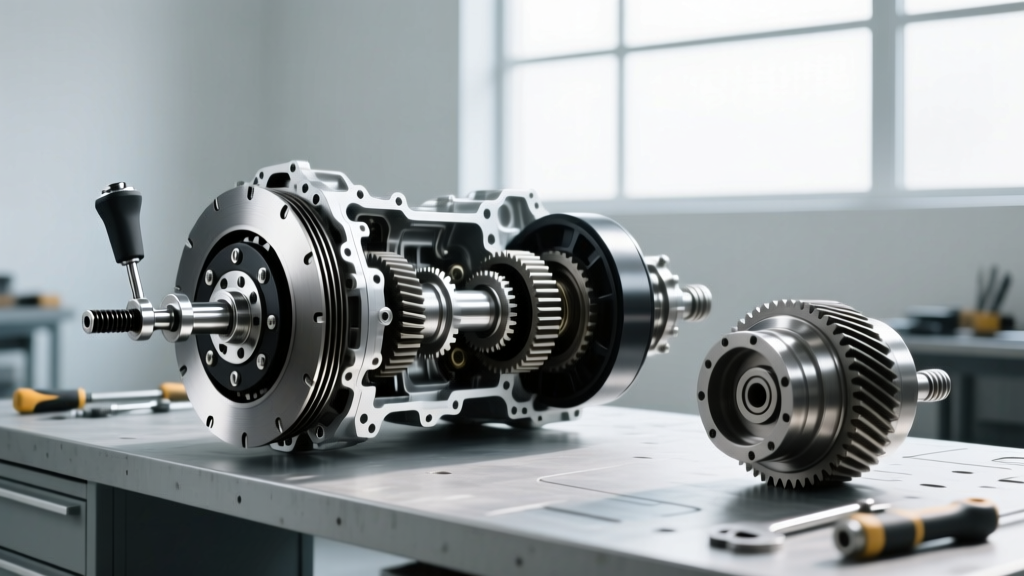
Resting your foot on the clutch pedal while driving or holding the car on an incline using the clutch pedal (instead of the brake or handbrake) applies constant, partial pressure to the throwout bearing (release bearing). This bearing is designed to spin only during shifts. Constant friction generates immense heat, leading to premature bearing seizure.
The Cost: The bearing itself (often an SKF or NTN OEM replacement) costs a mere $25 to $60. However, because the transmission must be completely removed from the vehicle to access it, the labor cost dominates. Expect to pay $800 to $1,400 in total for a throwout bearing replacement on a standard front-wheel-drive compact car. It is highly recommended to install a full clutch kit (like a LuK RepSet or Exedy OEM clutch) while the transmission is out, pushing the total bill closer to $1,500.
2. Grinding Gears and Synchro Degradation
Forcing a gear change without fully depressing the clutch, or attempting to engage a gear while the input and output shafts are spinning at mismatched speeds, results in the dreaded "gear grind." This sound is the brass or carbon synchro ring violently scraping against the steel gear cone.
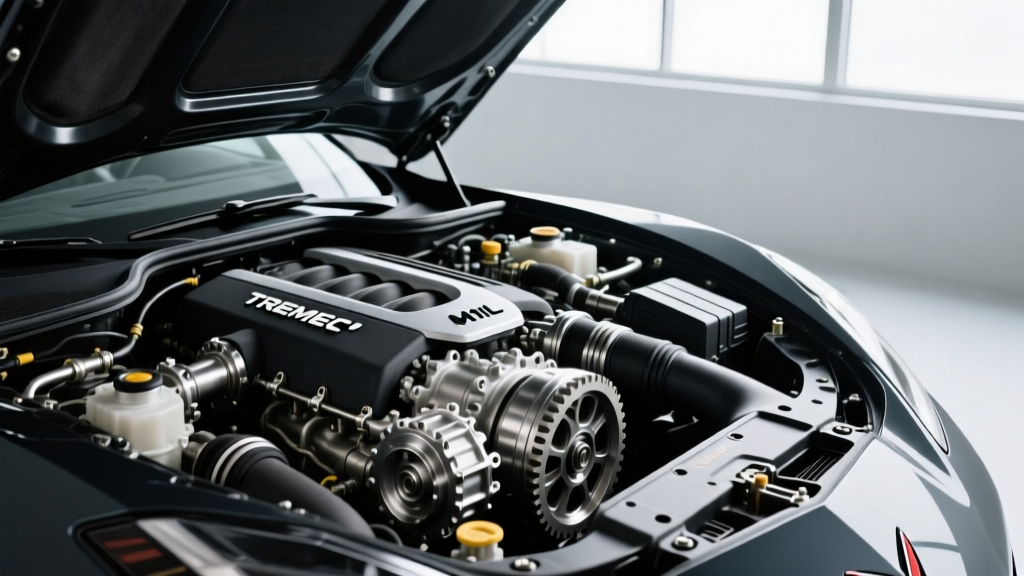
The Cost: Replacing a single synchro ring requires a complete transmission teardown and rebuild. A synchro ring kit for a common manual transmission (like the Tremec T5 or a Honda B-series gearbox) costs $150 to $300. However, specialized manual transmission rebuild labor ranges from $1,200 to $2,500. If metal shavings from the grind contaminate the gear oil and score the main shaft bearings, you are looking at a $3,500+ replacement with a remanufactured unit.
3. Stalling and Starter Motor Abuse
Stalling is a rite of passage. However, repeatedly stalling and immediately cranking the engine without allowing the starter motor to cool, or "grinding" the starter by turning the key while the engine is already running, destroys the starter's Bendix drive and flywheel ring gear.
The Cost: A Denso or Bosch remanufactured starter motor costs $120 to $250. If the flywheel ring gear teeth are stripped, the flywheel must be replaced or resurfaced. For vehicles with Dual-Mass Flywheels (DMF), such as many Volkswagen TDI or modern Ford diesel trucks, a replacement DMF and clutch kit can easily exceed $1,200 in parts alone, plus $600 in labor.
Advanced Techniques That Protect Your Wallet
Mastering advanced manual transmission driving techniques is not just about looking cool or driving faster; it is a direct financial investment in your vehicle's longevity.
"Mechanical sympathy is the art of operating a machine in a way that minimizes stress on its components. In a manual car, your right foot and left foot must communicate perfectly to save your drivetrain." — Autogear Nexus Engineering Team
Rev-Matching and Synchro Preservation
When you downshift, the transmission's output shaft is spinning faster than the input shaft. If you simply release the clutch, the synchro must do all the work to speed up the engine and input shaft. This generates massive heat and wear on the brass synchro rings. By "blipping" the throttle (rev-matching) to raise the engine RPM before releasing the clutch, you bypass the synchro's workload entirely.
Financial Impact: Proper rev-matching can easily double the lifespan of your transmission's synchros, delaying a $2,000 rebuild by tens of thousands of miles.
Proper Fluid Selection: The GL-4 vs. GL-5 Trap
Many beginners (and even some misinformed mechanics) attempt to save money by filling a manual transmission with cheap, readily available GL-5 gear oil. This is a catastrophic financial mistake. GL-5 oils contain high levels of sulfur-based extreme pressure (EP) additives. These sulfur compounds chemically react with and corrode the yellow metals (brass/bronze) used in manual transmission synchro rings.
The Fix: Always use the manufacturer-specified fluid. For many older and performance manuals, this means a dedicated GL-4 fluid or specialized synchromesh fluid.
- Red Line MT-90 (75W-90 GL-4): ~$22 per quart. Excellent for Honda, Nissan, and older Toyota manual gearboxes.
- GM/Pennzoil Synchromesh Fluid: ~$12 per quart. The gold standard for GM Tremec and Getrag transmissions.
- Mopar Manual Transmission Lubricant: ~$28 per quart. Required for many Chrysler/Dodge Tremec T56 applications.
2026 Cost Breakdown: Mistakes vs. Repair Bills
The following table illustrates the real-world financial consequences of improper manual transmission driving techniques, based on 2026 national average repair estimates for a standard compact sports sedan (e.g., Honda Civic Si, Subaru WRX, or Mazda Miata).
| Driving Mistake | Component Damaged | Avg. Parts Cost (2026) | Avg. Labor Cost | Total Financial Impact |
|---|---|---|---|---|
| Riding the Clutch | Throwout Bearing & Friction Disc | $250 (LuK RepSet) | $750 | $1,000 |
| Forced / Grinding Shifts | Brass Synchro Rings | $200 (Synchro Kit) | $1,600 | $1,800 |
| Using GL-5 Gear Oil | Corroded Synchros & Shift Forks | $450 (Rebuild Kit) | $1,800 | $2,250 |
| Aggressive Clutch Drops | Engine/Trans Mounts & Half-shafts | $350 (OEM Mounts) | $300 | $650 |
| Resting Hand on Shifter | Shift Fork Pads & Detent Springs | $80 (Fork Pads) | $1,400 | $1,480 |
Critical Assembly Torque Specifications
If you are learning to drive manual by wrenching on your own practice car, adhering to exact torque specifications is vital to prevent catastrophic failure. Here are baseline specs for two of the most common practice vehicles:
- Honda K-Series (Civic Si / Acura TSX): Flywheel to crankshaft bolts must be torqued to 76 lb-ft (103 Nm), followed by an additional 90-degree turn. Pressure plate to flywheel bolts: 18 lb-ft (25 Nm) in a crisscross pattern.
- Mazda Miata (NA/NB 1.8L): Flywheel bolts: 54 lb-ft (73 Nm). Pressure plate bolts: 14 lb-ft (19 Nm). Always use a new pilot bearing and align the clutch disc with an alignment tool before tightening the pressure plate to avoid bending the input shaft splines.
Sourcing the Right Practice Vehicle
When figuring out how to learn to drive a manual transmission car, the vehicle you choose to learn on dictates your financial risk. Do not learn on a high-horsepower rear-wheel-drive sports car, and avoid modern heavy-duty diesel trucks with complex Dual-Mass Flywheels and hydraulic clutch systems that are expensive to bleed and repair.
The most cost-effective practice vehicles are lightweight, front-wheel-drive or low-power rear-wheel-drive cars from the late 1990s to mid-2000s. A 1998-2005 Honda Civic (D16 or B16 engine) or a 1990-1997 Mazda Miata (NA) are ideal. Their clutch kits are cheap (under $150 for parts), their gearboxes are forgiving, and their low torque output makes it difficult to snap half-shafts or destroy engine mounts during learning-induced clutch drops.
Final Thoughts on the ROI of Manual Proficiency
Learning to drive a manual transmission is an investment. While the initial phase involves the risk of accelerated wear, mastering techniques like rev-matching, proper fluid selection, and precise clutch modulation ultimately results in a drivetrain that can easily surpass 200,000 miles with only routine fluid changes and a single clutch replacement. For a deeper dive into the mechanical operation of these gearboxes, we highly recommend reviewing the engineering teardowns at Car and Driver's manual transmission guides and checking current OEM part pricing databases like RockAuto to budget for your specific vehicle's maintenance needs. Treat the machine with respect, and it will respect your bank account.