The Architecture of Lucid’s Rear-Wheel Drive Operation
When discussing modern electric vehicle platforms, the traditional rear-wheel drive (RWD) layout has been entirely reimagined. In the context of the Lucid Air—particularly the Pure RWD trim and the rear-biased dual-motor configurations—the rear axle is not merely a secondary power source; it is the primary workhorse of the drivetrain. Understanding the nuances of this system is critical before undertaking any lucid motor and drivetrain repair, as the engineering here diverges wildly from legacy internal combustion RWD setups or even early-generation EV drive units.
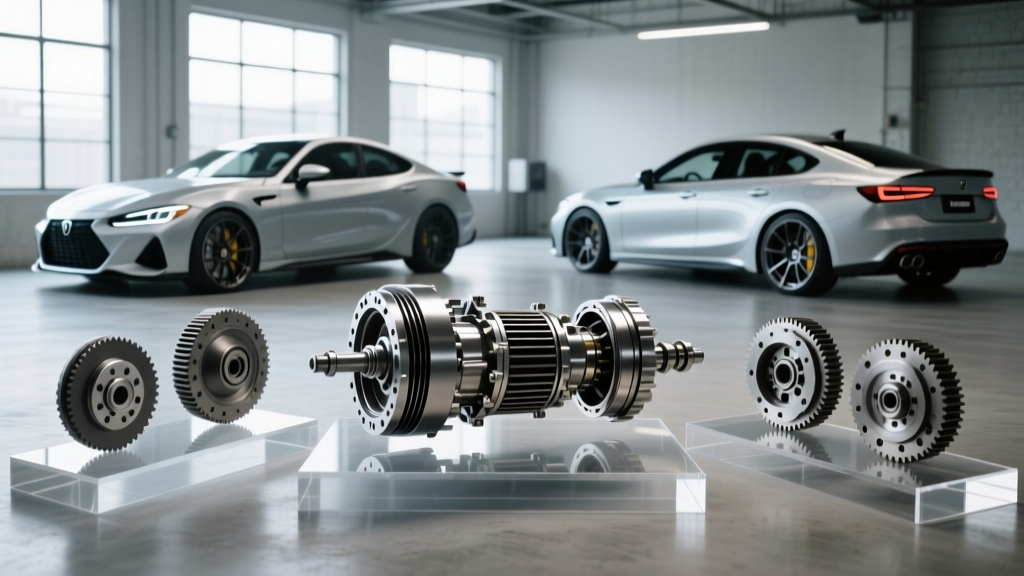
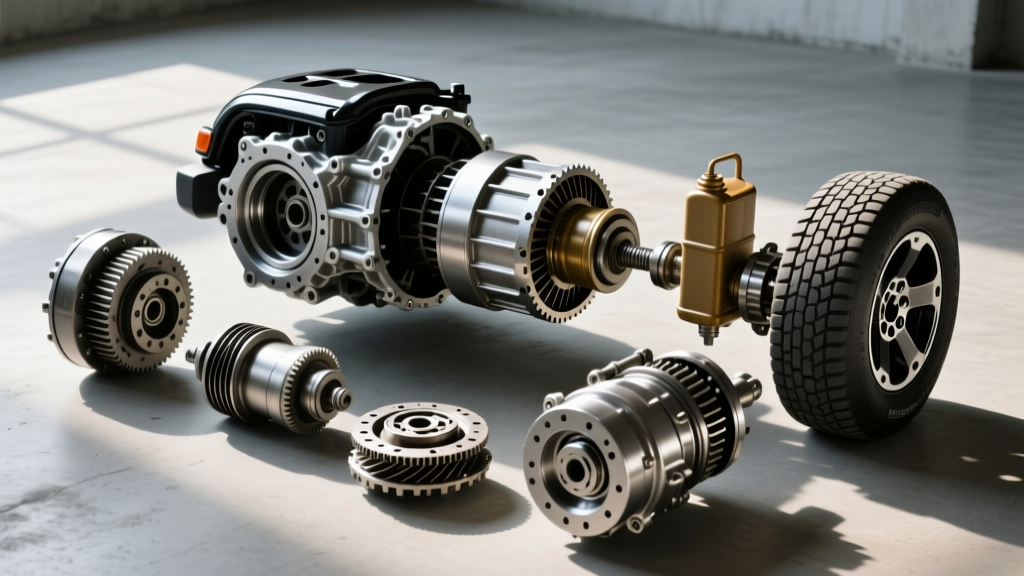
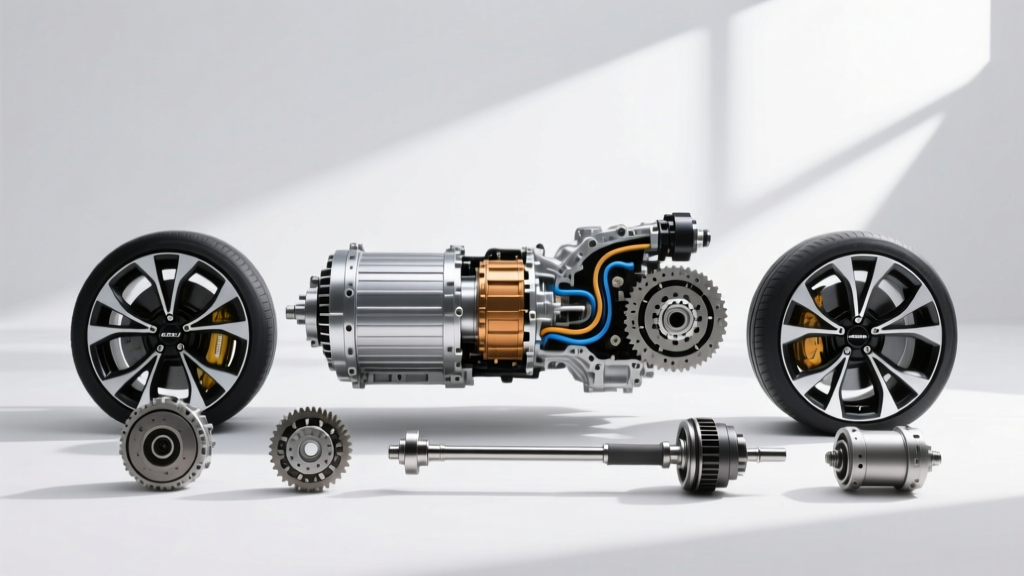
Unlike a traditional RWD vehicle that relies on a longitudinal engine, a transmission tunnel, a multi-piece driveshaft, and a bolt-on rear differential, the Lucid Air utilizes a highly integrated Rear Drive Unit (RDU). This single cassette houses the electric traction motor, the power inverter (often referred to as the Wunderbox), and the reduction gearset with an integrated differential. The entire assembly weighs remarkably little compared to its output, utilizing miniaturization and high-RPM operation to deliver upwards of 620 horsepower from a single rear motor in specific configurations.
"The miniaturization of the Lucid RDU allows for a massive frunk and optimized cabin space, but it concentrates immense thermal and mechanical loads into a single, densely packed cassette. This makes modular repair nearly impossible without specialized EV cleanroom environments."
Teardown: Inside the Lucid Rear Drive Unit (RDU)
To accurately assess repair costs, one must understand the internal components that dictate rear-wheel drive system operation in this platform. The Lucid RDU operates at staggering rotational speeds, often exceeding 19,000 RPM at the motor shaft. This necessitates extreme precision in manufacturing and material science.
- Hairpin Stator Windings: Instead of traditional round wire, the stator uses rectangular copper hairpins. This increases the copper fill factor, improving thermal conductivity and power density, but makes rewinding a burned stator economically unviable.
- Integrated Inverter (Wunderbox): The silicon carbide (SiC) inverter is mounted directly to the motor housing, sharing the liquid cooling jacket. This eliminates heavy high-voltage cables between the inverter and motor but means a coolant leak can destroy the high-voltage electronics.
- Helical Reduction Gearset: To handle the extreme torque and RPM while maintaining NVH (Noise, Vibration, and Harshness) standards, the RDU uses precision-cut helical gears rather than a simple planetary setup, requiring specialized low-viscosity lubricants.
- Resolver Sensors: These electromagnetic sensors track the exact position of the rotor thousands of times per second to synchronize the inverter's AC wave output.
Lucid Motor and Drivetrain Repair: 2026 Cost Matrix
Because the RDU is a sealed, highly integrated unit, independent repair shops often cannot perform component-level teardowns (such as replacing a single bearing or a faulty resolver) without risking high-voltage contamination or compromising the liquid cooling jacket's integrity. Consequently, most out-of-warranty lucid motor and drivetrain repair scenarios default to complete assembly replacement or specialized sub-assembly swapping. Below is the 2026 cost breakdown for rear drivetrain components and services.
| Component / Service | Part Description | Estimated Part Cost (2026) | Labor Hours | Total Estimated Cost |
|---|---|---|---|---|
| Complete RDU Assembly | Motor, Inverter, Gearset, Diff | $14,500 - $18,200 | 8.5 - 11.0 | $16,200 - $20,600 |
| Wunderbox Inverter Module | SiC Power Electronics (if separable) | $4,200 - $6,500 | 4.0 - 6.0 | $5,000 - $7,800 |
| Rear Half-Shaft (CV Axle) | High-torque EV rated CV assembly | $850 - $1,250 | 1.5 - 2.0 | $1,150 - $1,690 |
| Resolver Sensor Replacement | Rotor position sensor (requires teardown) | $350 - $600 | 10.0 - 14.0 | $2,350 - $3,680 |
| Diagnostic & HV Isolation Test | Megohmmeter testing, CAN bus logging | N/A | 2.0 - 3.0 | $400 - $660 |
Labor and Diagnostic Realities
Labor rates for certified high-voltage EV technicians in 2026 average between $180 and $220 per hour. Diagnosing a rear-wheel drive operation fault requires more than a standard OBD2 scanner. Technicians must utilize OEM-level software to read high-voltage isolation faults (HVIL), monitor the thermal degradation curves of the hairpin stator, and verify the PWM (Pulse Width Modulation) signals sent to the gate drivers. A common diagnostic trouble code (DTC) related to the RDU involves isolation faults, where the system detects a micro-leak in the coolant jacket allowing conductive fluid to bridge the high-voltage bus to the chassis ground.
Preventative Maintenance: Fluids and Torque Specifications
While EVs eliminate oil changes and spark plugs, the rear drive unit's reduction gearset and differential still require meticulous fluid maintenance to prevent catastrophic bearing and gear wear at 19,000 RPM. The Lucid RDU does not use traditional 75W-90 gear oil. Using the wrong fluid will lead to immediate dielectric breakdown (if the fluid bathes any internal sensors) or inadequate boundary lubrication at extreme RPMs.
Fluid Specifications and Service Intervals
The RDU requires a specialized, low-viscosity, low-conductivity synthetic EV thermal management fluid (often equivalent to Castrol ON or specific OEM Dexron ULV derivatives adapted for EV reducers). The total fill capacity is approximately 3.2 to 3.8 Liters, depending on the exact model year and housing revision.
- Drain Plug Torque: M14 magnetic drain plug, torqued to 32 Nm (24 lb-ft).
- Fill Plug Torque: M14 fill plug, torqued to 35 Nm (26 lb-ft).
- Service Interval: While some manufacturers claim 'lifetime' fluid, severe duty (track use, frequent hard launches) dictates a drain and fill every 60,000 miles to remove metallic shearing from the helical gears.
Subframe and Drivetrain Mounting Specs
When dropping the rear subframe to facilitate an RDU replacement, the structural mounting points must be torqued to exact specifications to maintain the Air's renowned ride quality and NVH isolation. The primary subframe-to-chassis M16 bolts require a torque of 140 Nm followed by an additional 120 degrees of rotation. The rear axle retaining nuts (M27) must be torqued to 280 Nm (206 lb-ft) and are strictly one-time-use stretch nuts.
Comparative Analysis: Lucid RDU vs. Legacy EV Drive Units
How does the cost of repairing the Lucid Air's rear-wheel drive system compare to its closest market rival, the Tesla Model S Plaid or the earlier Large Drive Unit (LDU) platforms? The Tesla LDU, while powerful, is physically larger and historically suffered from well-documented coolant manifold leaks that destroyed the inverter. Lucid solved this by integrating the cooling channels directly into the cast aluminum housing and utilizing advanced potting compounds for the inverter electronics. However, this integration means that while a Tesla LDU might allow for some independent inverter servicing, a failure in the Lucid Wunderbox often mandates a much more expensive, holistic cassette replacement. According to engineering analyses by Motor Trend, the power density of the Lucid unit is class-leading, but that density comes with a premium on out-of-warranty repairability.
Navigating Warranty and Out-of-Pocket Expenses
The silver lining to these steep repair costs is the robust factory coverage. Lucid's Battery and Drive Unit Limited Warranty covers the RDU for 8 years or 100,000 miles (whichever comes first). As detailed in the official Lucid Motors warranty documentation, this covers any internal failure of the motor, inverter, or differential that results in a loss of propulsion or a high-voltage safety fault.
However, owners must be aware of the exclusions. Damage to the RDU caused by external factors—such as road debris puncturing the lower casing, improper towing that forces the motor to act as an unregulated generator and fry the inverter, or the use of non-approved dielectric fluids during third-party servicing—will void the drivetrain warranty. Furthermore, peripheral components like the outer CV joints, half-shaft boots, and external coolant pumps are classified as wear-and-tear items and are only covered under the standard 4-year/50,000-mile bumper-to-bumper warranty.
Final Verdict on RWD System Ownership Costs
The rear-wheel drive system operation in the Lucid Air represents the absolute pinnacle of modern EV powertrain engineering. It delivers unmatched efficiency and performance by eliminating the parasitic losses of traditional mechanical linkages. However, this extreme integration means that when a failure occurs outside the 8-year warranty window, the lucid motor and drivetrain repair costs will be substantial. Prospective out-of-warranty buyers and independent EV repair shops must invest in high-voltage safety gear, OEM diagnostic licenses, and specialized EV fluid inventories to safely and effectively service these remarkable rear drive units.
For more technical deep-dives on EV drivetrain layouts, thermal management systems, and high-voltage safety protocols, consult the NHTSA Electric Vehicles safety guidelines and always adhere to OEM-specific service manuals before attempting any high-voltage system diagnostics.