The Intersection of Drivetrain Repair and Fluid Chemistry
When a rear axle begins to chatter, whine, or bind during low-speed turns, owners immediately begin researching limited slip differential repair costs. However, a significant percentage of these drivetrain issues—and their subsequent multi-hundred-dollar repair bills—stem directly from ignoring differential gear oil specifications. As of 2026, with synthetic lubricant prices fluctuating and specialized drivetrain labor rates averaging $145 to $195 per hour, understanding the financial intersection of fluid chemistry and mechanical repair is critical. Choosing the wrong API specification or skipping a $15 bottle of friction modifier can easily transform a routine $120 fluid service into a $1,400 axle teardown.
The Baseline Cost of Limited Slip Differential Repair
Before analyzing fluid costs, it is essential to establish the baseline pricing for mechanical limited slip differential (LSD) repairs. If incorrect gear oil specifications have caused internal damage, here is what you can expect to pay at a dedicated drivetrain shop:
- Clutch Pack Replacement (Eaton Posi-Trac / Auburn Pro-Series): Parts range from $150 to $340. Labor requires pulling the carrier, adding 3 to 5 hours ($435 to $975). Total: $585 to $1,315.
- Spider and Side Gear Replacement: If the clutches were neglected and the internal spline gears rounded off, a new internal gear kit costs $90 to $180.
- Ring and Pinion / Bearing Overhaul: If lubrication starvation caused severe hypoid gear wear or bearing failure, a full setup with Timken bearings and a new ring and pinion will cost between $1,100 and $1,800 in parts and precision setup labor.
Differential Gear Oil Specifications: Synthetic vs. Conventional Pricing
For any hypoid gearset, an API GL-5 specification is non-negotiable. GL-5 fluids contain high levels of sulfur-phosphorus Extreme Pressure (EP) additives designed to handle the extreme sliding friction of hypoid teeth. According to the American Petroleum Institute (API), using a GL-4 fluid in a modern axle will result in rapid gear wear due to insufficient EP protection.
Below is a 2026 cost breakdown of differential gear oil specifications based on a standard 2.5-quart rear axle capacity:
| Fluid Type & Spec | Avg Price / Quart | Capacity Cost (2.5 Qt) | Recommended Application |
|---|---|---|---|
| Conventional 80W-90 GL-5 | $9 - $13 | $22.50 - $32.50 | Standard open diffs, budget fleet vehicles |
| Synthetic 75W-90 GL-5 | $19 - $26 | $47.50 - $65.00 | Daily driven LSDs, cold climates, standard towing |
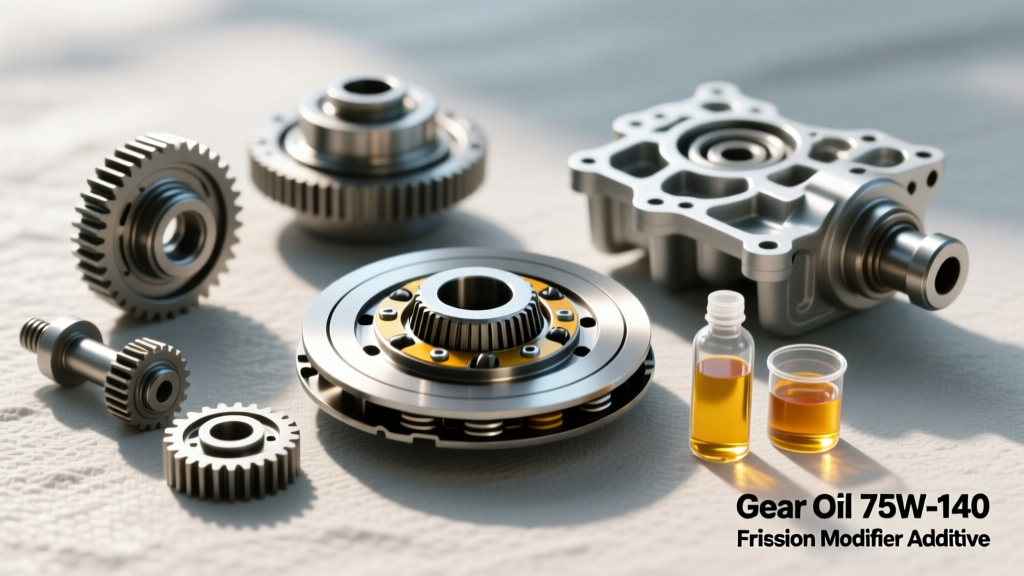
| Synthetic 75W-140 GL-5 | $25 - $34 | $62.50 - $85.00 | Heavy towing, off-road crawling, high-heat racing |
While synthetic fluids cost roughly 150% more upfront, their resistance to thermal breakdown prevents the varnishing that destroys LSD clutch packs, easily paying for themselves by extending service intervals to 50,000 miles or more.
The Hidden Variable: Friction Modifier Costs
The most common cause of LSD chatter is not mechanical failure, but the omission of a friction modifier. Clutch-type limited slip differentials require a specific coefficient of friction to allow the clutches to slip smoothly during cornering. Without it, the clutches grab and release violently, causing the infamous 'figure-8 chatter'.
OEM friction modifiers are highly specific and relatively inexpensive:
- Ford Motorcraft XL-3 (Part # XL-3): ~$14.00 per 4oz bottle. Required for all Ford Traction-Lok axles.
- GM ACDelco Limited Slip Axle Lubricant Additive (Part # 88900338): ~$16.50 per 4oz bottle.
- Mopar Limited Slip Additive (Part # 4318060AD): ~$18.00 per 4oz bottle.
Skipping this $15 bottle to save money on a fluid change is a false economy. If the clutches glaze over from chatter, no amount of fluid flushing will save them, forcing a complete carrier teardown.
Diagnosing Fluid-Related Chatter vs. Mechanical Failure
Before authorizing a limited slip differential repair, perform a diagnostic test. Drive the vehicle to an empty parking lot and perform tight, low-speed figure-8 maneuvers.
If you feel a rhythmic binding or hear a clunking chatter from the rear axle, the clutches are grabbing. If the fluid is old or lacks modifier, a shop can perform a drain, refill with high-quality synthetic GL-5 (like Red Line 75W90), and add 2 to 4 ounces of the correct OEM friction modifier. After driving for 50 miles to allow the new chemistry to penetrate the clutch pores, the chatter often disappears. Total cost: ~$85. If the chatter persists after two fluid changes, the clutch packs are mechanically glazed or worn, necessitating the $800+ mechanical repair outlined earlier.
Axle Torque Specs and Fluid Capacities for Popular Platforms
Whether you are performing the service yourself to save on labor or verifying your mechanic's work, adhering to exact torque specifications prevents cover leaks and stripped threads. Over-torquing aluminum differential covers is a frequent and costly mistake.
Ford Super 8.8 (Late Model F-150 / Mustang)
- Capacity: 2.5 to 2.8 quarts (depending on cover depth)
- Spec: 75W-85 or 75W-140 Synthetic GL-5
- Cover Bolt Torque: 28 - 38 lb-ft (Use caution on aluminum covers)
- Fill Plug Torque: 22 - 30 lb-ft
Dana 44 (Jeep Wrangler / Light Trucks)
- Capacity: 2.0 to 2.5 quarts
- Spec: 75W-90 or 80W-90 GL-5
- Cover Bolt Torque: 30 - 40 lb-ft
- Fill Plug Torque: 25 - 35 lb-ft
GM 9.5-Inch 14-Bolt (Heavy Duty Trucks / Vans)
- Capacity: 3.5 to 4.0 quarts
- Spec: 75W-90 Synthetic GL-5 (Eaton Gov-Loc requires NO friction modifier)
- Cover Bolt Torque: 25 - 35 lb-ft
Conclusion: Protecting Your Drivetrain Investment
The cost of a limited slip differential repair is heavily influenced by proactive maintenance and strict adherence to gear oil specifications. By investing $60 to $90 every 30,000 to 50,000 miles in premium API GL-5 synthetic fluids and the exact OEM friction modifier, you can effectively eliminate the risk of a $1,500 clutch and gear failure. Always consult your specific axle manufacturer's service data, such as the Dana Spicer technical library, to ensure your fluid chemistry matches your differential's mechanical design.