The Critical Intersection of LSD Operation and Fluid Integrity
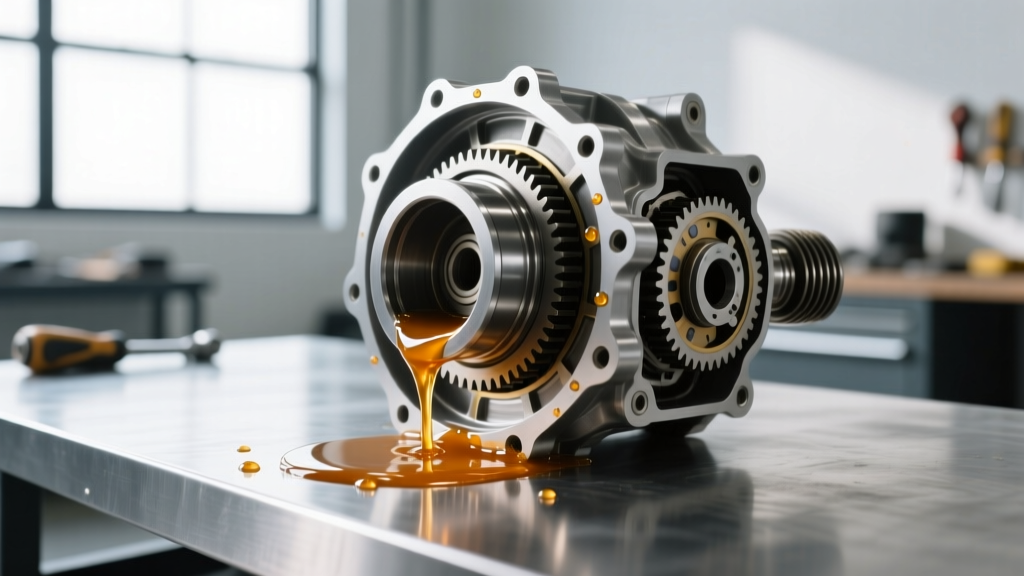
In the realm of drivetrain engineering, the limited slip differential (LSD) represents a masterclass in mechanical torque biasing. Unlike an open differential that sends power to the path of least resistance, an LSD utilizes internal friction mechanisms—typically clutch packs or helical gear sets—to distribute torque to the wheel with the most traction. However, this sophisticated mechanical ballet is entirely dependent on one vital element: proper lubrication. When a vehicle owner discovers leaking rear differential fluid, it is not merely an environmental nuisance or a driveway stain; it is an immediate, existential threat to the internal architecture of the limited slip mechanism.
As we navigate the automotive landscape in 2026, the tolerances inside modern axle housings have become increasingly precise. The days of simply topping off a leaking differential with generic gear oil are over. This technical deep-dive explores the internal operation of clutch-type LSDs, the catastrophic failure modes induced by fluid starvation, and the exact diagnostic and repair protocols required to save the unit from a complete rebuild.
Inside the Clutch-Pack LSD: Eaton Posi and Auburn Designs
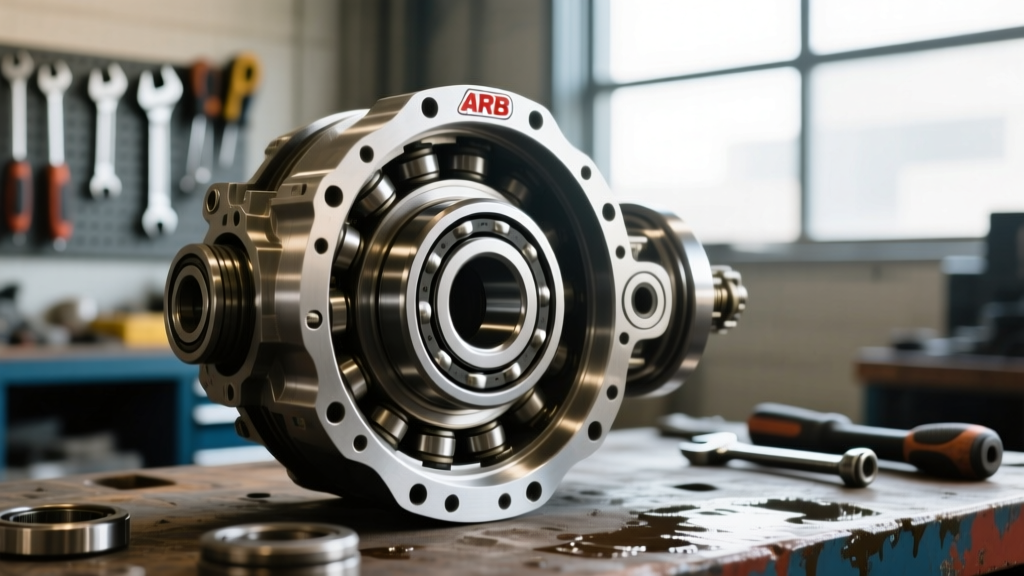
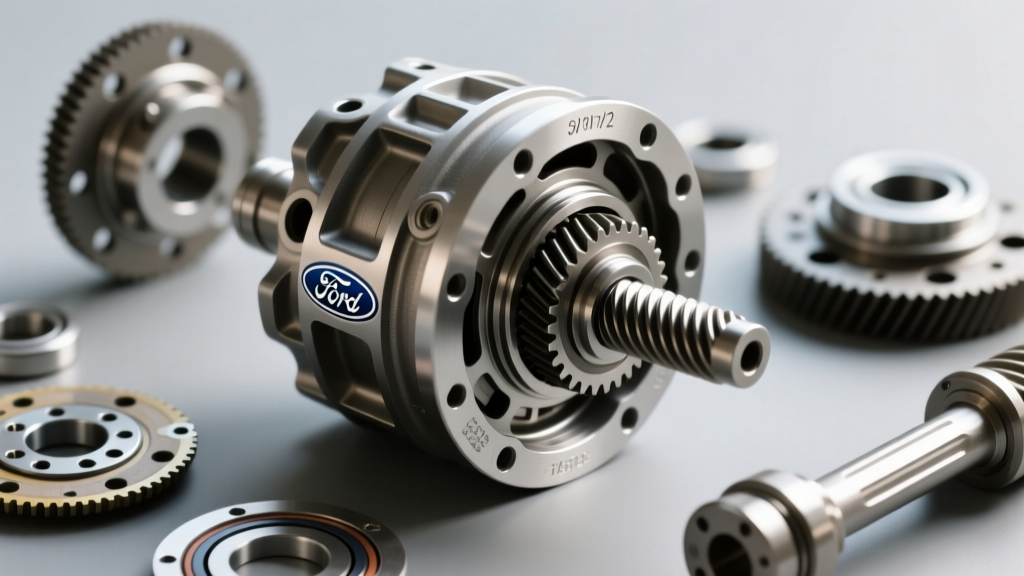
To understand why leaking rear differential fluid is so devastating, we must first examine the internal anatomy of a clutch-type LSD, such as the iconic Eaton Positraction or the Auburn Gear cone-style units. These differentials rely on a series of alternating friction discs and steel separator plates. The friction discs are splined to the side gears, while the steel plates are splined to the differential case.
When torque is applied, the spider gears push the side gears outward against the clutch packs. This axial thrust engages the clutches, locking the side gears to the case and forcing both axles to turn at the same speed. According to engineering data from Eaton Automotive Differentials, the coefficient of friction between these clutch materials must be meticulously controlled. This is where the differential fluid steps in. The gear oil must provide extreme pressure (EP) protection for the hypoid ring and pinion gears while simultaneously maintaining a precise friction boundary for the clutch packs. If the fluid level drops due to a leak, the clutch packs operate dry, leading to instantaneous glazing, thermal runaway, and permanent lock-up.
The Splash Lubrication Paradigm and Fluid Starvation
Rear axles do not utilize pressurized oil pumps; they rely entirely on splash lubrication. The ring gear acts as a centrifugal slinger, picking up fluid from the bottom of the housing and throwing it against the differential case, bearings, and pinion gear. The fluid then drips down through the cross-pin and spider gears, eventually penetrating the narrow clearances of the LSD clutch packs.
When leaking rear differential fluid drops the level by even one inch below the ring gear's centerline, the splash cycle is interrupted. The hypoid gears may still receive marginal lubrication, but the internal clutch packs are entirely starved. The resulting metal-on-metal contact generates localized temperatures exceeding 400°F (204°C). This heat anneals the steel separator plates, causing them to warp, and melts the resin binders in the carbon-fiber or Kevlar friction discs. The driver will first notice this as severe 'chatter' or shuddering during low-speed cornering, followed by a complete loss of limited-slip functionality as the clutches either glaze over (acting like an open diff) or weld together (acting like a locked spool).
Diagnostic Matrix: Locating the Leak Source
Identifying the exact origin of the leak is the first step in preserving the LSD. Axle housings have three primary failure points for fluid egress. The table below outlines the diagnostic indicators, common part numbers, and 2026 average repair costs for independent drivetrain specialists.
| Leak Location | Diagnostic Indicators | Common Seal Part Numbers | Avg. Repair Cost (2026) |
|---|---|---|---|
| Pinion Seal | Fluid slung forward onto the driveshaft and exhaust; whining noise on deceleration. | National 710998 (Ford 8.8), SKF 17944 (Dana 44) | $280 - $450 |
| Axle Shaft Seal | Fluid pooling inside the brake drum or rotor; contamination of brake pads. | Timken 8660S (GM 10-bolt), National 710999 | $180 - $320 per side |
| Differential Cover | Wetness around the perimeter of the housing cover; dripping directly downward. | Fel-Pro RDS55029, Lube Locker gaskets | $140 - $220 |
Precision Repair and Torque Specifications
Addressing leaking rear differential fluid requires strict adherence to torque specifications and sealing methodologies. The era of slapping a cork gasket and overtightening the bolts is a primary cause of warped differential covers and recurring leaks. Modern axle housings demand precise clamping forces to maintain the structural rigidity required for proper bearing preload and gear mesh.
Cover Gasket Replacement Protocol
When servicing the differential cover to address a leak or perform a fluid exchange, the mating surfaces must be scraped completely clean of old RTV or gasket material. Using a dedicated gasket scraper or a brass wire wheel prevents gouging the softer aluminum or cast-iron housing. If using RTV silicone (such as Permatex Ultra Black), apply a continuous 3/16-inch bead and allow it to skin over for 10 minutes before mating. However, reusable elastomeric gaskets like the Lube Locker series are highly recommended in 2026 for their superior sealing properties and ease of future service.
- Ford 8.8-inch Cover Bolts: 21 - 28 lb-ft (28 - 38 Nm)
- GM 8.5-inch 10-Bolt Cover Bolts: 25 lb-ft (34 Nm)
- Dana 44 Cover Bolts: 30 - 35 lb-ft (40 - 47 Nm)
Expert Note: Always tighten cover bolts in a crisscross, star pattern to ensure even clamping pressure and prevent the cover from 'walking' off the housing.
Fluid Chemistry and the Friction Modifier Imperative
Once the leak is sealed, the housing must be filled with the correct chemistry. Hypoid gear sets require API GL-5 rated gear oil, which contains high levels of zinc dialkyldithiophosphate (ZDDP) and phosphorus to withstand the extreme sliding pressures of the ring and pinion teeth. However, standard GL-5 fluid is too 'slippery' for an LSD clutch pack. Without a friction modifier, the clutches will grab aggressively, causing the aforementioned stick-slip chatter during cornering.
Friction modifiers are typically long-chain organic esters or polymers that alter the static-to-kinetic friction ratio, allowing the clutches to slip smoothly under low-torque turning loads while locking firmly under heavy acceleration.
2026 Formulation Update: While many premium synthetic 75W-90 fluids (such as Amsoil Severe Gear or Red Line 75W90) advertise 'LS-compatible' ester packages, OEM engineering specifications for dedicated clutch-type LSDs still mandate the addition of a dedicated modifier during break-in or severe track use. Always keep a bottle of Motorcraft XL-3 (C6AZ-19546-A) or GM ACDelco 10-4016 on hand.
Standard Capacities:
- Ford 8.8-inch: ~2.0 Quarts (1.9 Liters)
- GM 8.5-inch 10-Bolt: ~2.1 Quarts (2.0 Liters)
- Dana 44: ~2.0 Quarts (1.9 Liters)
Fill the housing until the fluid level is exactly at the bottom of the fill-hole threads. Overfilling can cause fluid aeration and increased internal pressure, which will force fluid past the pinion seal, creating a new leak.
When to Rebuild: Assessing LSD Clutch Pack Damage
If the leaking rear differential fluid was ignored for an extended period, a simple fluid service will not cure the chatter. The clutch packs will have suffered thermal damage and require a complete rebuild. Rebuilding an Eaton Positraction unit involves removing the cross-pin, extracting the side gears, and measuring the clutch pack clearance.
Using a dial indicator or feeler gauge, the clearance between the clutch pack and the side gear should measure between 0.030 and 0.060 inches before the S-wedge (preload spring) is inserted. If the clearance exceeds 0.080 inches, the friction discs are worn beyond service limits. Rebuild kits, such as the Eaton 19558-01, typically cost between $150 and $220 and include new carbon-fiber friction discs, steel separators, and fresh S-wedge springs. According to drivetrain specialists at Dana Spicer, failing to replace the S-wedge springs during a rebuild will result in insufficient preload, leading to immediate chatter upon reassembly.
Conclusion: Proactive Axle Maintenance
A limited slip differential is a precision instrument that bridges the gap between traction and handling. Leaking rear differential fluid is the fastest way to degrade this system, turning a high-performance torque-biasing unit into a noisy, welded liability or a useless open differential. By understanding the splash-lubrication dependencies, adhering to strict torque specifications, and utilizing the correct GL-5 chemistry with dedicated friction modifiers, technicians and enthusiasts can ensure their LSD operates flawlessly for hundreds of thousands of miles.